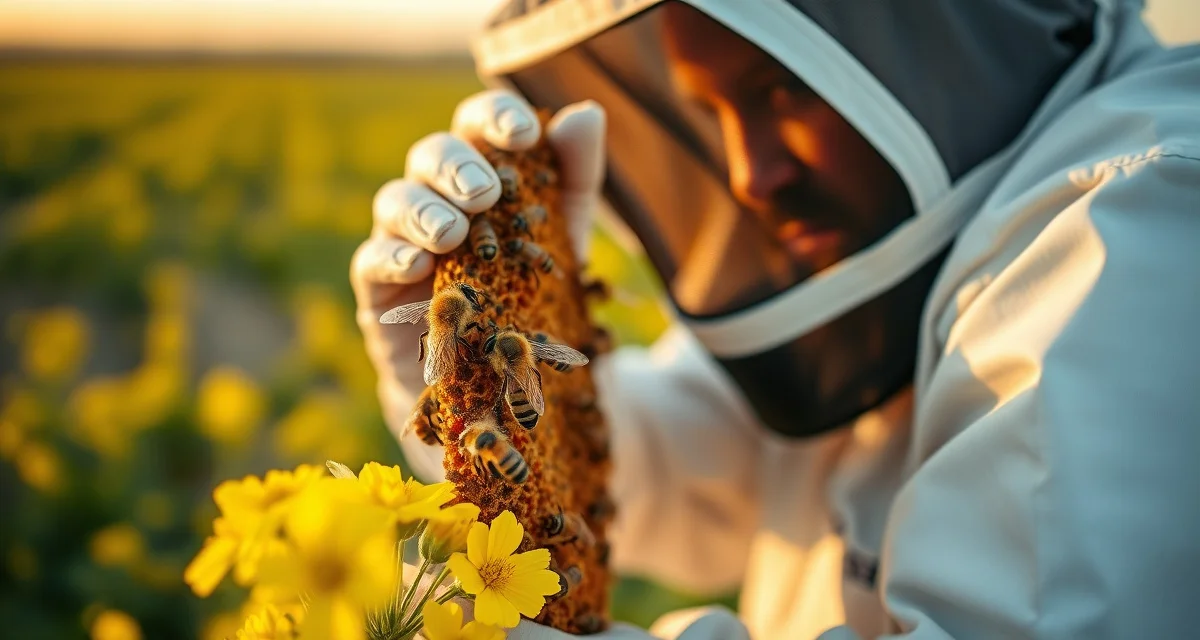
Canola Pollination in North Dakota: Growing Market for Commercial Beekeepers
North Dakota canola acreage has grown more than 1,000 percent over the past 30 years, transforming from a minor specialty crop into one of the state's major row crops and creating a genuine commercial pollination market where almost none existed before. The expansion has been driven by biofuel demand, growing domestic food-grade canola oil markets, and favorable agronomics for the Northern Plains climate.
Canola pollination runs July through August alongside sunflower in North Dakota, offering extended summer income for operators who position colonies in the state for honey production. Canola yields more nectar per acre than most crops during the same season, meaning your honey production and canola pollination goals align rather than compete.
TL;DR
- North Dakota's primary commercial beekeeping role is shaped by its crop mix, climate, and position on the national pollination circuit.
- Pollination rates in North Dakota range $65-220/hive depending on crop depending on crop and colony strength requirements.
- Out-of-state operators entering North Dakota for pollination contracts must register with the state agricultural authority and obtain a Certificate of Health.
- North Dakota functions as either a primary pollination destination, a seasonal honey production location, or a transitional stop depending on the circuit.
- Tracking permit status, registration documents, and yard records for North Dakota operations requires organized record-keeping before the season opens.
Canola Pollination Biology
Canola (Brassica napus and Brassica rapa varieties) is predominantly self-compatible but benefits from cross-pollination that increases seed yield 15 to 46 percent depending on variety and conditions. Bee visits improve not just the quantity but the uniformity of seed fill, which matters for the commercial canola crushing industry that pays premiums for consistent quality.
The pollination benefit for canola is well-documented in Canadian and European research, where canola is a major crop and pollination science is well advanced. North Dakota canola growers are increasingly aware of this data as their acreage has grown and agronomic management has become more sophisticated.
Open-pollinated canola varieties tend to benefit more from bee cross-pollination than hybrid varieties, though hybrids still show meaningful yield response. If you're negotiating a canola pollination contract, knowing which variety system your grower is using gives you better data to support your pricing.
North Dakota Canola Geography
North Dakota canola is concentrated in the northern tier of the state, particularly in Renville, Ward, Burke, Divide, and Mountrail counties in the northwest and Cavalier, Pembina, and Towner counties in the northeast. These areas overlap with the state's primary spring wheat and sunflower production zones.
The proximity of canola and sunflower production in the northern counties creates a natural multi-crop positioning opportunity. Operators who run sunflower pollination contracts can often add canola contracts from the same general yard locations without major repositioning. The North Dakota sunflower pollination season overlaps significantly with canola, running July and August in the same northern counties.
Getting Canola Pollination Contracts
The Northern Canola Growers Association and the North Dakota Oilseed Council are your primary industry contacts. The North Dakota State University Extension Service's cropping systems specialists have worked on canola pollination research and can provide grower referrals in the main production counties.
North Dakota canola growers are largely production-focused farmers managing large-acreage operations across multiple crops. The most receptive growers to canola pollination contracts are those who have seen yield data from managed pollination research, are managing canola as a precision input crop rather than a commodity rotation, and are already making other science-based management decisions.
Direct outreach to operations over 500 canola acres in the northwest counties is viable. Winter and early spring contact gives growers time to incorporate pollination hive costs into their input budgets for the upcoming season. Use PollenOps contract management to generate professional proposals with strength documentation that differentiates you from informal pollination arrangements.
Integration with North Dakota Honey Production
The most financially attractive aspect of North Dakota canola is its honey production value alongside pollination income. Canola bloom in July produces abundant light-colored nectar that bees work intensively. Canola honey is white to very pale and mild in flavor, which commands premium prices in specialty markets but can be problematic for operations focused on high-quality varietal honey, since canola crystallizes very quickly.
If you're running North Dakota for wildflower or clover honey production alongside canola pollination, manage your supers and extraction timing carefully to prevent crystallized canola honey from ruining your crop. Pull supers regularly and extract quickly during canola bloom rather than leaving honey in supers for extended periods.
The dual income from canola pollination fees plus honey production in the same timeframe is one of the better revenue-per-hive opportunities in the country for summer operations. At $70 to $100 per hive for pollination plus 60 to 100 pounds of honey per hive at $1.50 to $3.00 per pound, the math during a good North Dakota July is compelling.
Colony Strength Requirements
North Dakota canola growers typically require 6 to 8 frames of bees at delivery, with some large commercial operations requesting 8-frame minimums for high-value seed crop production. June delivery before July bloom allows colonies to acclimate and build on early summer forage before the canola flow begins.
The long summer daylight hours of North Dakota in July support exceptional colony build-up. Colonies that arrive in good condition in June can reach peak strength by the time canola peaks in mid-to-late July, which is optimal for both pollination performance and honey production.
Rates and Contract Terms
North Dakota canola pollination rates run $70 to $100 per hive, lower than almond or tree fruit but offset by the honey production opportunity in the same season. Sign contracts in February or March for July placements, with net-30 payment after placement.
Frequently Asked Questions
How do you get canola pollination contracts in North Dakota?
Contact the Northern Canola Growers Association and North Dakota Oilseed Council for grower introductions. The North Dakota State University Extension Service's specialists in canola agronomics can also connect you with progressive growers interested in managed pollination. Direct outreach to operations over 500 canola acres in the northwest counties (Renville, Ward, Burke, Mountrail) and northeast counties (Cavalier, Pembina) in winter and early spring is viable. Lead with yield data showing the pollination benefit for canola seed fill, since North Dakota farmers respond to agronomic economics.
When is canola bloom in North Dakota?
North Dakota canola bloom runs primarily in July and into August, overlapping with the state's sunflower pollination season. The exact timing varies by variety (spring canola vs. winter canola), planting date, and year-to-year temperature patterns. Most commercial North Dakota canola is spring-planted, with bloom concentrating in mid-to-late July in the main production counties. If you're running both canola and sunflower contracts in the same region, the bloom timing overlap requires planning your hive allocation across both crops.
What colony strength do North Dakota canola growers require?
Most North Dakota canola growers require 6 to 8 frames of bees at delivery, with large commercial operations sometimes requesting 8-frame minimums for high-value seed crop production. North Dakota's long summer days support rapid colony build-up through June, so colonies arriving in the state in good condition in early June should be at or near peak strength by the time canola peaks in mid-July. Run pre-move inspections before delivery and document colony strength, even for growers who don't formally require documentation.
What is the process for registering an out-of-state apiary in a new state?
Most states require out-of-state operators to register with the state department of agriculture apiary program before placing colonies. The process typically involves submitting a registration application (online or paper), paying a fee (usually $10-50 per location), and providing contact information for the operation. Some states also require the registration to be renewed annually. Contact the destination state's department of agriculture apiary program at least 60 days before your planned arrival to confirm current requirements.
What documentation do state apiary inspectors typically review?
State apiary inspectors review health certificates for out-of-state colonies, registration documentation, and colony inspection records during apiary visits. Inspectors check for signs of American foulbrood, European foulbrood, and other regulated pests and diseases. Operations with organized digital records that include treatment history and mite counts typically have faster, less complicated inspections than operations without documentation. Some state inspectors also verify that varroa mite loads are below state entry thresholds.
What triggers a state apiary inspection?
State apiary inspections can be triggered by routine inspection schedules (most states inspect a percentage of registered apiaries annually), neighbor or landowner complaints, disease reports from nearby operations, or inspection requirements tied to state entry permits. California, in particular, has the right to inspect incoming loads at port of entry for commercial beekeeping operations. Maintaining current registration and organized records makes required inspections faster and less disruptive.
Try These Free Tools
Sources
- USDA Agricultural Research Service
- Bee Informed Partnership
- American Beekeeping Federation (ABF)
- North Dakota Department of Agriculture
- Project Apis m.
Get Started with PollenOps
Commercial operations working in North Dakota face the same registration, permit, and documentation requirements as any state on the national circuit -- plus North Dakota's specific regulatory requirements. PollenOps tracks your North Dakota yard records, contract assignments, and permit documentation alongside your full operation, so entering a new state doesn't add a separate administrative burden. See how the platform fits operations working across multiple states.