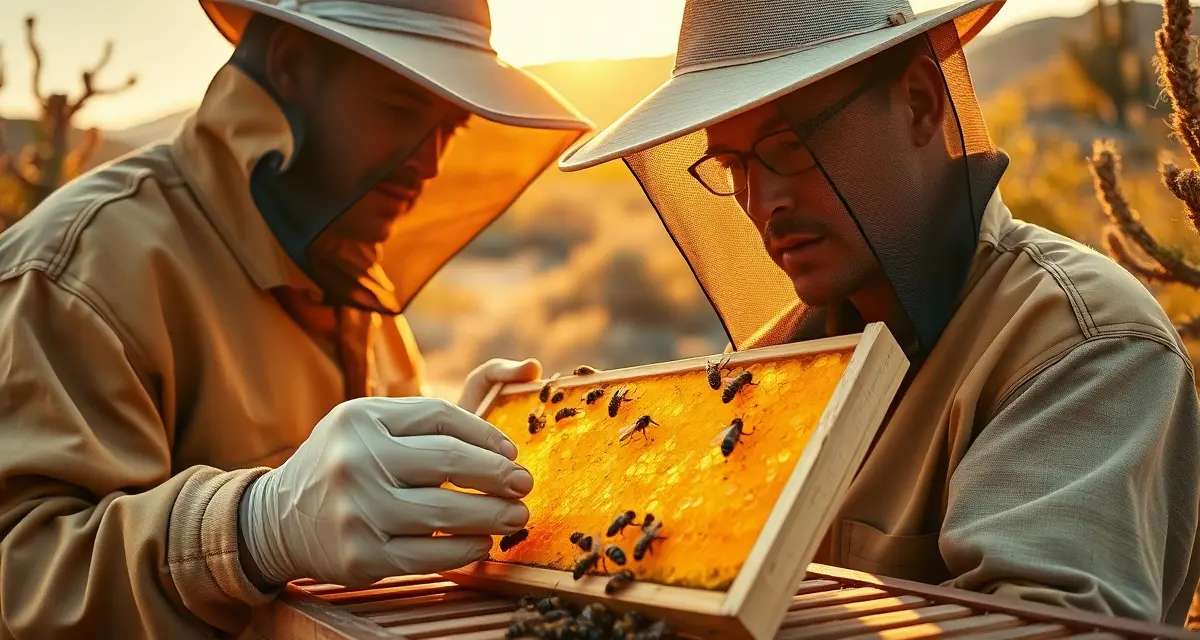
Sonoran Desert Honey: Arizona and New Mexico Commercial Beekeeping
Sonoran Desert honey from palo verde and mesquite commands premium prices in specialty markets, and Arizona desert wildflower honey season runs October through March in low-elevation desert areas, opposite the typical US honey season. This counter-cyclical production window is one of the Southwest's most distinctive commercial advantages.
TL;DR
- Wholesale honey prices for commercial producers have ranged from $1.50-2.50 per pound for bulk clover honey in recent seasons.
- Varietal honeys (buckwheat, tupelo, sourwood) command $3.00-5.00 per pound or more at wholesale.
- Summer honey production in North Dakota, Montana, and the Pacific Northwest is the primary source of bulk honey revenue for migratory operations.
- Honey production and pollination revenue streams can be combined on the same annual circuit, with most operations capturing both.
- Packing, storage, and distribution requirements for commercial honey production add cost and logistics complexity beyond the extraction stage.
Why Desert Honey Is Different
Sonoran Desert honey reflects a plant community that exists nowhere else. The primary Sonoran Desert honey flora includes:
Palo verde (Parkinsonia species): Arizona's state tree produces a spectacular late spring bloom that's one of the desert's most significant honey flows. Palo verde honey is light, delicate, and distinctive.
Mesquite (Prosopis species): Mesquite blooms in late spring through early summer, producing a mild, slightly earthy honey with a distinctive Southwest character. Mesquite honey is sought by specialty buyers for its provenance story.
Desert wildflower (winter-spring annual bloom): In years with good winter rain, Arizona's desert floor erupts with annual wildflowers (lupine, poppies, desert marigold, and dozens of other species) producing exceptional wildflower honey in March through April.
Saguaro cactus: Saguaro blooms in May produce nectar for desert-adapted pollinators. While saguaro honey is difficult to isolate in quantity, it contributes to early summer desert honey.
Catclaw acacia, brittlebush, desert broom: Various desert shrubs and forbs contribute to multi-floral desert honey throughout the season.
New Mexico honey plants: Chamisa (rabbitbrush), native sunflowers, clover in higher-elevation agricultural areas, and diverse wildflowers from New Mexico's varied terrain contribute to the state's honey production.
The Counter-Cyclical Season Advantage
Arizona's desert honey season runs from October through March-April in low desert areas (Tucson basin, Phoenix metro perimeter, Yuma area). This is opposite the traditional Midwest and Northern Plains honey season.
This counter-cyclical timing has commercial implications:
Less competition: When most honey producers are wintering colonies and buying honey, Arizona operators are actively producing. This market timing advantage can help with direct-to-consumer relationships and restaurant accounts. You have fresh local honey when others don't.
Winter colony building: Operators who winter colonies in Arizona's desert low country can build colony strength during the productive desert bloom period, then move north or to California for spring pollination with strong colonies.
Year-round market presence: Arizona's tourism economy and year-round farmers markets create continuous direct-to-consumer sales opportunity. Phoenix and Tucson farmers markets operate 12 months a year.
Arizona Honey Production Areas
Tucson Basin and surrounding desert (Pima, Santa Cruz counties): Low-elevation Sonoran Desert with palo verde, mesquite, and winter wildflower forage. Strong Tucson specialty food market.
Maricopa County desert perimeter: The desert areas around Phoenix metro produce good desert honey. Phoenix metro provides one of the largest specialty food markets in the Southwest.
White Mountains and high country (Apache, Navajo, Coconino counties): Higher elevation areas in Arizona's White Mountains and Mogollon Rim produce clover, wildflower, and diverse honey from the region's forest and meadow vegetation. This is a summer production window similar to Northern states.
Southern Arizona agricultural valleys (Santa Cruz, Cochise counties): Agricultural areas produce alfalfa and clover honey alongside the desert.
New Mexico Honey Production
New Mexico's honey production spans the state's dramatic terrain from desert lowlands to mountain meadows:
Rio Grande Valley and central New Mexico: Agricultural areas with alfalfa and clover honey.
High desert and chamisa country: Chamisa (rabbitbrush) honey from New Mexico's high desert is a distinctive late-summer varietal with strong character.
Northern New Mexico mountains (Taos, Rio Arriba counties): Mountain wildflower honey from northern New Mexico's diverse terrain.
Market Access
Phoenix specialty food market: Phoenix and Scottsdale have well-developed specialty food retail and restaurant markets. The Phoenix metro is one of the fastest-growing food markets in the US.
Tucson specialty food market: Tucson's food culture is surprisingly well-developed and values local desert honey with authentic provenance.
Santa Fe and Albuquerque: New Mexico's specialty food scenes (particularly Santa Fe's, which has an outsized food culture relative to its size) provide premium channels for desert honey.
Tourism economy: Both Arizona and New Mexico have major tourism economies with significant gift and specialty food purchasing. Desert honey with compelling provenance stories sells well in tourism retail.
Online direct-to-consumer: Sonoran Desert honey with palo verde and mesquite provenance supports $12-18/lb online pricing. The story is genuinely unique.
Commercial honey market trends provides pricing benchmarks for desert varietals in specialty markets.
Track your desert yard records, extraction dates, and floral source documentation in PollenOps to support premium market positioning. Commercial beekeeping in Arizona covers the broader Arizona commercial beekeeping context.
Frequently Asked Questions
How do you produce Sonoran Desert honey commercially?
Sonoran Desert honey production requires yard placement in areas with significant palo verde, mesquite, and desert wildflower forage, typically at lower elevations (under 3,000 feet) in Arizona and the Sonoran Desert corridor into New Mexico. Position colonies before the palo verde bloom (typically late April through May) for the main flow. In years with good winter rain, winter wildflower bloom (February-April) can produce significant surplus. Keep colonies at lower elevation through spring, then move to higher elevation or cooler areas for summer. Low desert summer is too hot and dry for productive colony management. Many Arizona operators maintain hives in desert areas in fall and spring, then summer in higher elevations or move to pollination contracts.
What desert flowers produce Arizona's best honey?
Palo verde is Arizona's most productive and distinctive honey plant. The bloom covers the desert in yellow and produces strong nectar flows when conditions are right. Mesquite is the second most significant commercial desert honey plant, producing from late April through June depending on elevation and location. Winter annual wildflowers (after good winter rain) produce diverse multi-floral honey in March-April that's highly regarded by specialty buyers. Catclaw acacia, desert broom, and various native composites and legumes contribute to multi-floral desert honey throughout the season. Saguaro contributes marginally. The combination of these sources produces a honey profile that's genuinely unlike anything from outside the Sonoran Desert.
How do you market Southwest desert honey to specialty buyers?
Sonoran Desert honey markets most effectively through its genuinely unique provenance story. "Palo verde and mesquite honey from the Sonoran Desert" communicates a specific, identifiable source that specialty buyers can research and validate. Document the floral sources in your production records and, if possible, have pollen analysis done to confirm dominant pollen types. Specialty buyers and distributors increasingly want this documentation for premium pricing. Lead with the geographic story: the Sonoran Desert is one of the most ecologically distinctive places in North America. Phoenix and Tucson specialty food markets are the most accessible channels; online direct-to-consumer with good photography and storytelling reaches national buyers who specifically seek desert honey.
How do commercial beekeepers choose summer honey yard locations?
Summer honey yard selection focuses on forage quality, density, and landscape characteristics. North Dakota and Montana white clover and sweetclover flows typically produce 80-150 pounds per colony in good years. The Pacific Northwest offers diverse flows from clover, fireweed, and wildflowers. Proximity to other apiaries reduces forager competition; bee-friendly state lands or rented agricultural properties with forage diversity are preferred. Water availability within 1-2 miles of each yard is a basic requirement.
What is the difference between selling honey as bulk versus packaged retail?
Bulk honey sales to brokers or packers provide simple logistics (55-gallon drums or totes shipped directly from extraction) but yield lower per-pound prices ($1.50-2.50/pound for clover at wholesale). Packaged retail sales through direct channels (farmers markets, online, specialty retailers) yield $6-12 per pound but require labeling, packaging equipment, food safety compliance, and distribution relationships. Most commercial operations rely primarily on bulk sales and use retail as a supplementary channel for premium varieties.
Can honey production records be tracked alongside pollination contract records?
Yes. PollenOps tracks yard assignments and honey production data alongside pollination contracts so the full economic picture of each yard and each season is visible in one system. This matters for operations that use the same yards for honey production in summer and pollination staging in winter and spring, since the value of a yard location depends on both revenue streams.
Try These Free Tools
Sources
- USDA Agricultural Research Service
- Bee Informed Partnership
- American Beekeeping Federation (ABF)
- American Honey Producers Association
- National Honey Board
Get Started with PollenOps
Running honey production alongside pollination contracts requires coordinating two revenue streams on a single annual calendar. PollenOps tracks both in one platform so your circuit planning reflects reality rather than optimistic assumptions.