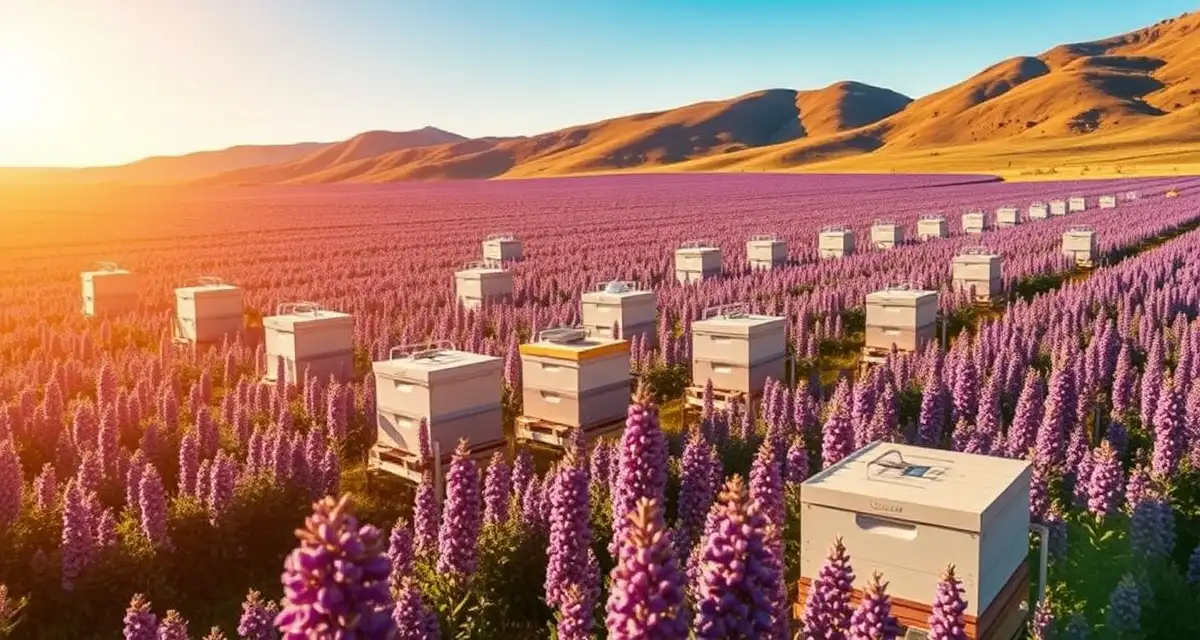
Alfalfa Honey and Seed Pollination in Utah: Commercial Opportunities
Utah's Cache Valley and other agricultural areas produce quality alfalfa honey and alfalfa seed, creating dual revenue opportunities for commercial beekeepers positioned in the state's farming corridors. Utah alfalfa honey is a highly regarded varietal honey in specialty markets, with its clean, mild flavor profile appealing to premium buyers.
For commercial operators running Northern Plains or Rocky Mountain circuits, Utah's alfalfa season fills the late June through August window between western tree fruit contracts and fall honey production.
TL;DR
- Utah's primary commercial beekeeping role is shaped by its crop mix, climate, and position on the national pollination circuit.
- Pollination rates in Utah range $65-220/hive depending on crop depending on crop and colony strength requirements.
- Out-of-state operators entering Utah for pollination contracts must register with the state agricultural authority and obtain a Certificate of Health.
- Utah functions as either a primary pollination destination, a seasonal honey production location, or a transitional stop depending on the circuit.
- Tracking permit status, registration documents, and yard records for Utah operations requires organized record-keeping before the season opens.
Utah's Alfalfa Honey Production
Utah produces alfalfa honey from its significant irrigated alfalfa acreage, particularly in:
Cache Valley (Cache County): One of the most productive alfalfa areas in the state. The valley's irrigation infrastructure and long alfalfa cultivation history support consistent nectar flow during July and August.
Box Elder County: Agricultural corridor along the Great Salt Lake plain with substantial alfalfa and wildflower forage.
Sevier County and south-central Utah: Additional alfalfa acreage in irrigated valleys supports honey production.
San Juan County: More limited but quality wildflower forage in the southeastern corners.
Alfalfa bloom in Utah typically runs from late June through August, with multiple cuttings per season. The alfalfa that's allowed to go to bloom (not cut) produces the strongest nectar flow. Alfalfa honey from Utah is light in color, mild in flavor, and well-regarded in specialty markets for baked goods and restaurant use.
The Seed Crop Opportunity
Utah has a modest alfalfa seed production sector, though smaller than Idaho's Magic Valley. Alfalfa seed growers in Utah primarily rely on alfalfa leaf-cutter bees as their primary pollinator. Honeybee supplemental placement contracts exist but are a secondary market.
For beekeepers interested in Utah alfalfa seed contracts, the approach is the same as Idaho and Nevada: be transparent about the supplemental role of honeybees in alfalfa seed, price accordingly, and position the placement as a combination of supplemental pollination and honey production value.
Honey Production Alongside Pollination Contracts
Utah honey production can be integrated with a broader Rocky Mountain circuit:
- June-July: Idaho cherry/apple contracts in the Treasure Valley
- July-August: Utah alfalfa honey production in Cache Valley and Box Elder County
- August-September: Move to North Dakota for late-season clover and sunflower honey
This sequencing keeps colonies productive from June through September without returning to a home base.
Utah wildflower honey, produced from the diverse mountain and canyon flora in the state's varied landscape, is another production opportunity. Colonies positioned in or near Utah's mountain benches during late summer can produce exceptional multi-floral honey that commands premium prices.
Market Access
Utah alfalfa honey has several accessible market channels:
Specialty food buyers: Utah honey commands premium prices in the Mountain West regional specialty food market. Natural grocery chains, co-ops, and artisan food buyers in Salt Lake City, Denver, and Park City are natural markets.
Direct to consumer: Utah's active outdoor recreation and natural foods culture creates strong consumer demand for local honey. Farmers markets in Salt Lake City and Provo are productive direct channels.
Bulk honey brokers: For operations producing volume, bulk sales to brokers at $2.00-$3.50/lb are reliable and require no direct marketing infrastructure.
For honey production management alongside pollination contracts, PollenOps tracks honey production by yard separately from pollination contract revenue, giving you clear visibility into each income stream.
Frequently Asked Questions
What honey production opportunities does Utah offer from alfalfa?
Utah's irrigated alfalfa acreage, particularly in Cache Valley, Box Elder County, and south-central irrigated valleys, supports quality alfalfa honey production from late June through August. Colonies positioned near alfalfa fields during bloom can produce 40-70 lbs per hive in a good season. Utah alfalfa honey is a mild, light-colored varietal valued in specialty food markets. The Mountain West regional food market in Salt Lake City, Denver, and resort towns like Park City provides accessible premium buyers. Bulk honey brokers pay $2.00-$3.50/lb for volume production.
Are there alfalfa seed pollination contracts in Utah?
Utah has a smaller alfalfa seed production sector compared to Idaho or Nevada, but supplemental honeybee placement contracts do exist. Alfalfa seed growers in Utah primarily use alfalfa leaf-cutter bees as their primary pollinator; honeybees serve a supplemental role at lower per-hive rates than tree fruit or almond contracts. The more commercially significant opportunity for honeybee operators in Utah is alfalfa honey production, which doesn't require a seed pollination contract and can be pursued independently wherever alfalfa is grown to bloom.
What alfalfa honey markets can Utah operators access?
Utah alfalfa honey finds its best markets in the Mountain West specialty food sector: natural grocery chains, co-ops, artisan food retailers, and direct-to-consumer sales through farmers markets and online channels. Salt Lake City's growing specialty food scene, combined with tourist destinations like Park City and St. George, creates regional demand for premium Utah honey. Bulk honey brokers serve operations producing volume who don't want to maintain retail relationships. Utah's local food branding is strong. "Utah honey" carries regional identity value that supports premium pricing in specialty channels.
What is the process for registering an out-of-state apiary in a new state?
Most states require out-of-state operators to register with the state department of agriculture apiary program before placing colonies. The process typically involves submitting a registration application (online or paper), paying a fee (usually $10-50 per location), and providing contact information for the operation. Some states also require the registration to be renewed annually. Contact the destination state's department of agriculture apiary program at least 60 days before your planned arrival to confirm current requirements.
What documentation do state apiary inspectors typically review?
State apiary inspectors review health certificates for out-of-state colonies, registration documentation, and colony inspection records during apiary visits. Inspectors check for signs of American foulbrood, European foulbrood, and other regulated pests and diseases. Operations with organized digital records that include treatment history and mite counts typically have faster, less complicated inspections than operations without documentation. Some state inspectors also verify that varroa mite loads are below state entry thresholds.
What triggers a state apiary inspection?
State apiary inspections can be triggered by routine inspection schedules (most states inspect a percentage of registered apiaries annually), neighbor or landowner complaints, disease reports from nearby operations, or inspection requirements tied to state entry permits. California, in particular, has the right to inspect incoming loads at port of entry for commercial beekeeping operations. Maintaining current registration and organized records makes required inspections faster and less disruptive.
Try These Free Tools
Sources
- USDA Agricultural Research Service
- Bee Informed Partnership
- American Beekeeping Federation (ABF)
- Utah Department of Agriculture
- Project Apis m.
Get Started with PollenOps
Commercial operations working in Utah face the same registration, permit, and documentation requirements as any state on the national circuit -- plus Utah's specific regulatory requirements. PollenOps tracks your Utah yard records, contract assignments, and permit documentation alongside your full operation, so entering a new state doesn't add a separate administrative burden. See how the platform fits operations working across multiple states.