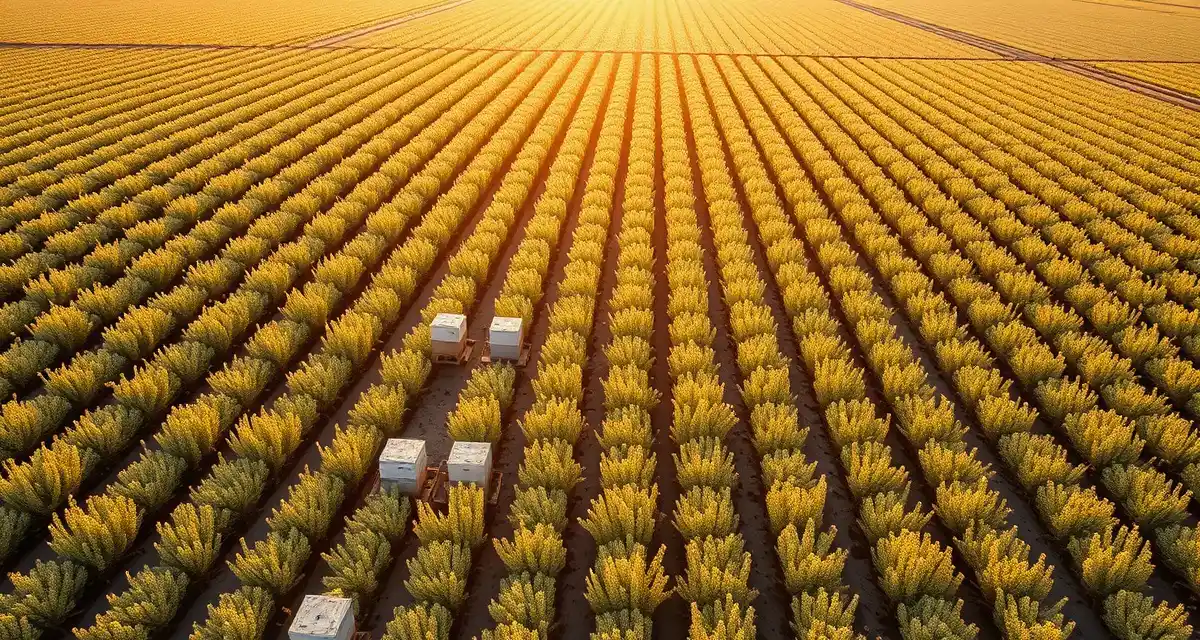
Alfalfa Seed Pollination in California: Imperial Valley Contracts
California's Imperial Valley is a major alfalfa seed production region, and its pollination season runs counter to the almond calendar. While California almonds bloom in February, Imperial Valley alfalfa seed runs June through September, offering a strategic summer income opportunity for operators who want to stay in California for summer revenue rather than moving north to Plains honey yards.
Imperial Valley alfalfa seed pollination is particularly valuable for operators who have established California infrastructure, grower relationships, and storage capability. Rather than driving trucks to Montana or the Dakotas for summer honey production, a portion of the fleet can generate pollination revenue in the southern California desert.
TL;DR
- California's primary commercial beekeeping role is shaped by its crop mix, climate, and position on the national pollination circuit.
- Pollination rates in California range $65-220/hive depending on crop depending on crop and colony strength requirements.
- Out-of-state operators entering California for pollination contracts must register with the state agricultural authority and obtain a Certificate of Health.
- California functions as either a primary pollination destination, a seasonal honey production location, or a transitional stop depending on the circuit.
- Tracking permit status, registration documents, and yard records for California operations requires organized record-keeping before the season opens.
Imperial Valley: Counter-Season to Almonds
The Imperial Valley sits in the southeastern corner of California along the Mexican border, one of the hottest and most productive agricultural valleys in the country. The valley's year-round irrigation from the Colorado River allows multiple crop cycles, including alfalfa seed production that extends well into summer and early fall.
Imperial Valley alfalfa seed bloom runs from approximately June through September, with multiple cutting cycles producing bloom windows that extend the season. This extended bloom window is different from the 6 to 8 week seasonal operations in Colorado or New Mexico, and it allows operators to place colonies for longer periods and potentially manage honey production alongside seed pollination income.
For alfalfa and clover seed crop pollination contracts, the Imperial Valley is one of the longer-season opportunities in the country.
Heat Management
Imperial Valley summers are extreme. July and August temperatures routinely exceed 110 degrees Fahrenheit, and colony management in this environment requires different practices than temperate operations.
Colony water provision is critical. Colonies in Imperial Valley summer heat need continuous access to clean water, with the water management requirements scaling up proportionally with the heat load. Without adequate water, colonies beard excessively, reduce foraging, and can suffer rapid population decline.
Shade provision helps in extremely hot yards. Some operators use shade cloth over yards or position colonies under existing vegetation to reduce direct heat load on hive bodies. White or light-colored hive bodies are preferred over dark colors in extreme heat locations.
Yard visits need to be timed for morning hours before temperatures become dangerous for crew. Work in the Imperial Valley in July means 4 AM to 10 AM field hours, not midday operations.
Contract Structure and Rates
Imperial Valley alfalfa seed pollination rates have typically run $55 to $85 per hive. The extended season allows some operators to negotiate multi-month placement fees rather than per-placement contracts. Multi-month rates can work favorably for both growers, who get reliable colony availability through the season, and operators, who avoid the logistics of mid-season moves.
Growers in the Imperial Valley are sophisticated agricultural businesses accustomed to contracted input services. Contract documentation, insurance certificates, and professional communication are expected.
Connecting to the Annual Circuit
For California commercial beekeeping and almond circuit planning, the Imperial Valley slot works as a summer anchor point. Colonies finish California almonds in late February, transition to spring positions in the Pacific Northwest or other spring states through April and May, and then some portion of the fleet returns to Imperial Valley for summer alfalfa seed work.
This two-California strategy keeps some revenue tied to California infrastructure while using other months for spring circuit income.
Regulatory Requirements
California apiary registration and any applicable health certificate requirements apply in the Imperial Valley the same as anywhere in the state. Contact the California Department of Food and Agriculture for any updated entry requirements if you're bringing colonies from out-of-state to Imperial Valley.
Frequently Asked Questions
How do you get alfalfa seed contracts in California's Imperial Valley?
Contact alfalfa seed growers and seed company representatives in the El Centro, Brawley, and Calexico areas of the Imperial Valley. Outreach in the fall for the following summer season is standard. The Imperial Valley agricultural community includes large commercial farming operations, some managed by farming companies. Connecting through regional agricultural associations or directly through seed company contacts who work with multiple Imperial Valley growers is the most efficient prospecting approach. Come prepared with colony count, strength standards, and previous pollination references.
What colony strength do Imperial Valley alfalfa growers require?
Most Imperial Valley alfalfa seed growers require colonies at 6 frames of bees minimum. Given the extreme summer heat, arriving with stronger colonies is advisable, as heat stress and water management challenges mean colonies will be under more pressure than in moderate-climate operations. Strong colonies entering the Imperial Valley summer are better positioned to maintain adequate forager populations through the demanding July-September period. Plan your spring buildup with Imperial Valley delivery requirements in mind.
How does Imperial Valley alfalfa pollination connect to the annual circuit?
Imperial Valley alfalfa seed runs June through September, after almond season (February-March) and after most spring pollination work. Operators who work California almonds can route a portion of their fleet to Imperial Valley for summer pollination rather than making the long move to Northern Plains honey yards. The trade-off is summer heat management versus summer honey production income. For operators with established California relationships and infrastructure, staying in the state for summer revenue often makes more logistical and financial sense than the fuel, time, and colony stress of a Montana or Dakotas round trip.
What is the process for registering an out-of-state apiary in a new state?
Most states require out-of-state operators to register with the state department of agriculture apiary program before placing colonies. The process typically involves submitting a registration application (online or paper), paying a fee (usually $10-50 per location), and providing contact information for the operation. Some states also require the registration to be renewed annually. Contact the destination state's department of agriculture apiary program at least 60 days before your planned arrival to confirm current requirements.
What documentation do state apiary inspectors typically review?
State apiary inspectors review health certificates for out-of-state colonies, registration documentation, and colony inspection records during apiary visits. Inspectors check for signs of American foulbrood, European foulbrood, and other regulated pests and diseases. Operations with organized digital records that include treatment history and mite counts typically have faster, less complicated inspections than operations without documentation. Some state inspectors also verify that varroa mite loads are below state entry thresholds.
What triggers a state apiary inspection?
State apiary inspections can be triggered by routine inspection schedules (most states inspect a percentage of registered apiaries annually), neighbor or landowner complaints, disease reports from nearby operations, or inspection requirements tied to state entry permits. California, in particular, has the right to inspect incoming loads at port of entry for commercial beekeeping operations. Maintaining current registration and organized records makes required inspections faster and less disruptive.
Try These Free Tools
Sources
- USDA Agricultural Research Service
- Bee Informed Partnership
- American Beekeeping Federation (ABF)
- California Department of Agriculture
- Project Apis m.
Get Started with PollenOps
Commercial operations working in California face the same registration, permit, and documentation requirements as any state on the national circuit -- plus California's specific regulatory requirements. PollenOps tracks your California yard records, contract assignments, and permit documentation alongside your full operation, so entering a new state doesn't add a separate administrative burden. See how the platform fits operations working across multiple states.