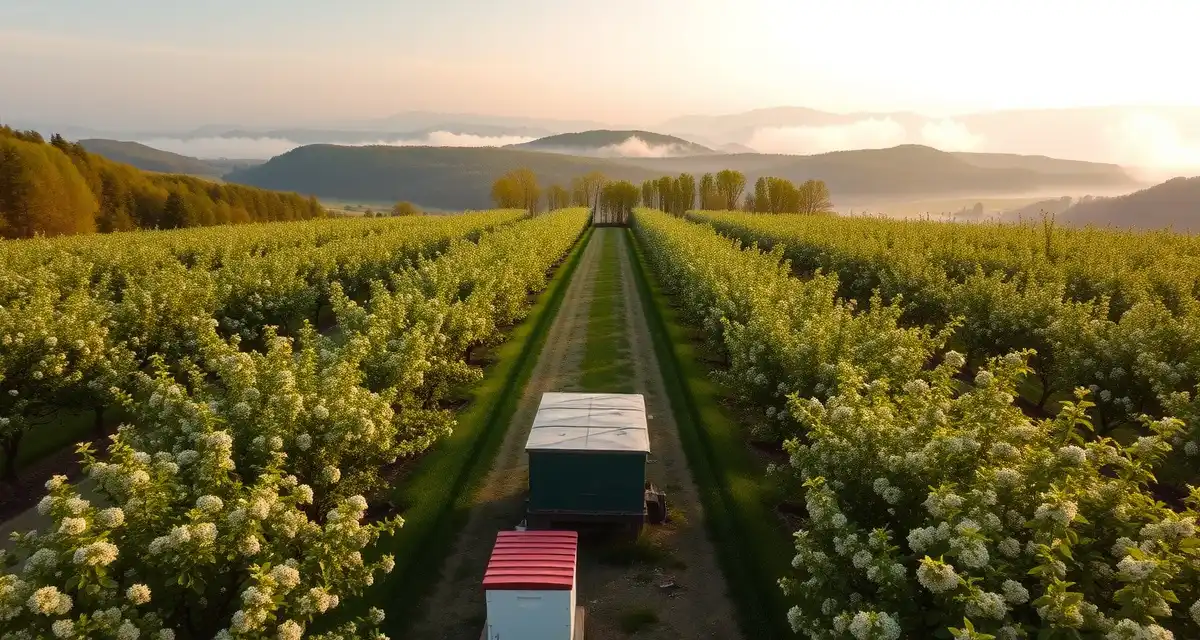
Apple Pollination in Vermont: Lake Champlain Valley Orchards
Vermont's Lake Champlain Valley produces quality apples with commercial pollination demand, concentrated in the broad fertile valley on Vermont's western edge bordering New York. Addison, Chittenden, and Franklin counties hold the state's primary commercial apple acreage, with the moderating influence of Lake Champlain creating a growing microclimate more favorable than Vermont's interior highlands.
Vermont apple bloom runs mid-May through early June at higher elevations, with valley floor orchards sometimes opening a few days earlier due to the lake effect temperature moderation. For Northeast circuit operators, Vermont fits naturally into a spring route that may include New Hampshire, Massachusetts, or New York apple before or after.
TL;DR
- Vermont's primary commercial beekeeping role is shaped by its crop mix, climate, and position on the national pollination circuit.
- Pollination rates in Vermont range $65-220/hive depending on crop depending on crop and colony strength requirements.
- Out-of-state operators entering Vermont for pollination contracts must register with the state agricultural authority and obtain a Certificate of Health.
- Vermont functions as either a primary pollination destination, a seasonal honey production location, or a transitional stop depending on the circuit.
- Tracking permit status, registration documents, and yard records for Vermont operations requires organized record-keeping before the season opens.
The Lake Champlain Apple Belt
The Champlain Valley's apple production is small by national standards but consistent and quality-oriented. Middlebury, Burlington-area orchards, and the farm country north toward St. Albans represent the main commercial acreage. Vermont's apple industry has strong farm brand identity and direct-market orientation; many orchards have operated in the same families for multiple generations.
This market character means pollination contracts tend to be relationship-based rather than bid-driven. Growers who are satisfied with their beekeeper rarely shop for alternatives, so breaking into new accounts often requires patience and a referral from within the community. Your first Vermont apple relationship is likely your most important.
The Vermont Tree Fruit Growers Association is the primary grower organization, and their annual meeting and newsletter provide contact channels for building relationships. The University of Vermont Extension's agricultural programs also connect with commercial apple growers in Addison and Chittenden counties.
Getting Contracts and Approach
Direct outreach to orchards over 20 acres in the Champlain Valley in January or February for May placements is the standard approach. Vermont orchards vary widely in professionalism of management, from highly systematic commercial operations to smaller family businesses that haven't used formal pollination contracts before.
For orchards without existing beekeeper relationships, your proposal should educate as well as pitch. Many Vermont growers are sophisticated about fruit production but may not have thought about pollination services as a formalized input. Framing your service around yield consistency, documented delivery, and the risk management aspect of having reliable coverage tends to resonate with Vermont's quality-oriented growers.
Use PollenOps Northeast apple contract management to generate a professional proposal. Reference your Vermont commercial beekeeping registration and compliance records in your outreach.
Bloom Timing and Elevation Variation
Vermont's Champlain Valley floor orchards bloom in mid-May, while orchards on the valley slopes and transition zones to the Green Mountains proper can run a week or more later. If you're placing hives at multiple Vermont sites, ask each grower about their typical bloom timing based on prior year observation rather than using a single regional average.
The compressed New England season means that mis-timed placements are costly relative to markets with longer windows. Vermont growers paying for commercial pollination understand that precise timing matters, and demonstrating awareness of local variation in your proposal strengthens your credibility.
Colony Strength Requirements
Vermont apple growers typically prefer 6 to 8 frames of bees at delivery with an active laying queen and visible brood. The mid-May Vermont bloom coincides with cold spring conditions that can include frost risk, and strong colonies tolerate these conditions and fly in marginal temperatures better than lighter populations.
April management is critical for reaching target strength by mid-May Vermont placements. Your colonies need to be building actively from a good winter baseline. If you're routing from southern states, your colonies should be approaching peak strength by the time you're staging for New England. Run a pre-move inspection no more than 5 days before delivery and document your count.
Rates and Contract Terms
Vermont apple pollination rates run $110 to $150 per hive for commercial orchards. Some premium-oriented farms with strong direct-market brands may pay above this range for reliable, professionally documented service. Sign contracts in January or February with a 25 percent deposit at signing and net-30 balance after bloom.
Frequently Asked Questions
How do you get apple pollination contracts in Vermont?
Contact the Vermont Tree Fruit Growers Association and the University of Vermont Extension's agricultural specialists in Addison and Chittenden counties. The Champlain Valley apple community is relationship-driven; referrals from a respected grower carry significantly more weight than cold outreach. Direct outreach to orchards over 20 acres in the Champlain Valley in January or February for May placements is the standard approach. Lead with your strength documentation and a professional contract proposal that addresses the elevation and timing variation across valley and slope orchards.
When is apple bloom in Vermont?
Vermont apple bloom runs mid-May through early June, with Champlain Valley floor orchards opening in mid-May and orchards on valley slopes or at higher elevations running into late May or early June. Year-to-year variation tied to spring temperature accumulation can shift timing by a week or more. Vermont bloom generally runs a few days later than Massachusetts and New York, and a few days ahead of higher-elevation Maine orchards. Contact your growers in April for updated bloom timing estimates based on the current spring's temperature accumulation.
What colony strength do Vermont apple growers prefer?
Vermont apple growers typically prefer 6 to 8 frames of bees at delivery with an active queen and visible brood. Mid-May Vermont bloom can occur alongside cold mornings and frost risk, so strong colonies with high worker populations provide better coverage during marginal temperature windows. Inspect your colonies 3 to 5 days before delivery and document strength at placement. Vermont's quality-oriented direct-market growers particularly value professional documentation because their crop quality directly affects their farm brand and customer relationships.
What is the process for registering an out-of-state apiary in a new state?
Most states require out-of-state operators to register with the state department of agriculture apiary program before placing colonies. The process typically involves submitting a registration application (online or paper), paying a fee (usually $10-50 per location), and providing contact information for the operation. Some states also require the registration to be renewed annually. Contact the destination state's department of agriculture apiary program at least 60 days before your planned arrival to confirm current requirements.
What documentation do state apiary inspectors typically review?
State apiary inspectors review health certificates for out-of-state colonies, registration documentation, and colony inspection records during apiary visits. Inspectors check for signs of American foulbrood, European foulbrood, and other regulated pests and diseases. Operations with organized digital records that include treatment history and mite counts typically have faster, less complicated inspections than operations without documentation. Some state inspectors also verify that varroa mite loads are below state entry thresholds.
What triggers a state apiary inspection?
State apiary inspections can be triggered by routine inspection schedules (most states inspect a percentage of registered apiaries annually), neighbor or landowner complaints, disease reports from nearby operations, or inspection requirements tied to state entry permits. California, in particular, has the right to inspect incoming loads at port of entry for commercial beekeeping operations. Maintaining current registration and organized records makes required inspections faster and less disruptive.
Try These Free Tools
Sources
- USDA Agricultural Research Service
- Bee Informed Partnership
- American Beekeeping Federation (ABF)
- Vermont Department of Agriculture
- Project Apis m.
Get Started with PollenOps
Commercial operations working in Vermont face the same registration, permit, and documentation requirements as any state on the national circuit -- plus Vermont's specific regulatory requirements. PollenOps tracks your Vermont yard records, contract assignments, and permit documentation alongside your full operation, so entering a new state doesn't add a separate administrative burden. See how the platform fits operations working across multiple states.