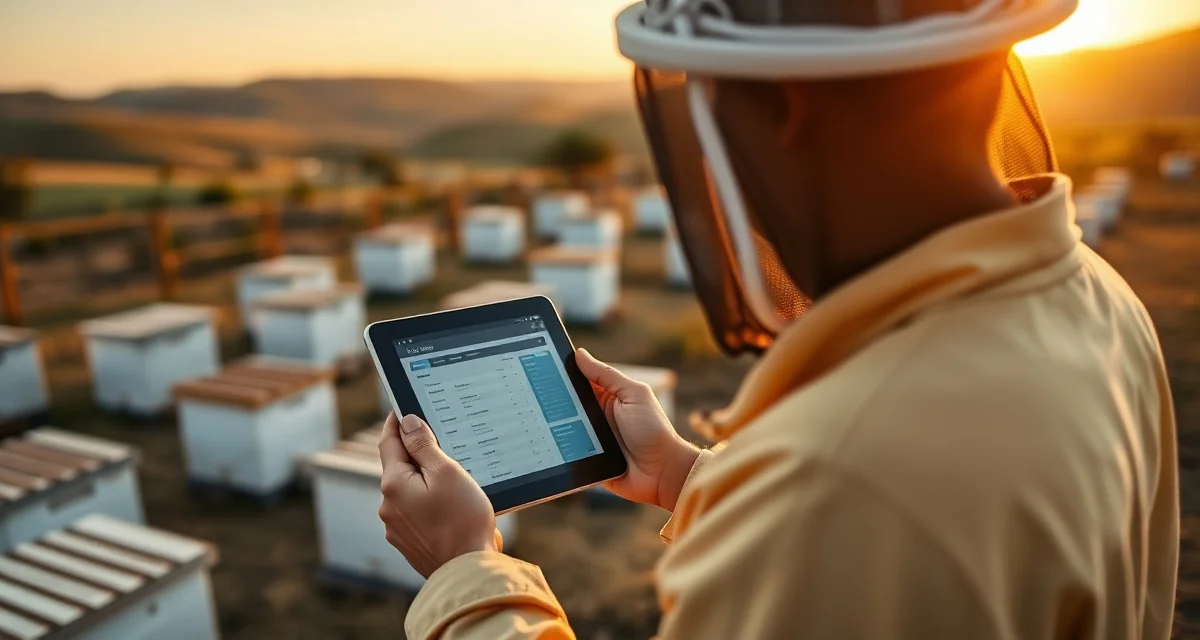
PollenOps Mobile App: Managing Your Operation from the Field
Offline capability means yard data can be captured without cell coverage in remote yard locations. Real-time sync means office managers see yard visit data as crews complete tasks. These two features address the specific gap that makes mobile tools actually work for commercial beekeeping: you're often in places without reliable connectivity, but the data still needs to get into the system.
The PollenOps mobile app is designed for the conditions of commercial yard management, not the conditions of an office environment. That distinction shapes every design decision.
TL;DR
- Commercial beekeeping operations that manage contracts on spreadsheets and phone calls spend 5-10 hours per week on administrative tasks that software handles automatically.
- Purpose-built beekeeping software centralizes contract lifecycle management, yard records, health documentation, and fleet logistics in one platform.
- The primary ROI drivers for operations software are fewer contract disputes, faster invoicing, and reduced time spent on administrative coordination.
- PollenOps is built specifically for commercial-scale pollination operations; it is not a hobbyist platform adapted for commercial use.
- Moving from spreadsheets to dedicated software typically pays for itself within one season in time savings and dispute prevention.
What You Can Do from the App
Colony health updates: Crew members can record colony assessments during yard visits, including frame counts, brood pattern quality, queen status, and any abnormalities. The app presents the colony list for the yard being visited, and crew swipe through colonies logging observations.
Treatment logging: Record varroa treatments, medications, and other colony interventions with date, product, dose, and which colonies were treated. Treatment records are timestamped and associated with the specific colony records they belong to.
Hive count confirmation: Confirm colony counts at placement and pickup, with the ability to note discrepancies from the contracted count. These confirmations create the timestamped records that matter in hive count disputes.
Yard visit completion: Mark a yard visit as complete when the crew finishes. This triggers the office dashboard update that shows which yards have been visited today and which haven't.
Route and yard access: View the day's yard route, yard GPS coordinates for navigation, yard notes including access instructions and landowner contacts, and any notes from the previous visit.
Task logging: Record tasks completed at a yard, whether that's adding honey supers, checking water sources, or completing a specific management action.
Offline Functionality
The most important technical feature of the app is genuine offline capability. When you arrive at a remote Nevada honey yard without cell service, the app loads your yard's colony list and all relevant context from the last sync. You work through the yard, recording all your observations, and the data sits on the device until you get back to a cellular area.
When connectivity returns, the app syncs all captured data to the PollenOps cloud in the background. No manual upload, no special sync step.
This is different from apps that technically work offline but require connectivity to load data at the start of a session. PollenOps loads yard data preemptively when planning a visit, so the information is available whether or not you have signal.
For the PollenOps Pro plan and above, offline sync is unlimited across all device types. This means multiple crew members at the same yard can use different devices and their data will reconcile correctly when it syncs.
Real-Time Sync for Office Managers
When crew members are working with connectivity, their app updates flow to the office dashboard in real time. An operations manager sitting in an office during a busy April delivery week can see exactly which yards have been visited, which colony counts have been confirmed, and which any-issue flags have been logged, as it happens.
This eliminates the end-of-day reporting phone call that commercial operations typically rely on to stay coordinated. The data speaks for itself, and it's there when it's recorded rather than when someone has time to transcribe it.
For integrating field data with grower contract documentation, the mobile app's timestamped colony data provides the delivery and health documentation that growers increasingly request.
Navigation and Route Integration
The app integrates with your device's default navigation app (Google Maps, Apple Maps, or Waze) for turn-by-turn directions to yard locations. Yard GPS coordinates stored in PollenOps are passed directly to navigation without needing to manually enter coordinates.
For multi-yard route days, the app can sequence your stops to minimize driving time based on yard locations, a simple route optimization that saves time across hundreds of yard visits per season.
Crew Permissions
Different team members can have different access levels in the mobile app. A field crew member sees colony records and can log observations and completed tasks. They don't see contract financials or grower pricing data. An operations manager sees the full picture.
Permission levels are configured in the PollenOps web dashboard by the account administrator. Changes take effect immediately for all connected devices.
Frequently Asked Questions
How does the PollenOps mobile app work in the field?
The app runs on iOS or Android devices and is designed for use during yard visits. It presents your colony list for the yard you're visiting, allows you to log health observations and treatments for individual colonies or yard-wide actions, confirm hive counts, and complete yard visit records. Navigation to yard GPS locations is integrated with your device's maps app. All data captured during a visit is stored locally on the device and synced to PollenOps when connectivity is available. The workflow is designed to match how a yard visit actually happens, moving from colony to colony with quick data entry that doesn't interrupt the work.
Does the PollenOps mobile app work without cell service?
Yes. PollenOps preloads your yard data to the device when you're planning a visit, so all colony records and yard notes are available regardless of connectivity during the visit. Data captured offline is stored securely on the device and syncs automatically when you return to an area with cell service. This offline-first design is specifically for commercial beekeeping operations, which regularly work in remote agricultural areas with limited cellular coverage.
Can field crews log colony health data through the mobile app?
Yes, and this is one of the app's core use cases. Field crew members can record colony health assessments including frame counts, brood pattern evaluations, queen status, varroa mite wash monitoring results, and general condition notes for each colony or colony group during their yard visit. These records are timestamped, associated with the correct colony ID, and synced to the central system when connectivity is available. Operations managers can review field crew health data from any device, enabling the kind of oversight that improves consistency and catches developing problems before they affect contract delivery capacity.
What does purpose-built commercial beekeeping software do that a spreadsheet cannot?
Dedicated software connects data across your operation in ways spreadsheets cannot: a contract record links to the specific hives assigned to it, which links to the yard location, which links to health inspection records and treatment logs. When a grower calls to dispute a hive count, you can pull the delivery record, timestamped photos, and GPS-confirmed location in 30 seconds rather than searching three spreadsheets and an email thread. This integration is where the time savings and dispute-prevention value comes from.
How long does it take to migrate from spreadsheets to beekeeping software?
Most commercial operators complete the core migration in 2-4 weeks, starting with current contract records and active yard locations. Historical data (past seasons' inspection records, old contracts) can be migrated over time rather than all at once. The practical recommendation is to start with the current season's live data and add historical records as time allows. The operational improvement from having current data in the system is immediate; the historical data adds analytical depth over subsequent seasons.
Is there a free trial available for PollenOps?
Contact PollenOps directly to confirm current trial and demo options. Most commercial operators benefit from a walkthrough of the contract management and yard tracking modules against their own operation's data before committing, since the fit between the platform and your specific circuit and crop mix is the most important evaluation factor.
Try These Free Tools
Sources
- USDA Agricultural Research Service
- Bee Informed Partnership
- American Beekeeping Federation (ABF)
- American Honey Producers Association
- Project Apis m.
Get Started with PollenOps
Commercial beekeeping operations that move from spreadsheets to purpose-built software consistently report fewer disputes, faster invoicing, and less time on administrative work during peak season. PollenOps is built specifically for commercial-scale pollination operations. See how the platform fits your operation.