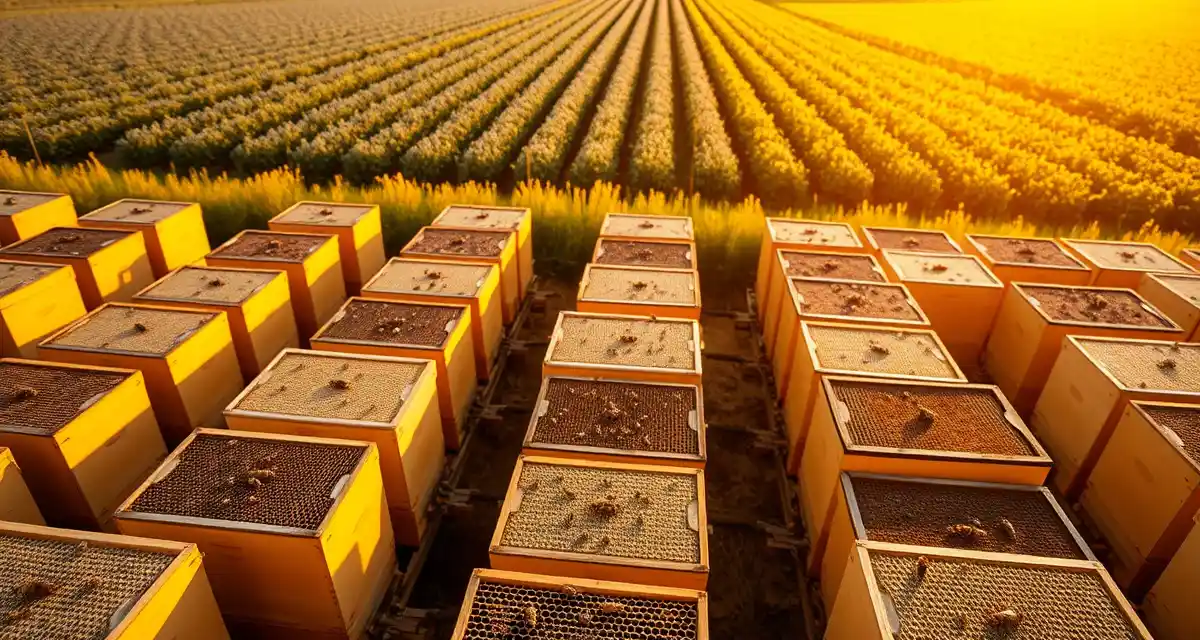
Managing Crop-Specific Pollination Contracts: Almonds, Blueberries, and Canola
Managing a pollination business across multiple crop types is significantly more complex than working with a single crop. Almond growers want 8-frame hives delivered in February within a 5-day window. Blueberry growers want delivery in May and have different density requirements that vary by region. Canola placements in the northern states and Canada produce honey as a secondary revenue stream that changes the whole contract structure. Running these different contracts through the same spreadsheet with the same forms and the same scheduling logic creates errors and missed obligations.
Almond Pollination: The High-Stakes Contract
California almond pollination sets the commercial beekeeping calendar for most large operations in the US. Growers contract in the fall for February delivery, which means your November hive inventory assessment needs to accurately reflect what you can guarantee for spring. Standard contracts specify 6 to 8 frames of bees at delivery, with strength inspected within 48 hours of placement.
The pressure during almond season is unlike any other crop. Bloom windows run 3 to 4 weeks, weather can compress that window further, and there are approximately 1.8 to 2 million colonies moved into California's Central Valley in a very short period. Logistics errors, hive strength shortfalls, and communication failures have direct financial consequences.
Key almond-specific management considerations:
Protein supplementation during almond placement is standard practice. Natural pollen and forage diversity are limited in most orchard environments, and colonies not supported with protein patties during the placement can decline in brood rearing capacity through the bloom period.
Varroa management must be completed before almond placement or deferred until after removal. Apivar strips are label-restricted to use without honey supers, and colonies during almond bloom are effectively on contract status. Pre-almond varroa treatment timing, ideally achieving mite loads below 1 per 100 bees by late January, is essential for colony performance during and after the placement.
Post-almond colony recovery matters for the rest of the season. Track which yards participated in almond and plan extra inspections for those colonies in March and April. Almond yards frequently show higher post-season mite and virus loads than colonies that overwintered in less intensive forage environments.
Hive transport logistics for almond are tightly managed. Nighttime moves with ventilated screens, coordinated with grower access schedules, and documented delivery records are all part of a defensible almond placement operation.
Blueberry Pollination: Different Standards, Variable Timing
Highbush blueberry pollination in Michigan, Washington, and Maine follows a different calendar than almonds. Bloom timing by variety and region spans April through late June. Standard hive strength requirements in blueberry contracts are typically 6 frames of bees, somewhat below almond standards. Placement density varies by grower: commonly 2 hives per acre for highbush, sometimes less.
Blueberry offers lower nectar reward than many major crops, which means bees do not orient to blueberry fields as strongly as they do to almond or clover. Drift away from placement sites toward competing forage nearby can be a practical problem. Dense placement positioning within the field and careful hive orientation helps reduce this effect, and growers with high-value plantings sometimes require discussion about bee confinement or placement location.
For beekeepers managing placements across multiple blueberry regions, timing coordination is the primary logistics challenge. Maine wild lowbush blueberry blooms in late June and early July; Michigan highbush peaks in May; Pacific Northwest blueberry varieties vary from April through late May. An operation with blueberry commitments in multiple regions can have hive movements spanning 10 to 12 weeks under the "blueberry" contract category alone.
PollenOps maintains separate contract records for each placement with crop-specific strength thresholds, delivery windows, and grower contacts, so a colony assessed against a 6-frame blueberry standard is not inadvertently logged against an 8-frame almond contract in the same system.
Canola Pollination: When the Bees Also Make Honey
Canola is one of the major nectar-producing crops in North America. Colonies placed in canola fields during bloom build population rapidly and produce significant quantities of honey. In a good canola year in the northern plains or Canadian prairies, hives can produce 80 to 100 pounds of canola honey per colony during a placement.
This changes the contract economics significantly compared to almonds or blueberries. The per-hive pollination fee for canola is often lower than other crops precisely because the beekeeper retains honey value from the placement. Some contracts structure this explicitly; others leave the arrangement ambiguous. Make sure your contract language is clear about who retains the honey and how that affects the pollination fee.
Canola honey crystallizes very rapidly after harvest due to its high glucose content. Supers need to be pulled promptly after bloom ends to prevent the honey from setting in the comb, which makes extraction impossible or extremely labor-intensive. Plan your extraction schedule with canola pull timing in mind.
Swarm management during canola is active work. Strong colonies with abundant forage and stimulus are highly inclined to swarm. Add box space proactively, monitor for queen cells during bloom inspections, and consider splitting colonies that are building up aggressively. A swarm from a canola yard represents both a production loss and a potential problem for the grower if bees depart the contracted area.
Tracking Multiple Crop Types with PollenOps
The core management challenge with multi-crop pollination is keeping each contract's specific requirements clearly separated from every other contract in the system. When you have almond colonies returning from California, blueberry deliveries being prepared, and canola yards already in the field, clarity about which colonies are assigned to which obligation is operationally essential.
PollenOps assigns specific colony groups to specific contracts, applies the hive strength standard appropriate to each crop, logs delivery dates and compliance documentation by contract, and tracks payment milestones separately for each placement. Colonies committed to one contract cannot inadvertently appear as available for another assignment.
Review your commercial beekeeping record keeping practices to ensure colony IDs, inspection records, and treatment history are current before any major delivery window. Linking accurate hive strength scoring data to each contract assignment gives you defensible delivery documentation and a clear record if a payment dispute arises after placement.
For almond operations specifically, keep your varroa monitoring records tied to colony records so you can demonstrate pre-placement treatment and mite load status if a grower questions hive performance during the placement.
Managing a multi-crop pollination operation without a system that tracks crop-specific requirements by contract creates the kind of confusion that surfaces at the worst times: during a busy delivery week, when a grower disputes hive strength, or when accounting for the season needs to differentiate honey production revenue from pollination contract revenue. Building the right structure in advance prevents most of those problems.
Try These Free Tools
Sources
- United States Department of Agriculture
- American Beekeeping Federation
- Almond Board of California
- North American Blueberry Council