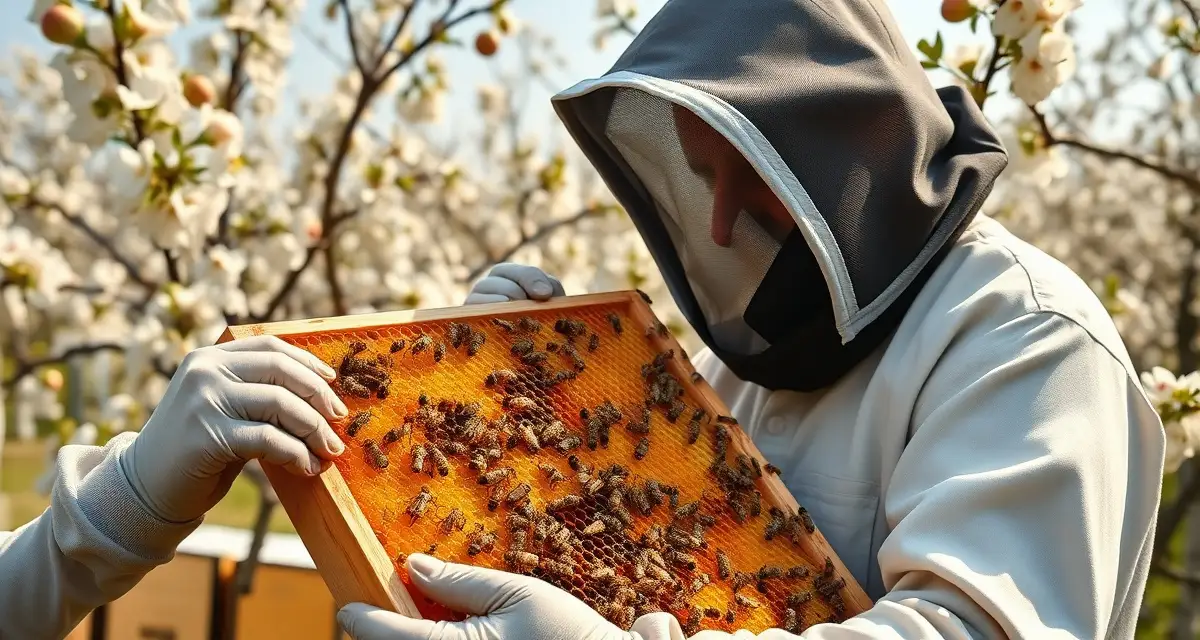
Apple Pollination Contracts: What Beekeepers Need to Know
Apple pollination runs from late April through May across a dozen major growing states. It's not the highest-paying pollination crop per hive, but the volume is real (Washington state alone has over 150,000 acres of apple production), and the timing slots neatly into the spring circuit after almonds and before summer honey.
If you're running a migratory operation and not putting hives on apples, you're leaving a spring revenue leg on the table.
TL;DR
- Apple pollination is one of the most geographically distributed pollination markets, with significant demand in Washington, Michigan, New York, Pennsylvania, and New England.
- bloom timing varies by 3-6 weeks between the Pacific Northwest and Northeast, enabling migratory operators to extend their apple season.
- Hive strength requirements for apple contracts typically range from 4-6 frames depending on the grower and orchard density.
- Washington State accounts for roughly 60% of US apple production, making it the dominant commercial apple pollination market.
- Cross-pollination variety requirements mean orchard layout significantly affects how many hives are needed and where they should be placed.
The US Apple Market
Washington state dominates US apple production with 60%+ of commercial volume. Key growing regions: the Yakima Valley, Wenatchee and Chelan counties, the Columbia Basin. Washington apple acreage requires significant annual hive placement.
Other major apple states with commercial pollination demand:
- New York (Hudson Valley, Lake Ontario counties, Champlain Valley)
- Michigan (Leelanau Peninsula, northwest Lower Peninsula)
- Pennsylvania (Adams County is one of the largest apple-producing counties in the East)
- Virginia and West Virginia (Shenandoah Valley)
- Oregon (Hood River Valley)
- California (Apple Hill, Sebastopol)
- New England states (Vermont, Massachusetts, Connecticut)
Each region has different timing, slightly different strength requirements, and different grower cultures.
Timing by Region
Washington/Oregon: Late April–mid-May. Fuji and Gala bloom after early-blooming varieties. Red Delicious typically peaks early to mid-May in the Yakima Valley. Hood River, Oregon, runs on a similar schedule.
California (Apple Hill/Sebastopol): Late March–April. These regions can catch operators right on exit from almond season.
Mid-Atlantic (Virginia, Pennsylvania, Maryland): Late April–May. Shenandoah Valley is a major concentration.
New York: Mid-to-late May. Hudson Valley and Lake Ontario counties.
Michigan: May. Michigan apple follows Michigan cherry by 1–3 weeks in most years.
New England: Mid-to-late May through June in Vermont and northern New England. Later than mid-Atlantic due to latitude and elevation.
Contract Rates and Terms
Apple pollination rates:
- Washington: $75–100/hive
- Michigan: $80–105/hive
- New York/Mid-Atlantic: $80–100/hive
- Pennsylvania: $75–95/hive
- New England: $85–110/hive (limited supply drives rates up in remote areas)
Lower than almonds, similar to cherries. The apple circuit works economically because it uses hives that are already mobilized from almond season at a point in the spring when colonies are building naturally.
Strength Requirements
Apple growers typically specify 4–6 frames of bees. Most commercial apple operations aren't running third-party verification at the level almond operations do, but direct relationships with larger growers increasingly include explicit strength standards.
Apple cross-pollination requirements: most commercial apple varieties require cross-pollination from a compatible variety. Growers plant 1 row of pollinizer variety per 7–10 rows of main variety. Your bees facilitate the cross-pollination by moving between rows. Higher bee density per acre improves set rates.
Standard placement: 1–2 hives per acre. Large commercial operations often specify 1.5 hives per acre as a standard requirement.
The Post-Almond to Apple Timing Problem
Here's the tight spot: you need hives removed from California almonds (late February–mid-March) and into Pacific Northwest or mid-Atlantic apples by late April. That's 5–7 weeks.
Colonies stressed by almond rental don't automatically bounce back to peak strength in 5 weeks. You need:
- Aggressive nutrition support (pollen substitute + syrup) during the buildup period
- Varroa monitoring and treatment if levels are elevated post-almond
- Staging yards with adequate forage
- Time to assess colonies and cull weak ones rather than delivering understrength hives
The operators who consistently deliver strong colonies to apple season do so because they plan the post-almond recovery phase, not because they got lucky.
Managing Apple Alongside Other Spring Crops
The spring circuit complexity increases significantly when you're managing:
- Almond removal (late Feb–mid March)
- Pacific Northwest cherry delivery (late April)
- Apple delivery (late April–May, depending on region)
- Blueberry delivery (May–June)
These crops overlap in time across different hive groups and different geographic legs. Your 500 hives in California come out of almonds and some go north to cherry while others head east to Michigan for cherry and apple. Meanwhile your remaining 500 might be staging in North Dakota for early summer honey.
Keeping track of which 200 hives are contracted to a Washington apple grower at $85/hive, which 300 are going to Michigan, and which crew is driving which truck to which yard: this is the operational coordination challenge that PollenOps is built to solve. One platform, all contracts, all yard assignments, all fleet routing. See how it works
Long-Term Grower Relationships
Apple growers, particularly family operations in Washington, New York, and New England, tend to work with the same beekeepers for years. The apple-cider renaissance and premium variety market have made quality pollination more important to these growers.
Building apple grower relationships is a multi-season investment. Show up with strong hives, deliver on your contract terms, communicate proactively, and you'll have the same apple contract every year without the contracting overhead. Lose a grower's trust once (through late delivery, weak hives, or billing disputes) and you've likely lost that account for years.
FAQ
When is apple pollination season?
Apple pollination timing varies significantly by region and variety. Pacific Northwest apple bloom starts mid-to-late April in the warmest Yakima Valley sites and runs through mid-May in higher-elevation and later-variety blocks. Mid-Atlantic states (Virginia, Pennsylvania, Maryland) bloom late April through May. New York peaks in late May. Michigan apple runs May through early June. New England is latest, with some higher-elevation orchards blooming into June. Early varieties (Gala, Fuji in some regions) bloom before Red Delicious and later varieties in the same orchard. If you're contracted to a multi-variety orchard, the effective pollination window spans the overlapping bloom of multiple varieties.
How many hives per acre do apple orchards require?
Apple growers typically specify 1–2 hives per acre. The most common standard for commercial operations is 1.5 hives per acre, which provides adequate cross-pollination between rows while being economically feasible for growers. Higher-density modern trellis-trained apple systems (common in new Washington and Michigan plantings) sometimes specify 2 hives per acre because the higher tree density per acre requires more intensive pollination coverage. Some research supports even higher densities for maximum set in commercial operations targeting premium markets, but 1.5–2 hives per acre is the working standard in most contracts.
How is apple pollination priced compared to almond?
Apple pollination rates run roughly 40–50% of almond rates. Current Pacific Northwest apple rates are $75–100/hive versus $185–220/hive for California almonds. The difference reflects the shorter rental period (7–14 days versus 3–5 weeks for almonds), lower per-acre crop value compared to almonds, and more competitive hive supply in many apple regions during spring. Despite the lower per-hive rate, apple contracts work economically for migratory operators because the circuits use hives already mobilized from almond season. The incremental cost of a cherry or apple placement is primarily crew time and fuel for the repositioning move, not a new mobilization from a home base.
What are the hive strength requirements for apple pollination contracts?
Apple pollination contracts typically specify 4-6 frames of bees at delivery, though requirements vary by grower. Large corporate orchard operations in Washington State often specify 6 frames minimum. Smaller independent orchards may accept 4-5 frame colonies. The practical consideration is that apple bloom timing can be cold and variable, and stronger colonies forage more effectively in marginal weather conditions.
How does apple pollination timing differ across the US?
Apple pollination timing runs approximately 3-5 weeks in most regions, starting in late March in the mid-Atlantic, April in the Midwest and Pacific Northwest lowlands, and May in New England and higher elevations. Washington State's diverse geography means bloom timing varies 2-3 weeks between the Columbia Basin and the higher-elevation orchards in Chelan County. Migratory operators can extend their apple season by following bloom north and east.
What is the relationship between apple variety and pollinator requirements?
Most commercial apple varieties require cross-pollination between compatible varieties, which means orchard layout -- where pollinizer rows are planted relative to the primary variety -- directly affects how many hives are needed and where they should be placed. Orchards with good pollinizer distribution require fewer hives per acre than orchards with poor pollinizer coverage. Understanding the orchard's variety layout helps operators advise growers on optimal hive placement.
Try These Free Tools
Sources
- USDA Agricultural Research Service
- Bee Informed Partnership
- American Beekeeping Federation (ABF)
- Washington Tree Fruit Research Commission
- Cornell University Cooperative Extension
Get Started with PollenOps
Apple pollination season spreads across multiple regions and bloom timing windows, giving migratory operators a 6-8 week window to sequence deliveries and maximize hive utilization. PollenOps coordinates contract management, delivery scheduling, and health documentation across your full apple circuit so you can focus on execution rather than administration.