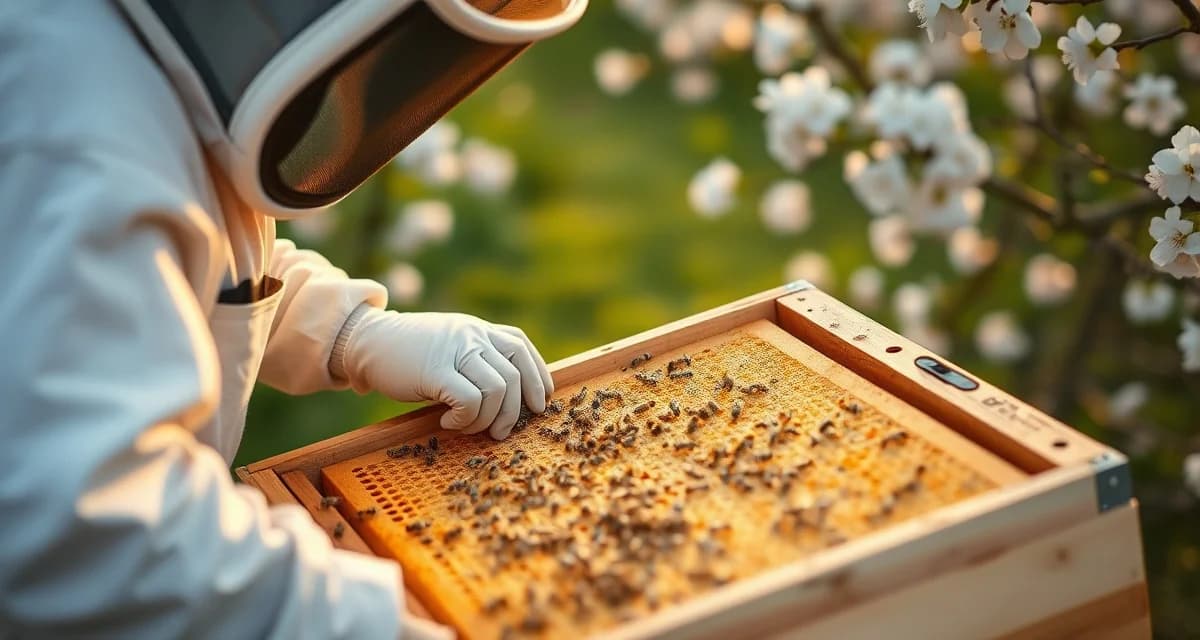
Cherry Pollination Contracts: Rates Timing and Hive Logistics
Washington state grows over 60% of the nation's sweet cherries. If you're exiting California almonds in March and looking for the next leg of the circuit, Washington and Oregon cherries are the natural move north: strong rates, established grower relationships, and a market that needs healthy colonies right when yours are hitting peak spring buildup.
The challenge is timing. Cherry bloom is narrow (often just 10–14 days) and weather in the Pacific Northwest in late April can shut down foraging for days at a stretch. Strong colonies and logistical precision matter more here than in almost any other crop.
TL;DR
- Sweet cherry pollination windows in Washington's Yakima Valley typically run 5-10 days in late April to early May, leaving no margin for late delivery.
- Cherry pollination rates range from $80-130 per hive depending on colony strength and demand in a given year.
- Washington State produces over 60% of US sweet cherry volume, making the Yakima-Columbia Basin corridor the center of the commercial cherry pollination market.
- Hive strength requirements for cherry contracts typically specify 6-8 frames of bees.
- Timing coordination with apple pollination season requires careful scheduling since the two crops overlap in some regions.
The Cherry Pollination Market
Washington's sweet cherry acreage is concentrated in the Yakima Valley, Chelan County, and the Columbia Basin. Key growing areas: Wenatchee, Chelan, Okanogan, and the Horse Heaven Hills near Prosser.
Oregon has significant sweet cherry acreage in the Dalles area (Wasco County) and the Willamette Valley, plus tart cherry production in the Willamette and Rogue valleys.
Michigan is the nation's leading tart cherry producer, with cherry production concentrated on the Leelanau and Old Mission peninsulas near Traverse City. Michigan tart cherry bloom runs in early to mid-May, timing that fits a slightly different circuit than Pacific Northwest sweet cherries.
Typical contract rates:
- Washington sweet cherry: $80–110/hive
- Oregon sweet cherry/tart: $75–100/hive
- Michigan tart cherry: $75–95/hive
Lower than almonds, but cherry contracts are shorter (7–14 days) and allow for movement to subsequent crops within the same spring season.
Timing Relative to Almonds
This is the critical logistical challenge for California almond operators targeting the Pacific Northwest.
California almond removal typically runs late February through mid-March. Pacific Northwest cherry bloom starts in late April in the warmest Yakima Valley zones, running through late May in higher-elevation areas.
You have roughly 5–7 weeks between almond removal and cherry delivery. That's enough time to:
- Move hives from California to Washington/Oregon staging yards
- Allow 2–4 weeks for recovery and spring buildup
- Treat any mite issues that emerged during almond rental
- Position trucks and crews for cherry delivery
The tight part: if you have California contracts requiring hive removal after March 15, and cherry delivery windows start April 20–25 in the earliest Yakima areas, you have 5 weeks. Build in your varroa assessment and any necessary treatment in that window.
Hive Strength Requirements
Cherry contracts typically specify 4–6 frames of bees. Sweet cherry growers in Washington have become more sophisticated about strength requirements over the past decade.
Strong colonies matter for cherries because:
- Weather windows for pollination can be short. A colony that can put 80% of its foragers out on a 2-hour sunny break in an otherwise cloudy week is worth more than a weak colony that can barely cover its brood.
- Cherry orchards often have established tree structures that require bees to move between rows actively. Larger bee populations cover the orchard more effectively.
Many Washington cherry growers rely on the same operator relationships they've had for years. If you're new to cherry pollination, expect to start with smaller growers and build a track record before accessing the large corporate operations.
Contract Terms for Cherry
Cherry contracts have some distinct characteristics versus almond:
Bloom uncertainty: Cherry bloom timing varies more than almond bloom. Spring cold snaps, rain, and temperature swings create significant uncertainty about exactly when bloom will peak. Good contracts include bloom-condition delivery clauses: delivery triggered by bloom stage, not calendar date.
Weather clauses: If bloom happens during 10 days of rain that suppresses foraging, growers sometimes want extended placement. Know your contract's terms for rental period extension and any additional payment for extended placements.
Multiple variety management: Sweet cherry varieties (Bing, Rainier, Sweetheart, Coral Champagne) have different bloom times. An orchard with multiple varieties has a bloom window that extends 3–4 weeks total. Know which block you're servicing and plan delivery accordingly.
Pesticide exposure: Pacific Northwest cherry operations apply fungicides, insecticides, and PGRs (plant growth regulators) at various stages. Notify requirements in your contract are important. Some cherry pesticide applications are highly toxic to bees.
Logistics: Moving from California to the Pacific Northwest
The California-to-Pacific Northwest move is one of the most common migratory circuits in commercial beekeeping. You know it well if you run this route:
I-5 route: Fresno or Bakersfield north to Redding, then north through Oregon to the Willamette Valley or east on I-84 to the Columbia River Gorge and into Washington. Yakima is about 1,200 miles from Fresno, approximately 18–20 hours driving.
I-80/US-97 route: East out of California on I-80, north on US-395 through Oregon, then US-97 into Yakima. This route avoids I-5 truck congestion around Sacramento and Portland but adds distance. Useful for loads going directly to central Washington.
Staging yards: Most operators maintain or lease staging yard space in the Columbia Basin or Yakima Valley where hives can rest and build for 2–4 weeks before cherry delivery. Some orchards allow early placement on their property with limited disturbance.
State entry requirements: Washington requires a Certificate of Health from your origin state. Oregon similarly. If your hives are already in California (origin state is California), coordinate with CDFA for outbound certificates.
Michigan Tart Cherry Circuit
Michigan's Leelanau and Old Mission peninsulas are a concentrated cherry growing area, with thousands of acres of tart cherry on a narrow land mass jutting into Lake Michigan. The lake effect moderates temperatures and pushes bloom to early to mid-May.
Michigan tart cherry is well-suited for operators who run Michigan blueberries in mid-May through June. The two crops can be sequential placements for the same hive groups, maximizing utilization.
Michigan requires a Certificate of Health for incoming colonies. MDARD (Michigan Department of Agriculture and Rural Development) inspection presence is active during spring pollination season.
FAQ
What strength hives are needed for cherry pollination?
Cherry pollination contracts typically specify 4–6 frames of covered bees. Washington sweet cherry growers have become more precise about strength requirements as the industry has grown and large corporate orchards have implemented quality programs. Strong colonies (6 frames or more) perform significantly better in the short and often weather-disrupted cherry bloom period. A colony that can deploy 60–70% of its foragers on a 2-hour weather break is far more effective than a weak colony that barely covers its brood. Build colonies to 6+ frames before delivery, especially for premium contracts in high-value sweet cherry operations.
When does cherry pollination season start in Washington?
Washington sweet cherry bloom starts in late April in the warmest growing zones (Horse Heaven Hills and lower Yakima Valley). Higher elevation areas like Wenatchee and Chelan Valley typically bloom in early to mid-May. Specific variety timing: Rainier cherries bloom slightly earlier than Bing in most locations. Operators planning the almond-to-cherry circuit target the earliest Yakima Valley blocks for late April delivery and work north through May as bloom progresses up in elevation. Washington State University's TFREC (Tree Fruit Research and Extension Center) publishes bloom tracking data that's useful for delivery planning.
How do cherry pollination contract rates compare to apple?
Cherry and apple pollination rates are roughly similar, both running $75–120/hive depending on region, colony strength, and demand in a given year. Washington sweet cherry rates at $80–110/hive are typically at or slightly above apple rates in the same region ($75–100/hive). Michigan tart cherry runs $75–95/hive, slightly below Michigan apple rates ($80–105/hive) in most years. The more relevant comparison for circuit planning is crop sequence. Cherry blooms earlier than most apple varieties in the same region, so a cherry contract followed by an apple contract in the same spring season allows two separate placements from the same hive group.
How tight is the pollination window for sweet cherries?
Sweet cherry bloom is notoriously narrow, typically lasting 5-10 days under normal weather conditions. Rain, cold temperatures, or wind during bloom can compress the effective pollination window further. Late-arriving hives or hives that need several days to orient after transport may miss a significant portion of the receptive bloom window. Delivery 1-2 days before anticipated bloom opening is the standard target for cherry contracts.
How does cherry pollination coordinate with apple pollination in Washington State?
Washington sweet cherry bloom typically runs April 20 to May 10 in the Yakima Valley and Columbia Basin, while apple bloom runs May 1 to May 20 at lower elevations. The overlap means operators working both crops need to sequence deliveries carefully, since some hives will need to move from cherry to apple within the same 2-week window. Staging yards between the Yakima Valley and the north Cascades fruit growing districts facilitate these moves.
What is the difference between commercial and hobby beekeeping?
Commercial beekeeping is distinguished by scale (typically 100+ hives, often 500-5,000+), revenue source (pollination contracts and bulk honey sales rather than local honey retail), and management approach (systematic protocols applied across yards rather than individual colony attention). Commercial operators manage bees as an agricultural enterprise, with the administrative, regulatory, and logistical complexity that entails. Most commercial operators derive the majority of their income from pollination services; honey production is a supplementary revenue stream.
Try These Free Tools
Sources
- USDA Agricultural Research Service
- Bee Informed Partnership
- American Beekeeping Federation (ABF)
- Washington State University Extension
- Northwest Cherry Growers
Get Started with PollenOps
Cherry pollination leaves no margin for scheduling errors when the bloom window runs 5-10 days. PollenOps keeps your contract terms, hive assignments, and fleet logistics in one system so every piece of the operation is aligned before the window opens.