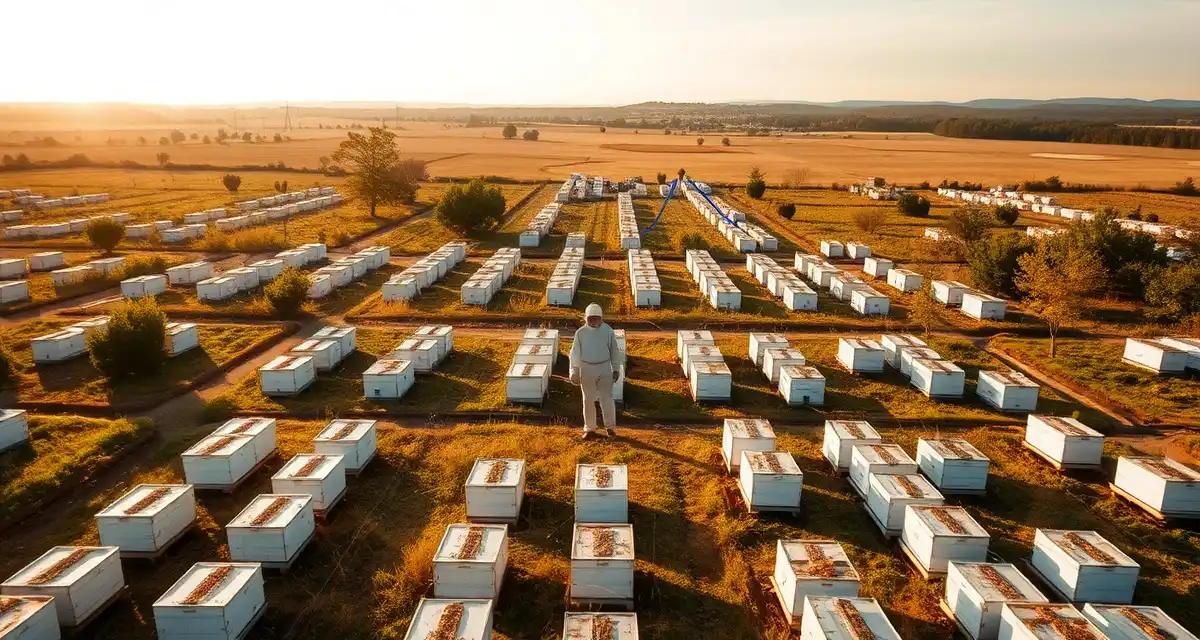
Coordinating Multiple Yards in Migratory Beekeeping Operations
Operations with 20+ yards experience 30% or more additional colony losses from delayed intervention compared to operations with systematic monitoring. A 2,000-hive operation visiting each yard monthly requires 240+ yard visits per year. That's a staffing and logistics problem as much as a beekeeping problem.
The gap between knowing you have 20 yards that need monthly visits and actually executing those visits on schedule (across multiple states, in all weather, with a 4-person crew) is where operations lose efficiency and colonies. Get the coordination system right and the colony management follows. Get it wrong and you're always reacting to problems that should have been caught 3 weeks ago.
TL;DR
- Most states require a Certificate of Health or Certificate of Veterinary Inspection issued by the origin state before out-of-state colonies can enter.
- A California-to-Florida-to-Pacific-Northwest-to-Northern-Plains circuit is the most common full-year migratory route for large commercial operations.
- Interstate permit coordination requires lead time; certificates typically need to be obtained 7-30 days before entry depending on the destination state.
- Moving 1,000 hives requires 2-3 truck loads per move, with fuel, driver wages, and DOT compliance as the primary variable costs.
- Operations that plan their annual circuit 6-8 months in advance can sequence pollination contracts and honey production to maximize annual revenue per hive.
The Scale Problem
At 5 yards with 50 hives each, you can run a mental schedule. You visit one yard per day, you know each colony, and your crew is you and maybe one other person. This works.
At 20 yards with 100 hives each, the math changes entirely. Twenty yards on a 10-day rotation means 2 yards per day. Your crew needs to know which yards they're visiting, in what order, what tasks need to happen at each, and how to record results so you can review them. Add interstate movements between states and the scheduling complexity compounds again.
The information management problem: you need to know, at any time, when each yard was last visited, what was found, what tasks are pending, and whether any colonies are trending toward a health problem. That's 2,000 individual colony histories across 20 locations, not manageable in a binder or a spreadsheet that gets updated when someone remembers to do it.
Building a Yard Visit Schedule
The foundation of multi-yard coordination is a systematic rotation schedule built around your crew capacity and your health monitoring intervals.
Determine your visit interval by yard type:
- Summer honey yards (peak season): 7-10 days during active flow for super management
- Buildup yards (pre-almond season): 10-14 days to track buildup progress and flag issues
- Wintering yards (off-season): 14-21 days minimum; some operators extend to monthly in mild climates
- Pollination placement yards: varies by contract terms; some growers want 7-day hive checks, others are weekly
Map your yards by geography. Group yards into logical clusters that can be visited in a single day or a 2-day road trip. A crew driving from eastern North Dakota to western North Dakota for a single yard visit is burning resources. Design the rotation so adjacent yards get visited on the same day.
Calculate crew capacity. How many hives can your crew assess per day? A crew of 2 can assess 80-120 hives thoroughly in an 8-hour day under normal conditions. A crew of 4 can do 150-200. These numbers decline in hot weather, when equipment problems occur, or when specific intervention work (combining, requeening, treating) comes up.
Build the schedule. Assign yards to specific days, crew members, and rotation cycles. Write it down, put it in a shared digital format, and update it when things change.
Tracking Visit Completion
A schedule that exists but isn't tracked is a suggestion, not a system. You need to know:
- Was the yard visited on schedule?
- What was found at each visit?
- What tasks were completed (feeding, treating, supering, combining)?
- What tasks are pending at that yard?
- Are there colonies flagged for follow-up?
Paper-based recording works on a single-person operation. At commercial scale with multiple crew members in multiple locations, paper creates a 24-72 hour lag between work happening in the field and the information reaching you. By the time you review the notes from Tuesday's yard visit on Thursday, the situation may have changed.
Mobile data entry during the yard visit (crew members recording via phone or tablet while they work) gives you real-time information. When a crew member flags a colony in Yard 14 as queenless at 9 AM on Tuesday, you can see that note at 9:15 AM and make a decision about whether to send a queen the next day or wait for the next rotation.
Remote Monitoring Between Visits
The 10-14 day gap between yard visits is when things go wrong without warning. A varroa crash, a queen failure, a pesticide event, or a disease outbreak that starts on day 3 after a visit may be well advanced by day 14 when you return.
Acoustic colony health monitoring addresses this gap. Sensors that continuously monitor sound frequencies inside the hive can detect:
- Queenlessness (colony sound patterns change measurably within 24-48 hours of queen loss)
- Swarming preparation (distinctive sound patterns 2-3 days before swarm emergence)
- Declining colony activity consistent with disease or varroa infestation
- Absconding or environmental stress events
PollenOps's acoustic monitoring system places sensors at yard level, tracking colony health indicators and alerting you when a yard's aggregate pattern deviates from baseline. You don't need a crew member physically present to know something is wrong. You get an alert, you decide whether to dispatch someone or adjust the rotation schedule to visit sooner.
This is particularly valuable for remote summer honey yards (sites in the Northern Plains or Pacific Northwest that are 2-4 hours from your home base). A yard producing 100 lbs/hive in a North Dakota sweet clover flow is generating significant revenue. A disease or varroa problem that's caught in week 2 rather than week 4 of a colony decline might save 20-40% of the yard's production plus the colony losses.
Communication Systems for Multi-Crew Operations
With 3-5 crew members operating in different locations simultaneously, communication discipline matters. Establish clear protocols:
Daily check-in: Every crew member reports at end of day: yards visited, tasks completed, issues flagged. This doesn't need to be a phone call. A quick message or app update in your operations platform covers it.
Immediate escalation for significant issues: Queen failure, dead-out cluster, suspected disease, or pesticide kill should be reported immediately, not at end-of-day check-in. Define what triggers immediate communication versus routine reporting.
Pre-trip briefings: Before any crew member heads to a set of yards, they should know: what tasks are pending, what the last visit found, what the current health monitoring data shows, and any specific protocols for that yard.
Post-trip documentation: Within 24 hours of any yard visit, the crew member records their findings in the operations system. Same-day entry is better; memory degrades and notes get lost.
Multi-State Coordination Challenges
If your yards span multiple states, you're dealing with different regulatory environments, different state apiarist contact information, and potentially different pest and disease pressures. Your coordination system needs to track:
- Which yards are in which states (for registration purposes)
- Which state apiarist covers each area (for disease reporting)
- Interstate movement permit status for any yards feeding into the next planned move
- State-specific treatment restrictions (some states prohibit certain treatments; some have time-of-year restrictions)
The fleet logistics layer of your operations platform should integrate with yard management so that a movement plan for next month's almond run is already accounting for the current health status of the yards being loaded. If acoustic monitoring is flagging declining health in the yards you planned to load for California, that information should be visible in your movement planning tool before you schedule the trucks.
Prioritizing Yard Visits When Crew is Stretched
Peak season creates competing priorities for limited crew time. February almond delivery, July extraction, and fall treatments are concentrated periods that demand crew capacity that regular yard rotation also needs.
When you're short on crew, prioritize:
- Yards with active health alerts: colonies in decline can't wait
- Yards supplying upcoming contract deliveries: you need accurate strength assessment before loading
- Yards in active honey flow: super management timing directly affects yield
- Yards due for treatment: overdue varroa treatment compounds with every week's delay
Yards in low-stress periods (established wintering colonies in mild climates) can tolerate a stretched rotation. Yards in high-stress periods (post-almond recovery, heavy summer flow) need consistent attention.
FAQ
How do you schedule yard visits efficiently across 20+ yards?
Group yards into geographic clusters and build a rotation schedule that minimizes drive time by visiting adjacent yards on the same day. Calculate your crew's realistic daily assessment capacity (80-120 hives per 2-person crew under normal conditions) and build the schedule to match. Use digital tracking so you know in real time which yards are current and which are approaching or past their rotation due date. Remote monitoring between visits extends your effective coverage without adding physical visits.
How do you track colony health across multiple remote yard locations?
Acoustic colony health monitoring with continuous data transmission is the most practical solution for tracking health between physical visits. Sensors that detect queenlessness, varroa-related decline, swarm preparation, and other behavioral deviations alert you to problems without requiring physical presence. Combine remote monitoring with structured field recording during physical visits (crew members enter observations via mobile app during the visit) and you have real-time visibility across all yards regardless of when the last physical visit was.
What technology helps manage multiple beekeeping yards?
The core technology stack for multi-yard management: a mobile field app for crew data entry during yard visits, a dashboard that shows all yards' current health status and last-visit date in one view, acoustic monitoring sensors that provide continuous between-visit health data, and route planning tools that optimize driving between yards. PollenOps integrates all of these functions in one platform, which means crew assignment, yard health status, and movement scheduling are connected rather than living in three separate tools.
What is the most common full-year circuit for US migratory beekeepers?
The classic commercial circuit runs: winter buildup in Florida or southern Texas, California almonds in February, Pacific Northwest tree fruit (cherry, apple, pear) in April-May, Pacific Northwest or northern Midwest berry and clover crops in June-July, summer honey production in North Dakota, Montana, or Minnesota in July-August, and fall honey extraction and requeening before the cycle restarts. The exact circuit depends on contracted commitments, hive capacity, and the operator's regional relationships.
How do you coordinate state entry permits for a multi-state circuit?
State entry permits and health certificates require lead time: most states want certificates issued 7-30 days before entry. For a circuit that crosses 5-6 states, this means overlapping certificate applications where a certificate for the next state must be initiated before the current state's placement ends. Some operators use a permit tracking calendar that accounts for the lead time required for each destination state. PollenOps includes a permit tracking feature that alerts operators when certificates need to be initiated based on planned move dates.
What are the most common mistakes new migratory operators make?
The most common errors are underestimating transport costs, failing to secure contracts before building hive capacity, not accounting for state entry permit lead times, and neglecting varroa management during the compressed pre-almond preparation period. New operators often also underestimate the administrative load of managing 10-20 contracts across multiple states -- tracking payment status, compliance documentation, and crew scheduling simultaneously requires systems, not just a spreadsheet.
Try These Free Tools
Sources
- USDA Agricultural Research Service
- Bee Informed Partnership
- American Beekeeping Federation (ABF)
- American Honey Producers Association
- USDA Animal and Plant Health Inspection Service (APHIS)
Get Started with PollenOps
Migratory operations face the most complex coordination challenges in commercial beekeeping: permits across multiple states, staggered delivery windows, and fleet logistics that have to work precisely across hundreds of miles. PollenOps was built to handle multi-state, multi-grower, multi-crop operations at this level of complexity.