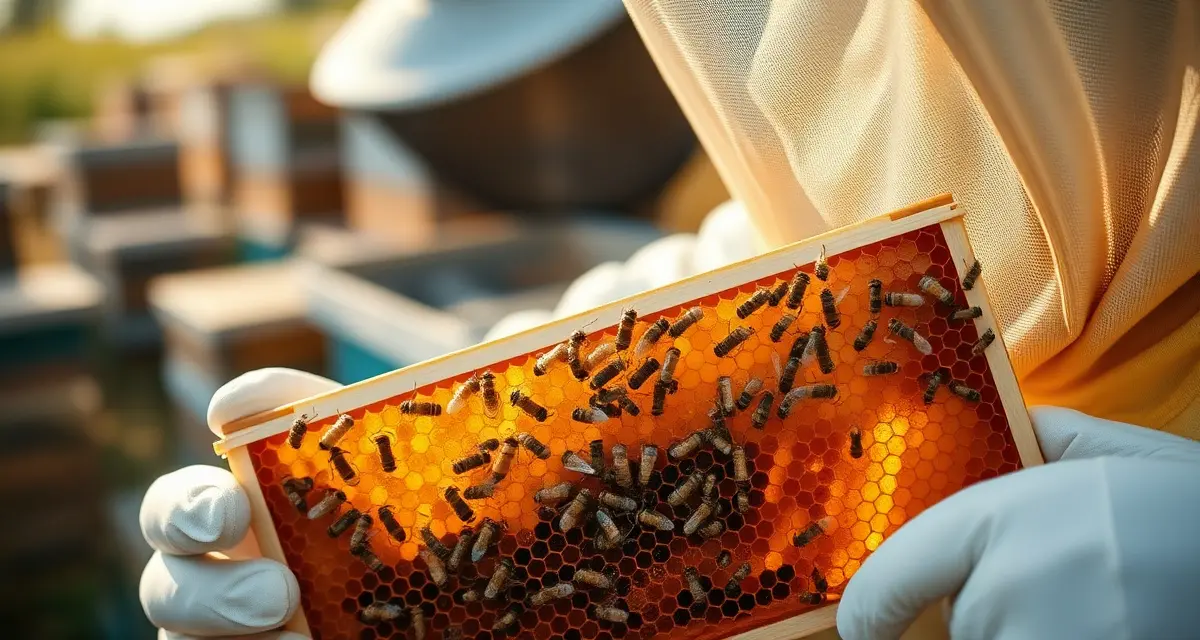
Nosema Management in Commercial Beekeeping Operations
Fumagillin was banned in 2023, leaving thymol and essential oil treatments as alternatives, and nosema is a real contributor to spring dwindle that jeopardizes almond contract strength. Those two facts together define the current nosema management challenge for commercial beekeepers.
No competitor integrates nosema treatment scheduling with spring buildup and contract calendars. This gap matters because nosema management is highly time-sensitive: treating at the wrong point in the spring buildup sequence either wastes the treatment or misses the problem window entirely.
TL;DR
- Commercial beekeeping operations face two primary management challenges: operational logistics (hive health, transport, placement) and administrative coordination (contracts, payments, documentation).
- Most disputes and revenue losses in commercial beekeeping are preventable with better documentation and clearer contract terms.
- The operations that run most profitably are those with disciplined systems for tracking hive health, contract status, and fleet logistics in one place.
- PollenOps is built specifically for the operational complexity of commercial-scale pollination services, not adapted from a hobbyist tool.
- The most important management decisions (treatment timing, contract renewal, hive allocation) require accurate current data to make well.
Understanding Nosema ceranae
Nosema ceranae is the dominant nosema species in US commercial apiaries, having largely displaced the original N. apis over the past two decades. The disease affects adult bees rather than larvae, disrupting their digestive function and reducing their lifespan.
The key thing to understand about nosema at commercial scale is that individual colony symptoms can be subtle. A colony with heavy nosema infection doesn't necessarily look obviously sick. It just underperforms. Bees die younger, the colony's workforce turnover increases, and the colony builds more slowly in spring.
In spring buildup for almond contracts, that performance gap is the problem. A colony that should be at 8 frames of bees in early February might be at 6 frames because nosema is shortening worker bee lifespan and reducing brood-rearing efficiency.
Nosema ceranae vs. Nosema apis
N. ceranae behaves differently from N. apis in important ways:
- Year-round active infection (not seasonally reduced in summer)
- Often less visible diarrhea (the classic dysentery sign is less common with N. ceranae)
- Higher virulence in experimental settings, though field impact varies
- Can infect bees at any temperature range that's conducive to colony activity
Commercial beekeepers should assume nosema is present in their colonies. The question is whether infection levels are high enough to reduce performance.
How Do You Manage Nosema in a 1,000-Hive Commercial Operation?
At 1,000 hives, nosema management has to be systematic rather than individual-colony reactive.
Monitoring for Nosema
Nosema can be confirmed microscopically by examining adult bee gut contents. Nosema spores are visible under 400x magnification. The technique requires a microscope and some training but is achievable in-house.
Sampling protocol for commercial operations:
- Collect 50 to 100 adult foragers from the entrance or top bars of 5 to 10 representative colonies from each yard
- Pool the sample or examine individually depending on your monitoring goals
- Prepare gut smears and examine for spore density
- Score by spore density: light, moderate, heavy
More practically, commercial operators can send samples to bee diagnostic labs for nosema spore counts. Several university and private labs offer this service for a modest fee per sample. Send samples from representative colonies in yards you suspect have nosema pressure.
The downside of external lab testing is turnaround time, weeks when you need to make treatment decisions within days during spring buildup.
Visual Signs of Nosema in the Yard
Even without microscopic confirmation, several field signs suggest notable nosema pressure:
K-wing: Bees with dislocated hindwings. The K-wing symptom is associated with nosema infection (especially N. apis) and with tracheal mite infection. Seeing K-wing bees frequently at the hive entrance warrants investigation.
Crawlers: Bees crawling on the ground near the hive entrance that aren't returning to the colony. Heavy crawling with no other obvious explanation (pesticide exposure, varroa) can indicate nosema.
Poor spring buildup: Colonies that are slow to build in early spring relative to your other colonies, without an obvious alternative explanation.
Spotty, irregular brood patterns: Though nosema primarily affects adults, secondary effects on colony function can produce brood pattern problems.
What Replaced Fumagillin for Nosema Treatment?
Fumagillin (sold as Fumagilin-B in Canada) was the only registered nosema treatment in North America for decades. It was banned in the US by FDA in 2023, leaving commercial beekeepers without a registered pharmaceutical treatment.
Current management options without fumagillin:
Thymol-Based Treatments
Thymol, a naturally occurring compound from thyme, shows some efficacy against nosema in laboratory settings. Commercial formulations designed primarily for varroa control (Api-Life Var, Thymovar) have been investigated for nosema co-treatment, but thymol is not registered for nosema control in the US. The evidence base for thymol as a nosema treatment is weaker than for varroa control.
Essential Oil-Based Supplements
Various essential oil supplements (including commercial products marketed as immune system supporters or nosema mitigants) have limited peer-reviewed evidence for efficacy. Some operators report positive results; controlled studies are inconsistent.
The general category of plant-derived compounds with purported antifungal or antiparasitic properties includes a range of commercial products. Evaluate them based on the quality of evidence behind their specific claims.
Management-Based Approaches
Without a reliable pharmaceutical option, management approaches become more important:
Good nutrition: Well-nourished bees are more resistant to nosema and recover more quickly from infection. Pollen supplements and diverse forage access support the nutritional status that confers nosema resistance.
Young bees: Younger bees are more resistant to nosema. Management approaches that maintain a high proportion of young bees (frequent requeening, spring splits from healthy colonies) may reduce nosema impact even without reducing spore counts.
Ventilation: Some evidence suggests adequate hive ventilation reduces nosema severity by reducing humidity that favors spore germination.
Replacing old comb: Nosema spores survive for years in old comb. Colonies in heavily contaminated old comb face continuous reinfection pressure. Systematic comb replacement (removing comb more than 3 to 5 years old) reduces the reservoir of nosema spores.
Seeking a Fumagillin Alternative
Research continues on nosema management options. Follow publications from the Honey Bee Health Coalition, American Bee Journal, and Bee Culture for current developments. University extension services in your state may have updated recommendations as new evidence emerges.
How Does Nosema Affect Spring Buildup for Almond Pollination?
This is the commercial beekeeping question that matters most. Nosema's impact on spring buildup timing is the connection between the disease and your almond contract obligations.
The Mechanism
Nosema shortens worker bee lifespan. A bee that would normally live 30 to 40 days as a summer worker may live 20 to 25 days with heavy nosema infection. This increases the rate at which the colony must replace its workforce.
In spring, when the colony is expanding and every new bee matters, shorter worker lifespan means the colony builds more slowly than it otherwise would. The brood-rearing queen may be performing normally, but the workforce that cares for brood and collects food is depleted faster.
A colony with high nosema pressure in November and December (when winter bees are being raised) may produce a cohort of compromised winter bees with reduced fat body development and shorter lifespans. Those compromised bees are what you're trying to get to 8 frames by early February.
Management Timeline for Almond Preparation
If you suspect nosema pressure in fall colonies heading to California:
September to October (pre-treatment window): Assess nosema levels through microscopy or lab testing. This is when you can still take meaningful management actions before winter bees are being raised.
October to November: If heavy nosema is confirmed and a treatment option is available, this is the window for application before the colony reduces its brood population for winter. Thymol is only effective when ambient temperatures are in the right range (above 59°F during treatment).
December to January: Colonies in California winter yards. Management options are limited. Focus on nutrition support (pollen supplements to support whatever immune function remains) and monitor closely.
February: You have what you have. But documenting nosema-affected colonies' performance for post-season management changes is worth doing.
FAQ
How do you manage nosema in a 1,000-hive commercial operation?
Management combines monitoring, prevention, and supportive practices. Sample representative colonies from each yard microscopically or via lab testing to understand nosema pressure at the yard level. Focus preventive measures on high-nosema-pressure yards. Use management-based approaches: good nutrition, regular comb replacement, adequate ventilation, and frequent requeening to maintain high proportions of young, resistant bees. Without fumagillin, there's no reliable pharmaceutical option. Prevention and management are the primary tools available.
What replaced fumagillin for nosema treatment?
No direct pharmaceutical replacement has been registered in the US since fumagillin's 2023 ban. Current options include thymol-based preparations (not registered for nosema control but used by some operators), essential oil-based nutritional supplements with limited efficacy evidence, and management-based approaches focusing on colony nutrition, comb rotation, and maintaining young-bee populations. Research continues. Follow Honey Bee Health Coalition resources and university extension publications for updates on emerging options.
How does nosema affect spring buildup for almond pollination?
Nosema shortens adult bee lifespan, which increases workforce turnover and slows the population growth rate during spring buildup. Colonies with high nosema loads in fall may produce compromised winter bees with reduced fat body development and shorter lifespans, the same bees responsible for surviving until spring and caring for the first brood cycles that build population for February almond delivery. A colony that should reach 8 frames by early February may only reach 6 frames if nosema-compromised winter bees are dying too quickly to maintain and expand the cluster.
What is the difference between commercial and hobby beekeeping?
Commercial beekeeping is distinguished by scale (typically 100+ hives, often 500-5,000+), revenue source (pollination contracts and bulk honey sales rather than local honey retail), and management approach (systematic protocols applied across yards rather than individual colony attention). Commercial operators manage bees as an agricultural enterprise, with the administrative, regulatory, and logistical complexity that entails. Most commercial operators derive the majority of their income from pollination services; honey production is a supplementary revenue stream.
How many hives are needed to make commercial beekeeping a full-time income?
Most beekeeping economists put the full-time commercial threshold at 500-800 hives, assuming efficient operations management and a combination of pollination and honey revenue. At 500 hives and $200/hive for almond pollination, almond season alone generates $100,000 in gross revenue before expenses. Net margins depend on operational efficiency, but well-run operations can achieve 30-50% net margins on pollination revenue. Additional crops and honey production improve per-hive economics but require additional management capacity.
What is the annual revenue potential for a 1,000-hive commercial operation?
A 1,000-hive operation running an almond season ($200/hive) plus blueberry or apple contracts ($80-100/hive) plus summer honey production ($25-40/hive after extraction costs) can generate $300,000-360,000 in annual gross revenue. Net margins after transport, crew, equipment, and hive replacement costs typically run 25-40% for well-managed operations, putting net income at $75,000-145,000 annually. The specific number depends heavily on circuit efficiency, loss rates, and contract quality.
Try These Free Tools
Sources
- USDA Agricultural Research Service
- Bee Informed Partnership
- American Beekeeping Federation (ABF)
- American Honey Producers Association
- Project Apis m.
Get Started with PollenOps
Managing a commercial beekeeping operation involves more data, more deadlines, and more moving parts than any general-purpose tool was designed to handle. PollenOps brings contracts, yard records, health documentation, and fleet logistics together in one platform built for the realities of commercial-scale beekeeping.