Minimum Hive Strength Standards for Pollination Contracts
California almond contracts most commonly specify a minimum of 6 frames of bees for compliance. That's the industry's most-watched standard, but it's far from the only one. Every major crop has developed its own strength expectations, and knowing them before you sign a contract protects you from delivering colonies that technically don't meet the grower's requirements.
This reference covers accepted minimums for the major US pollination crops, how they're measured, and who ultimately sets the standard.
TL;DR
- A well-written pollination contracts covers hive strength requirements, payment terms, delivery/removal windows, pesticide liability, and dispute resolution.
- Standard payment structure is 50% on delivery and 50% on removal; push for no longer than 14-day net on the back half.
- Hive strength disputes are the most common source of non-payment; third-party inspection at delivery is the cleanest resolution.
- Pesticide kill provisions should require grower notification 24-48 hours before any application within foraging range of placed hives.
- Contracts signed by November have stronger pricing leverage than those negotiated in December or January.
How Minimum Strength Is Measured
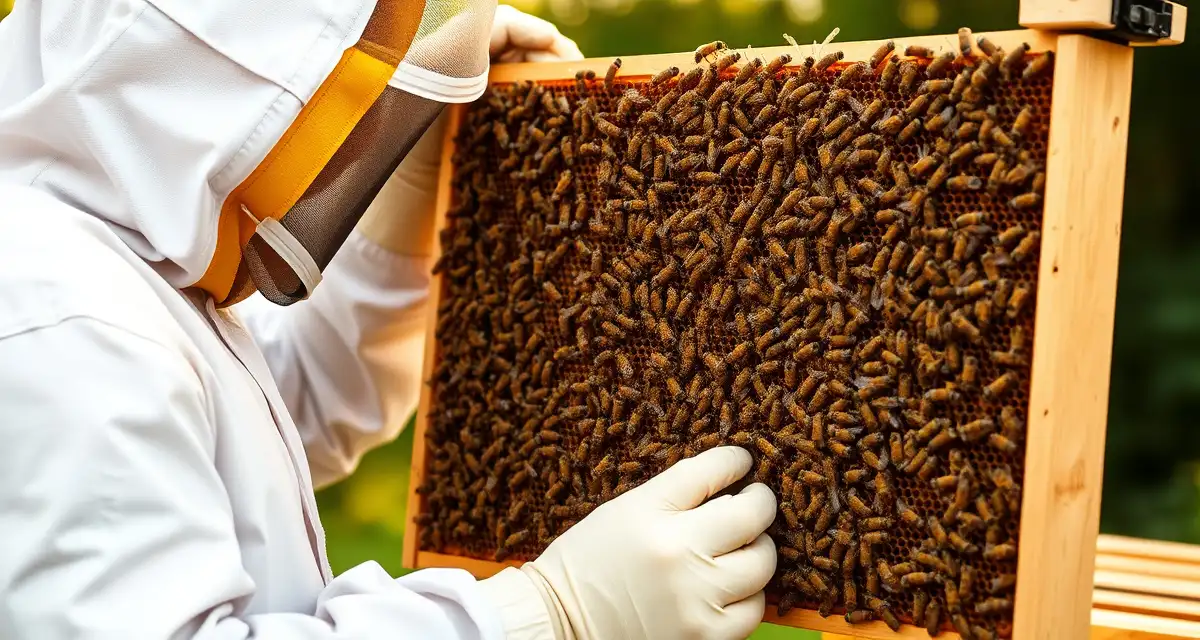
Strength is expressed as "frames of bees": the number of frames in a hive where both faces are covered with bees. A frame fully covered on both sides counts as one frame. Partial coverage counts as a fraction.
Some contracts specify "frames of brood" as an additional or alternative metric. Brood frames measure reproductive activity, not just population. A colony with strong population but poor brood may have a queen issue that will show up as a population decline during the contract period.
Most professional inspection systems use a standardized scoring rubric. PollenOps uses a 1-10 hive strength score that maps to frame counts and contract compliance thresholds for each crop.
Minimum Strength by Crop
Almonds (California)
- Standard minimum: 6 frames of bees
- Premium minimum: 8 frames (commanded by large growers and premium contracts)
- Notes: Most widely enforced minimum in US pollination. Third-party inspection common for large operations.
Cherries (Pacific Northwest)
- Standard minimum: 6 frames of bees
- Premium minimum: 8 frames
- Notes: Cherry is highly time-sensitive. Weak colonies at cherry delivery have very limited ability to build up given the short window.
Apples
- Standard minimum: 5-6 frames of bees
- Notes: Apple is somewhat more forgiving than cherry due to the longer bloom window, but most professional contracts specify 6 frames.
Blueberries (Commercial)
- Standard minimum: 5-6 frames of bees
- Notes: Southern highbush and rabbiteye growers typically accept 5-frame colonies in warm spring conditions; northern highbush growers in Michigan and Maine more commonly specify 6.
Wild Blueberries (Maine)
- Standard minimum: 5-6 frames of bees
- Notes: Maine wild blueberry barren operators sometimes accept 5 frames given the large areas being covered. Individual contract terms vary.
Cranberries (Wisconsin)
- Standard minimum: 4-6 frames of bees
- Notes: Cranberry contracts vary widely. Some growers accept lighter colonies; high-density growers managing tight schedules prefer 6-frame minimums.
Watermelon and Cucurbits
- Standard minimum: 4-5 frames of bees
- Notes: Cucurbit growers are generally less stringent than tree fruit operations. 4-frame colonies are often accepted in smaller commercial operations.
Red Clover Seed (Idaho)
- Standard minimum: 5-6 frames of bees
- Notes: Seed crop growers have become more sophisticated about strength requirements as their dependence on bee density increases.
Alfalfa Seed
- Standard minimum: 4-5 frames of bees
- Notes: Alfalfa seed is primarily served by leaf-cutter bees; honeybee minimums are lower because the expectation of yield contribution is lower.
Sunflowers
- Standard minimum: 4-5 frames of bees
- Notes: Sunflower contracts are less regulated than tree fruit; many informal contracts don't specify a minimum.
Avocado (California)
- Standard minimum: 5-6 frames of bees
- Notes: Avocado growers are increasingly sophisticated about pollination management and are moving toward documented compliance.
Citrus
- Standard minimum: 4-5 frames of bees
- Notes: Citrus is partially self-fertile, so bee density requirements are lower than for cross-pollinated crops.
Who Sets the Standard?
Minimum hive strength standards are set by the grower, informed by industry norms. There is no federal or state mandate for pollination contract minimums. The California Department of Food and Agriculture publishes guidance on almond pollination, and the Almond Board of California has issued recommendations, but these are advisory, not mandatory.
In practice, standards are shaped by:
Industry norms: The almond 6-frame standard became widespread through repetition in trade publications, extension recommendations, and grower association guidance.
Grower experience: Growers who have dealt with weak-colony deliveries raise their minimum requirements over time. Large almond operations now routinely specify 8-frame minimums because they've learned what 6-frame colonies cost them in yield.
Inspection infrastructure: When third-party inspection became available for almond delivery verification, it created a mechanism to enforce minimums that previously were unenforced.
The hive strength requirements and contract standards in PollenOps let you set crop-specific compliance thresholds for each contract so your pre-move assessments flag non-compliance before delivery.
Before You Use the Pre-Move Assessment
Whether you use PollenOps's pre-move hive strength assessment or a manual process, verify:
- What minimum does your contract specify?
- How is strength defined in your contract (frames of bees, frames of brood, or scored assessment)?
- Is third-party inspection required or allowed?
- What happens to colonies that don't meet minimum at delivery?
These questions should be answered in writing before your first delivery of the season.
Frequently Asked Questions
What is the minimum hive strength required for almond contracts?
The most common minimum hive strength requirement for California almond contracts is 6 frames of bees, meaning both faces of each qualifying frame are covered with bees. This standard appears in most professional almond pollination contracts and is consistent with California Almond Board guidance. Premium contracts with large growers or high-yield orchards increasingly specify 8 frames as the minimum. Some contracts specify a combination of bee population and brood presence. PollenOps hive strength scoring maps these requirements to a 1-10 scale, where a score of 7 or higher indicates compliance with the standard 6-frame minimum.
How does minimum strength differ between almond and blueberry contracts?
Almond contracts typically specify 6 frames of bees as the minimum, with premium contracts requiring 8. Blueberry contracts are somewhat more variable: commercial blueberry in Michigan and Maine commonly specifies 6 frames, while southern blueberry and some cucurbit growers accept 5 frames. The practical difference is driven by crop economics and grower sophistication. California almond growers pay $185-225 per hive and have invested heavily in verification infrastructure, so enforcement is strict. Smaller blueberry operations with less verification infrastructure may accept lighter colonies, particularly for early-season deliveries when population is naturally lower.
Who determines the minimum hive strength standard in a pollination contract?
The grower sets the minimum hive strength in a pollination contract, informed by industry norms, crop extension guidance, and their own experience. There is no federal or state legal minimum; the standard is contractual, not regulatory. The California Almond Board and university extension programs publish recommendations, but compliance is determined by what's written in your specific contract. When a beekeeper and grower negotiate a contract, the minimum is a negotiated term. Established beekeepers with track records of delivering strong colonies can sometimes negotiate less stringent enforcement mechanisms; newer relationships often specify stricter minimums.
What are the most common clauses in a commercial pollination contract?
A standard commercial pollination contract covers: hive strength minimums at delivery, payment terms (typically 50% on delivery, 50% on removal), delivery and removal dates, pesticide notification requirements, liability provisions for colony losses, truck access and yard location details, and dispute resolution procedures. Force majeure clauses addressing crop failure and operator inability to deliver the full hive count are also standard in well-written contracts.
How should pesticide liability be addressed in pollination contracts?
The contract should require growers to notify operators at least 24-48 hours before any pesticide application within foraging range (2-3 miles), specify the operator's right to remove hives immediately upon notification, and define liability for documented colony losses attributable to pesticide exposure. Without this clause, recovering compensation for pesticide kills requires proving causation after the fact, which requires lab testing, communication records, and timestamped photos of dead bees collected before cleanup.
What is a typical contract renewal strategy for commercial beekeepers?
Most successful commercial operators begin renewal conversations with existing growers in July, confirming the coming season's hive count and rate before new grower outreach. Existing grower relationships command better pricing stability than new contracts and require less pre-season sales effort. Sending growers a season-end report documenting hive placements and colony performance reinforces the relationship and creates a natural opening for renewal discussion.
Try These Free Tools
Sources
- USDA Agricultural Research Service
- Bee Informed Partnership
- American Beekeeping Federation (ABF)
- American Honey Producers Association
- Project Apis m.
Get Started with PollenOps
Managing pollination contracts across multiple growers and crops is where most commercial operations have the most to gain from better systems. PollenOps centralizes contract lifecycle management from initial quote through signed agreement, delivery documentation, and final invoice. Try it for your next season.