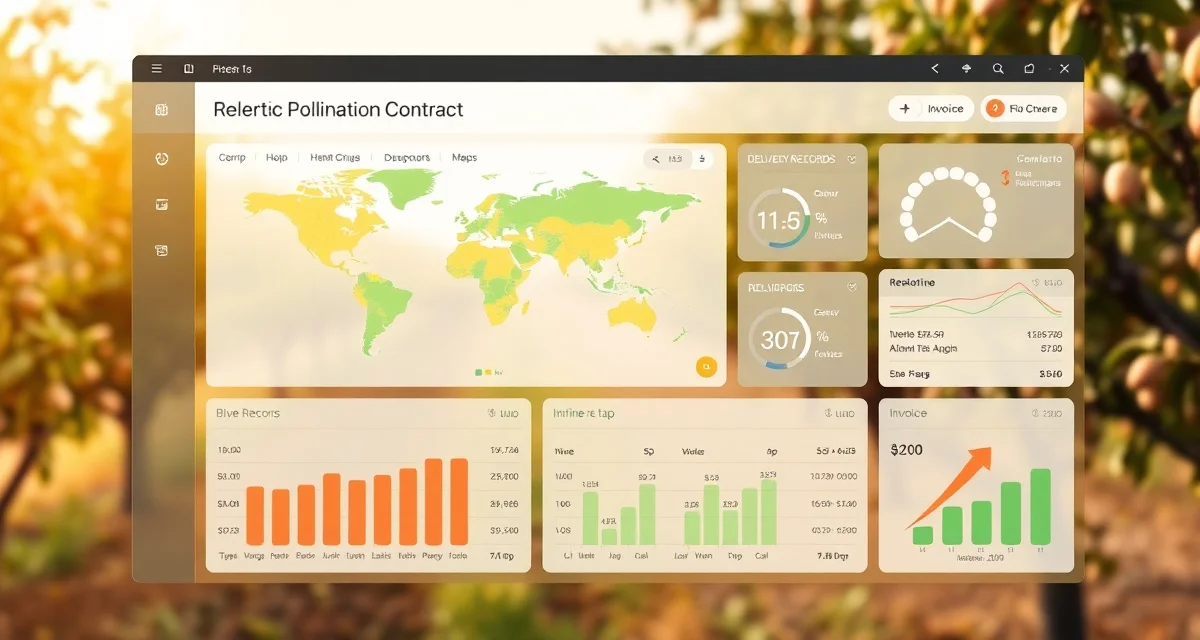
Pollination Contract Software for Almond and Berry Growers
Growers who actively monitor placement compliance are 60 percent less likely to dispute final invoices. The reduction in disputes isn't coincidental. It's a product of transparency. When a grower can see delivery records, hive counts, and placement timing in real time through a grower portal, disagreements about what was delivered and when are resolved by documentation rather than escalating into contested claims.
PollenOps provides a grower portal included in every beekeeper account at no additional cost. When your beekeeper uses PollenOps to manage your contract, you can access a grower view that shows your contracted terms, your delivery status, and the inspection records from your site without requiring calls or emails to get a status update.
TL;DR
- Commercial beekeeping operations that manage contracts on spreadsheets and phone calls spend 5-10 hours per week on administrative tasks that software handles automatically.
- Purpose-built beekeeping software centralizes contract lifecycle management, yard records, health documentation, and fleet logistics in one platform.
- The primary ROI drivers for operations software are fewer contract disputes, faster invoicing, and reduced time spent on administrative coordination.
- PollenOps is built specifically for commercial-scale pollination operations; it is not a hobbyist platform adapted for commercial use.
- Moving from spreadsheets to dedicated software typically pays for itself within one season in time savings and dispute prevention.
What Growers See in the PollenOps Portal
The grower portal gives you visibility into the specific contract records associated with your operation. The view is read-only. You can see data, but the beekeeper manages all contract terms, hive records, and scheduling. The portal shows:
Contract terms: Your contracted hive count, strength requirements, delivery window, and payment terms as entered by your beekeeper. If something in the contract record doesn't match what you agreed to, you can raise it with your beekeeper directly before the delivery window rather than discovering a discrepancy at invoice time.
Delivery status: When your hives are delivered, the GPS check-in record shows the delivery date, time, and confirmed hive count. You can see whether delivery happened within your contracted delivery window without asking your beekeeper for a separate update.
Hive count at delivery: The hive count recorded at your yard at delivery is in the portal. If you contracted for 100 hives and your portal shows 97 delivered, that's a conversation to have, but it's a factual conversation based on the beekeeper's own records rather than a dispute based on competing recollections.
Pre-move strength assessment: If your beekeeper conducts pre-move strength assessments, the results for your contracted hives are visible in the portal. You can see the frame count and colony condition reported before delivery, which tells you what your beekeeper knew about colony status before moving hives to your site.
Inspection records during placement: Inspection notes captured at your yard during the placement period are in the portal. If your beekeeper visited your site to check on colony condition mid-season, that visit is documented.
Invoice and payment status: When your invoice is generated, you can view it through the portal and track your payment status. This reduces invoice-related inquiries for both you and your beekeeper.
Why Grower Portal Access Reduces Disputes
Most pollination contract disputes come from information gaps, not from actual performance failures. A grower who doesn't know when hives arrived assumes they arrived late. A grower who didn't see the pre-move strength assessment assumes the beekeeper self-reported strength without documentation. A grower who receives an invoice without attached delivery records questions whether the invoice reflects what was actually delivered.
Grower portal access closes these information gaps in real time rather than at dispute resolution time. When you can see exactly when your hives arrived, how many were delivered, and what their condition was at delivery, the categories of dispute narrow significantly. You're not arguing about facts that neither party documented; you're discussing documented performance.
For growers who use multiple beekeepers for different crop seasons or orchard blocks, the portal structure means you have documented records from each beekeeper's PollenOps account for each contract. Comparing performance across beekeepers becomes a data-based exercise rather than a memory-based one.
Setting Up Grower Portal Access
Your beekeeper invites you to the grower portal when they create your contract in PollenOps. You receive an email with a secure link to create your portal access credentials. Your view is limited to contracts associated with your operation. You don't see any other grower's data, and you can't access your beekeeper's internal operation management data.
If your beekeeper hasn't offered portal access, you can request it. Any beekeeper using PollenOps can share portal access at no cost; it's a standard feature of the platform, not an add-on. If your beekeeper declines to share portal access or says it's not available, that's information worth noting about how they manage documentation.
For growers evaluating multiple beekeeping services, asking whether a potential beekeeper uses PollenOps or a comparable documented management platform is a legitimate qualifier. Beekeepers with documented delivery records negotiate from a position of verified compliance. Beekeepers without documentation rely on assertion.
Using Portal Data for Contract Renewal Decisions
At the end of a pollination season, the portal data is a factual record for renewal discussions. Did delivery happen on time? Was contracted hive count met? Were strength requirements documented? Were there mid-season inspection visits?
Growers who can answer these questions from documented records have a concrete basis for renewal negotiation. If delivery compliance was consistent, the renewal conversation starts from a positive baseline. If there were gaps (a late delivery, a short count, missed strength thresholds), the portal documentation creates a factual record for a performance improvement conversation rather than a general disagreement.
The portal record also protects beekeepers who performed well. If a grower misremembers a delivery detail unfavorably, the portal documentation resolves the discrepancy without a conflict. Both parties working from the same factual record creates the conditions for a professional long-term relationship.
Integrating PollenOps with Your Farm Management System
For growers managing pollination as part of a broader precision agriculture or farm management platform, PollenOps data can be referenced alongside your own field records. Your portal data can be exported for your own records and cross-referenced with bloom timing observations, crop yield data, and other metrics your operation tracks.
Large commercial growers with multiple beekeeper relationships and multiple orchard blocks benefit from having each beekeeper's delivery record in a consistent portal format rather than receiving delivery documentation in different formats from different operators. When all beekeepers use PollenOps, your portal aggregates their delivery records in a consistent structure for your own recordkeeping.
The pollination contract software overview covers the beekeeper-side features that generate the data you see in the grower portal. For contract tracking from the grower perspective, see the grower contract tracking documentation.
What Growers Ask About PollenOps
Growers new to the portal often have practical questions about scope, security, and what they can and can't do in the portal.
Data access is limited to your contracts. You can't see another grower's records, another beekeeper's internal data, or any information beyond what your beekeeper has specifically associated with your account. The portal is a read-only view of your contract's records.
You can't edit contract terms through the portal. All contract term changes require communication with your beekeeper. The portal is a documentation and visibility tool, not a contract management tool for the grower.
Portal access doesn't commit you to a contract. Accepting portal access for a season's contract isn't a signature or legal commitment. The contract is the legal commitment; the portal is the documentation layer.
Frequently Asked Questions
What can a grower see in the PollenOps portal?
The PollenOps grower portal shows your contracted terms (hive count, strength requirements, delivery window, payment terms), delivery records (GPS check-in time and date, confirmed hive count at delivery), pre-move strength assessment results for your contracted hives, inspection records from site visits during the placement period, and invoice and payment status. The portal is read-only. You can view all of this information but cannot edit contract terms or hive records. The data is generated by your beekeeper's activity in PollenOps and appears in your portal as it is recorded, so delivery records are visible to you typically within minutes of your beekeeper completing the delivery check-in.
How do I invite my grower to view my contract data in PollenOps?
When you create a contract in PollenOps, you can enable grower portal access by entering the grower's email address in the contract record. PollenOps sends the grower an invitation email with a secure link to create their portal credentials. Once they accept the invitation, they can view the contract record associated with their email. If you have an existing contract and want to add portal access after the fact, go to the contract record, enable grower portal access, and enter the grower's email. The grower receives the invitation and can access the record immediately after creating their credentials.
Does the grower portal allow the grower to edit any contract terms?
No. The grower portal is read-only. Growers can view all contract terms, delivery records, inspection notes, and invoice data, but they cannot edit any of these records. All modifications to contract terms, hive records, and scheduling are made by the beekeeper in their PollenOps account. If a grower sees a discrepancy in the portal (for example, a contracted hive count that doesn't match what was agreed verbally), the appropriate response is a direct conversation with the beekeeper to correct the record, not an edit in the portal. This structure keeps the beekeeper in control of their operation data while giving growers full visibility into the records that affect their contract.
What does purpose-built commercial beekeeping software do that a spreadsheet cannot?
Dedicated software connects data across your operation in ways spreadsheets cannot: a contract record links to the specific hives assigned to it, which links to the yard location, which links to health inspection records and treatment logs. When a grower calls to dispute a hive count, you can pull the delivery record, timestamped photos, and GPS-confirmed location in 30 seconds rather than searching three spreadsheets and an email thread. This integration is where the time savings and dispute-prevention value comes from.
How long does it take to migrate from spreadsheets to beekeeping software?
Most commercial operators complete the core migration in 2-4 weeks, starting with current contract records and active yard locations. Historical data (past seasons' inspection records, old contracts) can be migrated over time rather than all at once. The practical recommendation is to start with the current season's live data and add historical records as time allows. The operational improvement from having current data in the system is immediate; the historical data adds analytical depth over subsequent seasons.
Is there a free trial available for PollenOps?
Contact PollenOps directly to confirm current trial and demo options. Most commercial operators benefit from a walkthrough of the contract management and yard tracking modules against their own operation's data before committing, since the fit between the platform and your specific circuit and crop mix is the most important evaluation factor.
Try These Free Tools
Sources
- USDA Agricultural Research Service
- Bee Informed Partnership
- American Beekeeping Federation (ABF)
- American Honey Producers Association
- Project Apis m.
Get Started with PollenOps
Commercial beekeeping operations that move from spreadsheets to purpose-built software consistently report fewer disputes, faster invoicing, and less time on administrative work during peak season. PollenOps is built specifically for commercial-scale pollination operations. See how the platform fits your operation.