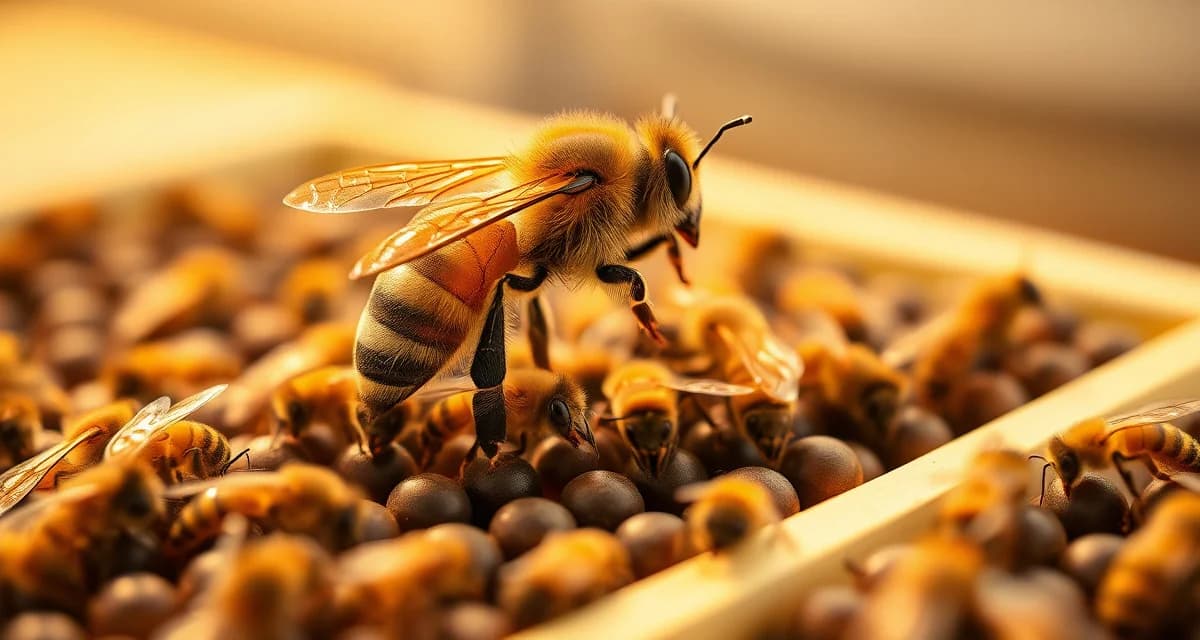
Queen Management for Pollination Season Performance
Hives with queens under 12 months old are 35 percent more likely to meet minimum strength requirements at pollination delivery than hives with older queens. The relationship between queen age and colony strength is consistent enough that experienced operators plan their requeening schedule around their pollination delivery calendar rather than treating requeening as a reactive response to visible queen failure.
Queen management for pollination season means: knowing the age of every queen in your operation, identifying colonies with queens over 18 months old before the season, and requeening those colonies with enough lead time for the new queen to establish a strong laying pattern before the delivery window.
TL;DR
- Queen quality is the single variable most directly under the operator's control that determines colony strength at pollination delivery.
- A colony with a failing or poorly mated queen cannot be rescued in time for an almond delivery 6 weeks away.
- Most commercial operations replace queens every 1-2 years to maintain peak laying performance and colony temperament.
- queen rearing at commercial scale requires dedicated equipment, timing coordination, and documentation of which colonies have been requeened.
- Tracking queen age and replacement history in a management system is the only reliable way to stay ahead of queen failure at commercial scale.
Why Queen Age Matters for Pollination
A queen's egg-laying capacity peaks in her first year and declines progressively after 18 months. A 2-year-old queen typically lays at 60 to 70 percent of the rate of a 1-year-old queen in comparable conditions. At lower laying rates, worker population growth slows, and a colony with a declining queen may struggle to meet the frame count requirements that almond, blueberry, or cherry contracts specify.
Beyond laying rate, older queens have a higher probability of spontaneous failure (supersedure or sudden queen loss) during a high-stress event like a long transport or a significant temperature change. A colony that loses its queen during transport to an almond yard faces a 30-day setback before a new queen can establish, which is longer than most pollination placements. The risk of in-transport queen failure is meaningfully lower in colonies with young queens.
Requeening before the pollination season rather than during it eliminates this class of in-season risk. A colony with a queen installed in September that has been laying since October has a well-established brood nest, a proven layer, and no queen transition risk during February delivery.
Requeening Timeline for Almond Season
For February almond season delivery:
August to September: Ideal requeening window for colonies intended for almond placements. A queen installed in August or September has 5 to 6 months to establish before delivery. By January, her worker cohort dominates the population and the colony shows strong frame counts.
October to November: Acceptable requeening window in warm climates (California, Arizona, Florida) where brood rearing continues through winter. In colder climates, a queen installed in November may not have time to significantly build population before the February delivery window.
December to January: Emergency requeening only. A queen installed this close to almond delivery may not produce enough new workers to affect the February frame count meaningfully. If you're requeening this late, it's because something went wrong earlier: a spontaneous queen failure or an unexpected colony collapse.
Requeening Timeline for Summer Crops
Summer crop pollination has more flexibility in requeening timing:
March to April requeening: Suitable for May and June blueberry, cherry, and early cucurbit contracts. A March queen has 6 to 8 weeks before late May blueberry delivery, enough time to build a significant new worker cohort on spring forage.
May requeening: Suitable for July canola and summer cucurbit contracts. A May queen has 6 to 8 weeks before a July delivery.
The general principle: requeen at least 6 weeks before your delivery date to give the new queen's first full brood cycle time to emerge and add workers to the population before delivery inspection.
Tracking Queen Age in PollenOps
PollenOps queen management records capture queen installation date, source, and queen marking (if marked) for each colony. The queen age report shows all colonies sorted by queen age, flagging queens over 18 months old as candidates for the next requeening round.
Before each season, run the queen age report as part of your pre-season assessment. Colonies with queens over 18 months go on your requeening list first. Colonies with queens over 24 months are a priority, as these are the colonies most likely to underperform at delivery. The hive strength assessment before moves workflow connects to the queen record so your pre-move assessment includes queen age alongside frame count and brood pattern.
For annual planning, the annual pollination contract planning guide covers how queen management fits into a full pre-season preparation sequence.
Sourcing Queens
For almond season requeening in August and September, you're purchasing queens at the peak of summer demand. Order queens from your primary supplier in June or July to guarantee availability in August. Waiting until August to order August queens risks supply gaps at suppliers who sell out during summer peak.
For operators in northern climates requeening in September, Italian and Carniolan queens are both appropriate for overwinter establishment. The queen's race matters less than her age at delivery; a well-established 5-month-old queen of either race outperforms a 1-month-old queen of any race.
Frequently Asked Questions
How do I time requeening for almond season pollination?
Target August to September requeening for colonies you plan to deliver to almond orchards in February. This gives the new queen 5 to 6 months to establish her brood pattern and build a strong worker population before delivery. The colony's frame count at delivery reflects the queen's output over those months, so early requeening gives you the full development window. If August requeening isn't possible due to supply constraints, September requeening works in warm climates where winter brood rearing continues. October requeening is a last option in California; in colder climates it's not reliable for almond preparation. Mark your calendar for requeening orders in June or July so supplier availability isn't the limiting factor.
How does PollenOps track queen age across my entire operation?
Queen age tracking in PollenOps is based on the queen installation date recorded in each colony's inspection history. When you requeen a colony, update the queen record with the new queen's installation date and, optionally, her source and marking color. The queen age report in PollenOps shows all colonies sorted by queen installation date, with queens over 18 months flagged automatically. You can filter by yard to see which locations have the highest concentration of older queens and prioritize your requeening schedule accordingly. The queen record updates in the mobile app during field inspections, so your queen age data stays current as you work through your yards.
What queen age threshold should I target for maximum pollination performance?
Target queens under 12 months old at the time of your most important pollination delivery. Queens in their first year show peak laying rates and the lowest probability of spontaneous failure during stressful events like transport. For a February almond delivery, this means requeening by February of the prior year, which is consistent with the August to September requeening window for colonies built for almond season. Queens between 12 and 18 months perform adequately in most cases but carry more risk than younger queens. Queens over 18 months are candidates for requeening before the next major delivery season. Queens over 24 months in a pollination operation represent a management gap worth correcting regardless of apparent colony strength, since the probability of mid-season failure rises significantly with age.
How often should commercial operations requeen their colonies?
Most commercial operations operate on a 1-2 year requeening cycle, replacing queens proactively before they fail rather than reactively after a colony declines. Operations focused on almond pollination often time requeening for late summer to ensure colonies going into winter and almond season have young, productive queens. Tracking queen installation dates in a management system is the practical requirement for managing a proactive requeening program across hundreds of colonies.
What should operators look for when assessing queen quality?
Key queen quality indicators include a solid brood pattern with minimal empty cells (indicating consistent laying), appropriate brood stage distribution showing continuous egg-laying, calm and predictable colony temperament during inspection, and a healthy egg-laying rate that maintains colony population during active season. A queen with a spotty or scattered brood pattern is likely poorly mated or failing and should be replaced before the colony weakens significantly.
Can queens be purchased or must they be reared in-house for commercial operations?
Both models work. Purchasing queens from established queen rearing operations in California, Hawaii, or the Southeast is the standard approach for many commercial operators, especially for mass requeening before almond season. In-house queen rearing provides more control over genetics and timing but requires dedicated equipment, technical skill, and calendar management. Large operations often use a combination: purchased queens for bulk requeening and in-house rearing for select stock development.
Try These Free Tools
Sources
- USDA Agricultural Research Service
- Bee Informed Partnership
- American Beekeeping Federation (ABF)
- Project Apis m.
- American Honey Producers Association
Get Started with PollenOps
Queen management across hundreds of colonies is only practical when you have a system tracking installation dates, requeening history, and performance assessments by yard. PollenOps provides the structure that makes proactive queen management achievable at commercial scale.