Remote Bee Yard Monitoring for Commercial Operations
Commercial beekeepers lose an estimated $8,000 per season to undetected remote yard problems. That's a rough average, but the number is plausible if you've ever driven 200 miles to a yard and found a problem that's been developing for two weeks.
Remote yards are part of the commercial beekeeping reality. You can't be at every location every day. The logistics of visiting each yard on a regular cycle gets harder as your operation grows and your yards spread across a region. At some point, you're making judgment calls about which yards to visit based on incomplete information.
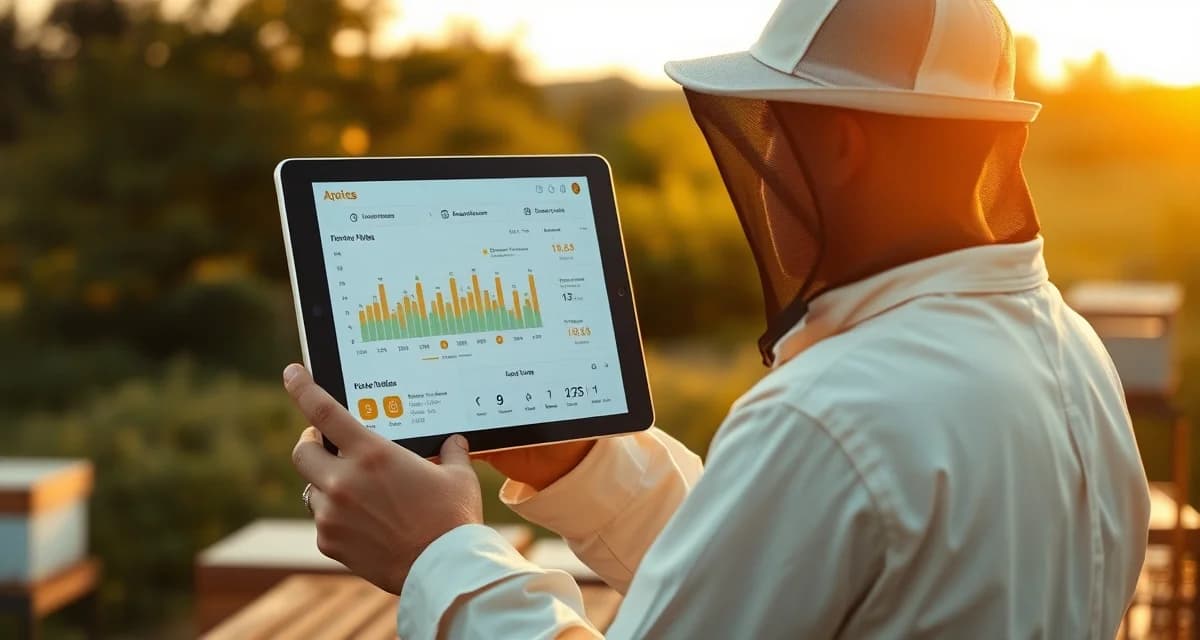
Remote bee yard monitoring changes that equation by giving you real-time data from sites you can't visit daily.
TL;DR
- Commercial beekeeping operations face two primary management challenges: operational logistics (hive health, transport, placement) and administrative coordination (contracts, payments, documentation).
- Most disputes and revenue losses in commercial beekeeping are preventable with better documentation and clearer contract terms.
- The operations that run most profitably are those with disciplined systems for tracking hive health, contract status, and fleet logistics in one place.
- PollenOps is built specifically for the operational complexity of commercial-scale pollination services, not adapted from a hobbyist tool.
- The most important management decisions (treatment timing, contract renewal, hive allocation) require accurate current data to make well.
What Remote Monitoring Actually Tells You
Different sensors capture different data. The most useful for commercial pollination operations:
Weight sensors: Hive weight tracked continuously. Rapid weight loss can indicate swarming, absconding, or theft. Steady weight gain during bloom confirms foraging activity. A hive that stops gaining weight during active bloom may have a problem worth investigating.
Temperature sensors: Internal hive temperature tracks colony health. A healthy colony maintains a tight temperature range in the brood nest. Sudden temperature drops or inability to regulate temperature can indicate loss of the queen, brood death, or colony collapse conditions.
Audio/acoustic sensors: Colony acoustics have patterns associated with healthy hive activity, queenlessness, and swarming. Acoustic monitoring is more technically complex but provides insight that weight and temperature alone can't capture.
Environmental sensors: Ambient temperature, humidity, and wind speed at the yard location. Helps interpret hive data in context: a cold night spike in weight isn't alarming if temperatures dropped to 28°F, but it's worth noting.
Camera systems: Battery-powered cameras with cellular data connections can provide visual confirmation of yard status. Useful for high-theft areas or yards with access road conditions you want to monitor.
How Do I Monitor Bee Yards That Are Far From My Home Location?
The basic approach is cell-connected sensors that transmit data to a web dashboard. You check the dashboard rather than checking the yard.
For this to work reliably, you need:
- Adequate cell signal at the yard location: 4G LTE covers most agricultural areas but not all. Before investing in remote monitoring hardware for a specific yard, confirm cell coverage at the site. A booster antenna can extend coverage in marginal signal areas.
- Power for the sensors: Most commercial remote monitoring systems use either battery power (rechargeable, typically lasting several months) or small solar panels. Battery systems work fine in most environments. Solar is more reliable for year-round monitoring in northern latitudes where batteries can be affected by cold.
- A platform that connects sensor data to your operations: Sensor data in isolation tells you something is happening. Sensor data connected to your yard record, contract status, and move schedule tells you what to do about it.
PollenOps remote yard monitoring integrates sensor data with your yard management platform so that alerts from remote sensors trigger the right workflow. A weight anomaly at a contracted yard triggers a pre-move assessment workflow automatically, not just a notification that something might be wrong.
What Sensors Work With PollenOps for Remote Yard Monitoring?
PollenOps integrates with a range of third-party sensors and monitoring platforms commonly used in commercial beekeeping, including weight scale systems, temperature loggers, and acoustic monitoring devices that transmit via cellular or LoRa networks.
The GPS yard tracking system connects each sensor installation to the specific yard record, so all data from a location is visible in the context of that yard's contract status, hive count, and move history.
For specific hardware compatibility, check with PollenOps support, as integrations expand regularly as new sensor options reach the commercial market.
Can I Get Text Alerts When Something Goes Wrong at a Remote Yard?
Yes. Sensor thresholds trigger push notifications and/or SMS alerts when conditions fall outside the parameters you set.
Common alert configurations:
- Weight drops more than X pounds in Y hours: potential swarming, absconding, or theft
- Internal temperature drops below Z°F: potential colony health issue
- No data received for X hours: sensor offline, possible cell signal issue or power failure
- Unusual acoustic pattern detected: queenlessness or other colony state change (depending on sensor type)
Alert sensitivity matters. Set thresholds too sensitive and you'll get false alarms that train you to ignore alerts. Set them too conservative and you'll miss real problems. Most experienced operators dial in thresholds over the first season based on what they actually see at each yard.
When Remote Monitoring Pays For Itself
The $8,000 average loss figure from undetected remote yard problems comes from a combination of:
- Colony losses that could have been prevented with early intervention
- Theft (hive theft is a real and growing problem in high-value areas, especially near almond orchards)
- Weather events that damage unprotected equipment
- Swarming losses that reduce your contracted hive count
Any of these events at a remote yard that you catch early enough to intervene costs far less than the same event discovered on your next scheduled visit.
In high-theft areas near commercial almond orchards, camera systems and weight monitoring have paid for multi-year subscriptions in a single prevented theft incident. In areas where colony health problems can develop quickly, the ability to detect and respond early can save colonies that would otherwise be lost.
Remote Monitoring Doesn't Replace Yard Visits
This is worth being clear about. Sensors tell you when something might need attention. They don't replace the judgment of an experienced beekeeper with a hive tool in hand.
The value of remote monitoring is triage: knowing which yards need a visit now versus which can wait for your scheduled rotation. An operation managing 25 yards across a 300-mile region can't visit every yard every week. Remote monitoring lets you prioritize your yard visits based on real data rather than guesswork.
Yards that look healthy on the sensors get their scheduled visit. Yards that show anomalies get a faster response. Overall, you're spending your driving time on yards that actually need it.
Frequently Asked Questions
How do I monitor bee yards that are far from my home location?
Remote monitoring relies on cell-connected sensors, including weight scales, temperature loggers, and environmental sensors, that transmit data to a web dashboard you can check from anywhere. The key requirements are adequate cell signal at the yard location and a power source for the sensors. PollenOps integrates sensor data with your yard management platform so remote alerts connect directly to your operational workflows.
What sensors work with PollenOps for remote yard monitoring?
PollenOps integrates with weight scale systems, temperature loggers, and acoustic monitoring devices from third-party manufacturers that transmit via cellular or LoRa networks. Each sensor installation connects to the specific yard record in your PollenOps account, so all remote data is visible alongside that yard's contract status, hive count, and move history. Contact PollenOps support for current hardware compatibility.
Can I get text alerts when something goes wrong at a remote yard?
Yes. You can configure alert thresholds for weight changes, temperature anomalies, acoustic patterns, and sensor offline conditions. When a threshold is crossed, you receive push notification and/or SMS alerts. You control the threshold values, so you can set the sensitivity based on what's actually actionable for each yard's specific situation.
What is the difference between commercial and hobby beekeeping?
Commercial beekeeping is distinguished by scale (typically 100+ hives, often 500-5,000+), revenue source (pollination contracts and bulk honey sales rather than local honey retail), and management approach (systematic protocols applied across yards rather than individual colony attention). Commercial operators manage bees as an agricultural enterprise, with the administrative, regulatory, and logistical complexity that entails. Most commercial operators derive the majority of their income from pollination services; honey production is a supplementary revenue stream.
How many hives are needed to make commercial beekeeping a full-time income?
Most beekeeping economists put the full-time commercial threshold at 500-800 hives, assuming efficient operations management and a combination of pollination and honey revenue. At 500 hives and $200/hive for almond pollination, almond season alone generates $100,000 in gross revenue before expenses. Net margins depend on operational efficiency, but well-run operations can achieve 30-50% net margins on pollination revenue. Additional crops and honey production improve per-hive economics but require additional management capacity.
What is the annual revenue potential for a 1,000-hive commercial operation?
A 1,000-hive operation running an almond season ($200/hive) plus blueberry or apple contracts ($80-100/hive) plus summer honey production ($25-40/hive after extraction costs) can generate $300,000-360,000 in annual gross revenue. Net margins after transport, crew, equipment, and hive replacement costs typically run 25-40% for well-managed operations, putting net income at $75,000-145,000 annually. The specific number depends heavily on circuit efficiency, loss rates, and contract quality.
Try These Free Tools
Sources
- USDA Agricultural Research Service
- Bee Informed Partnership
- American Beekeeping Federation (ABF)
- American Honey Producers Association
- Project Apis m.
Get Started with PollenOps
Managing a commercial beekeeping operation involves more data, more deadlines, and more moving parts than any general-purpose tool was designed to handle. PollenOps brings contracts, yard records, health documentation, and fleet logistics together in one platform built for the realities of commercial-scale beekeeping.