What Is Hive Strength and Why Does It Matter for Pollination?
Growers who specify minimum hive strength in contracts see 25% better crop set outcomes. That's a meaningful number, and it explains why the commercial pollination industry has moved steadily toward strength-specified contracts over the last decade.
Hive strength isn't just a beekeeping metric. It's the measure that determines how much pollination work a given hive can actually do.
TL;DR
- The California Almond Board's research supports 6 frames of bees as the minimum effective colony strength for almond pollination.
- Many growers now specify 8 frames for premium contracts, with rates at $200-215/hive versus $185-195 for 6-frame minimums.
- Hive strength assessment should be documented by yard, date, and assessor to create a defensible record for contract compliance.
- A colony assessed at the required strength in January can fall below minimum by February delivery if varroa loads are high or weather stress is severe.
- Third-party inspection at delivery is the cleanest resolution for strength disputes and protects operators as well as growers.
Defining Hive Strength
Hive strength refers to the overall population and health of a bee colony, typically measured through direct observation of the frames inside the hive. The two primary components:
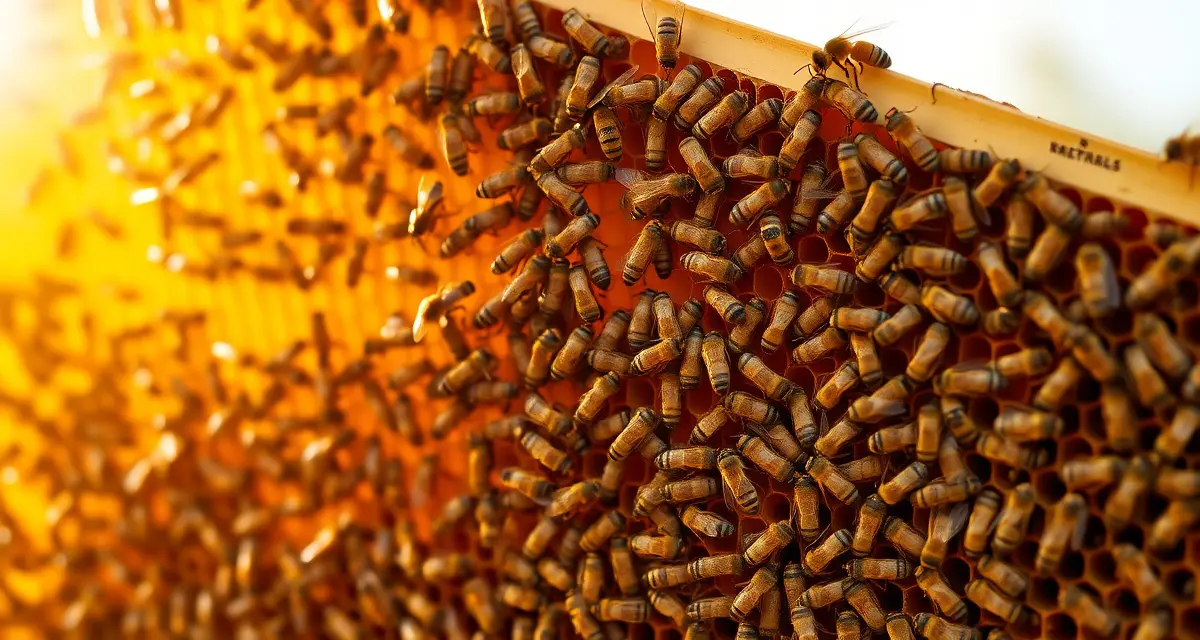
Frames of bees: How many standard Langstroth frames (10-frame box) are covered with adult bees. A frame with bees on both sides counts as one frame. This is the most direct measure of the forager population.
Frames of brood: How many frames contain a healthy brood pattern (eggs, larvae, and capped brood). Brood frames indicate colony health and growth trajectory. A colony with 8 frames of bees but only 1 frame of brood is declining. A colony with 6 frames of bees and 5 frames of brood is growing.
Most commercial contracts specify a minimum in terms of frames of bees, because that number most directly reflects the forager workforce available to do pollination work during the contract period.
How Do I Measure Hive Strength in the Field?
Field assessment of hive strength involves physically opening and inspecting the hive. The standard process:
- Light your smoker and suit up. This part is obvious, but a calm inspection is more accurate than a rushed one.
- Open the hive and work through the frames. For each frame, estimate the percentage covered with bees on each face and convert to a "frame equivalent." A frame with both sides completely covered = 1.0 frame. Half covered = 0.5 frame.
- Count brood frames. A frame with a solid brood pattern on both sides = 1.0. A frame with a sparse or spotty pattern = less.
- Record your observations. Don't trust memory for 50 hives. Use a paper form or, better, a mobile app that connects to your contract records.
Experienced assessors can complete this process in about 4-6 minutes per hive. PollenOps hive strength assessment tools guide you through a structured checklist that ensures consistent scoring across your entire fleet, regardless of which employee completes the assessment.
A trained inspector can assess 50 hives per hour using PollenOps's guided checklist on a tablet, which is the throughput you need to assess a full yard before a move.
What Is the Minimum Hive Strength for a Pollination Contract?
Minimums vary by crop and grower, but here are the most common standards:
Almonds: The California Almond Board's guidance references 8 frames of bees as a "strong" colony standard. Commercial contracts often specify 6 frames of bees as a minimum, with some growers or premium contracts requiring 7-8 frames.
Cherries: Most Pacific Northwest cherry contracts specify 5-6 frames of bees minimum.
Blueberries: Michigan growers typically specify 5-6 frames minimum. Some premium contracts require 7+.
Apples: Typically 5-6 frames minimum.
Cranberries: Usually 5-6 frames minimum.
The California almond market has driven the most explicit strength standard development because of the volume of commercial contracts and the history of disputes around understrength deliveries.
The Difference Between Frames of Bees and Frames of Brood
These are related but distinct measurements:
Frames of bees tells you the current workforce. This is what determines how many foragers will be working the crop during the bloom period.
Frames of brood tells you colony health trajectory. A high brood frame count means the colony is producing new bees, which indicates a laying queen, colony growth, and good health. A low brood frame count relative to adult bees is a warning sign.
For pollination contracts, most growers specify frames of bees because that's what directly correlates with pollination work during the contract period. Frames of brood is your indicator of whether that strength level will hold through the placement or decline during the service period.
A colony with 7 frames of bees and 6 frames of brood will likely maintain or increase its strength during a 3-week almond contract. A colony with 7 frames of bees and 1 frame of brood may drop to 5 frames of bees by the end of that same contract as older foragers die without replacement.
How Does Hive Strength Affect My Per-Hive Pollination Rate?
The connection is direct: more foragers per hive means more flowers visited per day per hive, which means better pollination outcomes for the grower. Growers who understand this relationship are willing to pay more for documented strength above the minimum.
The premium pricing logic:
- A hive at 8 frames of bees provides roughly 30-40% more forager activity than a hive at 6 frames
- That additional activity translates to measurably better fruit set in research conditions
- Growers who want reliable, above-minimum performance will pay for it
In practice, the premium for documented above-minimum strength runs approximately $15-30 per hive in almond contracts, depending on how far above minimum you can credibly document. That premium is real money on a 1,000-hive delivery.
The documentation piece is essential. Growers don't pay a premium based on your assertion that your bees are strong. They pay based on a pre-move strength assessment report that shows what you actually assessed before loading. PollenOps contract compliance documentation generates that report from your field assessments and links it directly to the contract record.
Frequently Asked Questions
How do I measure hive strength in the field?
Open the hive and inspect each frame, estimating the percentage covered with bees on each face and converting to frame equivalents. Count total frames of adult bees and separate frames of brood. Record your observations in a structured checklist, either paper or digital. PollenOps's guided strength assessment checklist walks you through each step and records the output in a format that connects to your contract compliance record. A trained assessor using a tablet-based checklist can complete approximately 50 hives per hour.
What is the minimum hive strength for a pollination contract?
Minimums vary by crop and grower. California almond contracts typically specify 6 frames of bees minimum, with some premium contracts requiring 7-8 frames. Cherry, blueberry, and apple contracts generally require 5-6 frames minimum. The contracted minimum should be specified in your written contract, not assumed from industry norms. If the contract doesn't specify a minimum, you're vulnerable if a grower claims your colonies underperformed.
How does hive strength affect my per-hive pollination rate?
Stronger colonies have more foragers, which means more flowers visited per day and better pollination outcomes for the grower. Beekeepers with documented above-minimum strength can justify premium rates of $15-30 per hive above standard contracts in almond markets. The premium requires documented pre-move strength assessments, not just assertion. Growers willing to pay for documented quality are your best long-term clients because they understand what they're buying and can verify what they're receiving.
How is hive strength measured for commercial contract compliance?
Hive strength is typically measured by counting frames of bees: the number of frames in the brood box that are covered (both faces) by worker bees. A frame covered on both faces counts as one frame of bees. Some assessors use a modified approach counting only the top face of each frame. The contract should specify the measurement method, since a hive assessed at 6 frames by one method might be 5 frames by another. Third-party inspection using a consistent, documented method is the cleanest standard for compliance.
What causes hives to fall below strength requirements between assessment and delivery?
Several factors can reduce colony strength between pre-season assessment and delivery: high varroa loads with insufficient treatment response, poor winter weather in northern states during transport south, queen failure or queen loss in the weeks before delivery, and nutritional stress from limited forage. Commercial operators typically re-assess colonies 1-2 weeks before departure to confirm strength has been maintained, replacing any colonies that have declined with stronger hives from their reserve inventory.
Can strength requirements be met with a recently split colony?
No. A recently split colony (within 4-6 weeks) will not have a full brood cycle's worth of adult workers emerging to maintain population. A split colony may appear to have adequate frames at the time of split but will decline in population over the following weeks as older workers die without emerging brood to replace them. Colonies going to almond pollination should have had their most recent split at least 8-10 weeks before delivery to allow full population recovery.
Try These Free Tools
Sources
- USDA Agricultural Research Service
- Bee Informed Partnership
- American Beekeeping Federation (ABF)
- Almond Board of California
- Project Apis m.
Get Started with PollenOps
Hive strength documentation is the foundation of contract compliance and dispute prevention. PollenOps structures strength assessment records, delivery confirmations, and inspection data so you have the evidence you need when questions arise about contract performance.