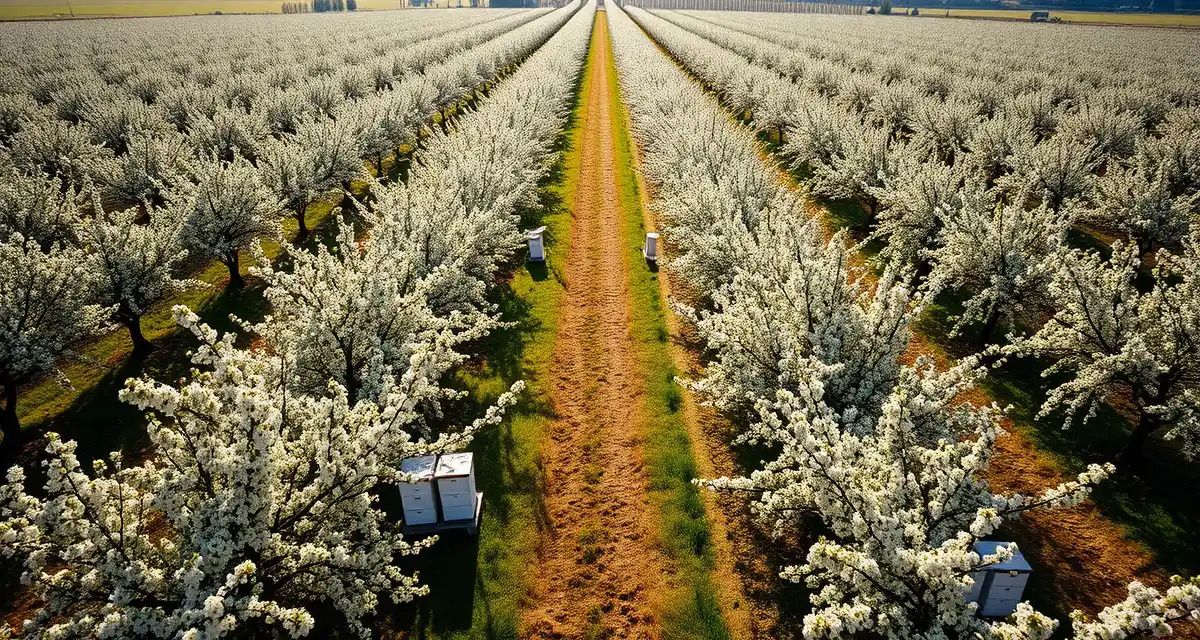
Apple Pollination Software for Washington State Beekeepers
Washington produces over 60 percent of US commercially grown apples, and every acre of that production requires active pollination services. The Wenatchee Valley and Chelan County alone account for a substantial portion of Washington's apple acreage, and the elevation variation across orchard blocks in these regions creates bloom timing differences of up to 7 days between valley floor and upper benchland sites within the same county.
PollenOps Washington apple software provides variety-specific bloom timing alerts calibrated for Wenatchee, Chelan, Yakima, and Okanogan growing regions. When you enter a Wenatchee Valley Honeycrisp contract, the alert uses Honeycrisp's specific bloom phenology combined with local weather station data. An early-blooming Gala block fires its alert before your Fuji or Granny Smith alerts, reflecting the actual sequence of Washington's commercial apple bloom rather than a single regional estimate.
TL;DR
- Apple pollination is one of the most geographically distributed pollination markets, with significant demand in Washington, Michigan, New York, Pennsylvania, and New England.
- Bloom timing varies by 3-6 weeks between the Pacific Northwest and Northeast, enabling migratory operators to extend their apple season.
- Hive strength requirements for apple contracts typically range from 4-6 frames depending on the grower and orchard density.
- Washington State accounts for roughly 60% of US apple production, making it the dominant commercial apple pollination market.
- Cross-pollination variety requirements mean orchard layout significantly affects how many hives are needed and where they should be placed.
Washington Apple Geography
Washington's apple production spans the full Columbia Basin and adjacent mountain valleys in north-central and eastern Washington:
Wenatchee Valley (Chelan County): The densest apple-producing region in the state. Confluence of the Wenatchee River and Columbia River creates a complex microclimate with significant elevation variation from 600 feet at the valley floor to 1,800 feet at upper bench orchards. Bloom typically starts in late April on valley floor sites.
Lake Chelan corridor: The lake's water mass moderates temperatures along its shores, creating a climate distinct from surrounding benchlands. Chelan-area orchards can bloom slightly later than comparable elevations closer to Wenatchee due to the lake's cooling effect in spring.
Okanogan County: North of Chelan, Okanogan County has significant apple production with later bloom timing than the warmer Wenatchee corridor. The Okanogan Valley floor typically blooms 4 to 6 days after Wenatchee Valley floor orchards.
Yakima Valley apple blocks: While Yakima is better known for its cherry production, the valley also has substantial apple acreage, particularly in the Tieton, Naches, and Selah areas. Apple bloom in Yakima follows cherry by 3 to 4 weeks.
Skagit and Whatcom counties (western Washington): Smaller-volume apple production in the Cascade foothills west of the mountains. Bloom timing differs significantly from eastern Washington due to the maritime climate influence.
Variety-Specific Bloom Alerts
Washington apple growers plant a range of varieties with meaningfully different bloom dates. Running a single bloom alert for all apple varieties in a contract misses the sequence that determines when each block actually needs hive coverage.
Gala (early): Among the earliest-blooming commercial apple varieties in Washington, typically opening in late April in Wenatchee Valley. Alert fires first in mixed-variety operations.
Fuji (mid-season): Mid-season bloom, typically 3 to 5 days after Gala in the same location. High-value crop with significant commercial acreage in Chelan and Okanogan counties.
Honeycrisp (mid to late): Later bloom than Gala, with timing variable by location and rootstock. Premium variety that commands higher care requirements from growers.
Granny Smith (late): One of the latest-blooming commercial apple varieties, typically 5 to 7 days after early-season varieties in the same location.
Red Delicious and Golden Delicious (mid-season): Legacy varieties still present in many Washington orchards, with mid-season bloom timing similar to Fuji.
PollenOps variety-specific bloom alerts cover Gala, Fuji, Honeycrisp, Granny Smith, Red Delicious, Golden Delicious, and other commercial apple varieties on separate timing tracks. When a single operation has multiple variety blocks under contract, each variety's alert fires when that variety's bloom is approaching rather than when the average orchard bloom is approaching.
Apple and Cherry Overlap in Central Washington
Central Washington presents a specific scheduling challenge for operators who run both cherry and apple contracts: the crops bloom in close sequence, with Yakima Valley cherry in early to mid-April and Wenatchee Valley apple in late April to early May. The window between cherry removal and apple placement can be as short as 10 days at lower elevation sites.
Managing this transition requires knowing your cherry removal dates and your apple placement alerts simultaneously. An operator with 20 Yakima cherry contracts and 15 Wenatchee apple contracts needs to sequence hive removal from cherry orchards as bloom completes and position those hives for apple delivery before Wenatchee's lower orchards reach the placement trigger.
PollenOps shows both your active cherry contracts and your pending apple contracts on the same dashboard. When Yakima cherry bloom completes and removal alerts fire, you can see exactly which apple contracts are next in queue and confirm that hive transition logistics match the biological reality of the bloom sequence.
The apple pollination management hub provides additional context on apple contract management across the full Pacific Northwest season. For Washington-specific circuit planning including cherry, see pollination service Washington.
Hive Density and Strength for Washington Apple
Washington apple growers typically require 1 to 2 hives per acre for commercial production. Premium varieties including Honeycrisp frequently specify 2 hives per acre, as the higher value per bin of Honeycrisp justifies higher pollination investment.
Colony strength at delivery is typically 6 to 8 frames of bees with a laying queen. Coming off Yakima Valley cherry season in mid-April, your colonies should be at or near peak strength for late April apple placements. Monitor your colonies during the cherry-to-apple transition: colonies sitting in a holding yard without foraging opportunities for 10 days can lose population. Position them on forage or provide supplemental feeding during the transition period.
Per-Hive Rates for Washington Apple
Washington apple rates in 2026 run $80 to $120 per hive for standard commercial contracts. Honeycrisp and premium variety blocks sometimes reach the upper end of the range due to the crop's higher value and the grower's interest in strong pollination performance. The Wenatchee and Chelan markets have sophisticated commercial apple operations with professional management programs; documentation standards in this market favor operators who can provide grower portal access and delivery verification records.
Operators who can demonstrate consistent delivery performance in the Wenatchee market with PollenOps compliance records have a specific advantage in rate negotiation with the large commercial operations that dominate the county's production.
Frequently Asked Questions
When does apple bloom start in the Wenatchee Valley?
Wenatchee Valley apple bloom typically starts in late April, with early-blooming varieties like Gala opening first and later varieties like Granny Smith following 5 to 7 days later. Valley floor orchards at 600 to 800 feet bloom before upper bench orchards at 1,500 to 1,800 feet. In warm years, valley floor Gala bloom can start in late April; in cool years it may hold until the first week of May. PollenOps Wenatchee Valley alerts use local weather station data and variety-specific phenology to fire each alert at the right time for that variety's bloom rather than using a single apple bloom estimate.
How many hives per acre do Washington apple growers require?
Washington apple growers typically require 1 to 2 hives per acre. Standard commercial Gala, Fuji, and Red Delicious blocks often specify 1 to 1.5 hives per acre. Premium Honeycrisp operations frequently specify 2 hives per acre because the per-bin value of Honeycrisp makes higher pollination density a sound investment for the grower. Confirm the density requirement in each contract since individual grower standards vary. Some growers with established native pollinator habitat in adjacent areas are comfortable at the lower end; others prefer the maximum density as yield insurance on high-value blocks.
How do I manage apple and cherry contracts simultaneously in Central Washington?
Treat cherry and apple as sequential phases rather than overlapping obligations. Your Yakima cherry contracts complete first, typically by late April; your Wenatchee apple contracts need service in late April to early May. The key is knowing your cherry removal dates and apple placement alerts at the same time so you can route hives efficiently from cherry to apple without gaps or idle time. PollenOps shows all active and pending contracts on a single dashboard, so you see cherry removal status and upcoming apple alerts together. Driver routing from Yakima to Wenatchee after cherry completion is straightforward geographically; the scheduling discipline is the management challenge.
What are the hive strength requirements for apple pollination contracts?
Apple pollination contracts typically specify 4-6 frames of bees at delivery, though requirements vary by grower. Large corporate orchard operations in Washington State often specify 6 frames minimum. Smaller independent orchards may accept 4-5 frame colonies. The practical consideration is that apple bloom timing can be cold and variable, and stronger colonies forage more effectively in marginal weather conditions.
How does apple pollination timing differ across the US?
Apple pollination timing runs approximately 3-5 weeks in most regions, starting in late March in the mid-Atlantic, April in the Midwest and Pacific Northwest lowlands, and May in New England and higher elevations. Washington State's diverse geography means bloom timing varies 2-3 weeks between the Columbia Basin and the higher-elevation orchards in Chelan County. Migratory operators can extend their apple season by following bloom north and east.
What is the relationship between apple variety and pollinator requirements?
Most commercial apple varieties require cross-pollination between compatible varieties, which means orchard layout -- where pollinizer rows are planted relative to the primary variety -- directly affects how many hives are needed and where they should be placed. Orchards with good pollinizer distribution require fewer hives per acre than orchards with poor pollinizer coverage. Understanding the orchard's variety layout helps operators advise growers on optimal hive placement.
Try These Free Tools
Sources
- USDA Agricultural Research Service
- Bee Informed Partnership
- American Beekeeping Federation (ABF)
- Washington Tree Fruit Research Commission
- Cornell University Cooperative Extension
Get Started with PollenOps
Apple pollination season spreads across multiple regions and bloom timing windows, giving migratory operators a 6-8 week window to sequence deliveries and maximize hive utilization. PollenOps coordinates contract management, delivery scheduling, and health documentation across your full apple circuit so you can focus on execution rather than administration.