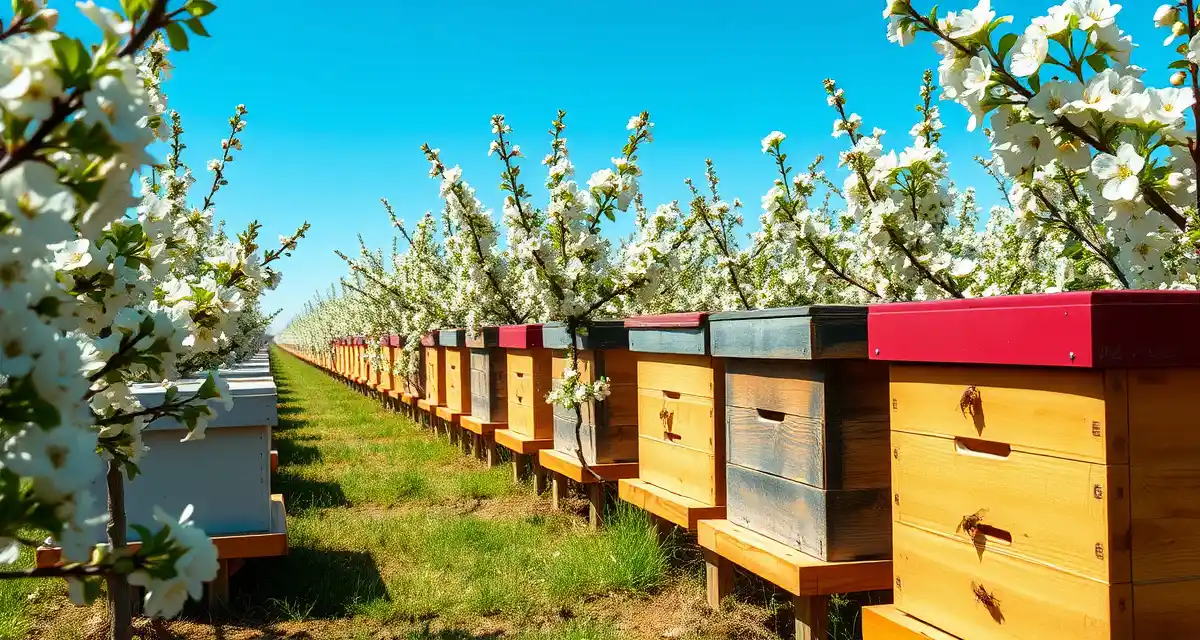
Apple Orchard Pollination Management Software
US apple growers spend an estimated $90 million per year on commercial pollination services. Apple is one of the most widely grown fruit crops in the country, planted in significant commercial volumes across Washington, New York, Michigan, Pennsylvania, and dozens of other states.
But apple pollination is also one of the more demanding crops to manage well. Bloom timing varies by variety and region. Hive density requirements differ by orchard configuration. And the timing window, while longer than cherry, still requires you to be in the right place within a roughly 10-14 day window per variety.
Getting this right at scale requires more than a phone call to the grower asking when bloom is starting.
TL;DR
- Apple pollination is one of the most geographically distributed pollination markets, with significant demand in Washington, Michigan, New York, Pennsylvania, and New England.
- Bloom timing varies by 3-6 weeks between the Pacific Northwest and Northeast, enabling migratory operators to extend their apple season.
- Hive strength requirements for apple contracts typically range from 4-6 frames depending on the grower and orchard density.
- Washington State accounts for roughly 60% of US apple production, making it the dominant commercial apple pollination market.
- Cross-pollination variety requirements mean orchard layout significantly affects how many hives are needed and where they should be placed.
Apple Bloom Stages and Why They Matter
Apple bloom unfolds in stages, and each stage has a name that both beekeepers and growers use when discussing placement timing:
- Green tip: First sign of leaf emergence, earliest stage
- Quarter-inch green: Leaf tissue expanded slightly, buds just beginning to swell
- Tight cluster: Buds clustered together, not yet separated
- Pink: Buds separated and showing color, pre-bloom
- Full bloom (king bloom): Majority of flowers open, highest receptivity
- Petal fall: Flowers dropping, pollination window closing
Most commercial growers want bees in place by the pink to early bloom stage, before full bloom opens. PollenOps tracks apple bloom progression from green tip through petal fall so you know exactly where each monitored orchard is in the cycle.
Placement too early (tight cluster or before) means your bees are burning resources without available flowers. Too late (petal fall) means you've missed the window.
When Should I Put Bees in an Apple Orchard?
The standard recommendation is placement at pink to 5% bloom. This gives colonies a day or two to orient and begin foraging as the first receptive flowers open, reaching peak foraging activity by the time full bloom hits.
For Washington apple orchards, this typically means:
- Fuji, Gala in lower Yakima: mid-April
- Honeycrisp in Wenatchee area: late April to early May
- Variety blocks at higher elevation: May, varying significantly by year
For Midwest and Northeast orchards:
- Hudson Valley, NY: early to mid-May
- Michigan: mid-May, varying by year and location
- Pennsylvania: late April to mid-May
All of these dates shift by a week or more in warm or cold years. Relying on last year's date is better than nothing, but it's not reliable.
How Many Hives Per Acre Do Apple Orchards Require?
Standard recommendations are 1-2 hives per acre for high-density orchards, and 1 hive per acre for traditional spacing. Some growers with high-value variety blocks or poor natural pollinator populations request 2-3 hives per acre.
The relevant factors include:
- Orchard density (trees per acre determines flower density)
- Variety cross-pollination requirements (most apple varieties require cross-pollination from a compatible variety)
- Presence of wild pollinators (orchards near natural habitat may need fewer hives)
- History of set (growers with a history of poor fruit set often want higher hive density)
When quoting apple contracts, clarify these factors with the grower before setting your hive count. A 40-acre high-density Fuji block is a different conversation than a 40-acre traditional spacing orchard with good wild pollinator habitat nearby.
What Hive Strength Do Apple Growers Expect?
Apple growers typically expect 5-6 frames of bees minimum, with some growers in competitive markets specifying 7-8 frames. Hive strength assessments before delivery, tied to your contract compliance record, protect you if a grower later questions whether your colonies were adequate.
PollenOps hive strength assessment tools guide you through a standardized pre-move inspection for every yard before loading. The checklist output becomes your contract compliance documentation, proving that every delivered hive met the contracted minimum.
This documentation is especially valuable in apple contracts because many growers use the same orchards year after year and compare observations across seasons. If your bees looked strong in 2024 and a grower thinks they looked weaker in 2025, your strength assessment records tell the definitive story.
Managing Apple Contracts Across Multiple Regions
Apple pollination is spread across the country in a way that creates real complexity for migratory operations. You might be finishing up Washington cherry contracts in late April and moving some of those same hives directly to Washington apple orchards. Meanwhile, you have Michigan apple contracts coming up in mid-May with a different set of trucks.
Keeping these logistics organized requires a view of your contract calendar that shows:
- Which contracts have upcoming delivery deadlines
- Which yards have hives currently available to assign
- What bloom timing looks like in each target region
- Which trucks and drivers are available
PollenOps apple pollination management shows your apple contracts alongside bloom timing projections for each monitored region. When you can see that Michigan apple bloom is tracking 3 days earlier than last year while Washington Honeycrisp is on schedule, you can adjust your truck routing before the conflict becomes a crisis.
Apple Pollination Documentation for Growers
Apple growers vary widely in how much documentation they want. Some large commercial operations want formal arrival reports, hive count confirmations, and strength summaries before they'll issue a purchase order. Others are content with a phone call and a handshake.
Either way, your documentation protects you. An arrival report emailed to the grower within a few hours of placement establishes your delivery date, your hive count, and your colony condition at the time of delivery. If the grower later claims hives arrived late or short, that document is your evidence.
PollenOps generates a grower-ready arrival report from your field check-in data. You fill in the checklist on your phone when you arrive at the orchard, and the formatted report is ready to send before you leave the site.
Apple Pollination in the Northeast and Midwest
Washington may be the biggest apple state, but the Northeast and Midwest represent substantial apple pollination markets with their own logistics challenges.
Northeast orchards are often smaller, more fragmented, and harder to access with large trucks than Washington's commercial blocks. Michigan's apple season overlaps with the state's blueberry season, creating a scheduling crunch that requires careful contract calendar management.
PollenOps supports apple pollination management for Northeast and Midwest operations with region-specific bloom timing data for major apple-producing areas in New York, Michigan, Pennsylvania, Vermont, and other states.
Frequently Asked Questions
When should I put bees in an apple orchard?
Standard practice is placement at pink to 5% bloom, giving colonies time to orient and begin foraging as the first receptive flowers open. In Washington's lower Yakima Valley, this typically falls in mid-April for early varieties. In Michigan and the Northeast, expect mid-to-late May depending on year and elevation. PollenOps apple bloom tracking monitors stage progression from green tip through petal fall so you know exactly when to move.
How many hives per acre do apple orchards typically require?
Standard recommendations are 1-2 hives per acre, with some high-density or premium variety blocks requesting up to 2-3 hives per acre. Actual requirements depend on orchard density, variety cross-pollination needs, presence of wild pollinators, and the grower's history with fruit set. Clarify these factors with your grower before setting the contracted hive count.
What hive strength do apple growers expect for pollination contracts?
Most apple growers expect 5-6 frames of bees minimum. Growers in competitive markets or premium variety orchards may specify 7-8 frames. Document pre-move strength assessments for every yard using PollenOps's guided checklist, which generates a contract compliance record you can reference if hive quality is ever questioned.
What are the hive strength requirements for apple pollination contracts?
Apple pollination contracts typically specify 4-6 frames of bees at delivery, though requirements vary by grower. Large corporate orchard operations in Washington State often specify 6 frames minimum. Smaller independent orchards may accept 4-5 frame colonies. The practical consideration is that apple bloom timing can be cold and variable, and stronger colonies forage more effectively in marginal weather conditions.
How does apple pollination timing differ across the US?
Apple pollination timing runs approximately 3-5 weeks in most regions, starting in late March in the mid-Atlantic, April in the Midwest and Pacific Northwest lowlands, and May in New England and higher elevations. Washington State's diverse geography means bloom timing varies 2-3 weeks between the Columbia Basin and the higher-elevation orchards in Chelan County. Migratory operators can extend their apple season by following bloom north and east.
What is the relationship between apple variety and pollinator requirements?
Most commercial apple varieties require cross-pollination between compatible varieties, which means orchard layout -- where pollinizer rows are planted relative to the primary variety -- directly affects how many hives are needed and where they should be placed. Orchards with good pollinizer distribution require fewer hives per acre than orchards with poor pollinizer coverage. Understanding the orchard's variety layout helps operators advise growers on optimal hive placement.
Try These Free Tools
Sources
- USDA Agricultural Research Service
- Bee Informed Partnership
- American Beekeeping Federation (ABF)
- Washington Tree Fruit Research Commission
- Cornell University Cooperative Extension
Get Started with PollenOps
Apple pollination season spreads across multiple regions and bloom timing windows, giving migratory operators a 6-8 week window to sequence deliveries and maximize hive utilization. PollenOps coordinates contract management, delivery scheduling, and health documentation across your full apple circuit so you can focus on execution rather than administration.