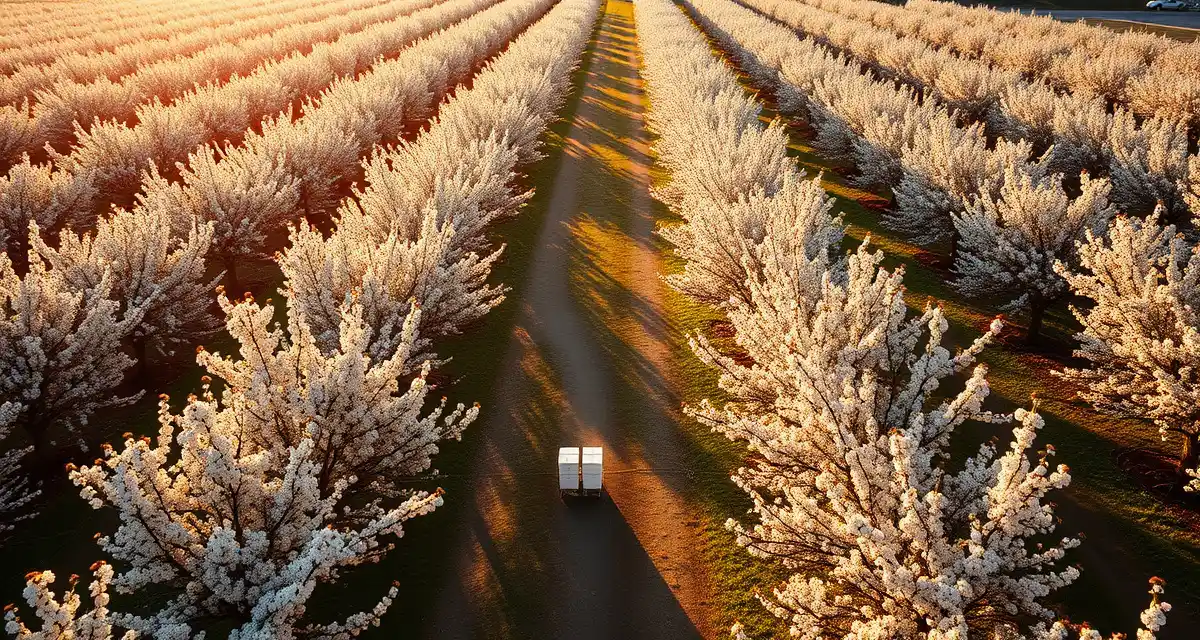
Apple Pollination in Washington State: Contracts, Timing, and Logistics
Washington state produces 60% or more of US apples across 150,000 or more bearing acres, and that translates into one of the largest apple pollination markets in North America. Washington apple bloom follows California almonds by 6 to 8 weeks, which makes it an almost ideal next stop for migratory operators exiting California in March.
That circuit timing is the key strategic insight. Operators who finish almond deliveries in late February or early March have colonies with 6 to 8 weeks to recover and build before Washington apple bloom begins in late April. Done well, you're running two high-revenue pollination windows in the same spring.
This guide covers contract sourcing, colony requirements, bloom timing, and the logistics of transitioning from California almonds to Washington apples.
TL;DR
- Apple pollination is one of the most geographically distributed pollination markets, with significant demand in Washington, Michigan, New York, Pennsylvania, and New England.
- Bloom timing varies by 3-6 weeks between the Pacific Northwest and Northeast, enabling migratory operators to extend their apple season.
- Hive strength requirements for apple contracts typically range from 4-6 frames depending on the grower and orchard density.
- Washington State accounts for roughly 60% of US apple production, making it the dominant commercial apple pollination market.
- Cross-pollination variety requirements mean orchard layout significantly affects how many hives are needed and where they should be placed.
The Washington Apple Pollination Market
Washington's apple acreage is concentrated in several distinct regions:
Wenatchee Valley (Chelan and Douglas counties): The historic heart of Washington apple production. The valley's geography (warm days and cool nights moderated by the Columbia River) produces exceptional fruit quality. Densely planted with apple, pear, and cherry orchards.
Yakima Valley (Yakima County): The largest apple-producing region in the state by volume. Extensive orchards across a wide area. Major producers and packinghouses are concentrated here.
Okanogan Highlands and Methow Valley: North-central Washington, with notable and growing apple acreage at higher elevations. Bloom runs later than Wenatchee and Yakima.
Columbia Basin: Irrigated orchards in Grant, Adams, and Franklin counties. Newer plantings, often large-scale operations.
Each region has different bloom timing, contract characteristics, and logistical requirements.
When Is Apple Pollination Season in Washington State?
Washington apple bloom timing varies by region, elevation, and annual temperature patterns.
Yakima Valley: Bloom typically begins in mid to late April, peaking around April 20th to May 5th most years.
Wenatchee Valley: Bloom often runs 3 to 7 days behind Yakima due to slightly cooler valley temperatures.
Okanogan and higher elevations: Bloom can be 1 to 3 weeks behind the lower valleys.
The practical delivery target is 3 to 5 days before bloom opens in each specific location. Most Washington apple contracts specify delivery windows rather than exact dates, with growers adjusting timing based on their bloom observations.
Year-to-year variability is real. A cold April can push bloom 2 weeks later than normal. A warm spring can accelerate it. Stay in close communication with your growers in the 2 to 3 weeks before your contracted delivery window.
How Many Hives Per Acre Do Washington Apple Growers Require?
Standard recommendations for apple pollination are 1 to 2 hives per acre, with most Washington growers targeting 1.5 hives per acre for reliable coverage. Some growers with dense plantings or varieties with poor self-fertility use 2 hives per acre or more.
Specific requirements vary by:
- Apple variety (some require cross-pollination, others are partially self-fertile)
- Orchard density (trees per acre affects hive placement and coverage)
- Grower's quality standards and yield targets
Ask your specific growers about their recommended stocking rate before committing contract quantities. You want to be at or slightly above their recommendation, not noticeably over (which wastes your capacity) and not under (which underserves their pollination needs).
Colony Strength Requirements
Washington apple pollination contracts typically specify minimum colony strength. Common requirements:
- 6 to 8 frames of bees at delivery
- Actively laying queen
- Some contracts specify minimum frames of brood
After California almonds, colonies have 6 to 8 weeks of spring buildup before Washington apple delivery. In a typical year, well-managed colonies that came out of almonds at 8 frames can be at 10 to 14 frames by late April.
Assess colonies 4 weeks before your Washington delivery date. If strength is marginal, you have time to supplement feed aggressively, combine underperformers, or adjust your contracted quantities with growers.
How Do You Transition from California Almonds to Washington Apples?
This transition is one of the defining operational challenges of the West Coast migratory circuit.
Post-Almond Recovery
After almond removal, colonies are often nutritionally depleted. The almond orchard environment is not particularly rich in diverse forage. Bees work hard during bloom but have less access to diverse nutrition than in natural settings.
Immediately after almond removal:
- Assess varroa loads. Mite populations can build during almond season in high-density hive environments.
- Feed if food stores are low.
- Check queen status in every yard.
- Combine or requeen any notably weak colonies.
You have approximately 6 weeks between almond exit (early to mid-March) and Washington apple delivery (late April to early May). Use this time intentionally.
Where to Position Post-Almond
Options for the March to April holding period:
California spring forage yards: Colonies held in California forage yards have access to early spring pollen and nectar. Good holding yards in the foothills or coastal valleys can get colonies building rapidly.
Oregon holding yards: Moving north through Oregon puts colonies on a more direct route to Washington while allowing spring buildup.
Direct to Washington: Some operators move directly to early Washington cherry contracts in March, then position for apple.
Dealing with Interstate Movement Requirements
Moving from California to Washington requires compliance with both states' movement regulations:
California exit: California issues movement permits for outbound colonies. Your colony's health certificate for California entry isn't always transferable.
Washington entry: Washington requires an inspection certificate from the state of origin, current at the time of movement. If you're moving from California, you need a California Department of Food and Agriculture health certificate. If you've been in another state between California and Washington, requirements may differ.
Contact Washington State Department of Agriculture's Plant Protection Division for current entry requirements before your first Washington season.
Contract Sources for Washington Apple Pollination
Direct grower relationships: Washington's apple industry is a mix of large-scale operations (some farming thousands of acres) and family orchards. Large operations often contract directly with experienced beekeepers. Smaller operations may use local beekeepers or work through agricultural networks.
Washington State Apple Commission: Can provide industry contacts and understanding of the market structure.
Local beekeeping associations: Washington State Beekeepers Association and regional associations have connections to growers looking for reliable pollinators.
Agricultural brokers: Pollination brokers active in the Pacific Northwest can facilitate introductions, particularly for operators new to the Washington market.
Rate for Washington apple pollination typically runs $80 to $130 per hive, lower than almonds but for a manageable 3 to 4 week placement that fits well in the spring circuit.
FAQ
When is apple pollination season in Washington state?
Apple bloom in Washington typically runs from mid-April through mid-May, with variation by region. Yakima Valley orchards bloom earliest, typically April 15th to May 5th. Wenatchee Valley follows 3 to 7 days later. Higher-elevation areas in Okanogan County can bloom 2 to 3 weeks after the Yakima Valley. Year-to-year variation of 1 to 2 weeks is common based on spring temperatures.
How many hives per acre do Washington apple growers require?
Most Washington apple growers target 1 to 2 hives per acre, with 1.5 hives per acre as the typical recommendation for adequate coverage. Some growers with high-density plantings or varieties with specific cross-pollination requirements use 2 hives per acre or more. Ask your specific growers about their requirements. The answer varies by variety, orchard density, and their production goals.
How do you transition from California almonds to Washington apples?
Almond contracts typically end in early to mid-March. After colony removal, assess varroa loads and colony strength immediately and address any problems. Position colonies in spring holding yards in California or Oregon where natural forage is available. Supplement feed if needed. The 6 to 8 week window between almond exit and Washington apple delivery should be used for colony recovery and buildup. Confirm interstate movement documentation requirements for both California exit and Washington entry before your first season.
What are the hive strength requirements for apple pollination contracts?
Apple pollination contracts typically specify 4-6 frames of bees at delivery, though requirements vary by grower. Large corporate orchard operations in Washington State often specify 6 frames minimum. Smaller independent orchards may accept 4-5 frame colonies. The practical consideration is that apple bloom timing can be cold and variable, and stronger colonies forage more effectively in marginal weather conditions.
How does apple pollination timing differ across the US?
Apple pollination timing runs approximately 3-5 weeks in most regions, starting in late March in the mid-Atlantic, April in the Midwest and Pacific Northwest lowlands, and May in New England and higher elevations. Washington State's diverse geography means bloom timing varies 2-3 weeks between the Columbia Basin and the higher-elevation orchards in Chelan County. Migratory operators can extend their apple season by following bloom north and east.
What is the relationship between apple variety and pollinator requirements?
Most commercial apple varieties require cross-pollination between compatible varieties, which means orchard layout -- where pollinizer rows are planted relative to the primary variety -- directly affects how many hives are needed and where they should be placed. Orchards with good pollinizer distribution require fewer hives per acre than orchards with poor pollinizer coverage. Understanding the orchard's variety layout helps operators advise growers on optimal hive placement.
Try These Free Tools
Sources
- USDA Agricultural Research Service
- Bee Informed Partnership
- American Beekeeping Federation (ABF)
- Washington Tree Fruit Research Commission
- Cornell University Cooperative Extension
Get Started with PollenOps
Apple pollination season spreads across multiple regions and bloom timing windows, giving migratory operators a 6-8 week window to sequence deliveries and maximize hive utilization. PollenOps coordinates contract management, delivery scheduling, and health documentation across your full apple circuit so you can focus on execution rather than administration.