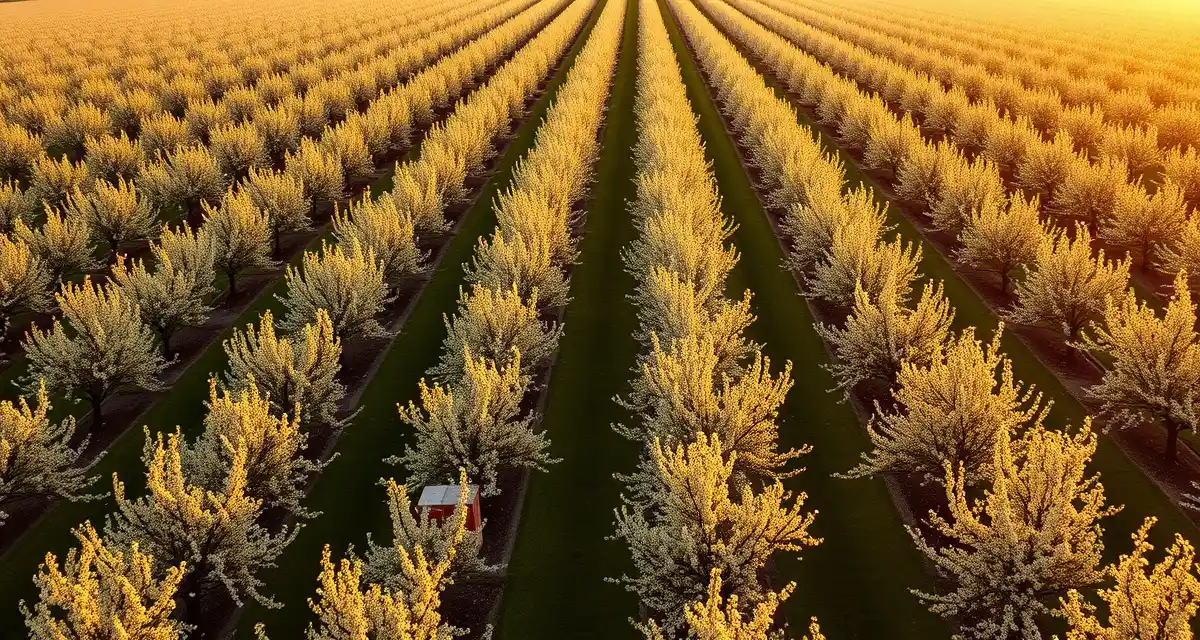
Pollination Service Management Software in Washington State
Washington produces 70% of US sweet cherries, creating the largest annual cherry pollination demand in the country. Add the Yakima Valley's apple industry, one of the largest in the world, and Washington State represents the most complex and valuable spring pollination market outside California.
Managing Washington contracts requires valley-specific bloom timing and the ability to coordinate cascade schedules across multiple elevation zones over a 6-8 week spring window.
TL;DR
- Commercial beekeeping operations face two primary management challenges: operational logistics (hive health, transport, placement) and administrative coordination (contracts, payments, documentation).
- Most disputes and revenue losses in commercial beekeeping are preventable with better documentation and clearer contract terms.
- The operations that run most profitably are those with disciplined systems for tracking hive health, contract status, and fleet logistics in one place.
- PollenOps is built specifically for the operational complexity of commercial-scale pollination services, not adapted from a hobbyist tool.
- The most important management decisions (treatment timing, contract renewal, hive allocation) require accurate current data to make well.
Washington's Commercial Pollination Landscape
Sweet cherries: The dominant crop for commercial pollination contracts in Washington. Yakima County, Okanogan County, Chelan County, and the Columbia River corridor from Wenatchee to the Tri-Cities all produce significant volumes. Sweet cherry bloom timing is elevation-dependent, creating cascade scheduling opportunities.
Tart cherries: Grown in smaller volumes than sweet, primarily in Yakima County. Tart cherry bloom timing differs from sweet cherry timing, typically running slightly later.
Apples: The Yakima Valley and Wenatchee/Columbia Basin are the centers of Washington's massive apple industry. Major varieties include Gala, Fuji, Honeycrisp, Granny Smith, Braeburn, and others. Apple bloom follows cherry by 7-14 days at comparable elevations.
Pears: Wenatchee and the Okanogan area produce significant volumes. Pear bloom timing falls between cherry and apple at most locations.
Blueberries: Skagit Valley and other western Washington lowlands produce commercial blueberry volumes, with bloom running May through early June.
Yakima Valley Bloom Timing
The Yakima Valley's elevation gradient creates the defining scheduling challenge of Washington cherry season:
Valley floor (700-900 ft elevation): Cherry bloom typically starts late March to early April. Lower Red Delicious apple orchards at similar elevation bloom approximately 10-14 days after cherry.
Mid-valley (1,000-1,500 ft): Cherry bloom typically starts 7-10 days after valley floor, running early to mid-April.
Upper elevation orchards (1,500-2,500 ft): Cherry bloom mid to late April. These orchards often bloom 2-3 weeks after valley floor orchards.
This elevation gradient is a cascade scheduling opportunity. Beekeepers who manage it well can move the same hives from lower elevation orchards to higher elevation orchards as the season progresses, filling multiple contracts with the same hive fleet.
PollenOps cherry bloom tracking provides elevation-zone-specific bloom timing alerts for Yakima Valley, Wenatchee/Columbia Basin, and Okanogan growing areas. You get separate alerts for each elevation zone, not a single county-wide forecast.
Wenatchee and Chelan County
The Wenatchee area and Lake Chelan valley produce some of Washington's highest-value cherry and apple orchards. The terrain in this region is more dramatic than the Yakima Valley, with orchards ranging from Columbia River elevation to mountain slopes.
Bloom timing in the Wenatchee area typically runs 7-14 days behind comparable Yakima Valley elevations. For a beekeeper with contracts in both areas, this creates a natural cascade: Yakima Valley delivery first, then move to Wenatchee as Yakima bloom wraps up.
How Many Hives Do Apple Orchards in Washington Require Per Acre?
Washington apple growers typically require 1-2 hives per acre for standard orchard configurations. High-density plantings, which are increasingly common in Washington's Gala and Fuji production, may require 2-3 hives per acre due to the higher tree count and corresponding flower density.
Variety-specific considerations:
- Fuji: Requires cross-pollination; placement positioning relative to pollenizer variety blocks matters
- Honeycrisp: Self-incompatible; adequate pollenizer variety integration is important
- Granny Smith: Self-incompatible; often requires higher hive density than some other varieties
Washington apple growers in the most competitive markets have become sophisticated buyers of pollination services. They specify strength minimums, expect delivery documentation, and track per-variety performance data.
Managing Contracts Across Yakima and Wenatchee Simultaneously
The logistics of managing contracts in both the Yakima Valley and the Wenatchee/Columbia Basin simultaneously requires:
- Separate bloom timing alerts by district (they don't bloom at the same time)
- A route plan that positions trucks for the cascade from Yakima to Wenatchee
- Contract calendar visibility showing which contracts need bees when, in each district
- Driver assignments that account for the travel time between the two valleys
PollenOps move planning software generates optimized sequences for multi-district operations, showing the most efficient order for Yakima deliveries, the timing of the Wenatchee transition, and the route plan that minimizes deadhead miles.
Washington State Apiary Regulations
Washington requires a certificate of health for all colonies entering from out of state. Washington also conducts spot inspections at border crossings and may request documentation when large loads enter the state during active season.
Additional Washington requirements:
- State apiary registration for all commercial operations
- County-level registration in each county where hives are placed seasonally
- Compliance with pesticide exposure documentation requirements (Washington has active protocols around neonicotinoid exposure in tree fruit districts)
The pesticide exposure tracking requirement in Washington is more formal than in many states, driven by the high-value crops and the history of pesticide-related bee incidents in the Yakima Valley.
Frequently Asked Questions
When does cherry bloom start in the Yakima Valley?
Lower Yakima Valley orchards at 700-900 ft elevation typically see cherry bloom start in late March to early April in normal years. Mid-valley orchards at 1,000-1,500 ft bloom approximately 7-10 days later. Upper elevation orchards at 1,500-2,500 ft bloom in mid to late April. All timing shifts 7-14 days earlier or later depending on winter chilling hours and spring temperature accumulation. PollenOps provides elevation-zone-specific alerts for each Yakima district.
How many hives do apple orchards in Washington require per acre?
Standard Washington apple contracts typically require 1-2 hives per acre. High-density plantings may require up to 2-3 hives per acre. The specific requirement depends on variety (some varieties are self-incompatible and need higher density), orchard configuration, and the grower's historical yield data. Confirm requirements with each grower before setting the contracted hive count.
How do I manage contracts across Yakima and Wenatchee simultaneously?
Use a contract calendar that shows bloom timing separately for each district alongside your delivery deadlines. Build a cascade route plan that delivers Yakima Valley contracts first, then transitions trucks to Wenatchee as Yakima bloom finishes. PollenOps provides district-specific bloom alerts for both valleys and generates optimized multi-district move sequences that account for the timing differential between the two regions.
What is the difference between commercial and hobby beekeeping?
Commercial beekeeping is distinguished by scale (typically 100+ hives, often 500-5,000+), revenue source (pollination contracts and bulk honey sales rather than local honey retail), and management approach (systematic protocols applied across yards rather than individual colony attention). Commercial operators manage bees as an agricultural enterprise, with the administrative, regulatory, and logistical complexity that entails. Most commercial operators derive the majority of their income from pollination services; honey production is a supplementary revenue stream.
How many hives are needed to make commercial beekeeping a full-time income?
Most beekeeping economists put the full-time commercial threshold at 500-800 hives, assuming efficient operations management and a combination of pollination and honey revenue. At 500 hives and $200/hive for almond pollination, almond season alone generates $100,000 in gross revenue before expenses. Net margins depend on operational efficiency, but well-run operations can achieve 30-50% net margins on pollination revenue. Additional crops and honey production improve per-hive economics but require additional management capacity.
What is the annual revenue potential for a 1,000-hive commercial operation?
A 1,000-hive operation running an almond season ($200/hive) plus blueberry or apple contracts ($80-100/hive) plus summer honey production ($25-40/hive after extraction costs) can generate $300,000-360,000 in annual gross revenue. Net margins after transport, crew, equipment, and hive replacement costs typically run 25-40% for well-managed operations, putting net income at $75,000-145,000 annually. The specific number depends heavily on circuit efficiency, loss rates, and contract quality.
Try These Free Tools
Sources
- USDA Agricultural Research Service
- Bee Informed Partnership
- American Beekeeping Federation (ABF)
- American Honey Producers Association
- Project Apis m.
Get Started with PollenOps
Managing a commercial beekeeping operation involves more data, more deadlines, and more moving parts than any general-purpose tool was designed to handle. PollenOps brings contracts, yard records, health documentation, and fleet logistics together in one platform built for the realities of commercial-scale beekeeping.