Wild Blueberry Pollination in Maine: Complete Contract Guide
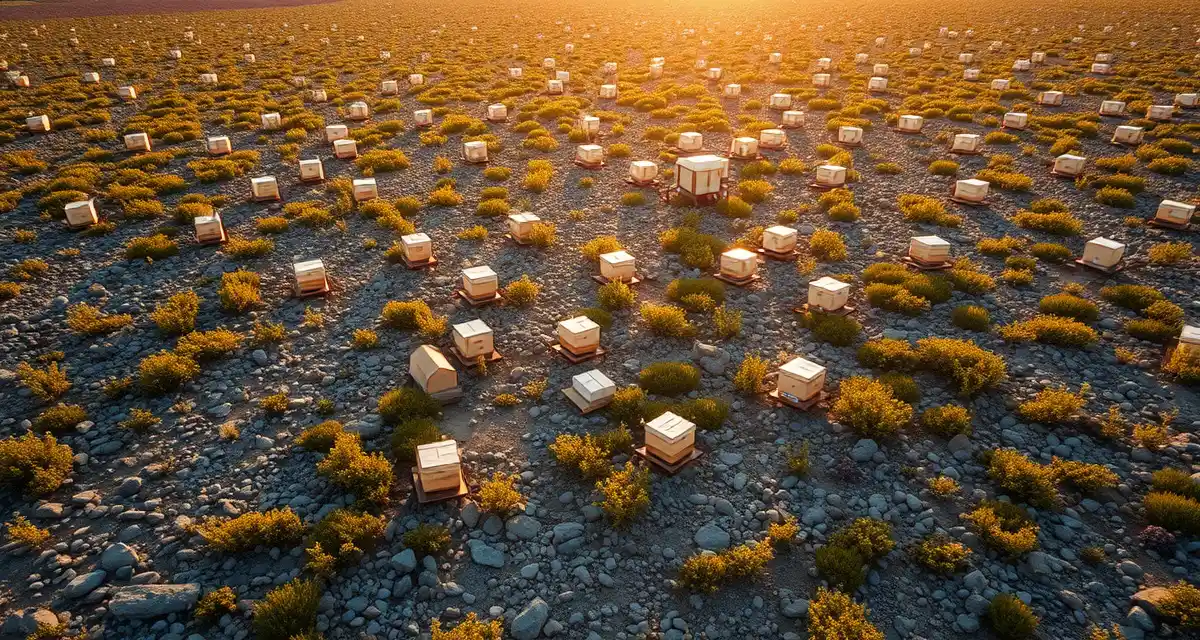
Maine wild blueberries cover 60,000 or more acres of barrens requiring dense hive placements in June. This isn't conventional orchard pollination. The barrens are sprawling, wild landscapes: open, rocky, and unlike anything else in commercial pollination. And the timing is compressed into 3 to 4 weeks in late May and June, with very little margin for error.
Wild blueberry pollination timing in Maine is not forgiving. Bloom waits for no one. If your hives arrive late or your colonies aren't strong, you miss the window.
This guide covers everything an operator needs to know to run Maine wild blueberry pollination contracts professionally: where to find contracts, what growers require, how wild blueberry pricing differs from cultivated blueberry, and what state regulations apply.
TL;DR
- Commercial blueberry pollination requires 2-4 hives per acre depending on variety and field density.
- Blueberry bloom windows are narrow (7-14 days) and vary by region from late February in Alabama to July in Maine.
- Lowbush blueberry in Maine operates under a different management model than highbush operations in Michigan, New Jersey, and the Pacific Northwest.
- Hive strength requirements for blueberry contracts typically range from 5-7 frames of bees depending on the grower.
- Coordinating delivery timing across multiple growers within a compressed bloom window is the primary logistics challenge in blueberry season.
Understanding Wild Blueberry Barrens vs. Conventional Orchards
The fundamental difference between Maine wild blueberry pollination and conventional orchard pollination is the nature of the crop. Wild blueberries grow in naturally occurring stands on acidic, rocky soils, primarily in Washington, Hancock, Aroostook, Oxford, and Penobscot counties. They're not planted in rows. They sprawl across barrens in irregular patterns.
This affects pollination strategy. In an apple orchard, you place hives at orchard edges in specific configurations relative to tree rows. In a blueberry barren, you're covering large open acreage with sufficient hive density to ensure every plant gets adequate pollinator visits.
hive placement density in wild blueberries typically runs 2 to 4 hives per acre of production area, though actual density recommendations vary by grower and processor. Coverage of a 1,000-acre barren might require 2,000 to 4,000 hive placements.
Maine Wild Blueberry Pollination Timing
Wild blueberry bloom in Maine typically runs from late May through the third week of June, but this varies by year, location, and elevation.
Coastal Washington County (the heart of Maine blueberry country): Bloom often begins in late May, typically peaking in the first two weeks of June.
Hancock County (Bar Harbor region): Similar timing to coastal Washington County.
Aroostook County (northern Maine): Bloom runs later, often mid-June, due to more northern latitude and cooler spring temperatures.
Oxford County (interior Maine): Timing falls between coastal and northern Maine.
Most colony deliveries to Maine blueberry yards happen in the second to fourth week of May, with the goal of having colonies established and foraging actively when the first flowers open. Delivery timing varies by location. Talk to your specific growers about their local bloom observations.
How Do You Get Wild Blueberry Pollination Contracts in Maine?
Wild blueberry pollination contracts flow through several channels.
Major Processor Networks
Maine's wild blueberry industry is dominated by a handful of large processors who contract with individual growers across the state. These processors (including Wyman's of Maine, Jasper Wyman & Son, and Cherryfield Foods) often coordinate pollination across their contracted grower base. Getting established with processor procurement contacts can open access to multiple growers simultaneously.
Contact processor procurement departments in the fall or early winter before your intended season. Introduce your operation, describe your hive count and circuit, and ask about their process for connecting beekeepers with growers.
Direct Grower Contact
Individual growers who aren't part of large processor networks contract directly with beekeepers. The Maine blueberry industry is geographically concentrated enough that word-of-mouth and direct outreach to individual operators in Washington and Hancock counties can lead to contracts.
The Wild Blueberry Commission of Maine and University of Maine Cooperative Extension are resources for understanding the industry and making introductions.
Returning Operator Advantage
Like most agricultural pollination markets, Maine rewards returning operators. Growers who had a good experience with you in year one will ask for you in year two. Build on your first season's relationships aggressively.
What Colony Strength Do Maine Blueberry Growers Require?
Requirements vary by grower and processor, but Maine wild blueberry contracts typically specify:
- Minimum 4 to 8 frames of bees at delivery (specific to your contract)
- Active laying queen (observable brood or queen present)
- Some contracts specify minimum brood frames in addition to total bee coverage
Higher-end growers in Washington and Hancock counties have moved toward requiring 6 to 8 frames of bees, similar to California almond standards. Lower-end contracts may accept 4 frames. Know what your specific contract requires before you arrive.
After California almonds and the spring circuit, your colonies should be strong enough for Maine requirements if they've been well-managed. Colonies that come out of almonds stressed, with high varroa loads or inadequate stores, need attention before Maine delivery.
How Is Wild Blueberry Pollination Priced Differently from Cultivated Blueberry?
This is an important distinction that affects revenue planning.
Wild Blueberry Pricing
Wild blueberry pollination rates in Maine typically run $70 to $130 per hive per placement, depending on contract terms, grower scale, and seasonal conditions. These rates are lower than almond pollination ($170 to $230 per hive) but comparable to or slightly above cultivated blueberry rates in other states.
The lower rate reflects several factors:
- Shorter bloom window (3 to 4 weeks vs. almond's 4 to 6 weeks)
- Wild plant structure creates less intense per-hive revenue demand than cultivated highbush
- Historical rate patterns in the Maine market
Cultivated Blueberry Pricing
Cultivated highbush blueberry pollination (in Michigan, New Jersey, and other states) typically runs $60 to $120 per hive. Maine wild blueberry rates are generally at or slightly above cultivated blueberry rates in those markets.
Revenue Planning for Maine
At $100 per hive average for Maine wild blueberry, 300 hives placed for 3 weeks generates $30,000. That's a meaningful spring income window. Not the almond anchor, but a solid contributor to the annual circuit revenue.
Combine Maine blueberry with California almonds, Pacific Northwest apple or cherry, and summer honey production, and you're building the kind of diversified revenue circuit that makes commercial beekeeping financially stable.
Maine Entry Requirements and Regulations
Maine takes its apiary regulations seriously. Out-of-state operators need to comply fully.
Entry Documentation
Colonies entering Maine must be accompanied by a certificate of inspection from the state of origin, issued within 30 days prior to movement. The certificate must confirm:
- Colony count
- Freedom from American foulbrood (AFB)
- Freedom from other regulated diseases (small hive beetle in some contexts)
Contact your home state's department of agriculture for the correct inspection certificate format. Some states use standard USDA forms; others have state-specific formats.
Maine Apiary Registration
All apiaries in Maine (including those operated by out-of-state beekeepers) must be registered with the Maine Department of Agriculture, Conservation and Forestry.
For out-of-state operators, this means registering each yard location you'll be using in Maine. Contact Maine DACF's Division of Animal & Plant Health to obtain current registration requirements and fees.
Maine Inspection on Entry
Maine state inspectors may inspect colonies at the point of entry or at yard locations. Having your documentation organized and accessible is important. Inspectors who find colonies without proper paperwork can hold or reject shipments.
Operational Logistics for Maine Blueberry Placements
Road Conditions
Many Maine blueberry barrens are accessed via unpaved roads. Washington County roads can be rough, particularly in May when ground is still soft from winter thaw. Ask growers about road conditions before scheduling deliveries. Some placements may require smaller loads per truck to stay within road weight limits.
Communication Expectations
Maine growers follow bloom closely. They'll give you delivery timing based on their bloom observations, not a fixed calendar date. Stay responsive to grower communication in the two weeks before your planned delivery date. Timing adjustments are common.
Hive Retrieval
After bloom ends, growers want hives removed promptly. They transition to harvest preparation and don't want active hives in the fields. Plan your retrieval logistics before delivery so you're ready to move quickly when the grower calls.
FAQ
How do you get wild blueberry pollination contracts in Maine?
The primary routes are through major processor networks (Wyman's, Cherryfield Foods) whose procurement teams coordinate pollination across their contracted grower base, and through direct outreach to individual growers in Washington and Hancock counties. The Wild Blueberry Commission of Maine and University of Maine Cooperative Extension can provide industry contacts. Build relationships in the fall and winter before your intended season. Most contracts are established well before the May delivery window.
What colony strength do Maine blueberry growers require?
Maine wild blueberry contracts typically specify 4 to 8 frames of bees at delivery, with an actively laying queen. Higher-end growers and larger processors increasingly require 6 to 8 frames, closer to California almond standards. Know your specific contract requirements and assess colonies approximately 4 to 6 weeks before delivery to ensure you have time to intervene if strength is insufficient.
How is wild blueberry pollination priced differently from cultivated blueberry?
Maine wild blueberry pollination rates typically run $70 to $130 per hive, at or slightly above cultivated blueberry rates in other major producing states (Michigan, New Jersey, Georgia) which typically range from $60 to $120 per hive. The compressed 3 to 4 week bloom window and the wild-plant structure of Maine's barrens means lower revenue per hive per season than almonds, but the Maine market remains an important component of the East Coast migratory circuit income.
What is the difference between lowbush and highbush blueberry pollination requirements?
Lowbush blueberry (Vaccinium angustifolium), grown primarily in Maine and eastern Canada, is managed as a wild crop in natural fields and requires 2-4 hives per acre. Highbush blueberry, grown commercially in Michigan, New Jersey, Oregon, and Washington, is a cultivated crop with different density requirements (typically 2-3 hives per acre). Lowbush bloom happens in late June to early July in Maine, while highbush bloom varies from May in the Mid-Atlantic to July in northern Michigan.
How long is the blueberry pollination placement period?
Blueberry pollination placements typically run 2-4 weeks, covering the full bloom window plus a few days before and after. Hives should be in position 1-2 days before peak bloom to allow forager orientation. Removal timing is typically negotiated in the contract and often coincides with petal fall or a set number of days after delivery. Most blueberry contracts specify 3-4 weeks of placement.
Can blueberry pollination contracts be combined with other crops in the same region?
Yes, and this is how experienced operators build efficient circuits. In the Pacific Northwest, blueberry season in June-July follows apple and cherry pollination in April-May. In New England, blueberry contracts in Maine (July) can follow apple pollination in Massachusetts and New York (May). Michigan blueberry in May-June can precede summer honey flows in the northern Midwest. Sequencing crops within a region reduces transport costs and maximizes revenue per hive per season.
Try These Free Tools
Sources
- USDA Agricultural Research Service
- Bee Informed Partnership
- American Beekeeping Federation (ABF)
- University of Maine Cooperative Extension
- Michigan State University Extension Apiculture Program
Get Started with PollenOps
Blueberry pollination across multiple growers and states requires tight coordination between delivery timing, hive inventory, and contract documentation. PollenOps tracks each grower's contract terms alongside your hive assignments and yard locations so your team executes on the schedule you planned, not the schedule you remember.