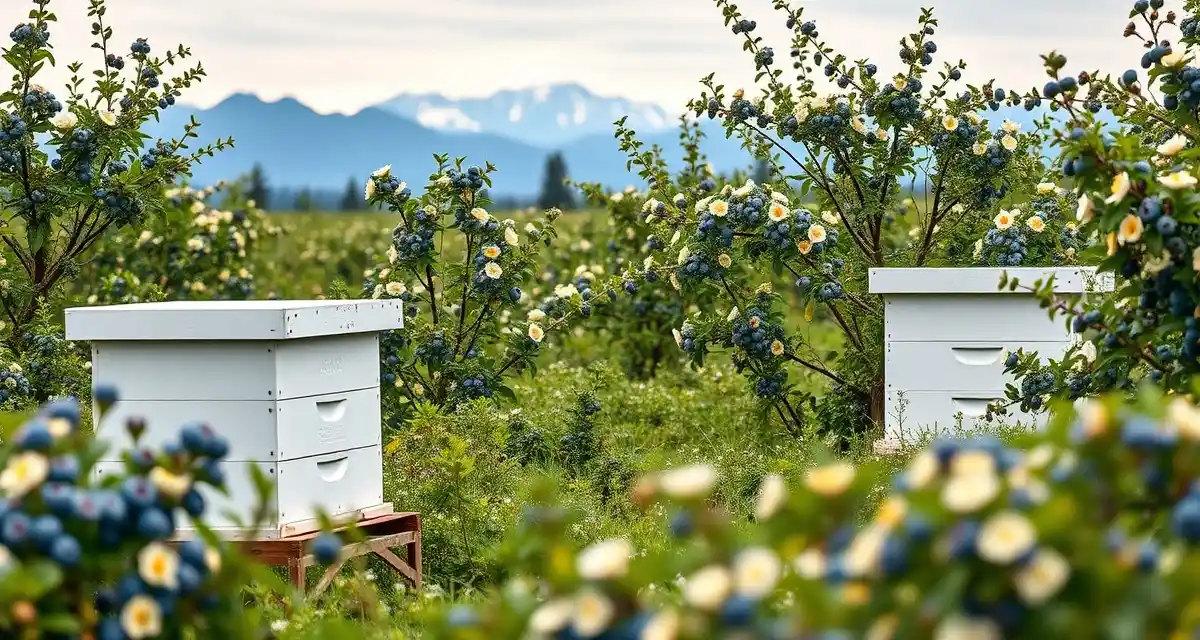
Blueberry Pollination in the Pacific Northwest: Oregon and Washington
Oregon and Washington produce significant cultivated blueberry acreage that requires commercial hive placements every spring. For migratory operators, Pacific Northwest blueberries bloom mid-April to mid-May, creating a natural bridge between almond exit in California and the cherry season that follows in May and June. If you're already running a West Coast circuit, these contracts can slot neatly between two larger revenue events.
Oregon's Willamette Valley and Washington's lowland counties are the primary production regions. Oregon tends to bloom a few days earlier than Washington's main production areas. Operators who want to cover both states often start in Oregon and shift north as bloom progresses, though logistics need to be mapped carefully to make that work.
TL;DR
- Commercial blueberry pollination requires 2-4 hives per acre depending on variety and field density.
- Blueberry bloom windows are narrow (7-14 days) and vary by region from late February in Alabama to July in Maine.
- Lowbush blueberry in Maine operates under a different management model than highbush operations in Michigan, New Jersey, and the Pacific Northwest.
- Hive strength requirements for blueberry contracts typically range from 5-7 frames of bees depending on the grower.
- Coordinating delivery timing across multiple growers within a compressed bloom window is the primary logistics challenge in blueberry season.
Timing and the Circuit Connection
The Pacific Northwest blueberry season runs roughly from mid-April to mid-May depending on variety and elevation. This timing works well for operators who exit California almonds in late February or early March and want a productive stop before transitioning to Washington cherries or Oregon/Washington mixed fruit crops.
Managing the transition from almonds to blueberries requires colonies that have recovered well from almond season stress. Varroa mite levels coming out of almonds can be elevated, and a 6 to 8 week recovery window gives colonies time to rebuild before blueberry bloom. Operators who manage post-almond mite loads well consistently arrive in the Pacific Northwest with better colony populations.
For planning your blueberry pollination contract schedule, understanding where Pacific Northwest timing fits in your annual circuit is the starting point for profitable route design.
Oregon Blueberry Contracts
Oregon's Willamette Valley highbush blueberry acreage is concentrated in the northern valley counties, particularly Polk, Yamhill, and Washington counties. Growers here have established relationships with local and migratory beekeepers, and breaking in requires direct outreach and competitive contract terms.
Oregon growers typically require colonies at 6 frames of bees or better. Given Oregon's wet spring weather, colonies with good cluster populations hold up better through cool, overcast bloom conditions than marginal hives. Plan for the weather variability that the Willamette Valley is known for in April.
Oregon's apiary entry requirements include a certificate of health from your origin state. Register your Oregon yard locations with the Oregon Department of Agriculture before placing hives. Working in Oregon also means awareness of the Willamette Valley's specific pesticide protocols for seed crop areas, though blueberry yards are typically outside the most intensive seed production zones.
Washington Blueberry Contracts
Washington's commercial blueberry production is primarily in the Whatcom County area in the northwest corner of the state, along with some acreage in the Skagit Valley. This region also has significant raspberry and other berry production that can be combined into multi-crop contract packages.
Whatcom County blueberry bloom typically runs from late April into mid-May. The area's proximity to Vancouver, BC creates some cross-border market dynamics, though US regulations require all colonies pollinating in the US to be sourced domestically.
Washington requires apiary registration and a certificate of health for incoming colonies. Get your Washington permits lined up before the move, especially if you're coming from another state. Washington Department of Agriculture apiary staff are generally helpful and responsive if you contact them in advance.
Contract Structure and Rates
Pacific Northwest blueberry pollination rates have typically run from $65 to $95 per hive, with variation based on colony strength requirements, location, and the season's demand balance. Operators with established Pacific Northwest relationships often have rates locked in from the prior fall.
If you're building new relationships, reach out to growers by November for the following spring. Many Pacific Northwest growers have their bee supplier commitments made by January. Coming in late with a cold call in March means you're competing for leftover spots, usually the ones other operators passed on.
Compliance for Out-of-State Operators
Both Oregon and Washington require out-of-state commercial operators to register yards and provide health certificates for incoming colonies. Oregon requires compliance with its apiary regulations including registration before placement. Washington has its own registration requirements that apply to all commercial operations, including temporary seasonal operators.
Keep your paperwork organized and your registration records current. The Pacific Northwest states take apiary health seriously, and inspections do occur during pollination season.
Frequently Asked Questions
How do you get blueberry contracts in Oregon or Washington?
Direct outreach to growers is the primary path. Focus your prospecting on Willamette Valley counties in Oregon and Whatcom County in Washington. Contact growers in the fall, not in the spring. Introduce yourself with your operation's background, colony count, and track record from other pollination contracts. References from California almond growers or other Northwest operators carry weight. Oregon and Washington growers talk to each other, so one good relationship can lead to more. Industry events like the Pacific Northwest Honey Bee Health Conference are also useful for making connections.
When is blueberry season in the Pacific Northwest?
Oregon Willamette Valley blueberry bloom typically runs from mid-April to late April. Washington's Whatcom County and Skagit Valley areas bloom from late April through mid-May. Specific timing varies by variety, with early varieties like Duke and Bluecrop blooming first, followed by later varieties. Cool, wet springs can delay bloom by a week or more. Operators planning the Pacific Northwest circuit should build a flexible schedule that can accommodate a week of weather delay without cascading problems for the next contract on the route.
How does Pacific Northwest blueberry timing connect to the migratory circuit?
Pacific Northwest blueberries fall between California almonds (February) and Pacific Northwest cherries (May-June). For operators on a West Coast circuit, this creates a clean 3-stop spring route: almonds in California, blueberries in Oregon/Washington, then cherries in Washington or Oregon. The key constraint is post-almond colony recovery. Colonies need 6 to 8 weeks of good buildup conditions between almond exit and blueberry placement to arrive with adequate strength. Operators who time their almond exit well and manage post-almond mite loads efficiently make the Pacific Northwest blueberry stop work profitably.
What is the difference between lowbush and highbush blueberry pollination requirements?
Lowbush blueberry (Vaccinium angustifolium), grown primarily in Maine and eastern Canada, is managed as a wild crop in natural fields and requires 2-4 hives per acre. Highbush blueberry, grown commercially in Michigan, New Jersey, Oregon, and Washington, is a cultivated crop with different density requirements (typically 2-3 hives per acre). Lowbush bloom happens in late June to early July in Maine, while highbush bloom varies from May in the Mid-Atlantic to July in northern Michigan.
How long is the blueberry pollination placement period?
Blueberry pollination placements typically run 2-4 weeks, covering the full bloom window plus a few days before and after. Hives should be in position 1-2 days before peak bloom to allow forager orientation. Removal timing is typically negotiated in the contract and often coincides with petal fall or a set number of days after delivery. Most blueberry contracts specify 3-4 weeks of placement.
Can blueberry pollination contracts be combined with other crops in the same region?
Yes, and this is how experienced operators build efficient circuits. In the Pacific Northwest, blueberry season in June-July follows apple and cherry pollination in April-May. In New England, blueberry contracts in Maine (July) can follow apple pollination in Massachusetts and New York (May). Michigan blueberry in May-June can precede summer honey flows in the northern Midwest. Sequencing crops within a region reduces transport costs and maximizes revenue per hive per season.
Try These Free Tools
Sources
- USDA Agricultural Research Service
- Bee Informed Partnership
- American Beekeeping Federation (ABF)
- University of Maine Cooperative Extension
- Michigan State University Extension Apiculture Program
Get Started with PollenOps
Blueberry pollination across multiple growers and states requires tight coordination between delivery timing, hive inventory, and contract documentation. PollenOps tracks each grower's contract terms alongside your hive assignments and yard locations so your team executes on the schedule you planned, not the schedule you remember.