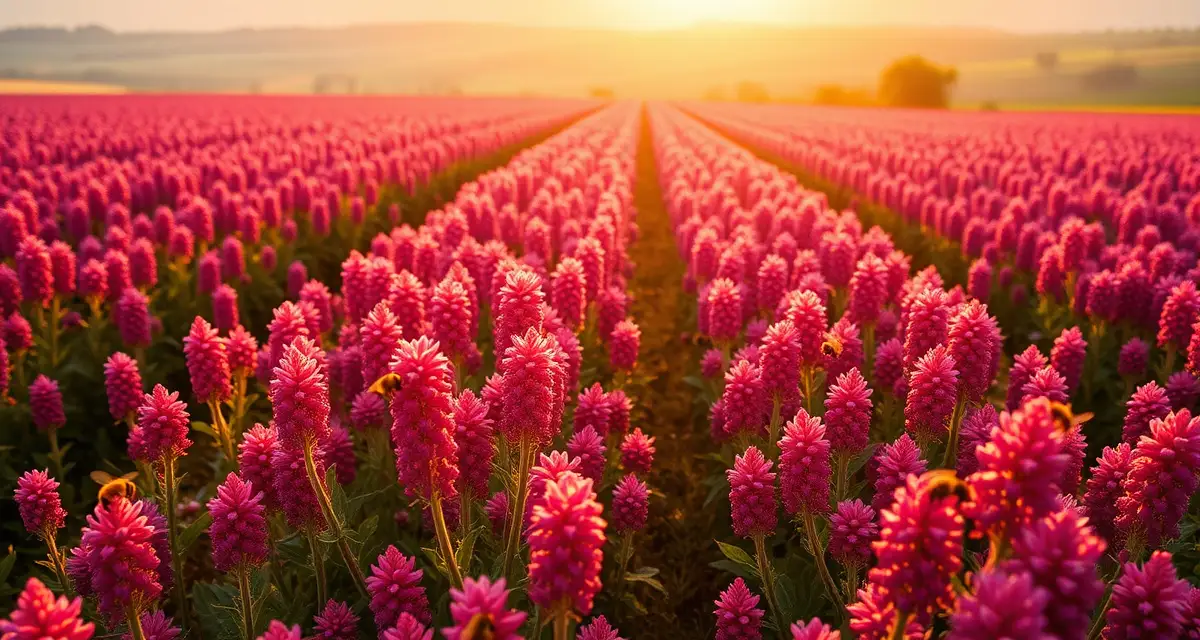
Clover Seed Pollination Contracts: Oregon and the Northwest
Oregon's Willamette Valley is the capital of US grass and legume seed production. Red clover, white clover, alsike clover, orchardgrass, ryegrass, bentgrass: the Willamette Valley produces a substantial share of the world's supply of these commercial seeds. And nearly all of them need bee pollination for commercial seed set.
Clover seed pollination requires some of the highest hive densities of any commercial crop: 3–5 hives per acre for red clover. For operators already running the Pacific Northwest circuit, clover seed is a high-density late-spring revenue leg.
TL;DR
- Clover seed and sunflower pollination represent two different models: clover seed requires 2-4 hives per acre, while sunflower typically requires 1 hive per acre.
- North Dakota is the center of both US sunflower and honey production, with summer flows that can generate 100+ pounds of honey per colony in good years.
- Clover seed production in the Pacific Northwest (Oregon, Idaho, Washington) requires precise placement timing tied to blooming stage.
- Sunflower pollination rates typically run $40-70 per hive; honey production value from the placement can supplement contract revenue.
- Managing clover or sunflower contracts alongside honey production requires tracking both revenue streams on the same calendar.
Oregon's Seed Industry
The Willamette Valley's climate (wet winters, warm dry summers) is nearly ideal for grass and legume seed production. The valley runs from Eugene in the south to Portland in the north, with the core seed production belt concentrated in Linn, Benton, Lane, and Polk counties.
Red clover is the highest-profile pollination crop in this system. Red clover requires cross-pollination and has a deep flower tube that excludes short-tongued bees. Bumble bees are actually more effective per visit than honey bees. But commercial production requires honey bee volume simply because bumble bees can't be deployed at scale.
Other Willamette Valley crops requiring bee pollination: white clover, crimson clover, alsike clover, carrot seed, radish seed, and some legume vegetable seed crops.
Red Clover: The Primary Crop
Red clover seed pollination is the most demanding assignment in the seed crop world:
Hive density: 3–5 hives per acre. Much higher than tree fruit crops. This density compensates for honey bees' lower per-visit efficiency on red clover versus bumble bees.
bloom timing: Late June through July in the Willamette Valley, depending on planting and variety.
Colony strength requirements: Strong colonies (6+ frames) that can deploy large forager numbers throughout the day. Red clover bloom hours extend through midday in cool Pacific Northwest weather, unlike desert melon where bloom closes by noon.
Rates: Red clover seed pollination runs $70–100/hive in Oregon. The higher density requirements (3–5 hives/acre) mean the grower is paying $210–500 per acre in pollination costs, which they're willing to do for certified seed production where per-acre returns justify the investment.
Other Seed Crops
White clover: Bloom May–June. Lower hive density than red clover (2–3 hives/acre). Rates $60–85/hive.
Carrot seed: An interesting pollination crop. Carrot flowers are tiny and accessible to many bee species, but honey bee coverage at 1–2 hives/acre is standard. Timing: June–July.
Radish seed: Radish produces abundant pollen and is attractive to bees. 1–2 hives/acre. Summer bloom.
Alsike clover: Similar to red clover in requirements, slightly lower density.
Fitting Oregon Seed Into Your Circuit
The Willamette Valley in late June–July occupies the same time slot as Michigan blueberries or early North Dakota summer honey. Operators who base in the Pacific Northwest may prefer the Oregon seed circuit. Those running California-centric or Midwest-centric circuits may find the logistics of the Willamette Valley don't pencil out against competing options.
The seed crop circuit works best for operators with:
- Existing presence in the Pacific Northwest (Washington/Oregon cherries in May, then south to Willamette Valley for seed crops in June)
- Established relationships with Willamette Valley seed growers (the market is smaller and more relationship-dependent than almond)
- Hives strong enough to deliver 6+ frames to the demanding red clover placements
Contract Terms
Seed crop contracts in Oregon tend to run through seed company intermediaries. Willamette Valley seed producers often contract production to seed companies, who in turn may coordinate pollination services. Key contract considerations:
Field isolation: Seed crops have strict isolation requirements (specific distance from other varieties) to maintain genetic purity. Your bees can't be foraging on contaminating sources nearby. Know what's within foraging range.
Pesticide protocols: Insecticide applications are tightly managed on seed crops because pollination is the priority. This is generally a safer environment for bees than many other crops.
Access: The Willamette Valley's agricultural infrastructure is well-developed and truck access is generally good.
FAQ
How many hives per acre does clover seed require?
Red clover seed production requires 3–5 hives per acre, among the highest hive density requirements of any commercial crop. The high density compensates for honey bees' relatively low per-visit efficiency on red clover's deep flower tube. White clover and alsike clover require somewhat lower density at 2–3 hives per acre. For operators accustomed to almond or apple density requirements (1–2 hives/acre), clover seed contracts on fewer total acres can still represent large hive placements. A 200-acre red clover seed field at 4 hives/acre requires 800 hives, a significant single placement.
When is clover bloom in Oregon?
Red clover bloom in Oregon's Willamette Valley typically runs late June through July. White clover blooms slightly earlier, often starting in late May and running through June. The timing fits well in a Pacific Northwest circuit that includes Washington/Oregon cherries in May. Exit cherry season in late May and move south to Willamette Valley for seed crop placements in June. The Pacific Northwest's climate extends the daily foraging window for bees compared to desert regions, which is an advantage for the demanding red clover pollination requirement.
How do clover seed pollination rates compare to almond?
Oregon clover seed pollination rates of $70–100/hive are 40–55% of California almond rates ($185–220/hive). However, the per-acre economics for the operator can be favorable because of density requirements. Placing 4 hives per acre on 300 acres generates $84,000–120,000 in pollination revenue from 1,200 hive placements, which approaches almond-season revenue levels from a smaller geographic area. The comparison depends heavily on your operation's base. For operators already in the Pacific Northwest, Oregon seed crops are a high-density local opportunity. For California-centric operations, the logistics of getting to the Willamette Valley may favor alternative summer circuits.
What is the difference between commercial and hobby beekeeping?
Commercial beekeeping is distinguished by scale (typically 100+ hives, often 500-5,000+), revenue source (pollination contracts and bulk honey sales rather than local honey retail), and management approach (systematic protocols applied across yards rather than individual colony attention). Commercial operators manage bees as an agricultural enterprise, with the administrative, regulatory, and logistical complexity that entails. Most commercial operators derive the majority of their income from pollination services; honey production is a supplementary revenue stream.
How many hives are needed to make commercial beekeeping a full-time income?
Most beekeeping economists put the full-time commercial threshold at 500-800 hives, assuming efficient operations management and a combination of pollination and honey revenue. At 500 hives and $200/hive for almond pollination, almond season alone generates $100,000 in gross revenue before expenses. Net margins depend on operational efficiency, but well-run operations can achieve 30-50% net margins on pollination revenue. Additional crops and honey production improve per-hive economics but require additional management capacity.
What is the annual revenue potential for a 1,000-hive commercial operation?
A 1,000-hive operation running an almond season ($200/hive) plus blueberry or apple contracts ($80-100/hive) plus summer honey production ($25-40/hive after extraction costs) can generate $300,000-360,000 in annual gross revenue. Net margins after transport, crew, equipment, and hive replacement costs typically run 25-40% for well-managed operations, putting net income at $75,000-145,000 annually. The specific number depends heavily on circuit efficiency, loss rates, and contract quality.
Try These Free Tools
Sources
- USDA Agricultural Research Service
- Bee Informed Partnership
- American Beekeeping Federation (ABF)
- Project Apis m.
- North Dakota Department of Agriculture
Get Started with PollenOps
Clover seed and sunflower pollination often overlap with summer honey production on the same circuit, creating two revenue streams from the same hives. PollenOps tracks both so your financial picture reflects the full value of each yard assignment.