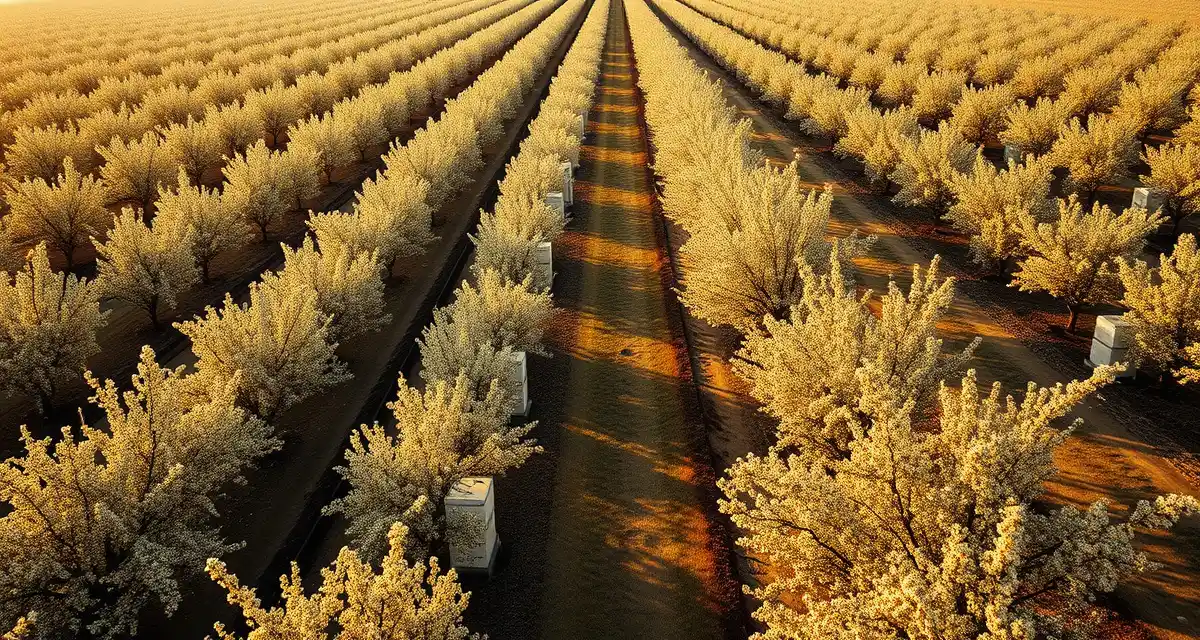
California Almond Pollination Rate Trends 2010-2025
California almond pollination rates have risen from $100-130 per hive in 2010 to $185-225 in 2025, and rate increases have outpaced inflation by 3x as almond acreage growth exceeded colony supply. Understanding the drivers of this trend, and where rates may go, helps operators make multi-year business planning decisions.
TL;DR
- California's primary commercial beekeeping role is shaped by its crop mix, climate, and position on the national pollination circuit.
- Pollination rates in California range $15-30/hive depending on crop and colony strength requirements.
- Out-of-state operators entering California for pollination contracts must register with the state agricultural authority and obtain a Certificate of Health.
- California functions as either a primary pollination destination, a seasonal honey production location, or a transitional stop depending on the circuit.
- Tracking permit status, registration documents, and yard records for California operations requires organized record-keeping before the season opens.
The Long Arc of Almond Pollination Rate Increases
In 2000, almond pollination rates averaged $35-50 per hive. By 2010, rates had risen to $100-130. By 2015, $140-160 was common. By 2020, $180-200 was standard. In 2025, market rates run $185-225 per hive for quality colonies.
That's a 5-7x increase in 25 years. What drove it?
Almond acreage expansion: California almond acreage grew from approximately 450,000 acres in 2000 to over 1.4 million acres by 2020. The crop grew more than 3x in acreage, creating demand for approximately 3x as many colonies, roughly 3 million colonies for a full state pollination.
Colony supply constraints: The US managed honeybee population hasn't grown proportionally with almond acreage. Colony losses from varroa, pesticides, and other stressors have kept the national colony count roughly flat despite significant industry investment in replacement production.
Supply-demand mathematics: When demand grows 3x and supply stays roughly flat, prices rise. The almond pollination market is a straightforward supply-demand story.
Quality premiums: As the market professionalized, growers began paying more for documented, stronger colonies. Premium prices for 8+ FOB colonies versus minimum-strength delivery separated the market into commodity and premium tiers.
What Drives Rate Variation Today
Not all almond pollination contracts pay the same rate. Current rate variation runs from approximately $170 to $240+ per hive depending on:
Colony strength: Operators delivering 8+ FOB routinely command $15-30/hive premium over minimum-strength delivery.
Relationship history: Long-term grower relationships regularly pay 10-20% above market rates for reliability and trust. New relationships typically start at market rates or below.
Contract timing: Operators who sign contracts in August-October for the following February season often get better rates than those signing in November-January when demand is most acute.
Delivery reliability record: Operators with documented track records of on-time, on-spec delivery command premiums. Growers pay for certainty.
Geographic demand variation: Certain valley areas or specific crop configurations create higher demand density than others. Rates vary somewhat by county and micromarket.
The Water Variable
California's water situation introduces a structural variable into long-term almond pollination demand. Almond trees require substantial water, approximately 3.5-4 feet of applied water per acre per year. As California's water supply becomes more constrained through drought and regulatory changes, some almond acreage may become economically unviable.
The USDA tracks California almond acreage changes, and there have been removal programs in water-stressed areas. A significant reduction in almond acreage would reduce colony demand and put downward pressure on rates.
This is a long-term risk, not an immediate one. But operators building 10-year business plans on almond pollination income should factor in California water risk.
Future Rate Outlook
Several factors bear on future almond pollination rates:
Continued acreage: If California almond acreage holds or grows, demand stays strong relative to colony supply.
Colony production investment: Significant industry investment in queen production, package bees, and overwintering has improved supply response. If colony supply grows faster than demand, rates could moderate.
Alternative protein crops: Consumer demand shifts away from almonds (environmental concerns about water use) could slow acreage growth.
Market rates from competing crops: As other pollination crops (avocados, pistachios, cherries) have increased their acreage and pollination demand, they compete for the same colony supply. This cross-market competition supports pricing.
Near-term (2025-2027) outlook: Rates are likely to hold in the $185-225 range absent a major acreage reduction event or significant new colony supply entering the market. The structural supply-demand imbalance that drove rates to current levels hasn't resolved.
What is almond pollination worth per hive covers the revenue calculation for almond pollination operations.
US pollination market size provides context on almond's position within the broader pollination market.
Frequently Asked Questions
What has driven almond pollination rate increases since 2010?
The primary driver is supply-demand imbalance. California almond acreage grew from approximately 600,000 acres in 2010 to 1.4+ million acres by 2020 (more than doubling in a decade), while US managed colony population grew only modestly. Almond pollination requires approximately two colonies per acre, so the crop went from needing 1.2 million colonies to needing nearly 3 million from California alone. Since total US colony supply is approximately 2.7 million, almond pollination now requires essentially all available commercial colonies for a 4-6 week period. That demand concentration, combined with colony quality premiums from growers seeking reliable high-strength delivery, drove rates from $100-130 in 2010 to $185-225 in 2025.
Will almond pollination rates continue to increase?
The fundamental supply-demand imbalance that drove rate increases over 15 years hasn't reversed, suggesting rates will hold near current levels. Upward pressure could continue if almond acreage grows and colony supply remains constrained. Downward pressure could come from California water restrictions reducing almond acreage, significant new colony supply entering the market, or demand disruption from consumer behavior shifts around almonds. The most likely near-term scenario (2025-2028) is rates holding in the $185-225 range with annual variation of $10-20 depending on colony supply and demand conditions in each season. Significant rate increases beyond 15-20% are less likely than in previous decades. The market has found a high-equilibrium band.
How should operators position for future almond rate trends?
Position for rate stability rather than continued rapid increases. Build your business model around $185-215/hive as a realistic multi-year expectation. Diversify beyond almonds, since California almond dependency creates risk if rates soften or acreage contracts. Build premium market position: operators delivering 8+ FOB with documentation and long-term grower relationships will hold their rate premium regardless of where the market floor moves. Add non-California pollination contracts (Washington apples, Pacific Northwest seed crops, Southeast blueberries) to reduce single-market risk. Long-term contract relationships (3-5 year agreements with established growers) provide rate certainty even if spot market rates fluctuate.
What is the process for registering an out-of-state apiary in a new state?
Most states require out-of-state operators to register with the state department of agriculture apiary program before placing colonies. The process typically involves submitting a registration application (online or paper), paying a fee (usually $10-50 per location), and providing contact information for the operation. Some states also require the registration to be renewed annually. Contact the destination state's department of agriculture apiary program at least 60 days before your planned arrival to confirm current requirements.
What documentation do state apiary inspectors typically review?
State apiary inspectors review health certificates for out-of-state colonies, registration documentation, and colony inspection records during apiary visits. Inspectors check for signs of American foulbrood, European foulbrood, and other regulated pests and diseases. Operations with organized digital records that include treatment history and mite counts typically have faster, less complicated inspections than operations without documentation. Some state inspectors also verify that varroa mite loads are below state entry thresholds.
What triggers a state apiary inspection?
State apiary inspections can be triggered by routine inspection schedules (most states inspect a percentage of registered apiaries annually), neighbor or landowner complaints, disease reports from nearby operations, or inspection requirements tied to state entry permits. California, in particular, has the right to inspect incoming loads at port of entry for commercial beekeeping operations. Maintaining current registration and organized records makes required inspections faster and less disruptive.
Try These Free Tools
Sources
- USDA Agricultural Research Service
- Bee Informed Partnership
- American Beekeeping Federation (ABF)
- California Department of Agriculture
- Project Apis m.
Get Started with PollenOps
Commercial operations working in California face the same registration, permit, and documentation requirements as any state on the national circuit -- plus California's specific regulatory requirements. PollenOps tracks your California yard records, contract assignments, and permit documentation alongside your full operation, so entering a new state doesn't add a separate administrative burden. See how the platform fits operations working across multiple states.