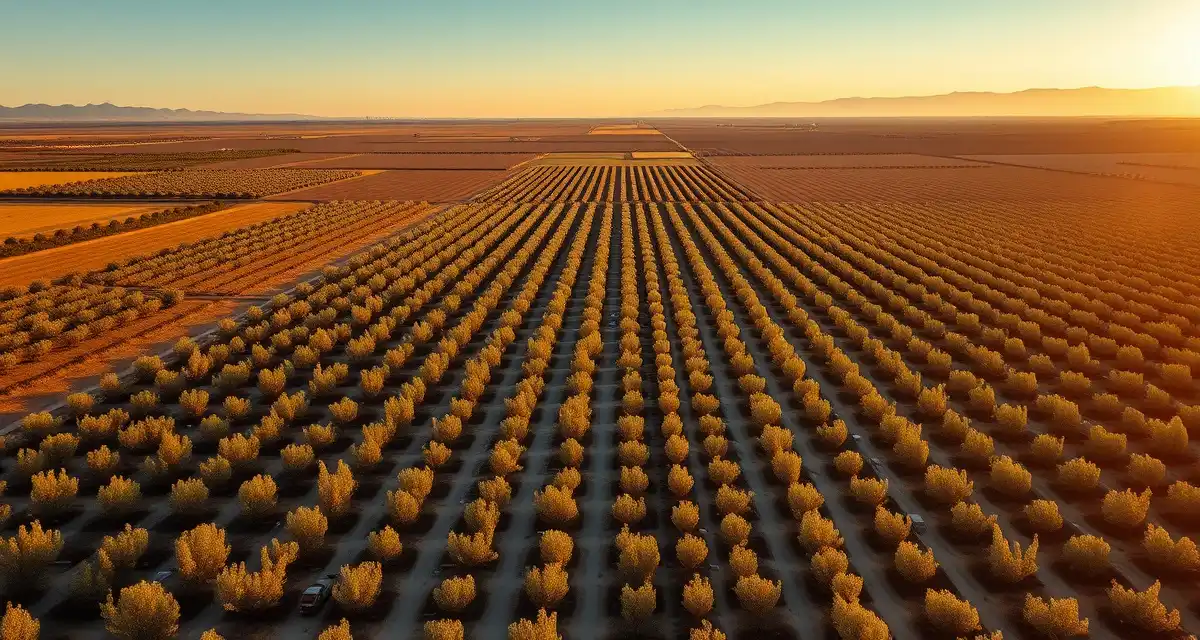
California Almond Geography: Key Regions for Commercial Beekeepers
California almonds run from Shasta County in the north to Kern County in the south, spanning 400 miles. Northern valley counties (Glenn, Tehama) are smaller markets but often easier to access. Understanding the geography of California almond production helps operators plan yard placement, sequence contracts, and navigate the state's logistics efficiently.
TL;DR
- California's primary commercial beekeeping role is shaped by its crop mix, climate, and position on the national pollination circuit.
- Pollination rates in California range $65-220/hive depending on crop depending on crop and colony strength requirements.
- Out-of-state operators entering California for pollination contracts must register with the state agricultural authority and obtain a Certificate of Health.
- California functions as either a primary pollination destination, a seasonal honey production location, or a transitional stop depending on the circuit.
- Tracking permit status, registration documents, and yard records for California operations requires organized record-keeping before the season opens.
The San Joaquin Valley: California's Almond Core
The San Joaquin Valley is the center of California almond production. The valley floor (running roughly 200 miles from Stockton in the north to Bakersfield in the south) contains the highest concentration of almond acreage in the world.
Kern County (Bakersfield area): The southern anchor of major almond production. High acreage density, warm climate. Kern County bloom typically starts earliest in the southern San Joaquin, often in late January or very early February in warm years. High colony demand and well-established operator relationships. One of the most competitive markets in the state for pollination contracts.
Fresno County (Fresno/Madera area): The largest almond-producing county in California by acreage. The central valley around Fresno has high almond density. bloom timing typically one to two days later than Kern in the south. Very high colony demand.
Tulare County (Visalia/Porterville area): Significant almond acreage on the east side of the valley. Bloom timing similar to Fresno. Kings County (adjacent) has additional acreage.
Merced County (Los Banos/Merced area): Central valley, mid-valley bloom timing. Growing almond acreage in the past decade.
Stanislaus County (Modesto/Turlock area): Northern San Joaquin Valley. Some of California's oldest established almond orchards. Bloom timing typically 4-7 days later than southern Kern.
San Joaquin County (Stockton/Lodi area): Northern edge of major production. Later bloom timing than southern valley.
The Sacramento Valley: Northern Almond Country
The Sacramento Valley north of Sacramento has almond acreage that's significant but smaller in scale than the San Joaquin. Northern valley operations have different characteristics:
Sacramento County and surroundings: Urban fringe almonds. Smaller scale, often more accessible in terms of competition for contracts.
Yolo County (Woodland/Davis area): UC Davis proximity means almond research is nearby. Some almond acreage mixed with other crops.
Colusa County: Western Sacramento Valley, some almond production.
Glenn County (Orland area): Active almond production in a smaller, more accessible market. Glen County operators often find it easier to build grower relationships than in the highly competitive Fresno/Kern market.
Tehama County (Red Bluff area): Northern Sacramento Valley. Smaller market, later bloom timing than the south valley.
North-to-South Timing: The Sequencing Opportunity
The 400-mile span of California almond production creates a bloom timing gradient. In most years:
- Kern County (south): Bloom often starts February 10-20
- Fresno County (central): Bloom typically February 14-24
- Stanislaus County (north San Joaquin): Bloom typically February 18-28
- Sacramento Valley counties: Bloom typically late February to early March
This 10-14 day spread across the state creates a sequencing opportunity for operators with enough flexibility. Operators who can place colonies in southern Kern contracts and then move to northern valley contracts as bloom progresses can increase their hive utilization per season.
PollenOps bloom timing data and contract records help track the timing across different yard locations, making it easier to identify the sequencing window in any given year.
Western vs Eastern Valley Logistics
The San Joaquin Valley splits into west-side (Highway 33/198 corridor) and east-side (Highway 99/245 corridor) almond production areas.
West side (Wasco, Lost Hills, Shafter area in Kern): Major industrial-scale almond production. Very large orchards, large contract volumes, high competition from established operators. The west side is where the biggest California almond deals happen, and where new operators face the steepest competition for relationships.
East side (Lindsay, Porterville, Reedley area in Tulare): Mix of smaller family orchards and larger operations. Sometimes more accessible for operators building new relationships.
Interstate 5 corridor: I-5 runs the west side of the valley, the fastest north-south route for moving trucks. Operators working the west-side valley use I-5 as their spine.
Highway 99 corridor: Highway 99 runs the east side through Fresno and Bakersfield, the main artery for east-side operations.
Almond pollination California covers the full California almond opportunity.
Almond pollination San Joaquin Valley goes deeper on San Joaquin Valley-specific operations and opportunities.
Frequently Asked Questions
What are the main California almond producing regions?
California almond production is concentrated in two valleys. The San Joaquin Valley (running from Bakersfield north to Stockton) is the core, with the highest acreage density in Kern, Fresno, Tulare, Kings, Merced, and Stanislaus counties. The Sacramento Valley has smaller but significant almond production in Sacramento, Colusa, Glenn, and Tehama counties. The Kern-Fresno corridor is the highest-density production area and the most competitive market for pollination contracts. Northern Sacramento Valley counties are smaller markets but often more accessible for operators building new grower relationships.
How does northern vs southern valley almond timing differ?
In most years, southern San Joaquin Valley almond bloom begins 10-14 days earlier than Sacramento Valley bloom. Kern County typically starts bloom in mid-to-late February; Sacramento Valley counties typically start late February through early March. Within the San Joaquin, Kern County typically runs 5-7 days ahead of Stanislaus County. This timing gradient creates sequencing opportunities. Operators who can place hives in southern contracts and then move north can increase hive utilization. However, early warm years compress the timing differential, and cold late years can synchronize the valley more than usual.
Which California regions are easiest to access for out-of-state operators?
The Sacramento Valley and northern San Joaquin counties are typically more accessible for new operator relationship-building than Kern or Fresno. The south valley's highest-density areas have well-established relationships between large operators and large growers. Entering as a new name is difficult. Glenn, Tehama, and Colusa counties in the Sacramento Valley have smaller-scale operations where direct grower outreach is more likely to succeed. East-side Tulare County (Lindsay, Porterville) also tends toward smaller family orchards where personal relationships are more accessible than west-side industrial operations.
What is the process for registering an out-of-state apiary in a new state?
Most states require out-of-state operators to register with the state department of agriculture apiary program before placing colonies. The process typically involves submitting a registration application (online or paper), paying a fee (usually $10-50 per location), and providing contact information for the operation. Some states also require the registration to be renewed annually. Contact the destination state's department of agriculture apiary program at least 60 days before your planned arrival to confirm current requirements.
What documentation do state apiary inspectors typically review?
State apiary inspectors review health certificates for out-of-state colonies, registration documentation, and colony inspection records during apiary visits. Inspectors check for signs of American foulbrood, European foulbrood, and other regulated pests and diseases. Operations with organized digital records that include treatment history and mite counts typically have faster, less complicated inspections than operations without documentation. Some state inspectors also verify that varroa mite loads are below state entry thresholds.
What triggers a state apiary inspection?
State apiary inspections can be triggered by routine inspection schedules (most states inspect a percentage of registered apiaries annually), neighbor or landowner complaints, disease reports from nearby operations, or inspection requirements tied to state entry permits. California, in particular, has the right to inspect incoming loads at port of entry for commercial beekeeping operations. Maintaining current registration and organized records makes required inspections faster and less disruptive.
Try These Free Tools
Sources
- USDA Agricultural Research Service
- Bee Informed Partnership
- American Beekeeping Federation (ABF)
- California Department of Agriculture
- Project Apis m.
Get Started with PollenOps
Commercial operations working in California face the same registration, permit, and documentation requirements as any state on the national circuit -- plus California's specific regulatory requirements. PollenOps tracks your California yard records, contract assignments, and permit documentation alongside your full operation, so entering a new state doesn't add a separate administrative burden. See how the platform fits operations working across multiple states.