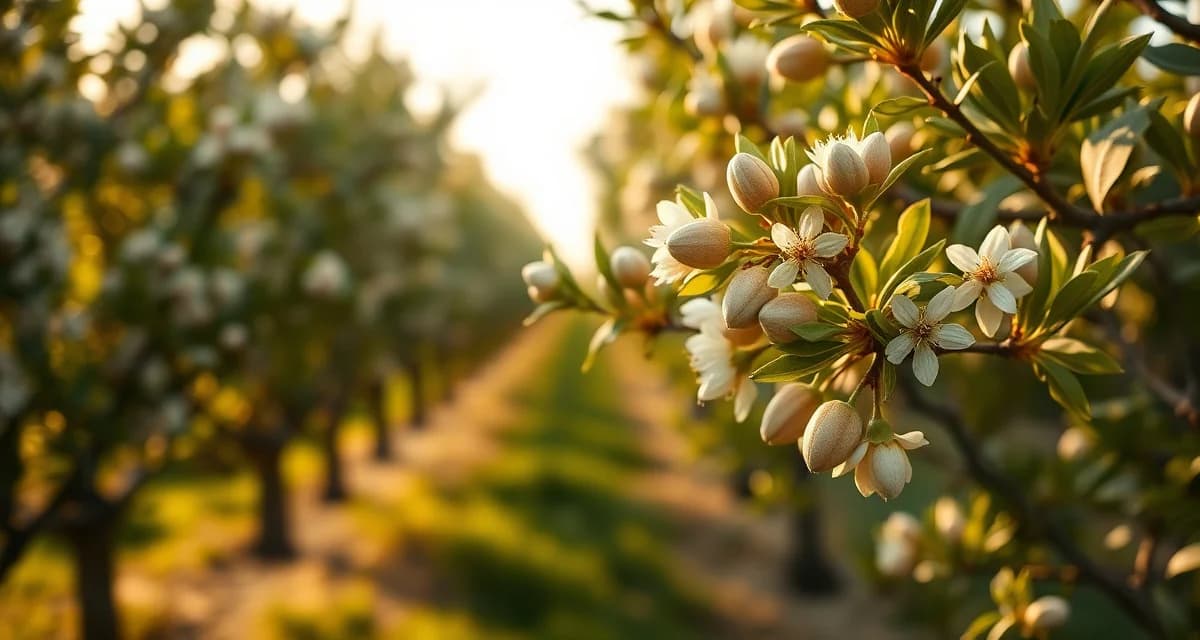
Pistachio Pollination in California: Understanding the Wind-Pollinated Crop
Understanding crop biology prevents operators from accepting suboptimal placement contracts. Pistachios are primarily wind-pollinated, and bees provide limited additional benefit compared to the fee you'd earn from an equivalent almond placement. That's information worth having before you commit trucks and colonies to a pistachio contract.
This guide covers the pistachio pollination biology, when bee placement might make sense, and how to evaluate whether a specific pistachio contract is worth pursuing.
TL;DR
- California's primary commercial beekeeping role is shaped by its crop mix, climate, and position on the national pollination circuit.
- Pollination rates in California range $60-80/hive depending on crop and colony strength requirements.
- Out-of-state operators entering California for pollination contracts must register with the state agricultural authority and obtain a Certificate of Health.
- California functions as either a primary pollination destination, a seasonal honey production location, or a transitional stop depending on the circuit.
- Tracking permit status, registration documents, and yard records for California operations requires organized record-keeping before the season opens.
Pistachio Pollination Biology
California pistachios (Pistacia vera) are dioecious: male and female flowers grow on separate trees. Pollen is produced by male trees and must reach female flowers on separate female trees for nut set.
The primary mechanism is wind. Pistachio pollen is light and dry, adapted for wind dispersal. In a well-designed orchard with adequate wind movement and sufficient male tree density, wind pollination is generally adequate for commercial nut set.
Bees visiting pistachio orchards don't meaningfully contribute to pollination in the way they do for almonds or cherries. Pistachio flowers don't produce nectar or have structures that attract bees for foraging purposes. Bees present in a pistachio orchard during bloom are primarily foraging for water or passing through on their way to other forage.
Some research has examined whether bee movement through pistachio orchards enhances pollen distribution, but the evidence for significant yield improvement from managed bee placement is weak compared to the strong evidence base for almonds, cherries, and blueberries.
Why Some Growers Still Request Bee Placement
Despite the wind-pollination biology, you'll encounter pistachio growers who want bees. Common reasons:
Uncertainty and insurance: Growers who don't fully understand the pollination mechanism may assume that "more pollinators = better" based on experience with other crops. This is a misapplication of almond logic to a biologically different crop.
Poor male tree distribution: If an orchard has inadequate male tree density or poor layout for wind movement, a grower may be looking for any solution to improve set.
Adjacent crop benefit: Some large pistachio operations are adjacent to other crops that do benefit from bee placement (adjacent almond or table grape blocks). The placement serves a nearby crop, not the pistachios.
Marketing or certification: Some specialty market certifications may encourage "natural pollination support" that a grower interprets as requiring managed bees, even if the biological benefit is minimal.
Evaluating a Pistachio Contract
If you're approached about a pistachio placement, evaluate it on these terms:
What is the per-hive rate? If it's equivalent to almond rates ($180-220), the grower is working from misinformation. A pistachio placement should be valued at what it actually provides.
What is your opportunity cost? Are these hives otherwise uncommitted during this window? If so, a pistachio placement at $60-80/hive might be worth taking. If your hives could be in almonds or spring fruit, the opportunity cost is real.
What is the grower's expectation? If the grower expects the bees to provide almond-like pollination improvement, clarifying the biology before signing the contract prevents a dispute when their yield doesn't improve and they blame the bees.
Is there adjacent forage value? If the pistachio yard has good wildflower forage, spring honey production potential, or is adjacent to other crops your colonies can forage on, the placement has value beyond the contract fee.
For per-hive rate calculation tools that help you model whether a pistachio contract is worth the movement cost, PollenOps provides revenue modeling for any crop type.
The Honest Conversation With a Pistachio Grower
The most professional approach when a pistachio grower asks for bee placement:
- Explain the wind-pollination biology clearly
- Note that research on bee contribution to pistachio yield is limited
- Offer to place hives if they want to run a trial, but set honest expectations
- Price the placement as a lower-value service than almonds if your hives aren't otherwise committed
Beekeepers who oversell the benefit of pistachio placement and fail to deliver yield improvement damage their relationship with that grower. Beekeepers who are honest about the biology build trust, which translates to referrals and higher-value contracts in other crops where bees genuinely matter.
This approach to evaluating crop biology (understanding when bees add clear value vs. limited value) applies to other less-common placement requests as well.
Frequently Asked Questions
Are pistachios worth pursuing for commercial pollination?
Pistachios are generally not worth pursuing as a primary pollination target. The crop is wind-pollinated, and research evidence for meaningful yield improvement from managed bee placement is weak. If your hives are committed to almonds or other high-value crops during the pistachio bloom window (March-April), declining pistachio contracts preserves your colonies for higher-value placements. If your hives are uncommitted during the period, a pistachio placement at a modest rate ($50-80/hive) may be worth accepting for incremental revenue. The key is honest evaluation of what bees actually contribute to this crop and pricing accordingly.
Do pistachio growers pay for bee placement?
Some pistachio growers in California pay for bee placement, though the market is small and rates are well below almond levels. Most sophisticated pistachio growers understand that their crop is wind-pollinated and don't budget for bees. Growers who do request bee placement often come from backgrounds in other crops (almonds, table grapes) where bee management is standard practice, and they assume a similar relationship exists in pistachios. When approached by a pistachio grower for placement, having an honest conversation about the wind-pollination biology protects your professional reputation and prevents disputes if the grower expects yield outcomes that bees can't provide.
How do you evaluate whether a crop is worth pursuing for pollination?
Evaluate any crop on three factors: biological dependency on bee pollination (almonds and cherries have high dependency; pistachios and wind-pollinated grains have minimal), available market rates relative to your alternative uses for the hives, and grower sophistication (a grower who understands what bees provide is a better long-term relationship than one who expects impossible results). The crops with the strongest commercial pollination case are almonds, cherries, blueberries, apples, and cucurbits, all of which have documented yield responses to bee density. Crops with weak or limited pollination responses (pistachios, some grains, many vegetables with self-fertile varieties) should be evaluated on their opportunity cost relative to what else your colonies could be doing.
What is the process for registering an out-of-state apiary in a new state?
Most states require out-of-state operators to register with the state department of agriculture apiary program before placing colonies. The process typically involves submitting a registration application (online or paper), paying a fee (usually $10-50 per location), and providing contact information for the operation. Some states also require the registration to be renewed annually. Contact the destination state's department of agriculture apiary program at least 60 days before your planned arrival to confirm current requirements.
What documentation do state apiary inspectors typically review?
State apiary inspectors review health certificates for out-of-state colonies, registration documentation, and colony inspection records during apiary visits. Inspectors check for signs of American foulbrood, European foulbrood, and other regulated pests and diseases. Operations with organized digital records that include treatment history and mite counts typically have faster, less complicated inspections than operations without documentation. Some state inspectors also verify that varroa mite loads are below state entry thresholds.
What triggers a state apiary inspection?
State apiary inspections can be triggered by routine inspection schedules (most states inspect a percentage of registered apiaries annually), neighbor or landowner complaints, disease reports from nearby operations, or inspection requirements tied to state entry permits. California, in particular, has the right to inspect incoming loads at port of entry for commercial beekeeping operations. Maintaining current registration and organized records makes required inspections faster and less disruptive.
Try These Free Tools
Sources
- USDA Agricultural Research Service
- Bee Informed Partnership
- American Beekeeping Federation (ABF)
- California Department of Agriculture
- Project Apis m.
Get Started with PollenOps
Commercial operations working in California face the same registration, permit, and documentation requirements as any state on the national circuit -- plus California's specific regulatory requirements. PollenOps tracks your California yard records, contract assignments, and permit documentation alongside your full operation, so entering a new state doesn't add a separate administrative burden. See how the platform fits operations working across multiple states.