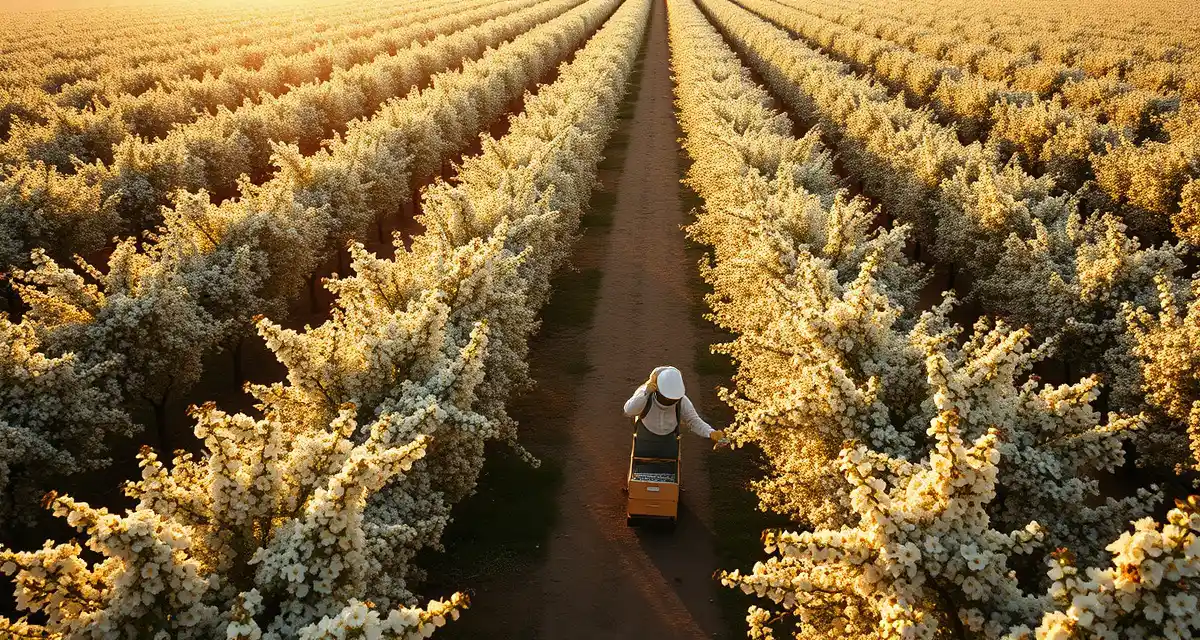
Organic Almond Pollination: Premium Rates and Requirements
Organic almond growers pay 15-25% premium over conventional for verified-clean colonies. Organic almond acreage has grown 200% or more since 2015, creating a significant and growing premium contract market within an already-valuable crop.
For commercial beekeepers who can document their treatment history and meet organic orchard requirements, organic almond contracts represent some of the best-paying placements in the US pollination market.
TL;DR
- California's primary commercial beekeeping role is shaped by its crop mix, climate, and position on the national pollination circuit.
- Pollination rates in California range $15-45/hive depending on crop and colony strength requirements.
- Out-of-state operators entering California for pollination contracts must register with the state agricultural authority and obtain a Certificate of Health.
- California functions as either a primary pollination destination, a seasonal honey production location, or a transitional stop depending on the circuit.
- Tracking permit status, registration documents, and yard records for California operations requires organized record-keeping before the season opens.
Why Organic Almond Growers Pay Premium Rates
Organic almonds sell for 25-40% above conventional prices. The organic premium flows through the supply chain. Growers who pay more for their inputs and management pass on higher costs; they also earn more from their crop and can afford premium inputs.
For pollination services specifically, organic certification requirements mean that not every beekeeper can serve an organic orchard. Supply of qualified beekeepers is more constrained than the conventional market, which supports higher rates.
The organic almond premium for pollination: approximately $15-45 more per hive depending on region, grower, and documentation quality. A 500-hive almond contract at $200 conventional becomes $215-$245 organic.
What Organic Almond Growers Require
Organic certification requirements for the orchard typically extend to inputs used during the certification period. For beekeepers, this creates documentation requirements that go beyond a standard conventional contract.
Treatment history documentation:
Most organic almond growers require documentation that colonies have not been treated with synthetic miticides (Apivar treatment/amitraz, Apistan/tau-fluvalinate, CheckMite+/coumaphos) within a specified period before placement. Common requirements:
- 90-day synthetic miticide-free period before orchard placement
- Some growers require a full calendar year of clean treatment history
- Documentation must include product name, application date, and applicator
PollenOps treatment records provide exactly this documentation: every treatment logged includes product name, application date, dosage, applicator ID, and timestamps. Generating a treatment history report for a specific colony or yard for any date range takes seconds.
Approved treatment alternatives:
Organic-compliant varroa treatments that are generally accepted by organic almond certification:
- Oxalic acid (Api-Bioxal): OMRI Listed, widely accepted
- Formic acid (Mite Away Quick Strips, FormicPro): OMRI Listed, accepted by most certifiers
- Thymol (Apiguard, ApiLife Var): OMRI Listed, accepted by most certifiers
- Hop beta acids (HopGuard): OMRI Listed
The specific products accepted vary by grower's certifying agency. Confirm which treatments are acceptable with each organic grower before placement.
No prohibited materials in your equipment:
Some organic certifiers check that wax foundation and other hive components weren't treated with synthetic substances. This is less commonly a formal requirement, but maintaining separate equipment for organic orchard placements is a best practice.
Building an Organic Treatment Program
To access organic almond contracts, you need a documented transition period. If you've been using synthetic miticides through the most recent season, you need to:
- Complete your fall synthetic miticide treatment before the required clean period cutoff
- Transition to organic-approved treatments exclusively from that point forward
- Document every treatment with product name, date, and application records in PollenOps
- Generate a clean treatment history report showing no prohibited products within the required window
For operations targeting 2026 organic almond contracts, the transition planning needs to start in the fall of 2025. If your contract requires 90 days clean from synthetic miticides, your last Apivar treatment needs to be completed before approximately November 2025.
Pricing Organic Contracts
When quoting organic almond contracts, account for:
Premium rate: $215-$245/hive vs. $185-$225 conventional
Additional management costs:
- Organic-approved treatments cost more per application than synthetic alternatives
- More frequent monitoring may be needed since organic treatments are generally less persistent
- Documentation maintenance adds minor administrative time
The net premium is real: Even accounting for higher treatment costs, organic almond contracts at $15-45/hive premium add $7,500-$22,500 to a 500-hive organic delivery vs. conventional rates.
How PollenOps Supports Organic Contract Documentation
The organic honey certification documentation tools in PollenOps are also applicable to organic orchard placement documentation. The treatment history report, which covers any date range and any colony or yard selection, produces the documentation that organic almond growers need.
For almond pollination contract documentation that includes organic compliance records, PollenOps stores all treatment data in the same system as your contract records, making organic compliance reporting a one-click operation.
Frequently Asked Questions
What premium do organic almond growers pay?
Organic almond growers typically pay 15-25% above conventional pollination rates, translating to approximately $15-45 more per hive depending on the grower, region, and documentation requirements. A conventional contract at $200/hive becomes $215-$245 for organic placement. The premium reflects the constrained supply of qualified organic beekeepers (not all beekeepers can meet treatment documentation requirements) and the organic grower's higher crop value and premium market positioning. The premium has grown as organic almond acreage has expanded and more professional growers have adopted formal compliance requirements for their bee suppliers.
What documentation do organic almond growers require from beekeepers?
Organic almond growers typically require a treatment history report showing that colonies have not received synthetic miticide treatments (amitraz, tau-fluvalinate, coumaphos) within a specified period before placement, usually 90 days, sometimes a full year. The documentation must include product names, application dates, and who applied them. Some growers also require documentation that only OMRI-listed treatments (oxalic acid, formic acid, thymol) were used during the clean period. The grower's certifying agency (CCOF, Oregon Tilth, Marin Organic, etc.) may have specific requirements that differ from the defaults above.
How do you document treatment history for organic orchard compliance?
In PollenOps, log every treatment application as it happens: product name, active ingredient, application date, dosage, yard or colonies treated, and applicator user ID. When an organic contract requires a treatment history report, generate the report from PollenOps by selecting the contract yard and the required date range. The report shows all treatments applied during that period, or confirms that no treatments were applied during a clean period. This report is the primary documentation organic almond growers need. Operations that don't keep systematic digital treatment records have to reconstruct history from memory or paper notes, which is less credible and harder to produce quickly.
What is the process for registering an out-of-state apiary in a new state?
Most states require out-of-state operators to register with the state department of agriculture apiary program before placing colonies. The process typically involves submitting a registration application (online or paper), paying a fee (usually $10-50 per location), and providing contact information for the operation. Some states also require the registration to be renewed annually. Contact the destination state's department of agriculture apiary program at least 60 days before your planned arrival to confirm current requirements.
What documentation do state apiary inspectors typically review?
State apiary inspectors review health certificates for out-of-state colonies, registration documentation, and colony inspection records during apiary visits. Inspectors check for signs of American foulbrood, European foulbrood, and other regulated pests and diseases. Operations with organized digital records that include treatment history and mite counts typically have faster, less complicated inspections than operations without documentation. Some state inspectors also verify that varroa mite loads are below state entry thresholds.
What triggers a state apiary inspection?
State apiary inspections can be triggered by routine inspection schedules (most states inspect a percentage of registered apiaries annually), neighbor or landowner complaints, disease reports from nearby operations, or inspection requirements tied to state entry permits. California, in particular, has the right to inspect incoming loads at port of entry for commercial beekeeping operations. Maintaining current registration and organized records makes required inspections faster and less disruptive.
Try These Free Tools
Sources
- USDA Agricultural Research Service
- Bee Informed Partnership
- American Beekeeping Federation (ABF)
- California Department of Agriculture
- Project Apis m.
Get Started with PollenOps
Commercial operations working in California face the same registration, permit, and documentation requirements as any state on the national circuit -- plus California's specific regulatory requirements. PollenOps tracks your California yard records, contract assignments, and permit documentation alongside your full operation, so entering a new state doesn't add a separate administrative burden. See how the platform fits operations working across multiple states.