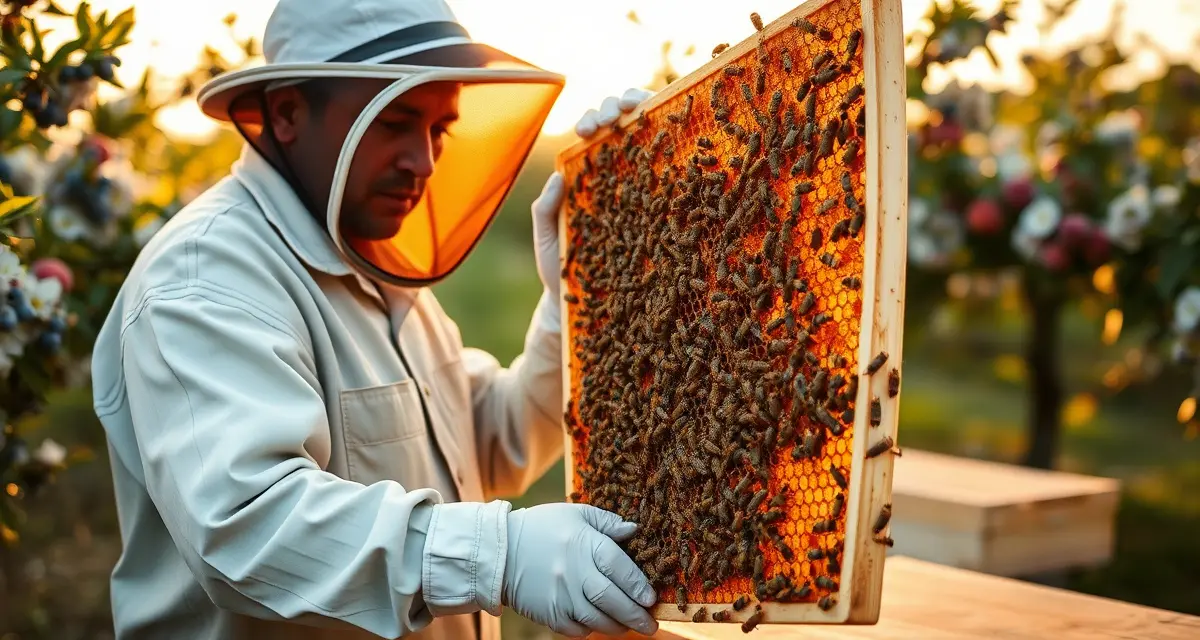
Commercial Beekeeping in Georgia: Regulations and Opportunities
Georgia's mild winters allow year-round operations and serve as a wintering location for Northern operators. It's the first major stop northward after Florida on the spring circuit, with early blueberries (the largest blueberry crop in the Southeast), peach pollination, and diverse vegetable crops creating a spring calendar that runs from February through May.
Georgia requires annual apiary registration and inspection for commercial operations. The state has an active inspection program and is an AHB-affected state in the southern counties, two factors that require attention before your first Georgia season.
TL;DR
- Georgia's primary commercial beekeeping role is shaped by its crop mix, climate, and position on the national pollination circuit.
- Pollination rates in Georgia range $70-90/hive depending on crop and colony strength requirements.
- Out-of-state operators entering Georgia for pollination contracts must register with the state agricultural authority and obtain a Certificate of Health.
- Georgia functions as either a primary pollination destination, a seasonal honey production location, or a transitional stop depending on the circuit.
- Tracking permit status, registration documents, and yard records for Georgia operations requires organized record-keeping before the season opens.
Georgia's Seasonal Pollination Calendar
Georgia's geographic position (warmer than most southeastern states except Florida) gives it early bloom timing that appeals to operators on the northward spring migration:
Blueberries (early crop): Georgia is the third-largest blueberry producing state. The primary production is rabbiteye blueberry in the Tifton Plateau area (Pierce, Ware, Brantley, Coffee, and surrounding counties) and highbush blueberries in northern Georgia. Rabbiteye blueberry bloom: mid-February to mid-March. Contract rates: $70-90/hive. Highbush varieties bloom slightly later, March-April.
Georgia blueberries bloom 4-6 weeks before Michigan blueberries, creating the opportunity for an operator to run Georgia in February-March and Michigan in late April-May, two blueberry contracts on one northward migration.
Peaches: Georgia's famous peach production (though South Carolina now produces more commercially) concentrates in the middle Georgia counties: Peach County (Fort Valley), Macon, Crawford, and surrounding areas. Peach bloom timing: late February to March depending on variety. Contract rates: $75-95/hive. Peach is moderately dependent on bee pollination. It's not as bee-critical as almonds, but growers with large acreage benefit from commercial placements.
Watermelon and cantaloupe: Georgia is a top watermelon producer. Commercial watermelon production in Berrien, Crisp, Irwin, and surrounding counties starts in late March-May. Contract rates: $55-75/hive.
Cucumbers and squash: Georgia's vegetable production (primarily in the Tifton Plateau) requires pollination for cucurbits. March-May timing. Contract rates: $50-70/hive.
Specialty crops: Georgia's diverse small farm sector includes blueberry, strawberry, and specialty vegetable operations that create smaller-volume pollination contract opportunities for operations willing to work with smaller growers.
Georgia as a Wintering Location
Georgia is second only to Florida as a preferred wintering state for northern migratory operations. The advantages over Florida:
- Lower AHB risk: AHB is less prevalent in Georgia than in Florida (though southern Georgia counties have some AHB presence)
- Earlier natural pollen: Georgia's early spring wildflowers and early bloom species provide natural protein earlier than some central Florida locations
- Central location: Georgia sits at the center of the eastern US circuit, with less distance to travel for Michigan blueberries in May or North Carolina operations than from deep south Florida
The trade-off: Georgia winters are cooler than Florida, and colonies maintain somewhat lower populations through cold snaps. January and February temperatures in central Georgia can drop to the low teens to 20s°F, cold enough to require cluster behavior but not typically cold enough for extended freezing that stresses colonies as severely as true northern winters.
Operations wintering in Georgia typically see better spring buildup timing than those in North Dakota but slightly slower than those in South Florida.
Georgia Apiary Registration Requirements
Administering agency: Georgia Department of Agriculture, Entomology and Pesticides Division
Registration: Annual apiary registration required for all Georgia beekeepers. Out-of-state operators maintaining colonies in Georgia must register as commercial out-of-state beekeepers. Commercial scale is typically defined as 10+ colonies.
Inspection: Georgia has an active state apiarist inspection program. Inspectors visit commercial yards and can require treatment or colony disposal for regulated diseases (American foulbrood is the primary concern). Compliance with state inspector recommendations is required.
CVI for incoming colonies: Georgia requires a CVI for colonies entering from out of state. Contact the Georgia Department of Agriculture Entomology Division before your first Georgia season to confirm current requirements.
AHB status: Southern Georgia counties have AHB presence. The state maintains monitoring programs and has protocols for AHB-suspect colonies. Operations working in the Tifton Plateau area (where most blueberry production is concentrated) should be aware of the AHB status in those specific counties.
Honey Production in Georgia
Georgia's honey production is driven by summer wildflower flows and the distinctive tulip poplar flow:
Tulip poplar (Liriodendron tulipifera): One of the best honey plants in the eastern US. Bloom timing: late April-May in Georgia. Tulip poplar honey is dark amber with a distinctive spicy, slightly malty character. It's a premium varietal honey that specialty buyers seek. Production varies dramatically with weather, as tulip poplar nectar secretion is temperature and humidity sensitive.
Gallberry (Ilex glabra): A native holly species in the Coastal Plain region of southeastern Georgia. Gallberry honey is light-colored, very mild, and has a strong following in the Southeast specialty honey market. Gallberry flows in late April-May in coastal Georgia. Some of the best gallberry production in the US comes from the Big Cypress Swamp area.
Summer wildflower: General summer wildflower flows from diverse native and agricultural species through June-August.
Georgia honey production is secondary to pollination income for most migratory operations that stop there, but operations with access to prime tulip poplar or gallberry locations can generate meaningful honey income from a Georgia spring stop.
The Georgia-to-Northern Circuit
Georgia's position on the eastern US migratory circuit makes it a natural hub for operations moving from Florida through the eastern states:
February: Some colonies stay in Florida for citrus; others move to Georgia for early blueberry
March: Georgia blueberries and peaches
April: Northern Georgia and South Carolina specialty crops; some operations move to North Carolina blueberries
May: Michigan and New Jersey blueberries; New England
June-July: Northern Plains honey production
This circuit generates $200-280+ per hive from sequential eastern pollination contracts before the summer honey flow. Georgia is one of the key enabling stops. Without Georgia's early bloom, the circuit's first productive step would be 6 weeks later.
FAQ
What are the best commercial beekeeping opportunities in Georgia?
Rabbiteye blueberry pollination in the Tifton Plateau (Pierce, Ware, Coffee, Brantley counties) in late February-March is the highest-value single contract in Georgia at $70-90/hive. Peach pollination in middle Georgia follows in March, with rates of $75-95/hive. Watermelon and cucurbit pollination in the spring vegetable belt runs March-May at $55-75/hive. Operations that sequence blueberries, peaches, and vegetables through the spring capture $200+/hive from Georgia contracts before moving north.
Is Georgia a good state to winter commercial hives?
Yes, for operations coming from northern states. Georgia winters are milder than the northern US, allowing colonies to maintain better populations and start spring buildup earlier than colonies wintered in cold climates. The spring blueberry and peach contracts create productive early-season income that makes Georgia wintering economically attractive beyond just the colony health benefit. AHB risk in Georgia is lower than Florida, particularly in northern Georgia, making colony management somewhat simpler.
What are Georgia's apiary registration requirements for commercial operators?
Georgia requires annual apiary registration with the Georgia Department of Agriculture's Entomology and Pesticides Division for all beekeepers including out-of-state commercial operators. A CVI is required for colonies entering the state. The state has an active inspection program for regulated diseases. Commercial operators should register before or immediately upon placing colonies in the state. Contact the Georgia Department of Agriculture for current fee schedules and the specific out-of-state operator registration process.
What is the process for registering an out-of-state apiary in a new state?
Most states require out-of-state operators to register with the state department of agriculture apiary program before placing colonies. The process typically involves submitting a registration application (online or paper), paying a fee (usually $10-50 per location), and providing contact information for the operation. Some states also require the registration to be renewed annually. Contact the destination state's department of agriculture apiary program at least 60 days before your planned arrival to confirm current requirements.
What documentation do state apiary inspectors typically review?
State apiary inspectors review health certificates for out-of-state colonies, registration documentation, and colony inspection records during apiary visits. Inspectors check for signs of American foulbrood, European foulbrood, and other regulated pests and diseases. Operations with organized digital records that include treatment history and mite counts typically have faster, less complicated inspections than operations without documentation. Some state inspectors also verify that varroa mite loads are below state entry thresholds.
What triggers a state apiary inspection?
State apiary inspections can be triggered by routine inspection schedules (most states inspect a percentage of registered apiaries annually), neighbor or landowner complaints, disease reports from nearby operations, or inspection requirements tied to state entry permits. California, in particular, has the right to inspect incoming loads at port of entry for commercial beekeeping operations. Maintaining current registration and organized records makes required inspections faster and less disruptive.
Try These Free Tools
Sources
- USDA Agricultural Research Service
- Bee Informed Partnership
- American Beekeeping Federation (ABF)
- Georgia Department of Agriculture
- Project Apis m.
Get Started with PollenOps
Commercial operations working in Georgia face the same registration, permit, and documentation requirements as any state on the national circuit -- plus Georgia's specific regulatory requirements. PollenOps tracks your Georgia yard records, contract assignments, and permit documentation alongside your full operation, so entering a new state doesn't add a separate administrative burden. See how the platform fits operations working across multiple states.