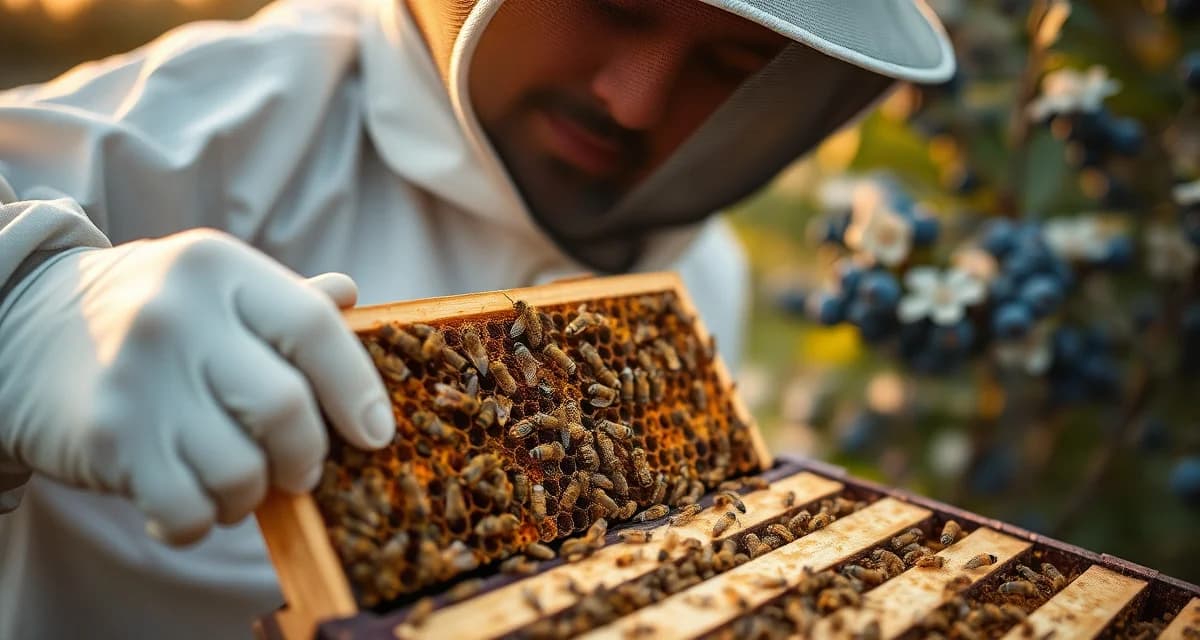
Blueberry Pollination in Georgia: South's Largest Blueberry Market
Georgia is the South's largest blueberry producing state, and its blueberry acreage has grown over 400% in the past 20 years, creating major commercial hive demand each spring. Georgia's blueberry season runs from March through May, earlier than Northern blueberry markets, which makes it a valuable early-season circuit stop for commercial operators looking for income before the main spring pollination rush.
Georgia blueberry season in March is the same window as California almonds, but for operators who don't have California almond contracts or who want Southeast circuit alternatives, Georgia blueberries represent a meaningful revenue opportunity at the start of the pollination season.
TL;DR
- Georgia's primary commercial beekeeping role is shaped by its crop mix, climate, and position on the national pollination circuit.
- Pollination rates in Georgia range $65-220/hive depending on crop depending on crop and colony strength requirements.
- Out-of-state operators entering Georgia for pollination contracts must register with the state agricultural authority and obtain a Certificate of Health.
- Georgia functions as either a primary pollination destination, a seasonal honey production location, or a transitional stop depending on the circuit.
- Tracking permit status, registration documents, and yard records for Georgia operations requires organized record-keeping before the season opens.
Georgia Blueberry Geography
Georgia's blueberry production is concentrated in the southeastern part of the state, particularly in Ware, Pierce, Bacon, Brantley, and Appling counties in the coastal plain. The city of Homerville in Clinch County is sometimes called the blueberry capital of the world, reflecting the density of production in this corner of the state.
The Vidalia onion country of Toombs and Montgomery counties also has blueberry production. The coastal plain's sandy, acidic soils are ideal for highbush blueberry, and the warm early spring temperatures allow Georgia's season to run weeks ahead of northern states.
Timing and Circuit Positioning
Georgia's blueberry bloom runs from late February through early April depending on variety and year. This timing puts Georgia's early season in direct competition with California almond contracts for the same commercial hive supply, which is why operators who haven't built California almond relationships sometimes find Georgia blueberries an attractive alternative.
For operators already working California almonds, Georgia blueberries don't fit the calendar. But for operators building a Southeast-first circuit, Georgia March blueberries can anchor the season's opening.
Georgia blueberries also connect naturally to North Carolina blueberries in April and May, creating a two-state sequential circuit through the Southeast. For the broader Southeast fruit crop circuit design, Georgia is the starting anchor.
For blueberry pollination contracts broadly, Georgia sits at the early end of the season timing spectrum for the Eastern US.
Colony Requirements and Rates
Georgia blueberry growers typically require colonies at 6 frames of bees minimum at placement. Early-season placement means colonies need to be coming out of a productive winter in the South or arriving from Southern wintering yards in good shape.
Operators who winter in Florida, Alabama, or Georgia itself can move directly to Georgia blueberry placements without a long-distance move. This geographic efficiency is an advantage for Southeast-based operators that Midwest and Northern Plains operators don't have.
Georgia blueberry pollination rates have typically run $70 to $100 per hive, with the early timing sometimes commanding a premium relative to later-season markets because fewer hives are available in late February.
Regulatory Requirements
For commercial beekeeping in Georgia's regulatory framework, out-of-state operators must register with the Georgia Department of Agriculture and provide health certificates for incoming colonies. Small hive beetle pressure is significant in Georgia's coastal plain spring and requires active management.
Frequently Asked Questions
How do you get blueberry pollination contracts in Georgia?
Contact growers in the southeastern Georgia coastal plain counties, particularly Ware, Pierce, Clinch, and Bacon counties, in the fall for the following spring season. The Georgia Farm Bureau and the Georgia Blueberry Growers Association are networking resources for introductions. Georgia blueberry growers who've had unreliable contractors in the past are active in the grower community talking about their experiences. A strong reference from another Georgia agricultural contact or from a Florida or Alabama wintering grower carries weight.
When is blueberry pollination season in Georgia?
Georgia's coastal plain blueberry bloom runs from late February through early April in most years. Southern counties bloom first, sometimes starting in mid-February in warm years. Northern Georgia blueberry areas bloom 2 to 3 weeks later. The full season in the main production counties runs from approximately February 20 through March 31. Year-to-year variation based on winter temperatures can shift bloom timing by 1 to 2 weeks in either direction. Monitor Georgia Extension bloom prediction resources starting in January.
What colony strength do Georgia blueberry growers require?
Georgia blueberry growers typically require colonies at 6 frames of bees at time of placement. Early-season placement in February requires that colonies have wintered well and are in early buildup mode. Colonies arriving from Florida or other Southern wintering locations in good condition are typically at 4 to 6 frames of bees in late February. Make sure your colonies are trending upward in population, not static or declining, when you make Georgia placements. The warm Georgia spring will support continued buildup through the 3 to 4 week placement period if colonies arrive with a healthy young queen and adequate stores.
What is the process for registering an out-of-state apiary in a new state?
Most states require out-of-state operators to register with the state department of agriculture apiary program before placing colonies. The process typically involves submitting a registration application (online or paper), paying a fee (usually $10-50 per location), and providing contact information for the operation. Some states also require the registration to be renewed annually. Contact the destination state's department of agriculture apiary program at least 60 days before your planned arrival to confirm current requirements.
What documentation do state apiary inspectors typically review?
State apiary inspectors review health certificates for out-of-state colonies, registration documentation, and colony inspection records during apiary visits. Inspectors check for signs of American foulbrood, European foulbrood, and other regulated pests and diseases. Operations with organized digital records that include treatment history and mite counts typically have faster, less complicated inspections than operations without documentation. Some state inspectors also verify that varroa mite loads are below state entry thresholds.
What triggers a state apiary inspection?
State apiary inspections can be triggered by routine inspection schedules (most states inspect a percentage of registered apiaries annually), neighbor or landowner complaints, disease reports from nearby operations, or inspection requirements tied to state entry permits. California, in particular, has the right to inspect incoming loads at port of entry for commercial beekeeping operations. Maintaining current registration and organized records makes required inspections faster and less disruptive.
Try These Free Tools
Sources
- USDA Agricultural Research Service
- Bee Informed Partnership
- American Beekeeping Federation (ABF)
- Georgia Department of Agriculture
- Project Apis m.
Get Started with PollenOps
Commercial operations working in Georgia face the same registration, permit, and documentation requirements as any state on the national circuit -- plus Georgia's specific regulatory requirements. PollenOps tracks your Georgia yard records, contract assignments, and permit documentation alongside your full operation, so entering a new state doesn't add a separate administrative burden. See how the platform fits operations working across multiple states.