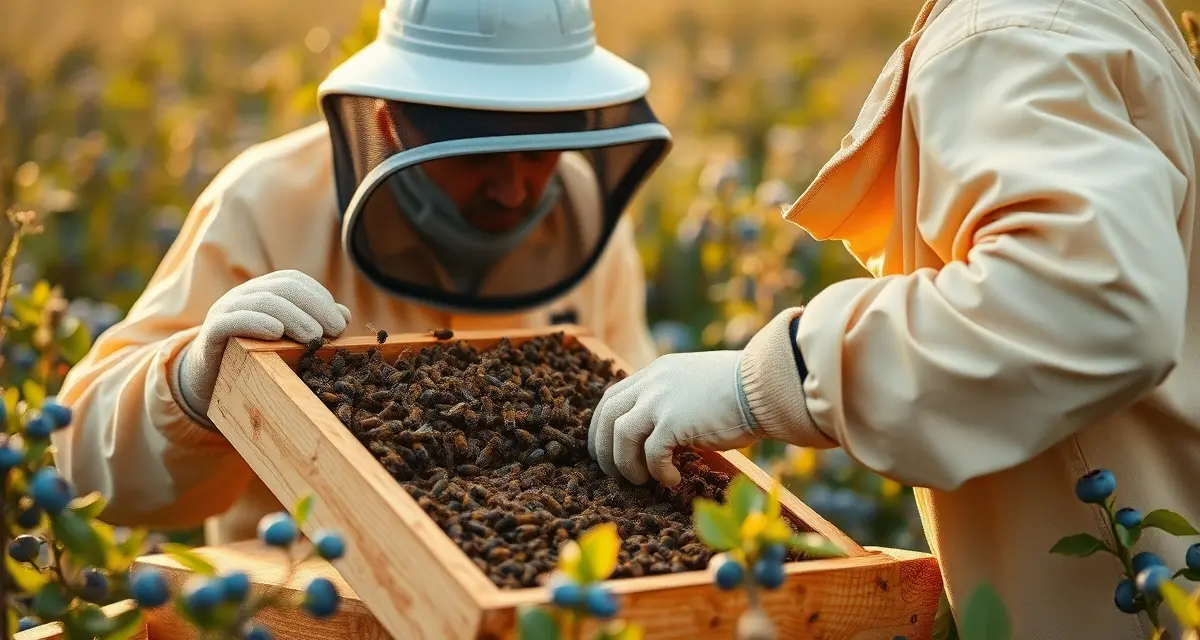
Georgia Blueberry Pollination Regulatory Requirements for Beekeepers
Georgia requires annual apiary registration and inspection certification for commercial operations, and Georgia blueberry pesticide restrictions include label-required notification before applications. Georgia is one of the top blueberry-producing states in the Southeast, and the state's early bloom timing makes it a key stop for operators on the Southeast circuit.
TL;DR
- Georgia's primary commercial beekeeping role is shaped by its crop mix, climate, and position on the national pollination circuit.
- Pollination rates in Georgia range $65-220/hive depending on crop depending on crop and colony strength requirements.
- Out-of-state operators entering Georgia for pollination contracts must register with the state agricultural authority and obtain a Certificate of Health.
- Georgia functions as either a primary pollination destination, a seasonal honey production location, or a transitional stop depending on the circuit.
- Tracking permit status, registration documents, and yard records for Georgia operations requires organized record-keeping before the season opens.
Georgia State Entry Requirements
Georgia Department of Agriculture Apiary Registration: All beekeepers maintaining apiaries in Georgia must register with the Georgia Department of Agriculture (GDA) Plant Protection Division. Out-of-state operators bringing colonies for blueberry pollination must register before placing hives.
Certificate of Health for out-of-state colonies: Georgia requires a certificate of health for colonies entering from other states. The certificate must be issued by your home state's department of agriculture or authorized inspector, confirming colonies are free of American Foulbrood and other regulated conditions.
Requirements:
- Issued within 30 days of entry
- Must accompany the shipment
- Colony count and state of origin identified
Contact GDA's apiary program annually to confirm current requirements, as certificates and entry requirements can change.
Inspection: GDA apiary inspectors may inspect colonies at the yard. Active inspection programs are more common in agricultural counties with high colony densities during pollination season.
Georgia Blueberry Production Areas
Georgia blueberry production is concentrated in two primary regions:
Southeast Georgia (Ware, Pierce, Coffee, Bacon, Atkinson counties): The Tifton Uplands and Coastal Plain region is the heart of Georgia blueberry production. Waycross area operations are the most significant cluster. Early bloom in this region (often late February through March) makes it an important stop for operators on the Southeast circuit.
North Georgia uplands (Union, Towns, Lumpkin, Dawson counties): Highbush and rabbiteye blueberry production in the mountain counties. Bloom is later than the coastal plain (April through May) and the market is more regional and specialty-oriented.
County agricultural extension offices in Ware, Pierce, and Coffee counties are the best contacts for current registration requirements in the primary blueberry region.
Pesticide Notification Requirements
Georgia's pesticide regulations require advance notification to registered beekeepers before applying pesticides with bee hazard ratings near apiaries. The notification requirements stem from both Georgia's pesticide regulations and individual pesticide label requirements.
What Georgia blueberry growers must do: Provide advance notice (typically 48 hours) before applying insecticides or other bee-hazardous materials during bloom. Many fungicides (applied for mummy berry, anthracnose, and other blueberry diseases) are less hazardous to bees but notification requirements may still apply depending on the label.
Contract requirements: Your pollination contract should specify:
- Minimum 48-hour advance notice before any pesticide application during bloom
- Required notification method (phone + text)
- Prohibited pesticide classes during active bloom period
- Post-bloom pickup timing to avoid exposure to post-harvest treatments
Early bloom timing in Southeast Georgia: Georgia's early bloom (February-March in the coastal plain) means pesticide management decisions occur in cooler weather. Some insecticide applications are less hazardous in cooler conditions, but bloom-period restrictions still apply.
Southeast Circuit Context
Georgia blueberry is typically the first major pollination stop for operators running the Southeast circuit. After Georgia blueberry, operators may move to Florida (if positioned there before Georgia), then north to Carolinas and Virginia blueberry, then further north for apple and other crops.
Timing decisions in Georgia affect the rest of your circuit. If Georgia bloom runs late, you may need to choose between extending your Georgia stay or leaving colonies for early pickup to stay on schedule for North Carolina or Virginia.
Documenting delivery dates, bloom timing observations, and pickup dates in PollenOps gives you the historical record to plan future circuit timing decisions.
For pesticide event documentation in Georgia, see pesticide exposure documentation.
For Georgia-specific compliance beyond blueberry, see commercial beekeeping in Georgia regulations.
Frequently Asked Questions
What registration is required for Georgia blueberry pollination?
Out-of-state operators must register with Georgia Department of Agriculture Plant Protection Division before placing hives. Registration requires operator contact information, colony count, and apiary location information. A certificate of health from your home state is required, issued within 30 days of entry. Contact GDA's apiary program annually to confirm current requirements. For operations in Ware, Pierce, and Coffee counties (the primary blueberry counties), additional county-level contacts may be useful. Local county extension offices can point you to current county requirements.
What pesticide notification requirements apply in Georgia blueberry fields?
Georgia requires advance notification to registered beekeepers before applying pesticides with bee hazard ratings. During active blueberry bloom, insecticide applications should be prohibited or restricted to early morning/evening periods outside peak bee foraging hours. Your contract should specify 48-hour minimum advance notice, phone and text notification, and prohibited application windows. Georgia blueberry disease management (mummy berry, anthracnose) uses fungicides that may be applied during bloom. Ensure your contract addresses timing requirements for fungicide applications, not just insecticides. Post-harvest treatments for spotted wing drosophila are common, so establish clear pickup timing to avoid post-bloom exposure.
How do you report a pesticide event in Georgia blueberry operations?
Document immediately: photograph affected colonies showing kill patterns, record GPS location and time, note weather conditions, and contact the grower to report the suspected event. Report to GDA's pesticide regulation program and your county agricultural office. Collect dead bee samples in alcohol for potential lab analysis. For events involving significant colony losses, contact GDA's apiary program as well. Your PollenOps records (delivery records, GPS placement coordinates, communication logs) provide timestamped documentation essential for any regulatory follow-up or insurance claim. Early documentation is critical. Bee kill evidence degrades quickly in Georgia's warm climate.
What is the process for registering an out-of-state apiary in a new state?
Most states require out-of-state operators to register with the state department of agriculture apiary program before placing colonies. The process typically involves submitting a registration application (online or paper), paying a fee (usually $10-50 per location), and providing contact information for the operation. Some states also require the registration to be renewed annually. Contact the destination state's department of agriculture apiary program at least 60 days before your planned arrival to confirm current requirements.
What documentation do state apiary inspectors typically review?
State apiary inspectors review health certificates for out-of-state colonies, registration documentation, and colony inspection records during apiary visits. Inspectors check for signs of American foulbrood, European foulbrood, and other regulated pests and diseases. Operations with organized digital records that include treatment history and mite counts typically have faster, less complicated inspections than operations without documentation. Some state inspectors also verify that varroa mite loads are below state entry thresholds.
What triggers a state apiary inspection?
State apiary inspections can be triggered by routine inspection schedules (most states inspect a percentage of registered apiaries annually), neighbor or landowner complaints, disease reports from nearby operations, or inspection requirements tied to state entry permits. California, in particular, has the right to inspect incoming loads at port of entry for commercial beekeeping operations. Maintaining current registration and organized records makes required inspections faster and less disruptive.
Try These Free Tools
Sources
- USDA Agricultural Research Service
- Bee Informed Partnership
- American Beekeeping Federation (ABF)
- Georgia Department of Agriculture
- Project Apis m.
Get Started with PollenOps
Commercial operations working in Georgia face the same registration, permit, and documentation requirements as any state on the national circuit -- plus Georgia's specific regulatory requirements. PollenOps tracks your Georgia yard records, contract assignments, and permit documentation alongside your full operation, so entering a new state doesn't add a separate administrative burden. See how the platform fits operations working across multiple states.