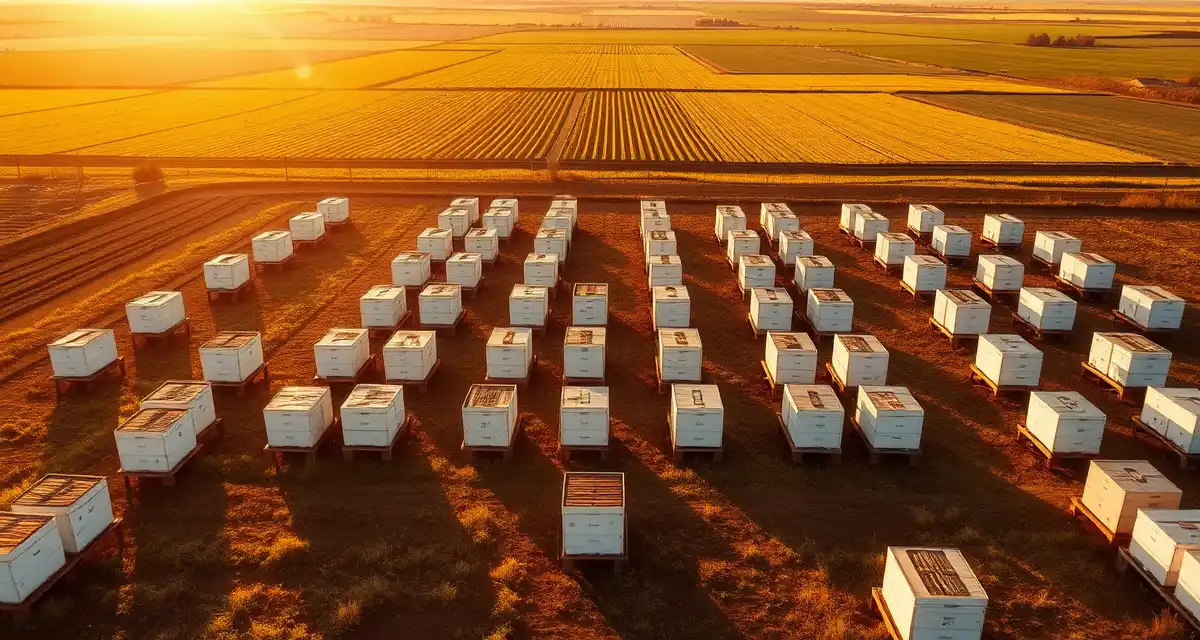
Commercial Beekeeping in Idaho: Seed Crops and Honey
Idaho is a major vegetable and alfalfa seed production state requiring significant hive placements. The Treasure Valley (southwestern Idaho along the Snake River), Magic Valley (south-central Idaho), and the Palouse (northern Idaho) together create one of the most diverse seed crop pollination circuits in the western US.
Idaho offers diverse income from seed pollination and premium honey production. For operations running the Pacific Coast circuit, Idaho sits in a natural geographic position between Oregon's Willamette Valley and Montana's open range honey country.
TL;DR
- Idaho's primary commercial beekeeping role is shaped by its crop mix, climate, and position on the national pollination circuit.
- Pollination rates in Idaho range $55-80/hive depending on crop and colony strength requirements.
- Out-of-state operators entering Idaho for pollination contracts must register with the state agricultural authority and obtain a Certificate of Health.
- Idaho functions as either a primary pollination destination, a seasonal honey production location, or a transitional stop depending on the circuit.
- Tracking permit status, registration documents, and yard records for Idaho operations requires organized record-keeping before the season opens.
Idaho Seed Crop Pollination
The seed crop market is what makes Idaho commercially significant for beekeepers. Unlike most agricultural states where one crop dominates pollination demand, Idaho's seed production includes:
Alfalfa seed: Idaho is consistently one of the top alfalfa seed producing states. Alfalfa bloom timing: late June-August, depending on cutting schedule. Contract rates: $55-80/hive. Alfalfa is self-incompatible for maximum seed production, but honey bees are less efficient than leafcutter bees for alfalfa, and growers sometimes use both. Honey bee contracts for alfalfa seed are still common, particularly for organic alfalfa seed where leafcutter alternatives may not be certified organic-compatible.
Clover seed: Idaho grows both red and white clover seed. The Treasure Valley and Magic Valley have significant clover seed acreage. Contract rates: $70-95/hive at 3-5 hives/acre (similar to Oregon). Timing: late June-July.
Onion seed: Eastern Idaho, primarily the Snake River Plain, has substantial hybrid onion seed production. Onion requires bee pollination for cross-pollination between male and female rows. Contract rates: $80-110/hive. Onion bloom timing: June-July. Onion honey is amber, distinctly flavored (onion-adjacent but milder than you'd expect), and not particularly valued as a specialty product. Operators running supers during onion contracts should plan to sell or blend that honey rather than market it as premium varietal.
Carrot seed: Idaho grows commercial carrot seed in the Magic Valley area. Bloom timing: July-August. Contract rates: $75-100/hive.
Mint: Southern Idaho grows peppermint for oil extraction. Mint bloom: July-August. Contract rates: $55-75/hive. Mint honey is one of Idaho's premium varietal honeys, with a light amber, cooling mint character. It commands $3-5/lb bulk from specialty buyers.
Rapeseed/canola: Northern Idaho and some Magic Valley acreage. Canola bloom: June. Contract rates: $30-50/hive.
Idaho Honey Production
Idaho's honey production comes from multiple sources:
Sweet clover and white clover: The Treasure Valley and Snake River Plain roadsides and field edges provide clover flows in July-August. Not as extensive as North Dakota or Montana but solid production in good years, with 50-80 lbs/colony from clover-dominant yards.
Mint honey: As noted above, Idaho produces one of the better regional specialty honeys in the US. Operations running mint contracts and positioning for the mint flow generate premium product. Mint honey requires clear labeling and marketing relationships with specialty buyers who value the specific flavor profile.
Wildflower from seed crop country: The diversity of blooming seed crops (alfalfa, clover, onion, carrot) in proximity creates a mixed-pollen honey that's positioned as "Treasure Valley wildflower" or "Snake River Plain wildflower" in regional markets.
Huckleberry and mountain wildflower: Northern Idaho (Clearwater, Latah, Benewah counties) and the Sawtooth region have mountain wildflower and huckleberry forage in July-August. Huckleberry honey is sought after in the Pacific Northwest but the remote terrain limits accessible yard locations.
Idaho Apiary Regulations
Administering agency: Idaho State Department of Agriculture (ISDA), Division of Plant Industries
Registration: Annual registration required. Out-of-state commercial operators must register with ISDA before placing colonies. Fees scale by colony count.
CVI requirement: Idaho requires a Certificate of Veterinary Inspection for colonies entering the state. Contact ISDA's Plant Industry Division before your first season to confirm current entry documentation requirements.
State inspection program: Idaho has an active apiary inspection program. The state apiarist's office works closely with the large commercial seed crop industry in Idaho, a well-organized regulatory relationship with established processes for commercial operator compliance.
Varroa documentation: Idaho inspectors may request varroa treatment records for commercial operators. Keep documentation current.
The Idaho Circuit Position
For operations on the Pacific Coast and Intermountain circuit, Idaho sits geographically between several key stops:
From Oregon: The Treasure Valley is a 6-8 hour drive from the Willamette Valley. An operation finishing Oregon clover seed contracts in July can move directly to Idaho alfalfa seed or mint contracts.
To Montana/North Dakota: From eastern Idaho, it's 4-6 hours to southwestern Montana or 6-8 hours to North Dakota. Operations finishing Idaho seed crop contracts in late July-early August can move to the Northern Plains for the sweet clover honey flow.
From California almonds: Some California-to-Idaho operators move directly from almonds to Idaho clover seed. The timing works if almond delivery finishes by early March and clover seed contracts start in late June, with a gap for spring buildup in between.
Treasure Valley Commercial Beekeeping
The Treasure Valley (the agricultural zone along the Snake River from Ontario, Oregon through Boise and east to Twin Falls) is the highest-concentration commercial beekeeping area in Idaho. The combination of seed crop pollination demand, summer forage from diverse crops and roadsides, and accessible terrain makes it the go-to region for Idaho commercial operators.
Experienced operators in the Treasure Valley manage multiple seed crop contracts sequentially through the season:
- May-June: canola or early vegetables
- Late June-July: onion seed or alfalfa seed
- July-August: clover seed or mint
- August: extract and treat varroa before fall moves
With sequential contracts and honey production, Treasure Valley operations can generate $200-280 per hive from Idaho stops alone, a competitive per-hive return compared to many national circuit stops.
FAQ
What pollination opportunities exist in Idaho?
Idaho's seed crop circuit is the primary commercial beekeeping opportunity. Alfalfa seed ($55-80/hive, late June-August), onion seed ($80-110/hive, June-July), clover seed ($70-95/hive, late June-July), carrot seed ($75-100/hive, July-August), and mint ($55-75/hive, July-August) are the main contracts. The Treasure Valley and Magic Valley areas have the highest concentration of seed crop demand. Operations can sequence multiple seed crop contracts in a single Idaho season, generating $200-280+ per hive when combined with honey production from adjacent forage.
What seed crops require pollination in Idaho?
Most commercially significant Idaho seed crops require bee pollination for cross-pollination (hybrid production) or yield improvement. Onion seed, clover seed (red and white), alfalfa seed, carrot seed, and some brassica seed crops (radish, turnip) specifically require or significantly benefit from commercial bee placements. Mint requires bee pollination for maximum seed set. Canola benefits from bee visitation for oil seed yield. Alfalfa in Idaho is sometimes better served by commercial leafcutter bees for seed production, but honey bee contracts remain common.
What are Idaho's apiary registration requirements?
Idaho requires annual registration with the Idaho State Department of Agriculture Division of Plant Industries for all beekeepers, including out-of-state commercial operators. A Certificate of Veterinary Inspection is required for colonies entering the state. Idaho's state apiarist program is active, particularly in the seed crop production areas where commercial bee demand is highest. Contact the ISDA Plant Industries Division before your first Idaho season to confirm current entry documentation, fees, and out-of-state operator registration requirements.
What is the process for registering an out-of-state apiary in a new state?
Most states require out-of-state operators to register with the state department of agriculture apiary program before placing colonies. The process typically involves submitting a registration application (online or paper), paying a fee (usually $10-50 per location), and providing contact information for the operation. Some states also require the registration to be renewed annually. Contact the destination state's department of agriculture apiary program at least 60 days before your planned arrival to confirm current requirements.
What documentation do state apiary inspectors typically review?
State apiary inspectors review health certificates for out-of-state colonies, registration documentation, and colony inspection records during apiary visits. Inspectors check for signs of American foulbrood, European foulbrood, and other regulated pests and diseases. Operations with organized digital records that include treatment history and mite counts typically have faster, less complicated inspections than operations without documentation. Some state inspectors also verify that varroa mite loads are below state entry thresholds.
What triggers a state apiary inspection?
State apiary inspections can be triggered by routine inspection schedules (most states inspect a percentage of registered apiaries annually), neighbor or landowner complaints, disease reports from nearby operations, or inspection requirements tied to state entry permits. California, in particular, has the right to inspect incoming loads at port of entry for commercial beekeeping operations. Maintaining current registration and organized records makes required inspections faster and less disruptive.
Try These Free Tools
Sources
- USDA Agricultural Research Service
- Bee Informed Partnership
- American Beekeeping Federation (ABF)
- Idaho Department of Agriculture
- Project Apis m.
Get Started with PollenOps
Commercial operations working in Idaho face the same registration, permit, and documentation requirements as any state on the national circuit -- plus Idaho's specific regulatory requirements. PollenOps tracks your Idaho yard records, contract assignments, and permit documentation alongside your full operation, so entering a new state doesn't add a separate administrative burden. See how the platform fits operations working across multiple states.