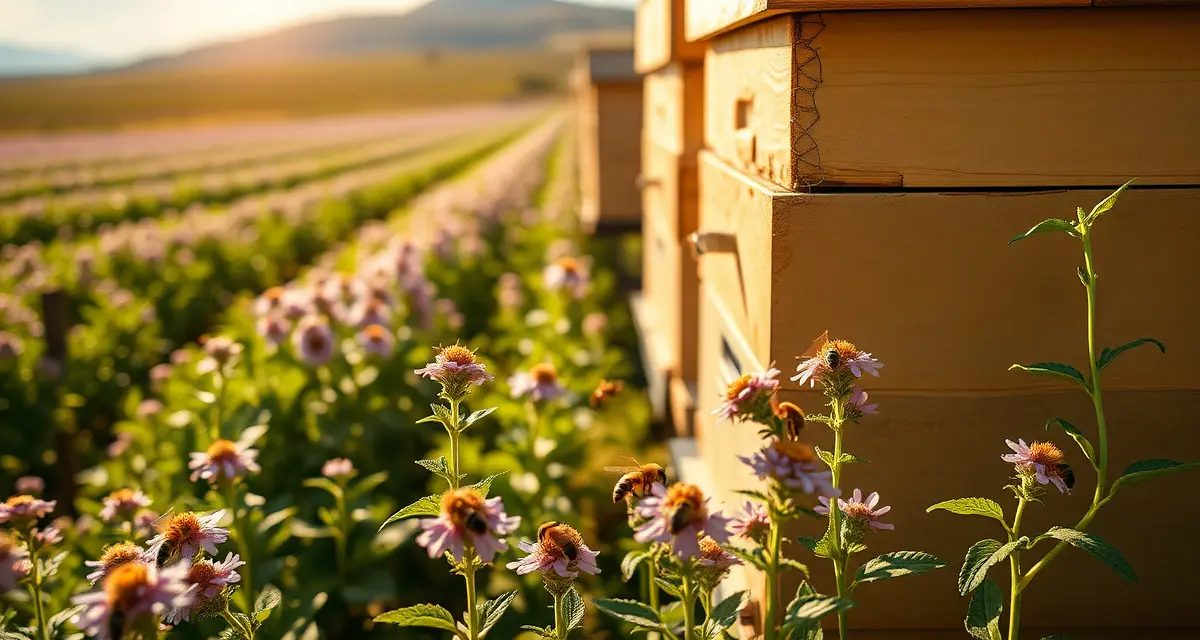
Mint Pollination in Idaho and the Pacific Northwest: Specialty Crop Opportunities
Idaho and Oregon produce over 90 percent of US peppermint and spearmint, making the Pacific Northwest the center of the country's mint oil production industry. Mint grown for seed production requires commercial pollination services, and the crop's unique characteristics create specialty income for beekeepers who understand the market. Idaho and Oregon mint pollination runs in July, and the crop requires 3 to 5 hives per acre for seed production, a high-density requirement that makes per-acre contract value significant even at moderate per-hive rates.
The mint pollination market is a niche within the broader Pacific Northwest specialty crop circuit, and it rewards beekeepers who understand its specific requirements. Mint grown for oil extraction doesn't require pollination since it's harvested before seed set. Only mint grown for seed stock (which provides the planting material for oil production acreage) needs managed bee pollination. This distinction is important for targeting your outreach to the right growers.
TL;DR
- Idaho's primary commercial beekeeping role is shaped by its crop mix, climate, and position on the national pollination circuit.
- Pollination rates in Idaho range $65-220/hive depending on crop depending on crop and colony strength requirements.
- Out-of-state operators entering Idaho for pollination contracts must register with the state agricultural authority and obtain a Certificate of Health.
- Idaho functions as either a primary pollination destination, a seasonal honey production location, or a transitional stop depending on the circuit.
- Tracking permit status, registration documents, and yard records for Idaho operations requires organized record-keeping before the season opens.
How to Get Mint Pollination Contracts
The Idaho State Department of Agriculture and the Oregon Department of Agriculture both maintain lists of specialty seed crop producers. The Idaho and Oregon Seed Association members include the primary commercial mint seed growers who contract for pollination services.
Mint seed production is concentrated in southwestern Idaho, particularly in Canyon and Gem counties near Nampa and Caldwell, and in the Willamette Valley of Oregon, primarily in Marion, Linn, and Polk counties. These are the target geographies for direct outreach.
Mint seed growers are sophisticated about pollination management because their seed crop outcome directly determines the quality and quantity of planting material available for the following season. They tend to respond well to professional proposals with strength documentation and a clear understanding of mint's pollination requirements. Don't pitch mint seed growers the same way you'd pitch a vegetable farmer; lead with your understanding of seed-set biology and your experience with high-density specialty crop placement.
Use PollenOps clover seed pollination management as a reference for how specialty seed crop contracts are structured, since mint seed contracts follow similar patterns. Your Idaho commercial beekeeping registration and compliance documentation should be current before making grower contact.
Mint Bloom Timing and Season Integration
Idaho and Oregon mint bloom runs July, overlapping with clover honey season, other specialty seed crops, and summer positioning for some Pacific Northwest operators. The July timing is a double-edged consideration: it coincides with the best summer honey flows in the Pacific Northwest, meaning that placing hives in mint fields may take them away from prime honey production locations.
At 3 to 5 hives per acre and per-hive rates of $70 to $120, the math for a substantial mint seed contract can exceed what those same hives would produce in honey income from a summer wildflower location. Run the numbers for your specific operation before committing, since the answer depends on your honey yields and market pricing.
Colony Requirements for Mint Pollination
Mint seed growers require strong colonies because high-density placement (3 to 5 hives per acre) doesn't compensate for weak colonies. You need strong foragers at every hive to provide adequate coverage across the flowering mint rows. Growers who specify per-acre density are expecting functional, actively foraging colonies, not a pile of boxes with minimal populations.
Strength requirements for mint seed growers are typically 8 frames of bees or more, with an active queen and strong brood. The July timing means your colonies should be at or near summer peak, which is favorable. But colonies that have been exhausted by multiple spring pollination moves may not be at the condition you want for a premium specialty crop contract.
Allow your mint seed hives to rest on good forage for at least two weeks before deployment if they've been running hard through cherry, blueberry, or other spring contracts. Arriving at mint with peak-strength colonies justifies premium rates and protects your relationship with seed growers who are paying for performance.
Honey Production Consideration
Mint honey is a byproduct of pollination placement in mint fields. Mint nectar produces honey with a distinctive minty note that varies from subtle to strong depending on the variety and harvest timing. The honey can be marketed as a specialty varietal product, though the market for mint honey is limited compared to clover or wildflower.
If you're running supers on your mint colonies, be aware that mint honey crystallizes with a fine-grained texture and has a distinctive flavor that will affect blended honey quality if not kept separate. Extract it promptly after removing from mint fields and decide in advance whether to market it as varietal or blend it into your general crop.
Rates and Contract Terms
Idaho and Oregon mint seed pollination rates run $70 to $120 per hive, varying by grower, acreage, and colony strength requirements. At 3 to 5 hives per acre, even at $70 per hive, a 100-acre mint seed contract generates $21,000 to $35,000, making it a significant revenue source.
Sign contracts in March or April for July placements. Net-30 payment after placement is standard, with a 25 percent deposit at signing.
Frequently Asked Questions
How do you get mint pollination contracts in Idaho or Oregon?
Contact the Idaho and Oregon Seed Associations, which include commercial mint seed producers who contract for pollination services. The Idaho and Oregon state agriculture departments maintain specialty seed crop producer directories. Direct outreach to operations in Canyon and Gem counties in Idaho and Marion and Linn counties in Oregon in March or April for July placements is effective. Lead with your understanding of seed-set requirements and your high-strength colony documentation. Mint seed growers are sophisticated about pollination and respond to beekeepers who understand their specific crop needs.
When is mint bloom in Idaho and Oregon?
Idaho and Oregon mint bloom runs in July, with slight variation by variety and planting location. The July timing coincides with other Pacific Northwest summer specialty crop and honey production opportunities, so planning your hive allocation before committing to mint seed contracts is important. Mint bloom is relatively brief, typically 2 to 3 weeks per field, though large operations with staggered planting may have bloom spread across a longer period.
What colony strength do mint seed growers require?
Mint seed growers typically require 8 frames of bees or more at delivery with an active laying queen. The high placement density of 3 to 5 hives per acre means individual colony strength directly affects field coverage. Weak colonies at high density don't provide the same coverage as strong colonies at the same density. Give colonies that have run hard through spring contracts time to recover on quality forage before July mint placement to ensure they arrive at peak foraging strength.
What is the process for registering an out-of-state apiary in a new state?
Most states require out-of-state operators to register with the state department of agriculture apiary program before placing colonies. The process typically involves submitting a registration application (online or paper), paying a fee (usually $10-50 per location), and providing contact information for the operation. Some states also require the registration to be renewed annually. Contact the destination state's department of agriculture apiary program at least 60 days before your planned arrival to confirm current requirements.
What documentation do state apiary inspectors typically review?
State apiary inspectors review health certificates for out-of-state colonies, registration documentation, and colony inspection records during apiary visits. Inspectors check for signs of American foulbrood, European foulbrood, and other regulated pests and diseases. Operations with organized digital records that include treatment history and mite counts typically have faster, less complicated inspections than operations without documentation. Some state inspectors also verify that varroa mite loads are below state entry thresholds.
What triggers a state apiary inspection?
State apiary inspections can be triggered by routine inspection schedules (most states inspect a percentage of registered apiaries annually), neighbor or landowner complaints, disease reports from nearby operations, or inspection requirements tied to state entry permits. California, in particular, has the right to inspect incoming loads at port of entry for commercial beekeeping operations. Maintaining current registration and organized records makes required inspections faster and less disruptive.
Try These Free Tools
Sources
- USDA Agricultural Research Service
- Bee Informed Partnership
- American Beekeeping Federation (ABF)
- Idaho Department of Agriculture
- Project Apis m.
Get Started with PollenOps
Commercial operations working in Idaho face the same registration, permit, and documentation requirements as any state on the national circuit -- plus Idaho's specific regulatory requirements. PollenOps tracks your Idaho yard records, contract assignments, and permit documentation alongside your full operation, so entering a new state doesn't add a separate administrative burden. See how the platform fits operations working across multiple states.