Sunflower Pollination in North Dakota: The Complete Commercial Guide
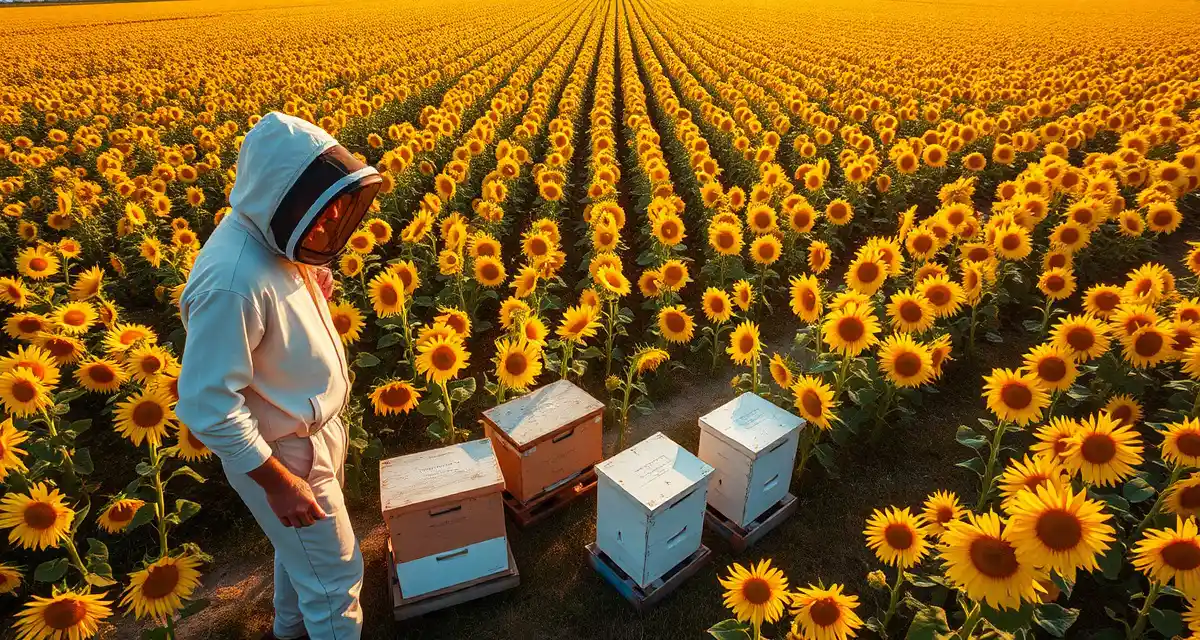
North Dakota has 1.5+ million acres of sunflower, the single largest sunflower pollination market in North America. Sunflower pollination season runs July-August in North Dakota at 1 hive per acre density, and for operations already in the state for the sweet clover honey flow, sunflower contracts provide meaningful supplemental income from the same geographic position.
The combination of sunflower pollination income and adjacent sweet clover honey production is what makes North Dakota's summer circuit so economically powerful for operations that time it right.
TL;DR
- North Dakota's primary commercial beekeeping role is shaped by its crop mix, climate, and position on the national pollination circuit.
- Pollination rates in North Dakota range $35-50/hive depending on crop and colony strength requirements.
- Out-of-state operators entering North Dakota for pollination contracts must register with the state agricultural authority and obtain a Certificate of Health.
- North Dakota functions as either a primary pollination destination, a seasonal honey production location, or a transitional stop depending on the circuit.
- Tracking permit status, registration documents, and yard records for North Dakota operations requires organized record-keeping before the season opens.
North Dakota Sunflower Production Overview
North Dakota leads all US states in sunflower production, both oil-type and confectionery (snack and birdseed) sunflower. The production concentrates in the Red River Valley and western North Dakota:
Primary production counties: Dickey, McIntosh, Emmons, Kidder, Stutsman (south-central North Dakota, the "Sunflower Triangle"), and Richland, Sargent, Ransom (southeast Red River Valley).
Crop types and their pollination value:
- Oil sunflower: Lower seed weight, self-compatible, benefits from bee pollination but doesn't strictly require it for commercial production. Pollination contracts: $35-50/hive.
- Confectionery sunflower: Larger seeds, higher value per pound, often shows more pronounced bee pollination response. Contracts: $45-65/hive.
- Hybrid sunflower seed production: Male and female lines planted in alternating rows require cross-pollination for seed production. Bees are essential. Contracts: $55-75/hive. Less acreage than commercial production but higher rates.
The Yield Impact of Bee Pollination on Sunflower
Research from the University of Minnesota and NDSU consistently shows sunflower benefits from bee pollination:
- 15-25% yield increase in most studies comparing bee-pollinated versus wind-only pollinated plots
- Confectionery varieties show more consistent response than oil types
- Complete seed fill (reducing the "empty center" problem in confectionery sunflower) is significantly improved by dense bee placement
At 1 hive per acre (the industry standard) a 500-acre sunflower field needs 500 colonies. This scale means individual North Dakota sunflower growers represent significant contract volume.
Timing the Sunflower Circuit
Sunflower bloom in North Dakota runs approximately mid-July to mid-August, with specific timing depending on planting date, variety, and location. The bloom timing closely overlaps with the peak sweet clover honey flow.
The dual-income play:
Colonies placed on sunflower contracts in south-central North Dakota are typically within foraging range of sweet clover, native wildflowers, and other forage. The "honey on sunflower contracts" scenario:
- Colonies contract for sunflower pollination at $45-65/hive
- Colonies also forage on surrounding sweet clover and wildflower
- Honey yield on sunflower contracts: 25-50 lbs/colony from surrounding forage (sunflower honey itself granulates rapidly and has a strong flavor, but surrounding clover honey is marketable)
- Combined value: contract ($45-65) + honey (25-50 lbs × $2.10 = $52-105) = $97-170 per hive equivalent
This dual-income calculation makes North Dakota sunflower one of the more attractive summer circuit stops when positioned correctly.
Sunflower Honey Management
Sunflower honey granulates extremely fast, sometimes within 24-48 hours of extraction if conditions are right. This is a management challenge that requires planning:
If running supers during sunflower contracts:
- Pull supers every 5-7 days during peak sunflower flow
- Extract immediately after pulling. Don't let sunflower honey sit in the tank.
- Blend with sweet clover or wildflower honey if possible to slow granulation
- Consider marketing as creamed honey. The fast, fine granulation of sunflower creates a premium creamed honey product.
Many operators on sunflower contracts don't run supers specifically to avoid the sunflower honey management complication, taking only the contract income. If the surrounding forage is primarily sweet clover rather than sunflower, running supers is more practical.
Finding Sunflower Contracts in North Dakota
National Sunflower Association: The primary industry organization for US sunflower production. Their website includes a grower directory and they maintain contacts with large production operations in North Dakota. Contact NSA's Bismarck regional office.
Grain elevators in the target counties: Elevator managers know which producers are growing sunflower and can make informal introductions. The major grain co-ops serving Dickey, McIntosh, Emmons, and Stutsman counties are the primary entry point.
Direct grower approach: USDA NASS county data identifies the top sunflower-producing counties. Contact farm bureau networks and ag extension offices in those counties for referrals to large producers.
Word of mouth: Established North Dakota beekeepers who run sunflower circuits often know growers looking for additional colonies. The community is well-networked through the North Dakota Beekeepers Association.
Professional contract management (written agreements, documented colony strength, delivery notifications) positions your operation above informal contractors. Large North Dakota sunflower producers manage multiple supply relationships and appreciate professional documentation.
North Dakota Registration for Sunflower Season
All standard North Dakota apiary registration requirements apply for sunflower season operations. Register with the ND Department of Agriculture before arrival. Health certificates required for colonies entering from out of state.
FAQ
How do you get sunflower pollination contracts in North Dakota?
Build relationships through the National Sunflower Association's North Dakota grower network, grain elevator managers in the primary production counties (Dickey, McIntosh, Emmons, Stutsman), and the North Dakota Beekeepers Association. Direct outreach to large sunflower producers in these counties is effective when accompanied by professional credentials: documented colony strength history, written contract templates, and proof of insurance. The market is relationship-driven; early contact in fall for the following summer's contracts is how committed beekeepers secure placements.
What is the going rate for sunflower pollination in North Dakota?
North Dakota sunflower pollination rates run $35-50/hive for oil sunflower production, $45-65/hive for confectionery sunflower, and $55-75/hive for hybrid seed production contracts. Documented colony strength above 6-frame minimum and professional contract management can push rates toward the top of the range. Rates have been relatively stable compared to almond rates because sunflower production hasn't expanded at the same rate relative to bee supply.
When is sunflower bloom in North Dakota?
North Dakota sunflower bloom runs from approximately mid-July through mid-August, with specific timing depending on planting date, maturity class, and annual weather. Early-maturity varieties plant in May and bloom in early-to-mid July. Later maturities extend bloom into August. The bloom window for any individual field is 2-3 weeks. For operations managing multiple sunflower contracts in different fields, the bloom progression allows sequencing, moving from early-blooming fields to later-blooming fields through the July-August window.
What is the process for registering an out-of-state apiary in a new state?
Most states require out-of-state operators to register with the state department of agriculture apiary program before placing colonies. The process typically involves submitting a registration application (online or paper), paying a fee (usually $10-50 per location), and providing contact information for the operation. Some states also require the registration to be renewed annually. Contact the destination state's department of agriculture apiary program at least 60 days before your planned arrival to confirm current requirements.
What documentation do state apiary inspectors typically review?
State apiary inspectors review health certificates for out-of-state colonies, registration documentation, and colony inspection records during apiary visits. Inspectors check for signs of American foulbrood, European foulbrood, and other regulated pests and diseases. Operations with organized digital records that include treatment history and mite counts typically have faster, less complicated inspections than operations without documentation. Some state inspectors also verify that varroa mite loads are below state entry thresholds.
What triggers a state apiary inspection?
State apiary inspections can be triggered by routine inspection schedules (most states inspect a percentage of registered apiaries annually), neighbor or landowner complaints, disease reports from nearby operations, or inspection requirements tied to state entry permits. California, in particular, has the right to inspect incoming loads at port of entry for commercial beekeeping operations. Maintaining current registration and organized records makes required inspections faster and less disruptive.
Try These Free Tools
Sources
- USDA Agricultural Research Service
- Bee Informed Partnership
- American Beekeeping Federation (ABF)
- North Dakota Department of Agriculture
- Project Apis m.
Get Started with PollenOps
Commercial operations working in North Dakota face the same registration, permit, and documentation requirements as any state on the national circuit -- plus North Dakota's specific regulatory requirements. PollenOps tracks your North Dakota yard records, contract assignments, and permit documentation alongside your full operation, so entering a new state doesn't add a separate administrative burden. See how the platform fits operations working across multiple states.