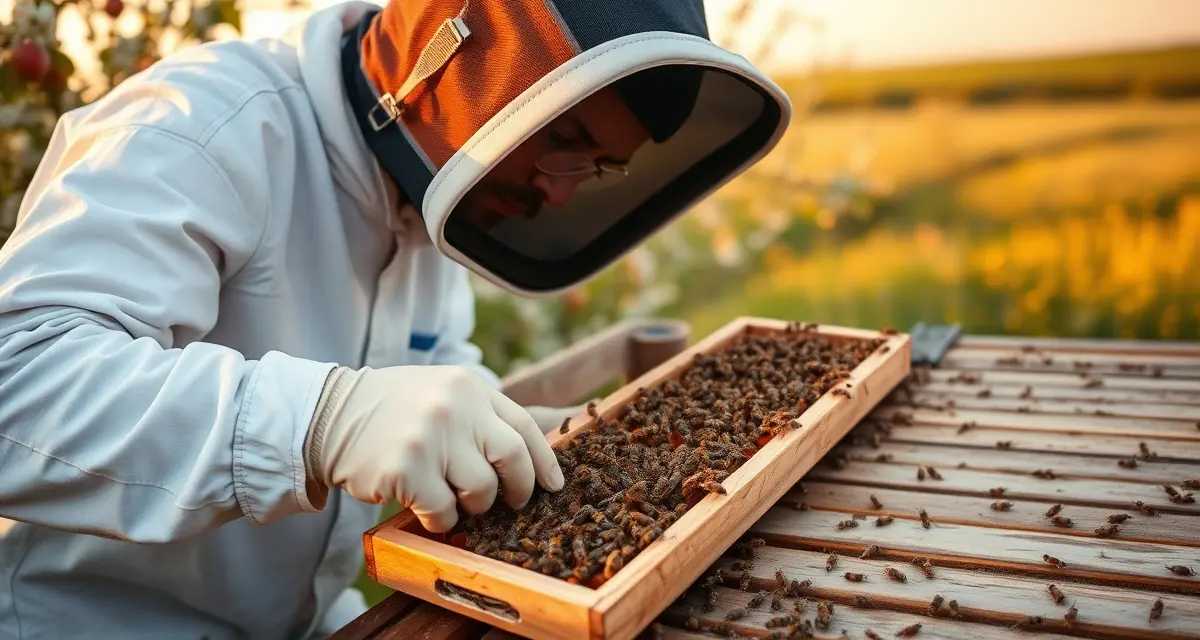
Commercial Beekeeping in Ohio: Fruit Crops and Honey Production
Ohio produces apple, cherry, and soft fruit requiring commercial pollination, and its clover and wildflower forage supports strong honey production alongside pollination income. For commercial beekeepers working the Midwest circuit, Ohio offers both spring pollination contracts and summer honey production opportunities that fit well in a broader operational calendar.
Ohio's geography puts it in a useful position: far enough north for productive clover honey flows, and with enough concentrated fruit production to make spring pollination contracts worthwhile. And for operators in the Midwest circuit, Ohio fits logistically between eastern states (Pennsylvania, New York) and western states (Indiana, Michigan, Illinois).
TL;DR
- Ohio's primary commercial beekeeping role is shaped by its crop mix, climate, and position on the national pollination circuit.
- Pollination rates in Ohio range $65-220/hive depending on crop depending on crop and colony strength requirements.
- Out-of-state operators entering Ohio for pollination contracts must register with the state agricultural authority and obtain a Certificate of Health.
- Ohio functions as either a primary pollination destination, a seasonal honey production location, or a transitional stop depending on the circuit.
- Tracking permit status, registration documents, and yard records for Ohio operations requires organized record-keeping before the season opens.
What Pollination Opportunities Exist in Ohio?
Ohio's fruit production is spread across several regions, with the most concentrated pollination demand in the northeastern and northwestern parts of the state.
Apple Pollination
Ohio has commercial apple production in the northeastern counties (Wayne, Holmes, Stark, Knox) and in the Lake Erie shoreline counties. The northeastern counties have a concentration of family-scale orchards and some commercial operations.
apple pollination rates in Ohio typically run $70 to $110 per hive. Timing follows northeast-regional patterns, with late April to early May for most Ohio orchards.
Cherry Pollination
Ohio has sweet and sour cherry production, particularly in the Lake Erie shoreline counties (Ottawa, Sandusky, Erie, Lorain) where the lake moderates temperatures favorably for cherry. Cherry bloom runs 1 to 2 weeks before apple, in mid to late April in most Ohio cherry regions.
Sour cherry contracts are common in Ohio's Lake Erie shore. Rates vary, typically $80 to $120 per hive.
Pumpkin and Squash
Ohio is a notable pumpkin-producing state, and pumpkins require bee pollination. Pumpkin pollination runs in June through July, offering a summer contract option after spring apple and cherry. Rates are typically lower per hive than tree fruits, but the timing fills the calendar gap between spring pollination and summer honey.
Small Fruits
Strawberry, blueberry, and raspberry production in Ohio requires pollination. These contracts are smaller in volume than apple or cherry but provide additional income opportunities for operators with the flexibility to service them.
What Honey Production Opportunities Does Ohio Offer?
Ohio's agriculture supports diverse honey production, though the state's smaller acreages compared to Midwest giants like the Dakotas mean production volumes per hive are modest.
White Clover
White clover is the backbone of Ohio's honey production. Ohio's mixed agricultural and pastoral landscape includes white clover in pastures, roadsides, and hay fields. White clover honey in Ohio is light-colored and mild-flavored, a standard commercial honey type with broad market appeal.
Wildflower
Ohio's varied landscape produces a diverse wildflower honey with different character from clover-dominant sources. Wildflower varieties command premium pricing in direct-to-consumer and local market channels.
Tulip Poplar
Tulip poplar is a notable honey source in Ohio's woodlands, particularly in the southeast part of the state where forest cover is heavier. Tulip poplar honey is darker than clover, with a distinctive flavor that some consumers actively seek.
Basswood
Northern Ohio, near the Lake Erie shore, has some basswood (linden) trees that produce an excellent honey flow when conditions align. Basswood honey is prized for its distinctive minty character and commands premium retail pricing.
Ohio in the Midwest Migratory Circuit
Ohio doesn't anchor the migratory circuit the way California almonds do, but it fits naturally into several circuit patterns:
East Coast circuit: Ohio can be part of a Pennsylvania/New York apple circuit with Ohio filling the May pollination window before moving to Michigan blueberry.
Summer honey circuit: Operators who winter in the Southeast (Florida, Georgia) can run through Ohio for spring apple pollination, then continue to Michigan or Midwest honey yards.
Midwest-focused operations: Ohio-based operators can build a circuit entirely within the Midwest: Ohio spring pollination, Indiana or Illinois summer honey, Ohio or Michigan fall positioning.
Ohio's central location makes it genuinely flexible as a circuit component.
Ohio Regulations for Commercial Beekeeping
Apiary Registration
Ohio requires registration of all apiaries with the Ohio Department of Agriculture. Registration is annual and required for all beekeepers, including commercial operators with large hive counts.
Ohio's registration process is administered through the Ohio Department of Agriculture, Division of Plant Health. Current fees and registration forms are available through the ODA website.
State Apiary Inspections
Ohio state apiary inspectors conduct routine inspections of registered apiaries. Commercial operators should expect annual inspections. Inspectors focus primarily on disease detection (American foulbrood, European foulbrood) and compliance with registration requirements.
Out-of-State Entry Requirements
Colonies entering Ohio from other states require a certificate of inspection from the state of origin, confirming freedom from American foulbrood and other regulated diseases. Contact the Ohio Department of Agriculture, Division of Plant Health for current entry requirements and certificate formats.
Ohio has historically maintained straightforward entry requirements for commercial operators compared to some other states.
Disease Reporting
Ohio requires reporting of American foulbrood and other regulated diseases to the state apiary inspector. If you discover suspected AFB in Ohio colonies, contact the ODA Division of Plant Health promptly. Failure to report can result in regulatory action.
Operating as a Commercial Beekeeper in Ohio
Local vs. Migratory Operations
Ohio has both local commercial beekeepers (based in Ohio year-round) and migratory operators who pass through for spring pollination. Local Ohio operators have advantages in relationship development and regulatory familiarity. Migratory operators need to factor Ohio's entry requirements and registration obligations into their circuit planning.
Grower Relationship Development
Ohio's fruit growers are accessible through:
- Ohio Fruit Growers Society
- Ohio State University Extension (strong agricultural extension presence in Ohio)
- Regional agricultural fairs and industry events
- Direct outreach to orchards in concentrated production areas
The Ohio apple and cherry market is competitive enough that reliability and professional documentation matter to growers, but not so competitive that established operators are impossible to displace.
FAQ
What pollination opportunities exist in Ohio?
Ohio's commercial pollination markets include apple (northeastern and Lake Erie counties), sweet and sour cherry (Lake Erie shoreline), pumpkin and squash (June to July), and various soft fruits. Apple and cherry are the primary spring contracts, running late April through mid-May. Pumpkin pollination in June to July offers summer contract opportunities. Total Ohio pollination income for a 300 to 500 hive operation running a full circuit can reach $30,000 to $60,000 per year from Ohio-based contracts.
What honey production opportunities does Ohio offer?
White clover is Ohio's primary honey crop, available from late June through August in pastoral and agricultural areas. Wildflower honey from Ohio's diverse landscape supports direct-to-consumer and local market sales. Tulip poplar honey in southeastern Ohio and basswood honey in northern Ohio provide distinctive variety types that command premium pricing. Ohio honey production is not at Dakotas-scale volume, but a 500-hive operation in good clover country can produce meaningful honey income alongside pollination contracts.
What are Ohio's apiary registration requirements?
All Ohio apiaries must be registered annually with the Ohio Department of Agriculture, Division of Plant Health. Out-of-state operators bringing colonies into Ohio for pollination must carry a current inspection certificate from their state of origin confirming freedom from American foulbrood and other regulated diseases. Ohio requires reporting of AFB and other regulated diseases to state inspectors. Contact ODA Division of Plant Health for current registration fees, forms, and entry requirements.
What is the process for registering an out-of-state apiary in a new state?
Most states require out-of-state operators to register with the state department of agriculture apiary program before placing colonies. The process typically involves submitting a registration application (online or paper), paying a fee (usually $10-50 per location), and providing contact information for the operation. Some states also require the registration to be renewed annually. Contact the destination state's department of agriculture apiary program at least 60 days before your planned arrival to confirm current requirements.
What documentation do state apiary inspectors typically review?
State apiary inspectors review health certificates for out-of-state colonies, registration documentation, and colony inspection records during apiary visits. Inspectors check for signs of American foulbrood, European foulbrood, and other regulated pests and diseases. Operations with organized digital records that include treatment history and mite counts typically have faster, less complicated inspections than operations without documentation. Some state inspectors also verify that varroa mite loads are below state entry thresholds.
What triggers a state apiary inspection?
State apiary inspections can be triggered by routine inspection schedules (most states inspect a percentage of registered apiaries annually), neighbor or landowner complaints, disease reports from nearby operations, or inspection requirements tied to state entry permits. California, in particular, has the right to inspect incoming loads at port of entry for commercial beekeeping operations. Maintaining current registration and organized records makes required inspections faster and less disruptive.
Try These Free Tools
Sources
- USDA Agricultural Research Service
- Bee Informed Partnership
- American Beekeeping Federation (ABF)
- Ohio Department of Agriculture
- Project Apis m.
Get Started with PollenOps
Commercial operations working in Ohio face the same registration, permit, and documentation requirements as any state on the national circuit -- plus Ohio's specific regulatory requirements. PollenOps tracks your Ohio yard records, contract assignments, and permit documentation alongside your full operation, so entering a new state doesn't add a separate administrative burden. See how the platform fits operations working across multiple states.