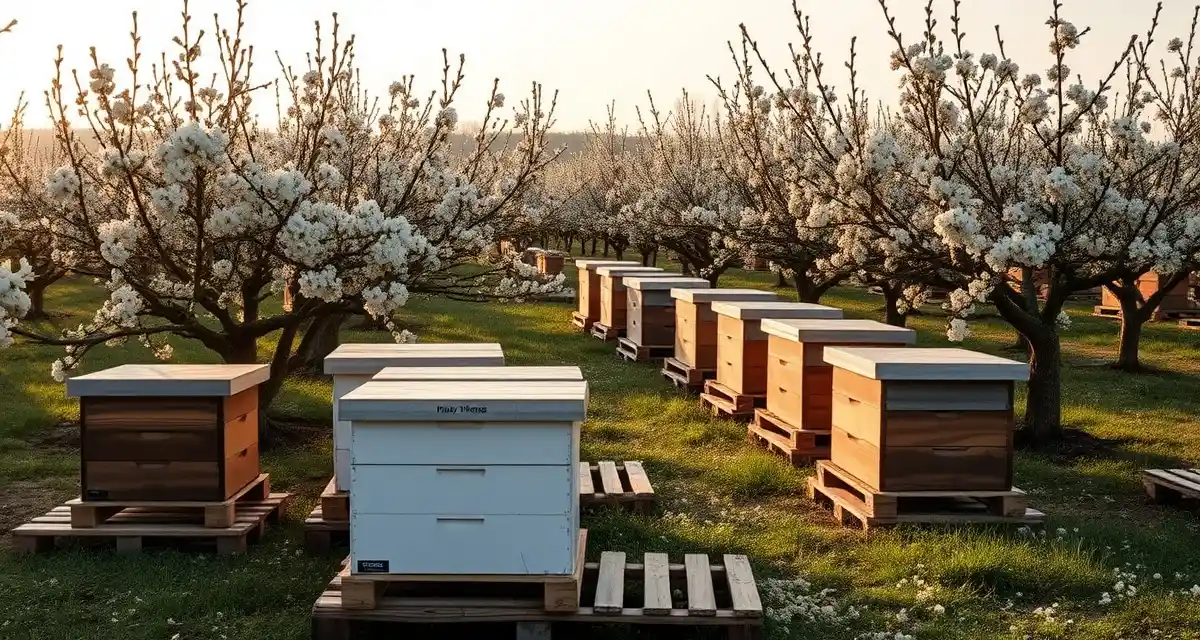
Apple Pollination in Virginia: Shenandoah Valley and Blue Ridge
Virginia's Shenandoah Valley produces significant quantities of apples across the ridge-and-valley geography stretching from Frederick County in the north to Rockingham County in the south. The valley's limestone soils, moderate climate, and proximity to major East Coast markets have supported commercial apple production for generations, creating a well-established pollination market for commercial beekeepers.
Virginia apple bloom runs mid-April through early May in Shenandoah Valley counties, making it one of the earliest-blooming major apple production regions in the Eastern US. This early timing positions Virginia as the opening stop in a Northeast apple circuit that can extend through Pennsylvania, New York, and New England over the following 6 weeks.
TL;DR
- Virginia's primary commercial beekeeping role is shaped by its crop mix, climate, and position on the national pollination circuit.
- Pollination rates in Virginia range $65-220/hive depending on crop depending on crop and colony strength requirements.
- Out-of-state operators entering Virginia for pollination contracts must register with the state agricultural authority and obtain a Certificate of Health.
- Virginia functions as either a primary pollination destination, a seasonal honey production location, or a transitional stop depending on the circuit.
- Tracking permit status, registration documents, and yard records for Virginia operations requires organized record-keeping before the season opens.
Shenandoah Valley Apple Geography
The core Shenandoah Valley apple counties are Frederick, Clarke, Shenandoah, and Warren counties in the northern valley. These counties, centered around Winchester, contain the highest concentration of commercial apple orchards in Virginia and include some of the most established apple-growing operations in the East.
Rockingham County and Augusta County in the central Shenandoah Valley add additional acreage, particularly in areas with limestone-influenced soils and adequate frost protection from valley topography.
Virginia in the Northeast Apple Circuit
Virginia's mid-April bloom timing is the earliest of the major Eastern apple circuits. This makes Virginia the natural first stop on a Northeast apple route that progresses north through the season:
- Virginia (Shenandoah Valley): Mid-April through early May
- Pennsylvania (Adams County): Mid-April through early May (overlapping)
- New York (Hudson Valley and Lake Ontario): Late April through mid-May
- New England orchards: May
Operators who want to maximize Northeast apple season revenue need to position themselves for the Virginia opening and then move north as bloom progresses. This requires planning for geographic coverage across states, coordinated truck moves, and multi-state compliance documentation.
For Northeast apple pollination circuit planning and for the Southeast fruit crop circuit that incorporates Virginia, Shenandoah Valley timing is the anchor date.
Colony Requirements and Rates
Virginia apple growers in the Shenandoah Valley typically require 6 to 8 frames of bees at placement. The valley's established commercial apple growers are sophisticated buyers who have worked with multiple beekeepers over the years and know what adequate colony strength looks like.
Virginia apple pollination rates have typically run $90 to $130 per hive, with established long-term relationships toward the upper range and new contractor relationships toward the lower end.
For Virginia apiary registration and compliance, out-of-state operators must register with the Virginia Department of Agriculture and Consumer Services and provide health certificates for incoming colonies.
Getting Virginia Apple Contracts
The Shenandoah Valley apple industry is organized through the Virginia Apple Growers Association and Virginia Cooperative Extension in Frederick and Clarke counties. The Winchester, Virginia area is the hub of the commercial apple community.
Contact Shenandoah Valley apple growers in fall for the following spring season. Mid-April delivery requirements mean that operators coming from Southern circuit spring work (Florida, Georgia, or South Carolina) need to position colonies for mid-April delivery, which requires planning from the start of the season.
Operators working the Southeast fruit circuit who exit North Carolina blueberry in late April may find the timing slightly late for the main Shenandoah Valley apple window. Understanding the exact bloom window for your specific grower contacts is important for sequencing.
Frequently Asked Questions
How do you get apple pollination contracts in Virginia?
Contact Shenandoah Valley apple growers in Frederick, Clarke, Shenandoah, and Warren counties in fall for the following spring season. Virginia Cooperative Extension in Frederick County serves the Shenandoah Valley apple industry and can provide introductions. The Virginia Apple Growers Association connects commercial producers. Operators who work Maryland or Pennsylvania apple season have geographic proximity to add Virginia, and the Mid-Atlantic apple grower community shares some networks and references. Start outreach by October for the following April contracts.
When is apple pollination season in Virginia's Shenandoah Valley?
Virginia Shenandoah Valley apple bloom runs from mid-April through early May in most years. Frederick County and Clarke County, the northernmost valley counties near Winchester, typically bloom from April 15 through April 30. Southern valley counties in Shenandoah and Warren counties follow within the same general window. Year-to-year variation based on winter chill hours and spring temperatures can shift bloom timing by 1 to 2 weeks. Virginia's earlier bloom timing compared to Pennsylvania and New York makes it the opening stop in a northeast apple circuit.
What colony strength do Virginia apple growers require?
Virginia Shenandoah Valley apple growers typically require colonies at 6 to 8 frames of bees at time of placement. Standard commercial contracts specify 6 frames. Some of the valley's more established commercial growers specify 8 frames and may request colony strength documentation at delivery. Plan spring management to ensure hives are building well through March and early April. Operators coming from Southern circuit work in February and March should have adequate recovery time for mid-April Virginia delivery if winter survival was strong and post-treatment buildup was well-managed.
What is the process for registering an out-of-state apiary in a new state?
Most states require out-of-state operators to register with the state department of agriculture apiary program before placing colonies. The process typically involves submitting a registration application (online or paper), paying a fee (usually $10-50 per location), and providing contact information for the operation. Some states also require the registration to be renewed annually. Contact the destination state's department of agriculture apiary program at least 60 days before your planned arrival to confirm current requirements.
What documentation do state apiary inspectors typically review?
State apiary inspectors review health certificates for out-of-state colonies, registration documentation, and colony inspection records during apiary visits. Inspectors check for signs of American foulbrood, European foulbrood, and other regulated pests and diseases. Operations with organized digital records that include treatment history and mite counts typically have faster, less complicated inspections than operations without documentation. Some state inspectors also verify that varroa mite loads are below state entry thresholds.
What triggers a state apiary inspection?
State apiary inspections can be triggered by routine inspection schedules (most states inspect a percentage of registered apiaries annually), neighbor or landowner complaints, disease reports from nearby operations, or inspection requirements tied to state entry permits. California, in particular, has the right to inspect incoming loads at port of entry for commercial beekeeping operations. Maintaining current registration and organized records makes required inspections faster and less disruptive.
Try These Free Tools
Sources
- USDA Agricultural Research Service
- Bee Informed Partnership
- American Beekeeping Federation (ABF)
- Virginia Department of Agriculture
- Project Apis m.
Get Started with PollenOps
Commercial operations working in Virginia face the same registration, permit, and documentation requirements as any state on the national circuit -- plus Virginia's specific regulatory requirements. PollenOps tracks your Virginia yard records, contract assignments, and permit documentation alongside your full operation, so entering a new state doesn't add a separate administrative burden. See how the platform fits operations working across multiple states.