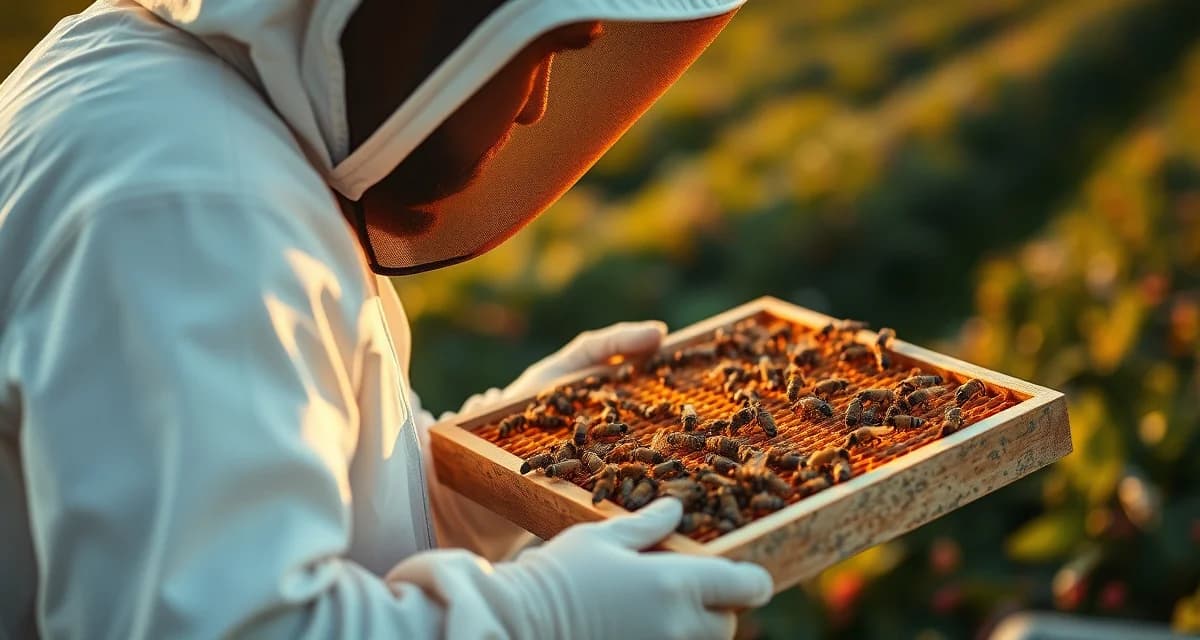
Commercial Beekeeping in Wisconsin: Cranberry Pollination and Honey
Wisconsin produces 60%+ of US cranberries. That's the state's single largest pollination market, and it runs on a June-July timeline that fits naturally between Pacific Northwest berry contracts and Northern Plains honey production. If you're already moving through the Midwest on a summer circuit, Wisconsin cranberry is a stop worth knowing.
Wisconsin cranberry pollination runs June-July with 2-3 hives per bog acre required. That placement density makes individual cranberry contracts significant volume. A 500-acre bog complex needs 1,000-1,500 colonies. Operators who build relationships with major Wisconsin cranberry growers work at scale that justifies the logistics.
TL;DR
- Wisconsin's primary commercial beekeeping role is shaped by its crop mix, climate, and position on the national pollination circuit.
- Pollination rates in Wisconsin range $60-80/hive depending on crop and colony strength requirements.
- Out-of-state operators entering Wisconsin for pollination contracts must register with the state agricultural authority and obtain a Certificate of Health.
- Wisconsin functions as either a primary pollination destination, a seasonal honey production location, or a transitional stop depending on the circuit.
- Tracking permit status, registration documents, and yard records for Wisconsin operations requires organized record-keeping before the season opens.
Wisconsin Cranberry Pollination
Wisconsin's commercial cranberry production concentrates in two main regions:
Central Sands region (Wood, Juneau, Monroe, Jackson, Adams counties): The Cranberry Capital of the world, centered around Cranmoor, Tomah, and Wisconsin Rapids. This region has the highest density of commercial cranberry bogs in the US. Many operations here are large, at 500-2,000 acres per grower.
Northern Wisconsin (Price, Oneida, Forest counties): Secondary production area with smaller individual bogs.
bloom timing: Cranberry bloom in Wisconsin runs mid-June through mid-July, with the specific window depending on location and variety. Central Sands bogs typically bloom late June to mid-July.
Contract rates: $60-80/hive for documented colonies meeting minimum strength (typically 5-6 frames). Some premium-paying growers offer $80-90/hive for high-strength, verified deliveries.
Hive density: 2-3 hives per bog acre. A 500-acre bog complex at 2.5 hives/acre needs 1,250 colonies. Major Wisconsin cranberry operations contract with multiple beekeepers to fill their full bee requirement.
The logistics: Cranberry bogs are wet environments surrounded by reservoirs and channels. hive placement is on the bog perimeter on firm ground, typically on wooden pallets set on elevated platforms or directly on ground with good drainage. Some bogs have established loading areas; others require portable equipment. Know the site before you arrive with a full truck.
Wisconsin Honey Production
Wisconsin's honey production sits in the shadow of North Dakota's output, but the state offers quality production opportunities:
Sweet clover: Wisconsin's roadsides and agricultural land edges have sweet clover, the same species that drives North Dakota production. The July-August sweet clover flow in central and western Wisconsin produces solid yields in good years. Average: 50-80 lbs/colony.
Basswood: Southeastern Wisconsin and the Driftless Area (southwestern Wisconsin along the Mississippi River) have mature basswood forests. The June-July basswood flow produces premium varietal honey, similar to Minnesota basswood but with slightly earlier timing in the southern Driftless counties.
Buckwheat: Wisconsin grows some commercial buckwheat, primarily in the central sands region that also supports cranberry production. Buckwheat honey is dark, strongly flavored, and sought by specialty buyers at $2.80-3.80/lb bulk. The buckwheat flow in August follows the main clover flow timing. Some operations position colonies in central Wisconsin specifically for buckwheat.
Clover + cranberry combination: The geographic overlap between Wisconsin cranberry country (Central Sands) and sweet clover forage means operations on cranberry contracts also benefit from surrounding clover and wildflower flows. A 6-week Wisconsin cranberry placement typically generates both contract income and honey production simultaneously.
The Summer Midwest Circuit
Wisconsin fits naturally into a Midwest summer circuit that combines multiple income sources:
- Late May-June: Move from Pacific Northwest berry contracts eastward
- Mid-June to mid-July: Wisconsin cranberry pollination (contract income + honey production)
- Mid-July to August: North or South Dakota sweet clover (primary honey production)
- August: Extract and treat for varroa
- September: Move south for winter
The Wisconsin stop on this circuit generates $70-80/hive in contract income plus 20-40 lbs of honey per colony from surrounding forage, a combined value of $100-120 per hive for a 4-6 week Wisconsin placement. It's not almond-level contract value, but it fills a calendar window that would otherwise be empty or less productive.
Wisconsin Apiary Regulations
Administering agency: Wisconsin Department of Agriculture, Trade and Consumer Protection (DATCP), Plant Industry Section
Registration: Annual apiary registration required for all Wisconsin beekeepers. Out-of-state operators must register as commercial out-of-state beekeepers. Commercial scale is typically defined as 20+ colonies.
Entry requirements: Wisconsin requires a health certificate (CVI) for colonies entering from out of state. Contact DATCP before your first Wisconsin season to confirm current entry permit requirements.
State inspection: Wisconsin has an active state apiarist program. Commercial yards are subject to periodic inspection. AFB-positive colonies are destroyed under state protocols.
Cranberry industry interface: Wisconsin's cranberry industry maintains relationships with the DATCP apiary program. It's in both parties' interest to have a healthy, disease-free bee supply working cranberry operations. Some Wisconsin cranberry cooperatives have developed relationships with the state apiarist's office around colony quality standards.
Building Wisconsin Relationships
The Wisconsin cranberry industry is concentrated among a relatively small number of large grower operations and several major grower cooperatives (Ocean Spray has significant Wisconsin membership). Contracts are relationship-driven:
How to find Wisconsin cranberry contracts:
- Wisconsin State Cranberry Growers Association member contact list
- Wisconsin Honey Producers Association can make introductions
- Direct approach to large grower operations identified through USDA agricultural census data for Wood and Juneau counties
- Ocean Spray grower networks
Professional contract management (a written agreement, documented colony strength, professional delivery notification) differentiates you from informal operators who show up with verbal arrangements. Cranberry growers managing 500+ acres run their businesses professionally and prefer contractors who operate the same way.
Wisconsin Buckwheat: An Emerging Premium Opportunity
For operations willing to position specifically for buckwheat honey, Wisconsin's central sands region is worth a closer look. Commercial buckwheat acreage has grown modestly with craft baking and specialty food interest in buckwheat as an ingredient. The honey flow follows buckwheat bloom in August, after the main clover flow but before the fall move south.
Buckwheat honey marketing requires differentiated channels. Bulk conventional buyers often discount it due to its strong flavor. Natural food retailers, mead producers, and specialty food manufacturers who specifically want buckwheat honey pay $3-5/lb, making it one of the better-value specialty honeys available to operations in the region.
FAQ
What cranberry pollination opportunities exist in Wisconsin?
Wisconsin's Central Sands region (Wood, Juneau, Monroe, Jackson, Adams counties) is the largest cranberry producing area in the US, requiring 2-3 hives per bog acre for pollination. Contract timing runs mid-June through mid-July. Rates are $60-80/hive for standard contracts, $80-90/hive for premium verified-strength placements. Large Wisconsin cranberry operations may need 500-2,500 colonies per property, creating significant volume contracts for commercial operations with the capacity and compliance infrastructure to serve them.
When is cranberry pollination season in Wisconsin?
Wisconsin cranberry bloom runs from mid-June through mid-July in the Central Sands region, peaking around late June to early July. The specific timing varies with spring temperatures and variety. Delivery should occur 3-5 days before the first flowers open. Exit from the bog is negotiated in the contract, typically 2-3 weeks after peak bloom is complete. The timing is 4-8 weeks later than California almonds and 2-4 weeks before North Dakota's peak sweet clover flow.
What are Wisconsin's apiary registration requirements?
Wisconsin requires annual registration with the Wisconsin DATCP Plant Industry Section for all beekeepers, including out-of-state commercial operators. A Certificate of Veterinary Inspection is required for colonies entering the state. Wisconsin has an active state apiarist inspection program that covers commercial yards. Contact DATCP before your first Wisconsin season to confirm current entry permit requirements and out-of-state commercial registration procedures. Registration fees are typically modest for commercial-scale operations.
What is the process for registering an out-of-state apiary in a new state?
Most states require out-of-state operators to register with the state department of agriculture apiary program before placing colonies. The process typically involves submitting a registration application (online or paper), paying a fee (usually $10-50 per location), and providing contact information for the operation. Some states also require the registration to be renewed annually. Contact the destination state's department of agriculture apiary program at least 60 days before your planned arrival to confirm current requirements.
What documentation do state apiary inspectors typically review?
State apiary inspectors review health certificates for out-of-state colonies, registration documentation, and colony inspection records during apiary visits. Inspectors check for signs of American foulbrood, European foulbrood, and other regulated pests and diseases. Operations with organized digital records that include treatment history and mite counts typically have faster, less complicated inspections than operations without documentation. Some state inspectors also verify that varroa mite loads are below state entry thresholds.
What triggers a state apiary inspection?
State apiary inspections can be triggered by routine inspection schedules (most states inspect a percentage of registered apiaries annually), neighbor or landowner complaints, disease reports from nearby operations, or inspection requirements tied to state entry permits. California, in particular, has the right to inspect incoming loads at port of entry for commercial beekeeping operations. Maintaining current registration and organized records makes required inspections faster and less disruptive.
Try These Free Tools
Sources
- USDA Agricultural Research Service
- Bee Informed Partnership
- American Beekeeping Federation (ABF)
- Wisconsin Department of Agriculture
- Project Apis m.
Get Started with PollenOps
Commercial operations working in Wisconsin face the same registration, permit, and documentation requirements as any state on the national circuit -- plus Wisconsin's specific regulatory requirements. PollenOps tracks your Wisconsin yard records, contract assignments, and permit documentation alongside your full operation, so entering a new state doesn't add a separate administrative burden. See how the platform fits operations working across multiple states.