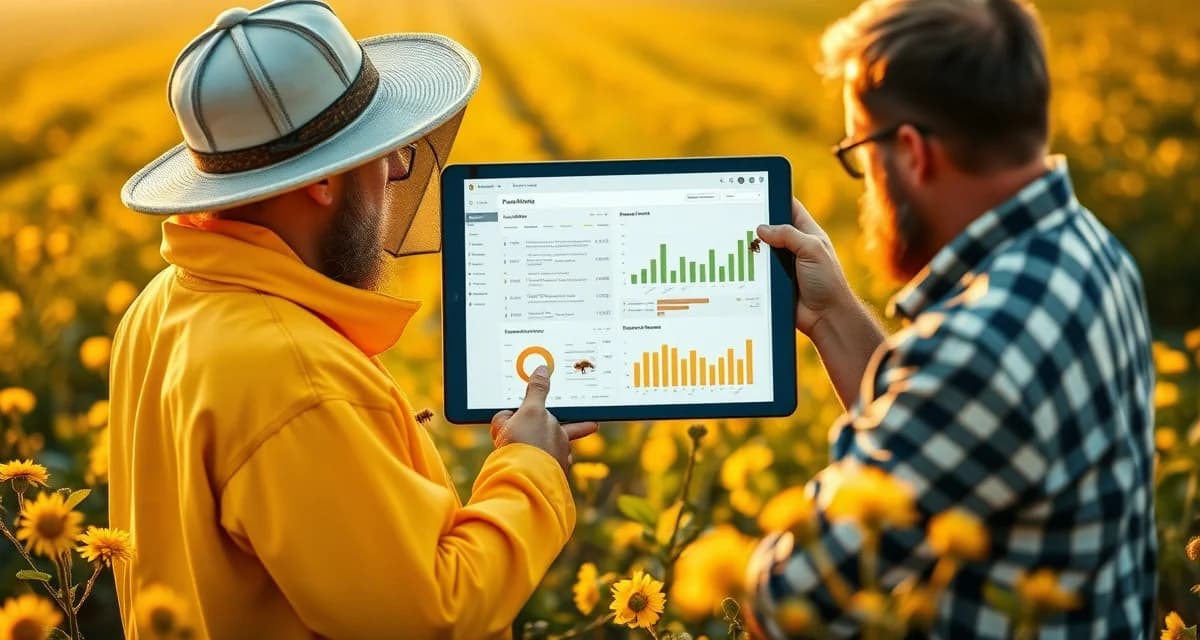
How Growers Use PollenOps: Finding and Managing Pollination Services
Growers save 8-10 hours per season using PollenOps vs managing beekeepers via phone and email. That time savings comes from a single source: instead of making calls to get status updates, the information is already in the portal.
The PollenOps Grower Marketplace connects 500+ commercial beekeeping operations with growers across the US. For growers who haven't found a reliable beekeeper, or who need to fill additional capacity beyond their existing relationships, the marketplace is the starting point.
This guide covers the full grower experience in PollenOps, from finding a beekeeper through managing contracts and tracking delivery.
TL;DR
- Commercial beekeeping operations that manage contracts on spreadsheets and phone calls spend 5-10 hours per week on administrative tasks that software handles automatically.
- Purpose-built beekeeping software centralizes contract lifecycle management, yard records, health documentation, and fleet logistics in one platform.
- The primary ROI drivers for operations software are fewer contract disputes, faster invoicing, and reduced time spent on administrative coordination.
- PollenOps is built specifically for commercial-scale pollination operations; it is not a hobbyist platform adapted for commercial use.
- Moving from spreadsheets to dedicated software typically pays for itself within one season in time savings and dispute prevention.
Finding a Beekeeper Through the PollenOps Grower Marketplace
The Grower Marketplace is the discovery layer where growers post their pollination needs and beekeepers respond with proposals.
To post a pollination need:
- Log into your PollenOps account (create a free grower account at pollenops.com)
- Go to Marketplace > Post Pollination Need
- Enter your crop, location, acreage, target delivery timing, and contracted hive count
- Optionally specify minimum strength requirements and other terms
- Post publicly or as an invitation-only request for specific beekeepers
What happens next:
Beekeepers in the marketplace who serve your region and crop type see your posting and can submit a proposal. Proposals include:
- The beekeeper's operation profile (hive count, years in service, crops served)
- Past season performance ratings from other growers
- Proposed per-hive rate and contract terms
- Availability for your timing window
You review proposals, compare operators, and select the one that fits your needs. This eliminates the cold-call problem that makes finding a new beekeeper time-consuming.
Reviewing Beekeeper Profiles
Before selecting a beekeeper on PollenOps, review their profile for:
Season history: How many seasons have they been operating? What crops have they served?
Grower ratings: Ratings from past clients on delivery reliability, colony quality, and communication. Honest reviews from other growers are the most valuable filtering tool.
Documentation quality: Do they have pre-move assessment records in their profile? A beekeeper who documents their quality has a track record you can verify.
Fleet capacity: Can they handle your total hive requirement? An operator with 300 hives can't fulfill a 500-hive contract.
Service geography: Are they experienced in your region? A California-based operation entering your Oregon market for the first time carries more risk than an established Pacific Northwest operator.
Setting Up Your Contract
Once you've selected a beekeeper, the contract is built in PollenOps with your agreed terms. Both you and your beekeeper can access it.
Contract terms you specify as a grower:
- Total hive count
- Minimum strength requirement (frames of bees)
- Delivery window (dates or bloom percentage)
- Placement location (GPS coordinates or orchard description)
- Your obligations (water access, pesticide notification timing)
- Payment schedule and terms
For pollination contract software for growers, PollenOps provides a standardized contract builder that protects both parties.
Tracking Your Delivery
After contract execution, your grower portal shows:
Pre-delivery: Your beekeeper's pre-move assessment records (if they share them) showing colony quality before delivery.
On delivery day: Timestamp and GPS coordinates of the delivery, updated in real time as your beekeeper records it. You know when hives arrived and where they were placed without making a phone call.
During bloom: Any updates your beekeeper records in the system, including health observations or issues.
After season: A season-end summary report with total delivery, strength documentation, and any events recorded during placement.
Managing Multiple Beekeepers
Large growers working with multiple beekeepers see all of them in one dashboard:
- Overview: All contracts sorted by delivery date or status
- Map view: All hive placements across your property from all beekeepers on one GPS map
- Invoice tracking: Payment status for each contract in one place
For growers managing 3,000-5,000 acres across multiple operators, this consolidated view replaces five separate email threads and five separate phone calls.
Communication Through PollenOps
When questions arise, the PollenOps messaging system documents your communications with your beekeeper in the context of the relevant contract. No more disputed verbal agreements. Questions about delivery timing, strength concerns, or pesticide notifications are all in the record.
Your beekeeper sees your messages immediately. If they're using PollenOps on their phone in the field, they can respond before they've left your orchard.
Verifying Compliance and Managing Payment
The contract record shows the documented delivery count and strength assessment alongside your contract terms. When the invoice arrives, you're comparing documented delivery against contracted terms, not relying on memory.
If there's a discrepancy (fewer hives delivered than contracted, or strength documentation showing colonies below minimum), the portal data is your reference. The conversation is grounded in facts, not recollection.
Payment is recorded in PollenOps when issued. Your beekeeper's account shows payment received. The paper trail is complete.
Frequently Asked Questions
How do growers find commercial beekeepers on PollenOps?
Growers find commercial beekeepers through the PollenOps Grower Marketplace. Create a free grower account, then post your pollination need with your crop, location, acreage, timing window, and strength requirements. Beekeepers serving your region and crop type see your posting and submit proposals with their rates, profile, and past performance ratings from other growers. You review the proposals and select the operator that fits your needs. The marketplace eliminates the traditional approach of finding beekeepers through word of mouth or cold calls, replacing it with a structured process where you see verified profiles and honest grower reviews before committing to a contract.
Can growers post their pollination needs on PollenOps?
Yes. Growers can post pollination needs publicly on the PollenOps Grower Marketplace, where registered beekeeping operations can respond with proposals. You specify the crop, location, hive count, timing, and any strength or certification requirements. The posting is visible to PollenOps beekeepers in your region who serve your crop. You can also post as an invitation-only request if you want to solicit proposals from specific beekeepers you've already identified. Grower Marketplace postings are free with a PollenOps grower account.
How does PollenOps help growers track hive delivery and quality?
Your PollenOps grower portal provides real-time delivery tracking from your beekeeper's records. Before delivery, you can view pre-move assessment scores showing colony quality. On delivery day, the portal updates with the delivery timestamp, GPS placement coordinates, and hive count as your beekeeper records them in the field. You see delivery confirmation without making a phone call. After delivery, your portal stores all documentation for the season, including any health records your beekeeper chooses to share. The complete delivery record serves as your compliance verification for payment purposes and as documentation if a dispute arises.
What does purpose-built commercial beekeeping software do that a spreadsheet cannot?
Dedicated software connects data across your operation in ways spreadsheets cannot: a contract record links to the specific hives assigned to it, which links to the yard location, which links to health inspection records and treatment logs. When a grower calls to dispute a hive count, you can pull the delivery record, timestamped photos, and GPS-confirmed location in 30 seconds rather than searching three spreadsheets and an email thread. This integration is where the time savings and dispute-prevention value comes from.
How long does it take to migrate from spreadsheets to beekeeping software?
Most commercial operators complete the core migration in 2-4 weeks, starting with current contract records and active yard locations. Historical data (past seasons' inspection records, old contracts) can be migrated over time rather than all at once. The practical recommendation is to start with the current season's live data and add historical records as time allows. The operational improvement from having current data in the system is immediate; the historical data adds analytical depth over subsequent seasons.
Is there a free trial available for PollenOps?
Contact PollenOps directly to confirm current trial and demo options. Most commercial operators benefit from a walkthrough of the contract management and yard tracking modules against their own operation's data before committing, since the fit between the platform and your specific circuit and crop mix is the most important evaluation factor.
Try These Free Tools
Sources
- USDA Agricultural Research Service
- Bee Informed Partnership
- American Beekeeping Federation (ABF)
- American Honey Producers Association
- Project Apis m.
Get Started with PollenOps
Commercial beekeeping operations that move from spreadsheets to purpose-built software consistently report fewer disputes, faster invoicing, and less time on administrative work during peak season. PollenOps is built specifically for commercial-scale pollination operations. See how the platform fits your operation.