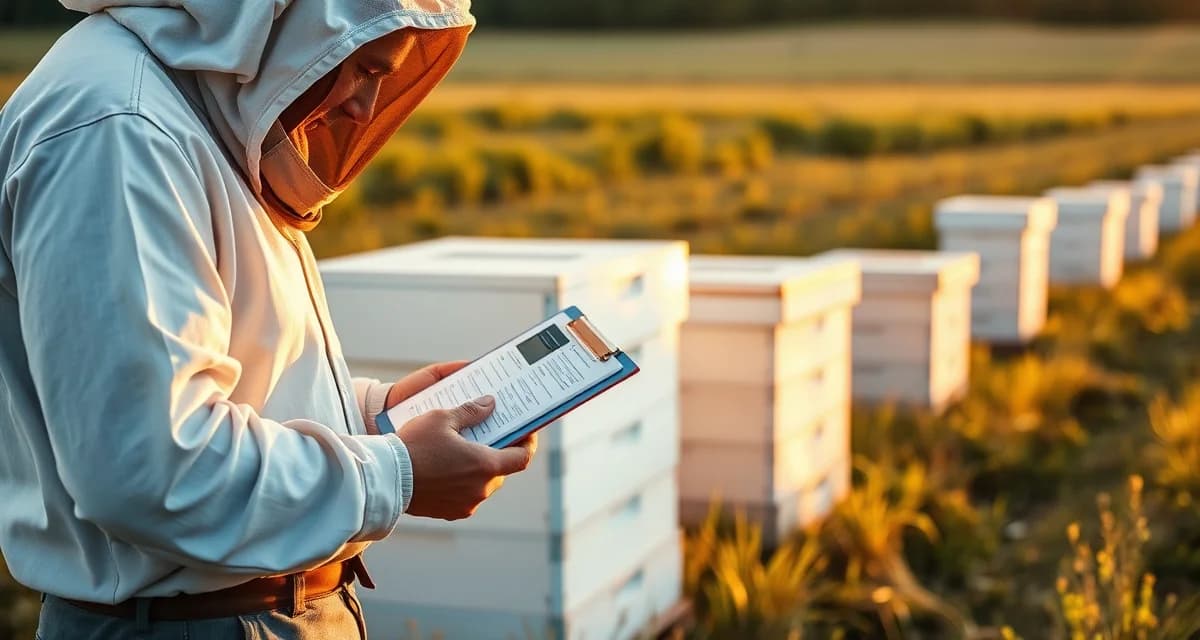
Hive Count Verification for Pollination Contract Compliance
Hive count discrepancies cost US commercial beekeepers an estimated $40 million per year. That's not a bug in an otherwise smooth system. It's the predictable result of delivering a service without documentation that proves what was delivered.
Photo-backed GPS check-in creates an irrefutable delivery record for every contract. BeeTrack lacks US-market grower-facing hive count verification workflows. The tools exist to eliminate this problem; the adoption just hasn't caught up.
TL;DR
- The California Almond Board's research supports 6 frames of bees as the minimum effective colony strength for almond pollination.
- Many growers now specify 8 frames for premium contracts, with rates at $200-215/hive versus $185-195 for 6-frame minimums.
- Hive strength assessment should be documented by yard, date, and assessor to create a defensible record for contract compliance.
- A colony assessed at the required strength in January can fall below minimum by February delivery if varroa loads are high or weather stress is severe.
- Third-party inspection at delivery is the cleanest resolution for strength disputes and protects operators as well as growers.
How Do I Verify Hive Count on Arrival at a Pollination Site?
The verification process happens at the time of delivery, not from memory later, and not from a loading count that may not match what actually arrived at the yard.
Field Verification Protocol
Step 1: Count before unloading. When you arrive at the yard, count the hives on the truck before anything comes off. Document this number. This is your "transported count," what left your loading yard.
Step 2: Count at placement. As pallets are placed in the yard, count hives per pallet and record per location. A 4-pallet delivery of 20 hives per pallet = 80 hives total. Record each pallet's count separately.
Step 3: GPS check-in at each pallet location. Using a mobile platform, check in at each pallet location. The GPS record timestamps your presence at the specific coordinates where each pallet was placed. This creates the verifiable location record that matches the pallet count.
Step 4: Photograph each pallet. A photo at each pallet location showing the hives clearly counted. Timestamp is embedded automatically by the device. This is your visual confirmation that matches the written count.
Step 5: Record total delivered count. Sum all pallets. Note any discrepancy between transported count and placed count (hives that were dead on arrival, damaged in transit, or otherwise not placed). Document the reason for any discrepancy.
Step 6: Delivery confirmation. Generate or record a delivery confirmation with total hive count, locations, and timestamp.
This process takes an experienced driver 15 to 30 additional minutes per delivery beyond the physical placement work. That time investment prevents hours of dispute resolution later.
What Is an Acceptable Hive Count Tolerance in a Pollination Contract?
Tolerance provisions in pollination contracts account for the reality that moving live bee colonies involves unavoidable loss between loading and delivery. Dead colonies en route, damaged equipment, and logistics complications can reduce the delivered count from the loaded count.
Standard commercial tolerances:
- +/-5%: Common in sophisticated commercial contracts. A 200-hive contract with 5% tolerance means delivering 190 to 210 hives is compliant.
- +/-10%: More common in smaller-scale or less formal contracts. A 200-hive contract with 10% tolerance means delivering 180 to 220 hives.
- Zero tolerance: Rare in practice, but some large growers specify exact count with any deviation triggering rate adjustment.
What Triggers Tolerance Application
Standard practice: if you deliver within tolerance, you're paid for the contracted amount. If you deliver below tolerance, you're paid for what you actually delivered (or for the contracted amount minus a penalty, depending on contract terms). If you deliver above tolerance, you're typically paid for the contracted amount (the extra is goodwill, not additional revenue, unless contracted otherwise).
Specifying Tolerance in Your Contracts
Always specify the tolerance provision explicitly in your contract. "200 hives, +/-10%" is unambiguous. "200 hives" is ambiguous. What happens when 190 arrive? Get this in writing before the season.
If a grower won't specify tolerance, establish a default: "In the event of delivery count variance, beekeeper shall notify grower immediately, and payment shall be prorated to actual delivered count."
Can I Use a Mobile App to Document Hive Counts in the Field?
Yes, and this is the most practical approach for commercial-scale hive count verification at every delivery.
What a Mobile Documentation App Should Do
A purpose-built field documentation tool for pollination delivery should:
- Capture GPS coordinates at the time of check-in (not a manually entered address)
- Timestamp the record automatically from device time
- Allow entry of hive count per pallet location
- Upload photos attached to the location record
- Sync with your contract management system to connect delivery records to the relevant contract
- Generate a delivery summary that can be shared with the grower
Generic apps (camera + notes) can capture some of this. A purpose-built commercial beekeeping platform captures it in a workflow that feeds directly into your contract compliance and invoicing records.
iOS and Android Compatibility
Any field documentation tool needs to work reliably on the devices your drivers actually carry. Most commercial operators run a mix of iOS and Android. Ensure your documentation platform works on both and operates in areas with limited cellular connectivity, as many orchard yards are in rural areas with spotty signal.
Offline Capability
Your field documentation tool must work offline and sync when connectivity is restored. Orchards in rural California, remote Maine blueberry barrens, and South Dakota honey yards often have limited or no cell service. An app that requires an active connection to record data is useless in these settings.
Hive Count Verification for Growers
Grower-side verification is an increasingly common requirement, especially from large commercial agricultural operations that are sophisticated buyers of pollination services.
What Growers Want to See
Growers who actively verify hive counts want:
- Your delivery record in a format they can reference
- GPS-verified location data for each pallet
- Photographs showing the hive count at each location
- A timestamp that confirms delivery within their contracted window
Growers who receive this information proactively, before they ask for it, have much better relationships with their beekeepers than growers who have to request documentation and wait for it.
Some growers have their own verification system, an agronomist or farm manager who counts hives at delivery. If a grower is going to count independently, the best outcome is that your count and their count match. The second-best outcome is that when there's a small discrepancy, you both have documentation you can compare.
Grower-Facing Delivery Summaries
After each delivery, send the grower a delivery summary that includes:
- Total hives delivered
- Delivery location(s) with GPS coordinates
- Delivery date and time
- Colony strength assessment results
- Photographs of the delivery
This can be a PDF generated from your delivery record, a portal notification, or an email with attachments. The format matters less than consistency. If growers know they always receive delivery confirmation within 24 hours, they stop calling to ask if the bees arrived.
Dispute Prevention vs. Dispute Resolution
Most beekeepers understand hive count verification as a dispute resolution tool. What changes in a well-run operation is that it becomes a dispute prevention tool.
When growers know you have GPS-verified, photo-documented delivery records for every placement, disputes don't start. The grower who might wonder if they got 180 hives instead of 200 doesn't make that call because they know you have the documentation that would resolve it.
The absence of disputes is more valuable than winning disputes. The contract compliance documentation and pollination contract software that enable systematic verification ultimately eliminate the adversarial dynamic that makes grower relationships tense.
FAQ
How do I verify hive count on arrival at a pollination site?
Count hives before unloading and record transported count. Count per pallet at placement and record each pallet separately. GPS check-in at each pallet location via mobile app to timestamp and geotag the delivery record. Photograph each pallet with clear hive count visible. Generate a total delivered count with any variance from transported count explained. This 15 to 30-minute investment per delivery creates an irrefutable record that prevents disputes from arising in the first place.
What is an acceptable hive count tolerance in a pollination contract?
Standard commercial tolerance is +/-5% to +/-10% of the contracted count. A 200-hive contract with 5% tolerance requires delivery of 190 to 210 hives for compliance. Contracts should specify the tolerance provision explicitly, along with how payment is calculated for delivery below tolerance (prorated to actual count, or contracted count minus a penalty, depending on negotiated terms). Contracts without explicit tolerance provisions create ambiguity that gets exploited when counts are close to contracted numbers.
Can I use a mobile app to document hive counts in the field?
Yes, and purpose-built mobile documentation tools are far more effective than general apps for commercial pollination delivery. What to look for: automatic GPS timestamp capture (not manually entered), offline operation for rural areas with limited connectivity, per-pallet count recording, photo attachment to specific GPS locations, and sync with your contract management system so delivery records connect to the relevant contract and feed into invoice generation.
How is hive strength measured for commercial contract compliance?
Hive strength is typically measured by counting frames of bees: the number of frames in the brood box that are covered (both faces) by worker bees. A frame covered on both faces counts as one frame of bees. Some assessors use a modified approach counting only the top face of each frame. The contract should specify the measurement method, since a hive assessed at 6 frames by one method might be 5 frames by another. Third-party inspection using a consistent, documented method is the cleanest standard for compliance.
What causes hives to fall below strength requirements between assessment and delivery?
Several factors can reduce colony strength between pre-season assessment and delivery: high varroa loads with insufficient treatment response, poor winter weather in northern states during transport south, queen failure or queen loss in the weeks before delivery, and nutritional stress from limited forage. Commercial operators typically re-assess colonies 1-2 weeks before departure to confirm strength has been maintained, replacing any colonies that have declined with stronger hives from their reserve inventory.
Can strength requirements be met with a recently split colony?
No. A recently split colony (within 4-6 weeks) will not have a full brood cycle's worth of adult workers emerging to maintain population. A split colony may appear to have adequate frames at the time of split but will decline in population over the following weeks as older workers die without emerging brood to replace them. Colonies going to almond pollination should have had their most recent split at least 8-10 weeks before delivery to allow full population recovery.
Try These Free Tools
Sources
- USDA Agricultural Research Service
- Bee Informed Partnership
- American Beekeeping Federation (ABF)
- Almond Board of California
- Project Apis m.
Get Started with PollenOps
Hive strength documentation is the foundation of contract compliance and dispute prevention. PollenOps structures strength assessment records, delivery confirmations, and inspection data so you have the evidence you need when questions arise about contract performance.