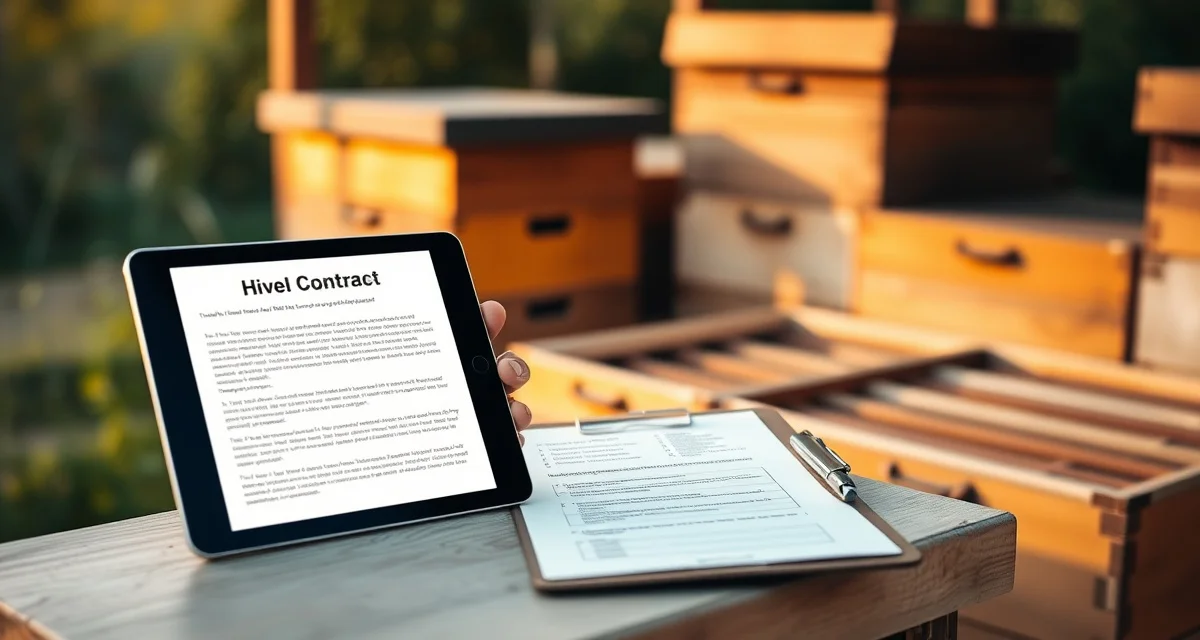
Hive Rental Agreement Management Made Simple
Over 60% of migratory beekeepers still manage rental agreements by phone and paper. That number should surprise you. These are B2B service contracts worth thousands of dollars each, and they're being managed with the same tools you'd use to organize a neighborhood book club.
The problem isn't that beekeepers don't know better. It's that until recently, there wasn't a tool purpose-built for what centralized hive rental management with built-in compliance documentation actually requires. Excel has no bloom alerts or automated compliance tracking. HoneyBook doesn't know what a frame of bees is. QuickBooks will happily invoice your growers, but it won't tell you when to move the bees.
This guide covers what hive rental agreement management actually requires at commercial scale, and how to build a system that protects you, documents your compliance, and keeps grower relationships strong.
TL;DR
- Most states require a Certificate of Health or Certificate of Veterinary Inspection issued by the origin state before out-of-state colonies can enter.
- A California-to-Florida-to-Pacific-Northwest-to-Northern-Plains circuit is the most common full-year migratory route for large commercial operations.
- Interstate permit coordination requires lead time; certificates typically need to be obtained 7-30 days before entry depending on the destination state.
- Moving 1,000 hives requires 2-3 truck loads per move, with fuel, driver wages, and DOT compliance as the primary variable costs.
- Operations that plan their annual circuit 6-8 months in advance can sequence pollination contracts and honey production to maximize annual revenue per hive.
What Is a Hive Rental Agreement in Beekeeping?
A hive rental agreement is the commercial contract between a beekeeper and an agricultural producer (the grower) that governs pollination services. It's called "rental" because the grower is renting the presence and pollination activity of the bees, not purchasing the hives.
The agreement specifies:
- Number of hives to be delivered
- Minimum colony strength at delivery
- Delivery timing (often relative to bloom, not calendar dates)
- Placement location(s)
- Duration of placement
- Per-hive rental rate
- Payment terms and schedule
- Responsibilities of each party (who moves hives, who notifies whom and when)
In practice, hive rental agreements range from sophisticated multi-page documents with grower attorneys' involvement (large California almond operations) to a single-page handshake agreement with a small family orchard. The larger and more sophisticated your growers, the more important formal, well-documented agreements become.
How Many Hives Per Acre Should I Specify in My Rental Contract?
This depends on the crop and the grower's production goals. General commercial standards by crop:
| Crop | Hives Per Acre (typical) | Notes |
|---|---|---|
| Almonds | 2–3 | California Almond Board recommends 2–3 |
| Apples | 1–2 | Varies by variety self-fertility |
| Blueberries (highbush) | 2–4 | Higher density for better coverage |
| Wild blueberries | 2–4 per production acre | Dense coverage needed |
| Cherries | 1–2 | Varies by variety |
| Cranberries | 2–4 | High density required |
| Pumpkins/squash | 1–2 | Lower density, longer bloom |
Your contract should specify the total hive count, not just the density. If you're placing 200 hives in a 100-acre almond orchard, the contract says 200 hives. That's what you're held to.
Build in a tolerance provision. Standard commercial practice is 5 to 10% tolerance, meaning you can deliver 90% to 95% of contracted hives without breach. This accounts for unavoidable losses between loading and delivery. Anything below 90% should trigger grower notification.
What Happens If a Grower Disputes My Hive Count?
This is one of the most common and most avoidable problems in commercial pollination. Hive count disputes arise when:
- The grower believes fewer hives were delivered than contracted
- There's no agreed method for counting at delivery
- No contemporaneous documentation exists
How to Prevent Hive Count Disputes
Prevention is straightforward: document the delivery with GPS-verified timestamps, photography, and a count method both parties understand.
Best practice delivery documentation:
- GPS record of each pallet location on arrival
- Photograph of each pallet with hives visible
- Written count of hives per pallet
- Total delivered count compared to contracted count
- Delivery receipt signed by your driver and, ideally, by a grower representative present at delivery
When this documentation exists, disputes resolve immediately. The grower is looking at photos and GPS coordinates that show exactly what arrived, when, and where it was placed.
When documentation doesn't exist, it's your word against theirs. You might be right. But you're going to have a harder time proving it, and the grower relationship will be damaged regardless of outcome.
Acceptable Hive Count Tolerance
Most commercial contracts specify a tolerance, typically +/-5% to +/-10% of contracted count. If you contracted for 200 hives and delivered 190, that's 95%, within a 5% tolerance. If you delivered 178, that's 89%, outside a 10% tolerance, and you have a payment or make-good conversation to have.
Specify tolerance in your contract before the season, not after a dispute arises.
Managing Multiple Rental Agreements Simultaneously
At 20 to 50 active grower contracts across multiple states, the organizational challenge of rental agreement management becomes a full-time function.
What You're Tracking Per Contract
Every active rental agreement requires tracking:
- Contract terms (hive count, rate, strength requirement, timing)
- Delivery status (delivered/pending/scheduled)
- Post-delivery documentation (GPS records, photos, strength assessment)
- Invoice status (generated/sent/paid/overdue)
- Renewal status (discuss/renew/declined)
At 50 contracts, that's 50 sets of data across 6 categories, or 300 data points to keep current. In a spreadsheet, this is possible but laborious. The update burden means most operators fall behind, and the spreadsheet becomes a snapshot of the past rather than a current operating view.
Bloom Timing Across Multiple Growers
Bloom timing varies by crop, region, elevation, and annual weather. With 20 growers in different locations, you're tracking 20 different bloom windows simultaneously.
Without automated bloom timing alerts, you're setting calendar reminders manually and hoping you don't miss the two-day window when you need to start loading trucks for a specific grower.
The value of bloom-triggered contract milestones is that you move bees at exactly the right time, not the time you remembered to check the calendar.
Contract Renewal Management
One-time grower transactions are less valuable than multi-year relationships. Retaining growers year over year builds your contract pipeline, reduces the cost of business development, and creates the reliability that allows you to plan operations with confidence.
Retaining one commercial grower account is worth $8,000 to $40,000 per season depending on acreage. That's the dollar value of a renewal conversation.
Renewal Timing
Start renewal conversations 3 to 5 months before the following season's delivery. For California almond growers, that means October to November contact for February placements.
The renewal conversation should include:
- Your performance from the current season (hive counts delivered vs. contracted, strength documentation)
- Your proposed terms for the following season
- Any changes to your circuit that affect this grower
Growers who hear from you in October are much more likely to re-sign than growers who get a call in January after they've already been talking to your competitors.
Grower Contract Tracking Systems
The renewal conversation works best when it's backed by data. A grower contract tracking system that maintains multi-season history lets you walk into the renewal conversation with specific performance data: "In 2024, we delivered 205 of 200 contracted hives at an average of 8.2 frames of bees." That's a much more compelling conversation than "we did a good job, didn't we?"
Hive Rental Agreement Templates and Compliance
Using a consistent, well-drafted rental agreement template protects both you and your growers.
Key Agreement Sections
Parties: Full legal names of the beekeeping operation and the grower.
Property description: Specific field or orchard address, acreage if applicable.
Hive specifications: Total hive count, minimum colony strength (frames of bees), and whether brood frames are also specified.
Delivery terms: When hives must be delivered (bloom-relative or calendar), who bears delivery cost, and acceptable delivery methods.
Placement: Who determines placement location, and what happens if placement must change.
Duration: How long hives remain in the field, and what triggers retrieval.
Compensation: Per-hive rate, total contract value, payment schedule, and late payment provisions.
Default and remedies: What constitutes default by either party, what the remedies are, and any notice requirements.
Compliance documentation: What documentation the beekeeper provides (inspection certificates, strength reports, delivery confirmation), and when.
Required Documentation by Contract Stage
| Contract Stage | Required Documentation |
|---|---|
| Pre-delivery | Interstate movement certificate, insurance certificate |
| At delivery | GPS delivery record, colony count, strength assessment |
| Post-delivery | Invoice, delivery confirmation summary |
| Season end | Removal record, final invoice if applicable |
Pollination Contract Software for Agreement Management
The tools that make hive rental agreement management actually work at scale are purpose-built for commercial beekeeping, not adapted from generic business software.
PollenOps centralizes every grower agreement, tracks hive delivery with GPS verification, and automates renewal reminders. The gap between Excel and a purpose-built platform isn't about features. It's about whether the system knows what bloom timing is, what frames of bees means, and what compliance documentation a grower expects.
FAQ
What is a hive rental agreement in beekeeping?
A hive rental agreement is the commercial contract between a beekeeper and an agricultural grower governing pollination services. The grower pays per hive to rent the pollination activity of the bees for a specified period during crop bloom. The agreement specifies hive count, minimum colony strength, delivery timing, placement terms, duration, per-hive rate, and payment schedule. More formal agreements also specify tolerance levels, dispute resolution procedures, and documentation requirements.
How many hives per acre should I specify in my rental contract?
Standard commercial stocking rates vary by crop: almonds typically use 2 to 3 hives per acre, apples 1 to 2, highbush blueberries 2 to 4, and cranberries 2 to 4. Your contract should specify the total hive count for the specific acreage being serviced, with a tolerance clause (typically ±5 to 10% of contracted count) to account for unavoidable losses between loading and delivery.
What happens if a grower disputes my hive count?
The outcome of a hive count dispute depends almost entirely on documentation. Operators with GPS-verified delivery records, timestamped photography of each pallet in place, and a written count of hives per pallet can resolve disputes immediately with objective evidence. Operators without contemporaneous documentation face a credibility argument that damages the grower relationship regardless of who's right. Preventing disputes through systematic delivery documentation is far less costly than resolving them after the fact.
What is the most common full-year circuit for US migratory beekeepers?
The classic commercial circuit runs: winter buildup in Florida or southern Texas, California almonds in February, Pacific Northwest tree fruit (cherry, apple, pear) in April-May, Pacific Northwest or northern Midwest berry and clover crops in June-July, summer honey production in North Dakota, Montana, or Minnesota in July-August, and fall honey extraction and requeening before the cycle restarts. The exact circuit depends on contracted commitments, hive capacity, and the operator's regional relationships.
How do you coordinate state entry permits for a multi-state circuit?
State entry permits and health certificates require lead time: most states want certificates issued 7-30 days before entry. For a circuit that crosses 5-6 states, this means overlapping certificate applications where a certificate for the next state must be initiated before the current state's placement ends. Some operators use a permit tracking calendar that accounts for the lead time required for each destination state. PollenOps includes a permit tracking feature that alerts operators when certificates need to be initiated based on planned move dates.
What are the most common mistakes new migratory operators make?
The most common errors are underestimating transport costs, failing to secure contracts before building hive capacity, not accounting for state entry permit lead times, and neglecting varroa management during the compressed pre-almond preparation period. New operators often also underestimate the administrative load of managing 10-20 contracts across multiple states -- tracking payment status, compliance documentation, and crew scheduling simultaneously requires systems, not just a spreadsheet.
Try These Free Tools
Sources
- USDA Agricultural Research Service
- Bee Informed Partnership
- American Beekeeping Federation (ABF)
- American Honey Producers Association
- USDA Animal and Plant Health Inspection Service (APHIS)
Get Started with PollenOps
Migratory operations face the most complex coordination challenges in commercial beekeeping: permits across multiple states, staggered delivery windows, and fleet logistics that have to work precisely across hundreds of miles. PollenOps was built to handle multi-state, multi-grower, multi-crop operations at this level of complexity.