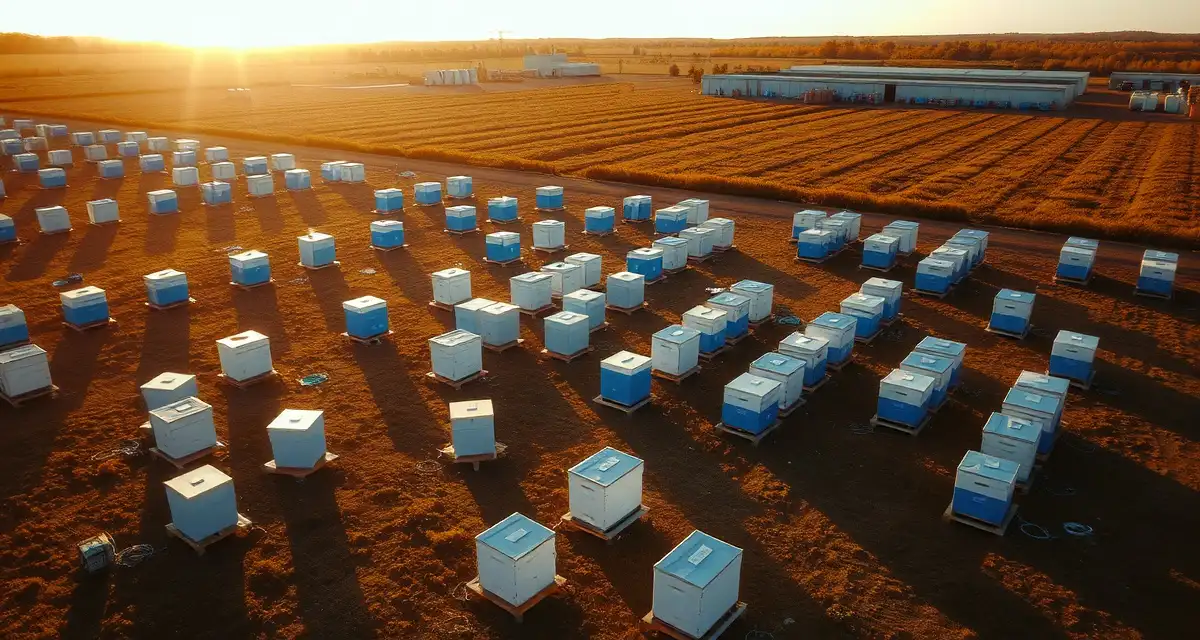
Contract Management for a 400-Hive Pollination Operation
Operations at 400 hives typically manage 10 to 25 simultaneous contracts across 6 to 12 yard locations. That's enough contract volume that the gaps in a manual system become expensive: missed delivery windows, billing errors, disputed invoices, and hours of administrative time that compound during the most demanding weeks of the season.
At 400 hives, PollenOps pays for itself with just one avoided disputed invoice per year. An almond contract for 50 hives at $200 per hive is a $10,000 contract. A dispute that costs you $2,000 to resolve through negotiation or legal review pays for two years of PollenOps commercial plan at $89 per month. Most 400-hive operations face at least one material contract ambiguity per season; documented compliance records resolve them without escalation.
TL;DR
- A well-written pollination contract covers hive strength requirements, payment terms, delivery/removal windows, pesticide liability, and dispute resolution.
- Standard payment structure is 50% on delivery and 50% on removal; push for no longer than 14-day net on the back half.
- Hive strength disputes are the most common source of non-payment; third-party inspection at delivery is the cleanest resolution.
- Pesticide kill provisions should require grower notification 24-48 hours before any application within foraging range of placed hives.
- Contracts signed by November have stronger pricing leverage than those negotiated in December or January.
What Contract Management Looks Like at 400 Hives
A 400-hive operation covering California almond plus Yakima cherry plus Washington apple is managing something like this during a typical spring season:
- 12 almond contracts in Fresno and Kern counties (February)
- 6 cherry contracts in Yakima Valley (April)
- 7 apple contracts in Chelan and Wenatchee (May)
That's 25 contracts with different bloom timing triggers, different delivery windows, different grower contacts, different strength requirements, and different invoicing timelines. In February, all 12 almond contracts are active simultaneously. In April, cherry contracts begin while you're collecting on almond invoices. In May, apple is active while cherry invoices are in 30-day payment windows.
Managing 25 contracts across 3 crops and 3 states with a spreadsheet and email means manually tracking bloom alert timing for 25 grower locations, manually generating 25 invoices from individual contract records, manually following up on 25 payment timelines, and maintaining 25 delivery documentation files that may be needed for dispute resolution. The manual approach doesn't fail completely. It just fails frequently enough to cost money.
How PollenOps Handles 400 Hives
The PollenOps commercial plan at $89 per month covers unlimited hives and unlimited contracts. For a 400-hive operation, the platform handles:
Bloom timing: Each contracted yard has a location-specific bloom alert calibrated to local weather station data. For Fresno County almond contracts, the alert uses Fresno County conditions. For Yakima cherry contracts, the alert uses Yakima Valley elevation-adjusted data. Your 25 contracts have 25 independent bloom alert triggers that fire in sequence as local conditions reach the delivery threshold, not on a single regional calendar estimate.
Driver coordination: With 2 to 3 drivers running different routes, the commercial plan's team management tools let you assign specific yards to specific drivers from the desktop dashboard. Each driver sees their assigned deliveries in the mobile app, navigates to GPS yard locations, completes check-ins, and records hive counts, all without calls to the office for instructions. You see all driver activity in real time.
Invoicing: Invoice generation runs at delivery completion for each contract. At 25 contracts, PollenOps generates 25 invoices from contract terms rather than requiring you to build each invoice manually. Your review time drops to confirming and sending rather than building from scratch.
Grower reporting: Delivery reports for each grower generate automatically from check-in data. Your growers get consistent professional documentation from every contract without you assembling the reports manually.
For a broader view of how the platform scales across larger operations, see mid-size commercial beekeeper software. For the full platform overview, see pollination contract software.
Pre-Season Setup at 400 Hives
The value of PollenOps at 400 hives depends on entering contracts before the season rather than during it. Pre-season setup takes 2 to 4 hours for a 25-contract operation: enter each contract with the grower's GPS yard location, contracted hive count, strength requirements, delivery window, and payment terms.
Once the contracts are in the system, bloom alerts run on your local weather station data without additional input from you. Driver assignments take minutes rather than lengthy scheduling conversations. Invoice generation is triggered by delivery completion rather than requiring manual invoice building during your busiest weeks.
The beekeepers who get the least value from PollenOps are the ones who sign up during the delivery window and try to enter contracts while simultaneously managing deliveries. Enter your contracts in November and December for the February almond season. Enter your summer contracts in March. The setup investment before the season pays off during the season.
Frequently Asked Questions
What contract management challenges does a 400-hive operation face?
At 400 hives, the primary challenges are simultaneous contract volume during peak delivery windows, driver coordination across multiple routes and regions, bloom timing monitoring for multiple crops and counties simultaneously, invoice generation and payment tracking for 20 or more growers, and maintaining delivery documentation for dispute protection across all contracts. Each individual challenge is manageable in a manual system; all of them running simultaneously during a 3-week February almond season is where manual management breaks down. Missing a bloom alert for one Fresno County contract because you were managing a Kern County delivery is the kind of gap that costs $5,000 to $15,000 in missed pollination outcome or contract dispute.
How does PollenOps handle 400 hives at $89/mo?
The $89 per month commercial plan covers unlimited hives and unlimited contracts with full team management features. For a 400-hive operation, the platform manages: bloom timing alerts calibrated to each contracted yard's location, driver accounts with mobile app access and route assignments, GPS delivery check-ins with automatic grower portal updates, batch pre-move assessment scheduling, automated invoice generation at delivery completion, and season revenue reporting for accounting. At $1,068 per year, the commercial plan represents a small fraction of annual contract revenue for a 400-hive operation and pays for itself quickly through avoided disputes and administrative time savings.
What is the ROI of PollenOps for a 400-hive operation?
A 400-hive operation running 20 contracts annually at an average of $150 per hive generates approximately $300,000 to $500,000 in contract revenue depending on crop mix. PollenOps at $1,068 annually represents 0.2 to 0.4 percent of that revenue. The ROI calculation includes: time savings of 10 to 20 hours per week during peak season (at $50 per hour, $5,000 to $10,000 in administrative time savings over a 10-week season), avoided dispute costs on 20 contracts at an estimated 10 percent dispute rate (2 disputes avoided, each potentially worth $2,000 to $5,000 in saved negotiation or legal cost), and billing accuracy improvements across 20 invoices. Conservative total estimated benefit: $9,000 to $20,000 annually. Net ROI after subscription cost: $7,932 to $18,932, or 743% to 1,773% return.
What are the most common clauses in a commercial pollination contract?
A standard commercial pollination contract covers: hive strength minimums at delivery, payment terms (typically 50% on delivery, 50% on removal), delivery and removal dates, pesticide notification requirements, liability provisions for colony losses, truck access and yard location details, and dispute resolution procedures. Force majeure clauses addressing crop failure and operator inability to deliver the full hive count are also standard in well-written contracts.
How should pesticide liability be addressed in pollination contracts?
The contract should require growers to notify operators at least 24-48 hours before any pesticide application within foraging range (2-3 miles), specify the operator's right to remove hives immediately upon notification, and define liability for documented colony losses attributable to pesticide exposure. Without this clause, recovering compensation for pesticide kills requires proving causation after the fact, which requires lab testing, communication records, and timestamped photos of dead bees collected before cleanup.
What is a typical contract renewal strategy for commercial beekeepers?
Most successful commercial operators begin renewal conversations with existing growers in July, confirming the coming season's hive count and rate before new grower outreach. Existing grower relationships command better pricing stability than new contracts and require less pre-season sales effort. Sending growers a season-end report documenting hive placements and colony performance reinforces the relationship and creates a natural opening for renewal discussion.
Try These Free Tools
Sources
- USDA Agricultural Research Service
- Bee Informed Partnership
- American Beekeeping Federation (ABF)
- American Honey Producers Association
- Project Apis m.
Get Started with PollenOps
Managing pollination contracts across multiple growers and crops is where most commercial operations have the most to gain from better systems. PollenOps centralizes contract lifecycle management from initial quote through signed agreement, delivery documentation, and final invoice. Try it for your next season.