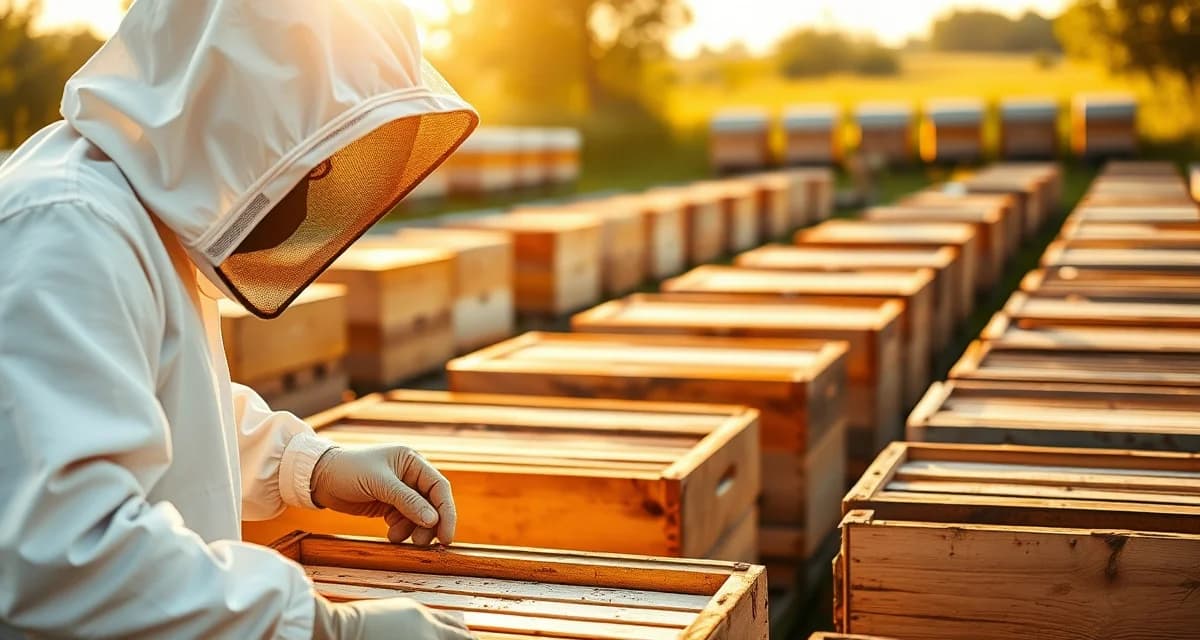
Hive Rental as a Business Model: Beyond Traditional Pollination Contracts
Hive rental is a distinct business model that some commercial beekeepers use alongside or instead of traditional pollination contracts. The core difference: in a rental arrangement, you're placing hives for a fee without the performance obligations tied to crop pollination. The renter pays for the presence of bees, not for documented per-acre fruit set or a contractually specified colony strength at delivery.
Hive rental rates run $200 to $500 per hive per season for placements without pollination service obligations. Urban and farm hive rental has grown as farms seek sustainability marketing credibility and urban homeowners want backyard bees without the learning curve of keeping their own. The model doesn't replace high-value almond contracts for most large operators, but it's a real supplemental income stream that some beekeepers build into a meaningful portion of their annual revenue.
TL;DR
- Commercial beekeeping operations face two primary management challenges: operational logistics (hive health, transport, placement) and administrative coordination (contracts, payments, documentation).
- Most disputes and revenue losses in commercial beekeeping are preventable with better documentation and clearer contract terms.
- The operations that run most profitably are those with disciplined systems for tracking hive health, contract status, and fleet logistics in one place.
- PollenOps is built specifically for the operational complexity of commercial-scale pollination services, not adapted from a hobbyist tool.
- The most important management decisions (treatment timing, contract renewal, hive allocation) require accurate current data to make well.
What Hive Rental Actually Is
In a hive rental, the beekeeper owns the hive, delivers it to the renter's location, maintains it throughout the rental period, and retrieves it at the end of the season. The renter is essentially leasing access to a beehive for marketing, educational, aesthetic, or general pollinator habitat purposes. Many urban farm hive renters want to say "we have bees" for brand positioning with local customers. The bees are present; their specific pollination output is secondary.
This differs from a pollination contract in a few important ways. There's no strength minimum tied to crop bloom timing. There's no per-acre density requirement. There's usually no grower expectation of a specific yield benefit. And there's no formal inspection or delivery documentation required for compliance. The beekeeper manages the colony as part of normal operations; the renter simply has bees on site.
Some farm-based hive rentals fall in a middle zone where the farm does benefit from pollination but frames the arrangement as a rental rather than a service contract. If you're working with a vegetable farm or orchard that clearly benefits from your hives, you may want to structure the arrangement as a pollination contract with strength requirements even if the grower calls it a rental. That gives you both the rate structure and the contract protections a service agreement provides.
Urban and Peri-Urban Hive Rental Markets
Urban hive rental has developed around rooftop farms, urban homesteads, school gardens, corporate campuses, and hospitality venues that want visible sustainability features. Rates in major metropolitan areas run $400 to $700 per hive per season or higher, reflecting both demand and the logistical cost of urban placements. A Manhattan rooftop or a Bay Area tech campus pays more than a rural farm because the marketing value to the renter is higher and the beekeeper's logistics are more demanding.
For operators based outside major urban centers, peri-urban hive rental within 30 to 60 miles of mid-size cities is a realistic option. Organic farms marketing to urban consumers, community-supported agriculture operations, vineyards positioning for agritourism, and event venues all represent potential rental clients. Many of these operations have never been approached by a professional beekeeper with a formal proposal and will respond positively to one.
The pollination contract software used for traditional pollination contracts also handles hive rental agreements, since the core elements are similar: hive delivery, placement location, maintenance schedule, and payment terms. Managing both revenue streams in the same system keeps your accounting clean and your season planning integrated.
Risks and Downsides of Hive Rental
The absence of formal performance requirements that makes hive rental easy also makes it somewhat hard to enforce. If a renter decides mid-season that they don't want the hives anymore, you may have less contractual leverage than in a traditional pollination contract where the grower had measurable crop benefit at stake.
Liability is another consideration. When hives are placed at urban or residential locations, the risk of bee-related incidents involving the public or the renter is higher than at agricultural sites. Make sure your liability insurance covers urban placements, and include a clear indemnification clause in your rental agreement. Urban locations may have HOA restrictions, local ordinances, or landlord approval requirements that the renter needs to resolve before you deliver.
Colony management at many small, geographically dispersed rental sites is also operationally different from concentrated agricultural placements. Driving to 20 individual locations for inspections is less efficient than servicing 20 hives at a single orchard yard. Build travel time and logistical complexity into your pricing for scattered urban or residential placements.
Pricing Hive Rentals
Your pricing should reflect the total cost of service including delivery, periodic inspection and maintenance, equipment wear, and retrieval, plus a margin for the business overhead. At $200 to $500 per hive per season, a single hive rental generates less total revenue than an almond contract placement but may require less preparation and fewer compliance obligations.
A common structure for agricultural hive rental is a flat seasonal fee paid in two installments: 50 percent at delivery and 50 percent at mid-season. This front-loads your cost recovery and reduces the risk of a renter who decides they don't want bees after the first inspection.
Use PollenOps pricing tools to model hive rental income against your traditional pollination contract revenue. Some operators find that a portfolio of 50 to 100 urban and farm rental placements at moderate rates provides stable base income that offsets the seasonal variability of almond or berry pollination contracts.
Frequently Asked Questions
How does hive rental differ from pollination contracting?
In a hive rental, you're placing bees for a fee without contractually specified pollination performance obligations. There's no strength minimum at delivery, no per-acre density requirement, and no expectation that you document crop yield outcomes. The renter is paying for the presence of bees rather than a measurable agricultural service. Traditional pollination contracts, by contrast, specify colony strength, hive count, delivery timing, and often include penalty clauses for non-compliance. Hive rental suits clients who want bees for marketing, educational, or general habitat purposes rather than commercial crop production.
What rate can you charge for hive rentals to farms?
Agricultural hive rental rates run $200 to $500 per hive per season depending on location, the length of the rental period, and what maintenance services are included. Urban placements at corporate campuses, hospitality venues, or upscale residential properties can reach $400 to $700 or higher. Your pricing should cover delivery, periodic inspection and maintenance labor, equipment depreciation, and retrieval, with a margin for your overhead and profit. Scattered urban placements with high individual travel time need higher per-hive rates to be economically viable compared to concentrated agricultural placements.
What are the risks of the hive rental business model?
The main risks are liability exposure at non-agricultural locations, enforcement difficulty if renters want to exit mid-season, and operational inefficiency from geographically dispersed placements. Ensure your insurance covers urban and residential placements, since standard agricultural liability coverage may not. Include a clear indemnification clause and cancellation penalty in your rental agreement. Build travel time and logistical complexity into your per-hive pricing for scattered placements, since the inspection and maintenance cost per hive is higher when sites aren't concentrated.
What is the difference between commercial and hobby beekeeping?
Commercial beekeeping is distinguished by scale (typically 100+ hives, often 500-5,000+), revenue source (pollination contracts and bulk honey sales rather than local honey retail), and management approach (systematic protocols applied across yards rather than individual colony attention). Commercial operators manage bees as an agricultural enterprise, with the administrative, regulatory, and logistical complexity that entails. Most commercial operators derive the majority of their income from pollination services; honey production is a supplementary revenue stream.
How many hives are needed to make commercial beekeeping a full-time income?
Most beekeeping economists put the full-time commercial threshold at 500-800 hives, assuming efficient operations management and a combination of pollination and honey revenue. At 500 hives and $200/hive for almond pollination, almond season alone generates $100,000 in gross revenue before expenses. Net margins depend on operational efficiency, but well-run operations can achieve 30-50% net margins on pollination revenue. Additional crops and honey production improve per-hive economics but require additional management capacity.
What is the annual revenue potential for a 1,000-hive commercial operation?
A 1,000-hive operation running an almond season ($200/hive) plus blueberry or apple contracts ($80-100/hive) plus summer honey production ($25-40/hive after extraction costs) can generate $300,000-360,000 in annual gross revenue. Net margins after transport, crew, equipment, and hive replacement costs typically run 25-40% for well-managed operations, putting net income at $75,000-145,000 annually. The specific number depends heavily on circuit efficiency, loss rates, and contract quality.
Try These Free Tools
Sources
- USDA Agricultural Research Service
- Bee Informed Partnership
- American Beekeeping Federation (ABF)
- American Honey Producers Association
- Project Apis m.
Get Started with PollenOps
Managing a commercial beekeeping operation involves more data, more deadlines, and more moving parts than any general-purpose tool was designed to handle. PollenOps brings contracts, yard records, health documentation, and fleet logistics together in one platform built for the realities of commercial-scale beekeeping.