Migratory Beekeeper Contract Management Software
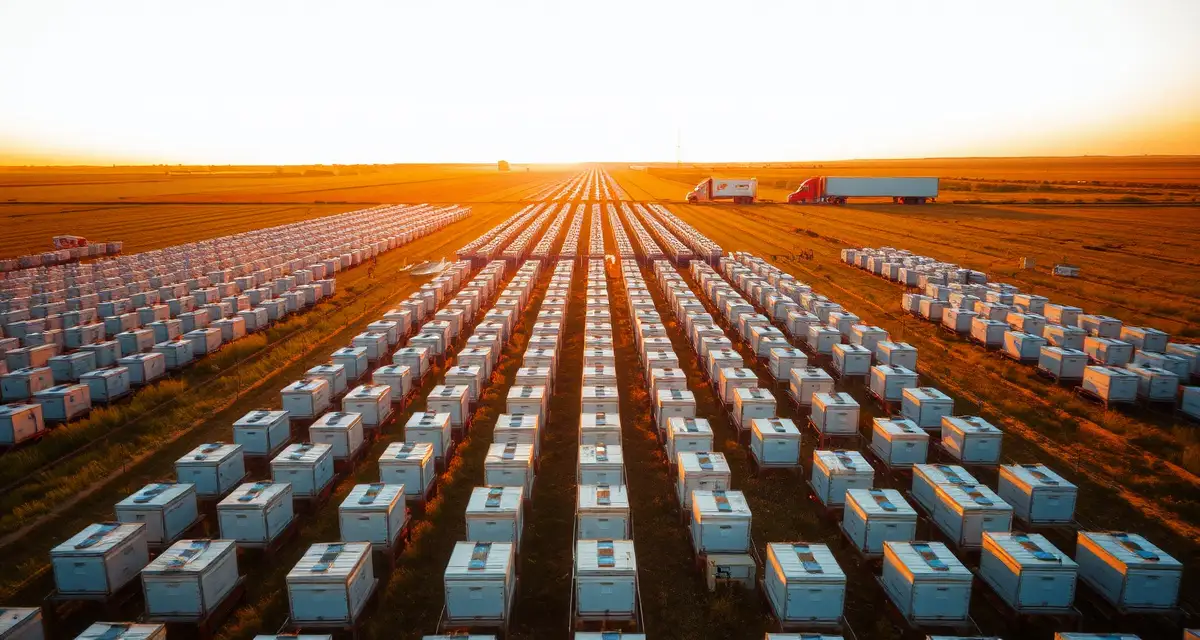
US migratory beekeepers move an estimated 2.5 million hives across state lines each year. That scale of movement represents a contract management challenge unlike anything in conventional agriculture. Multiple states, multiple crops, overlapping bloom windows, dozens of grower relationships, and interstate transport compliance, all happening simultaneously across hundreds or thousands of miles.
If you're managing a migratory operation on spreadsheets and memory, something has already gone wrong. Maybe it was a missed bloom window. A disputed invoice you couldn't document. A contract renewal you didn't notice was approaching. A state permit you forgot to file before your truck crossed the border.
Migratory beekeeper contract management requires a platform built for this specific complexity. PollenOps is that platform.
TL;DR
- A well-written pollination contract covers hive strength requirements, payment terms, delivery/removal windows, pesticide liability, and dispute resolution.
- Standard payment structure is 50% on delivery and 50% on removal; push for no longer than 14-day net on the back half.
- Hive strength disputes are the most common source of non-payment; third-party inspection at delivery is the cleanest resolution.
- Pesticide kill provisions should require grower notification 24-48 hours before any application within foraging range of placed hives.
- Contracts signed by November have stronger pricing leverage than those negotiated in December or January.
The Problem Migratory Beekeepers Actually Face
A honey bee operation wintering in Florida might follow this route: almonds in California in February, cherries in Washington in April, blueberries in Maine in May, and clover honey in the Dakotas in summer. Each stop involves separate contracts, separate growers, separate state regulations, and separate bloom timing.
No competitor is purpose-built for the multi-state contract complexity of migratory beekeepers. Most beekeeping software was designed for static apiaries or small honey operations. It handles yard records and hive inspections reasonably well. It falls apart when you need to manage overlapping pollination contracts across four states with live bloom alerts that trigger move planning workflows.
PollenOps's cross-state contract dashboard shows open contracts, upcoming blooms, and outstanding invoices in one view. That's the operational clarity a migratory operation needs.
Core Contract Management Features for Migratory Operations
Multi-Contract Dashboard
Your dashboard shows every active contract simultaneously: grower name, crop, contracted hive count, delivery status, payment status, and next action required. Not buried in files or scrolled through in a spreadsheet. Visible at a glance.
For a migratory operation running eight to twelve contracts across a season, this single view replaces hours of manual tracking every week.
Contract Lifecycle Tracking
Every contract moves through stages: negotiated, signed, deposit received, hives deployed, delivery confirmed, invoice sent, paid. PollenOps tracks each stage automatically based on the data recorded in the system.
When you generate a delivery record, the contract status updates. When an invoice is sent, the contract record updates. You don't maintain a separate status tracker. The system maintains it for you.
State-by-State Compliance Tracking
Interstate hive transport requires different documents in different states: health certificates, apiary inspection records, movement permits. Some states require inspection before entry. Others require advance notice.
PollenOps maintains a compliance checklist for each contract that accounts for the states on your route. Required documents are flagged before your move date so you're not scrambling for a health certificate the night before loading.
Bloom Alert Integration
migratory beekeeping is fundamentally a timing problem. You need your hives at the right location precisely when bloom peaks. Too early and you've burned foragers before peak pollen availability. Too late and you've missed the window entirely.
PollenOps bloom alerts fire 5-7 days before peak bloom based on regional weather data and crop phenology models. The alerts integrate with your contract calendar. When an alert fires, the corresponding contract's move planning workflow activates. You go from alert to scheduled move in a few taps.
Managing Yards Across Multiple States
GPS Yard Database
Every yard location is stored with GPS coordinates. When you arrive at a new site, you check in with the mobile app, which captures your location and timestamps the visit. Your full yard history, including every hive count and move event, is searchable by location, date, or contract.
For a GPS yard tracking system that works offline, the PollenOps mobile app captures data even in remote locations without cell service. Records sync automatically when you regain signal.
Move History Across Seasons
Every hive movement is logged with GPS route, load count, arrival location, and post-move count. This multi-season move history is searchable. If a grower questions whether hives were at their site during a specific date range three seasons ago, you can pull that record immediately.
This history also informs your future planning. You can see which yards had strong performance, which routes were efficient, and which contracts were worth repeating.
Invoicing Across Multiple Grower Relationships
For a migratory operation, invoicing complexity multiplies with every contract. Different growers, different rate structures, different payment schedules, different billing milestones.
PollenOps generates invoices from delivery records. When you close out a delivery event in the system, the invoice data is already there: delivered hive count, GPS timestamp, strength score summary, agreed rate. Review, adjust if needed, and send.
Outstanding invoice tracking shows every unpaid invoice across all growers in one view. You can see at a glance who's current and who's late without pulling up individual records.
For pollination contract software that handles the full invoicing cycle, the integration between delivery documentation and invoice generation is one of the most practical time-savers for operations running multiple concurrent contracts.
Grower Communication at Scale
Staying in touch with a dozen growers across the country is relationship management work. PollenOps automates the transactional layer: delivery reports go out automatically, invoice reminders can be scheduled, and contract renewal alerts fire at the right time.
That automation frees your communication time for the conversations that actually build relationships: pre-renewal calls, mid-season updates, feedback conversations after each placement.
For grower contract tracking, every interaction, document, and performance data point is linked to the grower record. When you sit down for a renewal conversation, you have the full history in front of you.
Interstate Transport Compliance
Moving hives across state lines isn't just a logistics challenge. It's a regulatory one. Requirements vary:
- Health certificates from your state veterinarian or apiary inspector
- Movement permits or advance registration in destination states
- Inspection requirements before entry in some states
- Africanized bee status documentation in certain regions
Violations can result in fines of $500 to $5,000 per incident and, in severe cases, denial of entry that strands your truck at the state border.
PollenOps maintains compliance document checklists for multi-state moves. When you plan a move to a new state, the system surfaces the requirements for that destination based on your origin state. Documents are stored in the system and can be retrieved from your phone at a state inspection stop.
Planning a Full Migratory Season
The most successful migratory operations plan their full season before January. Here's how PollenOps supports that planning:
Revenue forecasting. Enter your target contracts and the platform projects seasonal revenue based on contracted hives and regional rates. This lets you make staffing and equipment investment decisions based on projected income.
Capacity planning. The contract dashboard shows total committed hive counts across all active contracts. If you're approaching your realistic operational capacity, you see it before you overcommit.
Move scheduling. With all contracts in the system, you can map your move sequence across the full season, from first almond placement through last post-bloom pickup. Scheduling conflicts surface early, when you can still resolve them.
Bloom calendar. Regional bloom dates for all your contracted crops display in a unified calendar. You see the full season timeline at once (almond in February, cherry in April, blueberry in May) and can verify that your move plan aligns with bloom windows.
Building and Retaining Your Grower Network
For migratory beekeepers, your grower network is your most valuable asset. A grower who's been with you for five years, pays on time, and provides good sites is worth protecting aggressively.
PollenOps tracks performance history for every grower account: past contracts, delivery records, invoicing history, and any dispute records. When renewal season comes, you have the full picture for every account and can prioritize your renewal outreach accordingly.
Growers who receive professional delivery reports, timely invoices, and responsive communication renew at higher rates. The beekeepers who build multi-decade grower relationships aren't just skilled apiculturists. They're running professional operations with systems that make reliability automatic.
FAQ
How do I manage pollination contracts across multiple states?
Use a platform that maintains a centralized dashboard showing all active contracts simultaneously, regardless of state. PollenOps stores contract records, delivery documentation, and grower communication history in one system that's accessible from any device. For interstate moves, the platform also tracks the state-specific compliance documents you need for each border crossing. The critical discipline is entering every contract into the system as soon as it's signed. Then the system does the tracking work.
What software helps migratory beekeepers stay organized?
Get Started with PollenOps
Managing pollination contracts across multiple growers and crops is where most commercial operations have the most to gain from better systems. PollenOps centralizes contract lifecycle management from initial quote through signed agreement, delivery documentation, and final invoice. Try it for your next season.
How do I track which yards are under active contracts?
In PollenOps, every yard record shows its current contract status. The yard dashboard displays active contracts, upcoming move dates, current hive counts, and contract compliance status for each location. You can filter by state, crop, grower, or contract status to find exactly what you're looking for. When a contract closes and hives are picked up, the yard record updates to reflect the current status and the completed contract moves to the yard's history.
What are the most common clauses in a commercial pollination contract?
A standard commercial pollination contract covers: hive strength minimums at delivery, payment terms (typically 50% on delivery, 50% on removal), delivery and removal dates, pesticide notification requirements, liability provisions for colony losses, truck access and yard location details, and dispute resolution procedures. Force majeure clauses addressing crop failure and operator inability to deliver the full hive count are also standard in well-written contracts.
How should pesticide liability be addressed in pollination contracts?
The contract should require growers to notify operators at least 24-48 hours before any pesticide application within foraging range (2-3 miles), specify the operator's right to remove hives immediately upon notification, and define liability for documented colony losses attributable to pesticide exposure. Without this clause, recovering compensation for pesticide kills requires proving causation after the fact, which requires lab testing, communication records, and timestamped photos of dead bees collected before cleanup.
What is a typical contract renewal strategy for commercial beekeepers?
Most successful commercial operators begin renewal conversations with existing growers in July, confirming the coming season's hive count and rate before new grower outreach. Existing grower relationships command better pricing stability than new contracts and require less pre-season sales effort. Sending growers a season-end report documenting hive placements and colony performance reinforces the relationship and creates a natural opening for renewal discussion.
Try These Free Tools
Sources
- USDA Agricultural Research Service
- Bee Informed Partnership
- American Beekeeping Federation (ABF)
- American Honey Producers Association
- Project Apis m.
The Platform Built for the Miles You Cover
Migratory beekeeping is relentless. February almonds, April cherries, May blueberries, summer honey. Hundreds of thousands of miles of truck routes, dozens of grower relationships, thousands of contract compliance points.
PollenOps doesn't simplify the work. It organizes it. Every contract, every delivery, every invoice, every compliance document: tracked, documented, and accessible wherever you are.
Start your next season with your full contract management in one place.