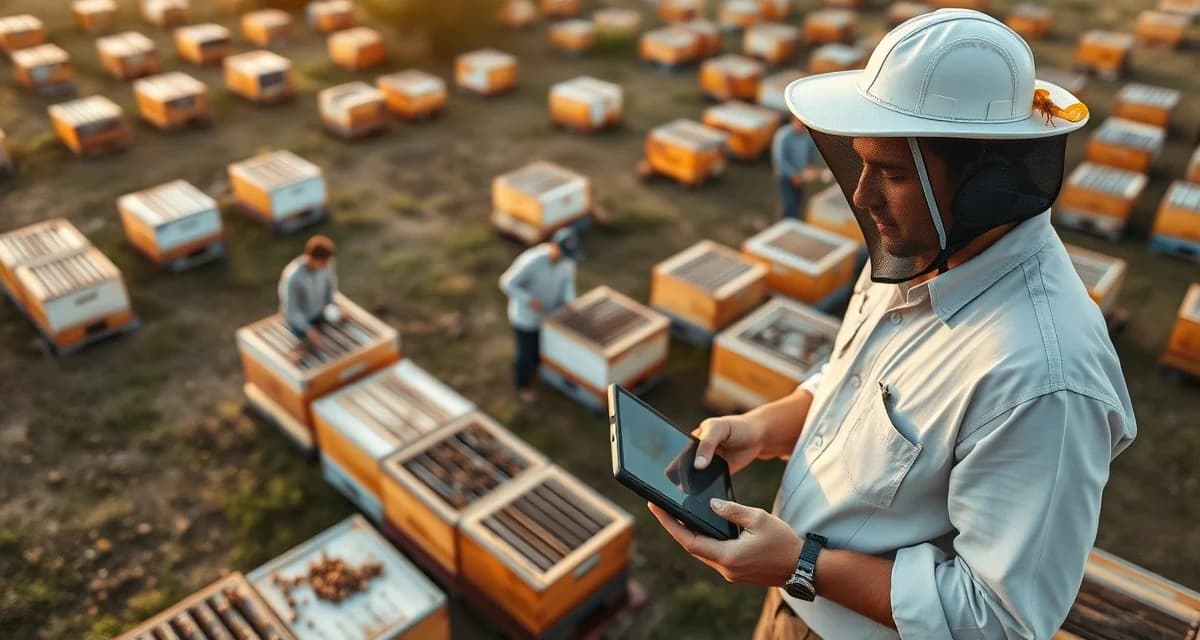
Beekeeper Employee and Team Management
Labor is the second-highest cost for commercial pollination operations after equipment. And it's the hardest to manage efficiently when your team is spread across dozens of yards, sometimes in multiple states, during the compressed chaos of pollination season.
During almond season, you might have 4 drivers running routes simultaneously, 2 yard workers doing pre-move assessments in the field, and an office person tracking invoices. None of them are in the same place. All of them need to know where to be and what's expected when they get there.
Managing a beekeeping crew without a shared platform means a lot of phone calls, a lot of texted directions, and a lot of "I thought he was going to do that" conversations after something didn't get done.
TL;DR
- A 2-person crew can place 200-300 hives per day for almond delivery; a 1,000-hive operation requires 7-10 crew-days for a single crop placement.
- Seasonal beekeeping labor is in high demand during February-May pollination season; recruiting begins months in advance for well-run operations.
- Clear task assignment and documentation requirements for crew work reduce errors and create accountability for inspection and treatment records.
- OSHA requirements for outdoor agricultural work apply to commercial beekeeping crews, including sting response protocols and appropriate PPE.
- Payroll, workers' compensation, and H-2A visa compliance (for operations using seasonal agricultural workers) add administrative complexity that scales with crew size.
The Core Challenge of Commercial Beekeeping Team Management
Most beekeeping operations have informal communication systems that work reasonably well at small scale. The owner knows where everyone should be. The crews know what to do when they get there. Coordination happens through direct conversation.
Add a second crew. Add more yards. Add contracts in multiple locations with different delivery timelines. The informal system starts generating errors: crews at the wrong yard, task assignments that weren't communicated, check-ins that didn't happen, discrepancies in what the owner and the crew thought was expected.
The fix isn't more phone calls. It's a system where assignments, expectations, and check-in requirements are clear and documented before the crew leaves the yard.
How Do I Manage a Beekeeping Crew Across Multiple Yard Locations?
The answer involves three things working together:
Pre-built yard assignments: Before the day starts, every crew member or crew team knows which yard they're going to, what they're doing there, and what they need to document when they leave. They shouldn't be waiting for a phone call when they arrive at the gate.
Field check-in requirements: Every yard visit produces a check-in record. The crew member logs their arrival, completes the required tasks (strength assessment, hive count, water check, or whatever the task is), and logs their departure. This creates a record that the yard was serviced on that date.
Real-time visibility: You can see, from wherever you are, that crew A arrived at the Fresno yard at 8 AM, completed 45 pre-move assessments, and departed at 11:30 AM. If crew B hasn't checked in at the almond yard by 10 AM when they were supposed to be there at 7, you know before the problem gets bigger.
PollenOps employee management connects crew assignments to specific yard records so the right information is available to the right person when they need it.
Can I Assign Specific Yards to Specific Employees in PollenOps?
Yes. Yard assignments in PollenOps let you designate which team member or crew is responsible for specific yard locations on specific dates. The assigned employee sees their yard assignments when they log into the mobile app.
When they arrive at the yard, they check in through the app. The GPS location confirms they're at the right place. The check-in triggers the task list for that yard type (pre-move assessment, routine inspection, setup, or pickup), and the results flow directly into the yard record.
This connection between employee assignment and yard record matters for two reasons:
Accountability: Every yard service event is tied to the employee who performed it. If a grower questions whether a task was completed, the record shows who completed it and when.
Data quality: When field data enters the system from a structured check-in rather than a phone call or text message to a central person, the accuracy improves and the delay disappears.
How Do I Track Employee Hours During a Busy Pollination Move?
During active moves, your crew is logging hours at odd times. A driver who starts a 400-mile run at 2 AM and arrives at a yard at 6 AM, unloads until 9 AM, drives back, and is ready for a second run by afternoon isn't tracking a standard work schedule.
Time tracking through the PollenOps mobile check-in captures clock-in and clock-out events at yard locations, which handles the field labor component. Your payroll system handles the rest. Connecting field check-in timestamps to payroll records is cleaner than asking drivers to fill out time sheets at the end of a 16-hour day.
For crew members working yard assessment or setup tasks, the check-in and check-out timestamps from the yard mobile app give you a direct record of time at location that feeds your labor cost accounting.
Mobile App Access for Field Crew
Your field crew shouldn't need a laptop or an office to use the team management tools. The PollenOps mobile app works on any smartphone and operates in offline mode when cell signal is unavailable at remote yard locations.
This is important because the yards where you most need reliable check-in documentation are often the remote ones where cell signal is worst. If the app requires connectivity to function, your remote yard check-ins become the least reliable records in your system.
Offline field check-ins sync automatically when signal is restored. Crew members complete their check-in in the field, and the record appears in your yard management system the next time they're in range of a cell tower.
Hive movement tracking connects to the same mobile interface, so drivers log their hive loads, route, and arrival at the destination in the same app they use for yard check-ins.
Crew Safety Protocols
One practical reason to require check-ins at every yard visit: safety.
Your crew is often working alone at remote locations with heavy equipment, stinging insects, and physical demands that create injury risk. If a crew member is injured at a remote yard and can't call for help, the GPS check-in record tells you the last known location.
Requiring a check-in when a crew member arrives at a yard and a check-out when they leave gives you visibility into whether they've left safely. If someone hasn't checked out of a remote yard by a certain time, you know to check in with them.
This is a practical safety practice, not just a documentation requirement. Communicate it to your crew as a safety protocol and they'll understand why it matters.
Scaling Team Management as You Grow
The team management workflow that works for 2 employees doesn't scale automatically to 10 or 20. As your crew grows, you need:
- Clear role definitions that match task assignments in the platform
- Multiple levels of yard access (some employees see all yards, some see only their assignments)
- Crew lead roles for employees who manage other crew members in the field
- Integration between field task completion and your payroll and labor cost tracking
PollenOps team management supports multiple user permission levels within a single account, so you can give a crew lead full yard access while a driver only sees their assigned routes for the day.
Frequently Asked Questions
How do I manage a beekeeping crew across multiple yard locations?
Pre-assign crew to specific yards before the day starts so everyone knows where they're going and what they need to document. Require GPS-stamped field check-ins at every yard visit so you have a real-time record of crew location and task completion. Use the PollenOps mobile app so crew members can access their assignments and complete check-ins without a phone call to the office. Monitor assignments in real time from the central dashboard so you know when crews have arrived, completed tasks, and departed each location.
Can I assign specific yards to specific employees in PollenOps?
Yes. Yard assignments in PollenOps designate which team member or crew is responsible for specific locations on specific dates. Assigned employees see their yard tasks in the mobile app when they log in. Their GPS check-in at arrival confirms they're at the correct location, and their field task completion flows directly into the yard record linked to your contract management and hive inventory systems.
How do I track employee hours during a busy pollination move?
PollenOps mobile check-in captures GPS-timestamped clock-in and clock-out events at each yard location, creating a field labor time record that feeds your payroll accounting. For drivers running overnight routes, the check-in timestamps document yard arrival and departure times directly from the field without requiring manual time sheet entry at the end of a long day.
What is the difference between commercial and hobby beekeeping?
Commercial beekeeping is distinguished by scale (typically 100+ hives, often 500-5,000+), revenue source (pollination contracts and bulk honey sales rather than local honey retail), and management approach (systematic protocols applied across yards rather than individual colony attention). Commercial operators manage bees as an agricultural enterprise, with the administrative, regulatory, and logistical complexity that entails. Most commercial operators derive the majority of their income from pollination services; honey production is a supplementary revenue stream.
How many hives are needed to make commercial beekeeping a full-time income?
Most beekeeping economists put the full-time commercial threshold at 500-800 hives, assuming efficient operations management and a combination of pollination and honey revenue. At 500 hives and $200/hive for almond pollination, almond season alone generates $100,000 in gross revenue before expenses. Net margins depend on operational efficiency, but well-run operations can achieve 30-50% net margins on pollination revenue. Additional crops and honey production improve per-hive economics but require additional management capacity.
What is the annual revenue potential for a 1,000-hive commercial operation?
A 1,000-hive operation running an almond season ($200/hive) plus blueberry or apple contracts ($80-100/hive) plus summer honey production ($25-40/hive after extraction costs) can generate $300,000-360,000 in annual gross revenue. Net margins after transport, crew, equipment, and hive replacement costs typically run 25-40% for well-managed operations, putting net income at $75,000-145,000 annually. The specific number depends heavily on circuit efficiency, loss rates, and contract quality.
Try These Free Tools
Sources
- USDA Agricultural Research Service
- Bee Informed Partnership
- American Beekeeping Federation (ABF)
- USDA Farm Service Agency
Get Started with PollenOps
Crew management during peak season is one of the most operationally demanding aspects of commercial beekeeping. PollenOps coordinates crew scheduling with yard assignments and contract timelines so your team is always working on the right yards at the right time.