The Migratory Beekeeping Operations Guide
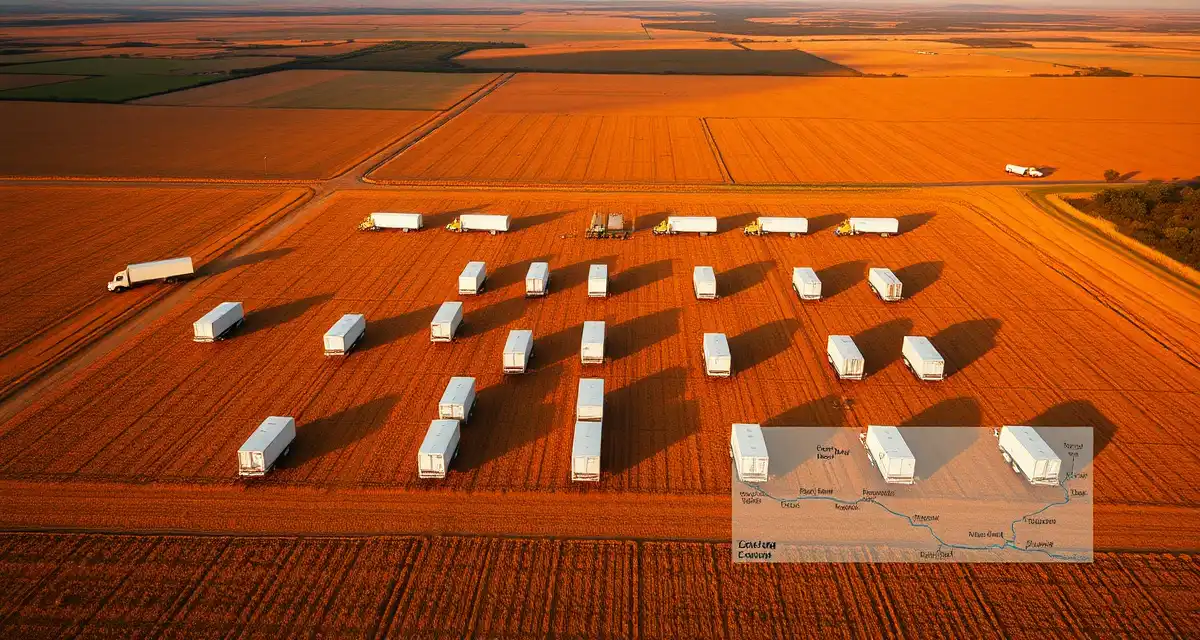
US migratory beekeepers travel an average of 12,000 miles per season across their full annual routes. That's a lot of diesel, a lot of driver hours, and a lot of logistics to coordinate across state lines, bloom windows, and dozens of simultaneous contracts.
Migratory beekeeping is the backbone of US commercial pollination, providing over 80% of the hive placements that make California almonds, Pacific Northwest cherries, Michigan blueberries, and dozens of other crops possible. It's also one of the most operationally complex small businesses you can run.
This guide covers route planning, contracts, state compliance, and GPS yard management as they apply to a full migratory operation.
TL;DR
- Most states require a Certificate of Health or Certificate of Veterinary Inspection issued by the origin state before out-of-state colonies can enter.
- A California-to-Florida-to-Pacific-Northwest-to-Northern-Plains circuit is the most common full-year migratory route for large commercial operations.
- Interstate permit coordination requires lead time; certificates typically need to be obtained 7-30 days before entry depending on the destination state.
- Moving 1,000 hives requires 2-3 truck loads per move, with fuel, driver wages, and DOT compliance as the primary variable costs.
- Operations that plan their annual circuit 6-8 months in advance can sequence pollination contracts and honey production to maximize annual revenue per hive.
Part 1: Route Planning
Building Your Annual Circuit
A migratory route is a circuit, not a one-way trip. Your bees start somewhere in fall, move through a succession of crop placements, and end up back where they started (or in a wintering location) before the cycle repeats.
The most efficient circuits connect high-value crop events in geographic order, minimizing backtracking and deadhead miles. The classic US migratory circuit:
October-January: Winter location (Florida, Texas, California, or home state)
February-March: California almond season (for operations that do almonds, this is the season anchor)
March-April: Pacific Northwest early cherry and pear, OR California cherry and early spring crops
April-May: Pacific Northwest main cherry and early apple, OR Midwest early tree fruit and berry
May-June: Pacific Northwest apple, Oregon and Washington blueberry, Midwest berry
June-July: Northern Plains honey production or seed crop pollination (North Dakota, South Dakota, Minnesota)
August-September: Late honey production, fall buildup, return south
October: Arrival at winter location, repeat cycle
Not every operation runs this full circuit. Regional operations might cover only 3-4 of these stages. But the geographic logic applies: move with the seasons, avoid backtracking, and connect high-value events in sequence.
Route Economics
The economic case for a specific route requires comparing:
Revenue from each stage: What does each crop placement pay per hive per week? Almond at $200/hive for 3-4 weeks is very different from sunflower at $50/hive for 4-6 weeks.
Transportation cost between stages: Fuel, driver wages, and truck wear for each move. A move that saves $5,000 in diesel costs is worth evaluating even if it adds some logistical complexity.
Dead time between stages: If you finish almonds on March 5 and your cherry contracts don't start until April 1, that's 3+ weeks of unproductive time. Route optimization minimizes this by finding interim placements or honey production opportunities to fill gaps.
State compliance costs: Health certificates, state inspections, and registration fees add up across a multi-state route. Include them in your route economics.
PollenOps route optimization calculates optimal multi-stop sequences accounting for drive distance, contract timing, and fleet capacity. For a typical 1,000-hive migratory operation, route optimization saves an average of 340 miles per season.
Planning for Weather and Bloom Variation
Routes built on fixed dates fail in unusual weather years. Your route plan should be built on contingencies:
- If almond bloom is early, when do you start heading north?
- If cherry bloom is delayed, what does your fleet do for an extra week?
- If a spring storm cancels 2 days of driving, which delivery deadlines are at risk?
PollenOps bloom timing alerts give you real-time advance warning that lets you adjust routing before fixed-date planning locks you into the wrong sequence.
Part 2: Multi-State Contract Management
Managing Contracts Across State Lines
A migratory operation with 50 contracts across 5 states needs a contract management system where every contract is visible in a single calendar, regardless of what state it's in.
The challenges of multi-state contract management:
Different grower expectations: California almond growers expect formal strength documentation. Michigan blueberry growers may be more informal. Your contract template needs to be flexible enough to match each market's norms while maintaining the standard terms that protect you.
Different timing: Your Pacific Northwest cherry contracts have different delivery windows than your Michigan blueberry contracts. The contract calendar has to show all of them simultaneously so you can spot scheduling conflicts.
Different payment schedules: Some growers pay 50% at delivery. Others pay at service end. Tracking which payments have arrived and which are outstanding across 50 contracts in 5 states is an administrative challenge that requires a system.
PollenOps migratory beekeeper contract management provides the cross-state dashboard that shows open contracts, upcoming bloom windows, and outstanding invoices regardless of state location.
Grower Relationships Across Distance
Building and maintaining grower relationships when you're physically present for 3-4 weeks per year requires intentional communication:
Before the season: Confirm contract terms, delivery timing, and any changes from last year.
At delivery: Professional arrival report within 2 hours of placement.
During placement: Brief check-in mid-service period if anything unusual is happening.
At pickup: Pickup notification and preliminary performance notes.
Post-season: Thank-you communication and early-season outreach for next year's contract discussion.
Growers who receive this level of professional communication renew at substantially higher rates than those who only hear from you when there's a problem.
Part 3: State Compliance
Health Certificates
Every state you move hives into, and sometimes through, requires a health certificate from your origin state. The health certificate:
- Is issued by a licensed apiary inspector in your home state
- Certifies that the hives showed no signs of regulated disease at time of inspection
- Is valid for a specified period (typically 30 days)
- Covers a specified hive count
For a migratory operation crossing multiple state lines in a season, you may need multiple health certificates throughout the year as certificates expire and new moves begin.
Planning: Schedule inspections so certificates are valid on your planned crossing dates, not just on the date you got the certificate.
State-by-State Requirements Reference
This isn't comprehensive (requirements change; always verify current rules before each move), but here are the major states for migratory beekeeping:
California: Certificate of health required. County apiary registration required in each county. Border Protection Station inspection at agricultural checkpoints.
Oregon: Certificate of health required. Destination apiary notification required.
Washington: Certificate of health required. State registration required.
Florida: Certificate of health required. Florida Department of Agriculture registration. AHB zone compliance requirements.
North Dakota: Certificate of health required. State registration required.
Michigan: Certificate of health required. State registration required.
Minnesota: Certificate of health required. State registration required.
Texas: Certificate of health required. AHB zone compliance considerations in southern areas.
PollenOps hive transport compliance tracks required documentation for your planned route and sends expiration alerts before certificates lapse.
Keeping Records That Satisfy Multiple States
The challenge of multi-state compliance isn't just having the right documents. It's having them organized and accessible when an inspector asks for them at a checkpoint or yard visit.
A migratory beekeeper's compliance folder (physical or digital) should contain:
- Current health certificate for all hives in transport
- Origin state apiary registration
- Destination state apiary registration (for each state where hives are currently placed)
- County registration confirmations (California)
- Any active quarantine exemption letters if crossing quarantine zones
PollenOps compliance document attachment lets you store these documents against each move record, so they're accessible from any device when you need them.
Part 4: GPS Yard Management Across Multiple States
Why GPS Yard Tracking Matters for Migratory Operations
At 30-50 yard locations across 4-5 states, the geographic complexity of your operation requires more than a mental map or a spreadsheet of addresses.
GPS-pinned yard records in PollenOps GPS yard tracking show:
- Exact yard location (not an address, an actual GPS coordinate)
- Current hive count at each location
- Active contract association
- Move history
- Last check-in date
When you're planning which yards to visit on a 3-day sweep through the Yakima Valley, the GPS map shows you all your active yards, their status, and the optimal visit sequence. When you're planning the route from your Central Valley almond yards to your Pacific Northwest cherry yards, the map shows the geographic relationship between all the relevant locations.
Offline Capability in Remote Areas
Many of your most important yard locations are in areas without reliable cell service. Remote almond yards in the eastern San Joaquin Valley, remote cherry orchards in the Chelan foothills, wild blueberry barrens in Maine. These are exactly the locations where reliable field documentation matters most, and where connectivity is least reliable.
PollenOps offline GPS capture records your yard check-in with a GPS timestamp even without cell service. The record syncs when you're back in coverage. You never lose a check-in because of remote location connectivity.
Multi-Season Yard History
Your GPS yard records accumulate history across seasons. After 3 years of consistent use, you have a searchable record of:
- Every yard's hive count history
- Which contracts used each yard
- Strength assessment patterns at each location
- Any notes or observations from each visit
This historical record is operational intelligence. When you're deciding whether to lease a new yard location, the performance history of nearby locations informs the decision. When a state inspector asks about historical use of a location, the export is ready in 30 seconds.
Part 5: Fleet Operations
Truck and Driver Management
For operations running 3+ trucks across multiple states during peak season, fleet management is a distinct operational function:
- Which truck is assigned to which route?
- What is each driver's compliance status for hours-of-service rules?
- Which truck has the capacity for which load?
- What permits are required for which routes (California Proposition 65 agricultural exceptions, weight permit states, etc.)?
PollenOps move planning software connects your truck fleet records to your route plan and contract calendar, generating load plans that account for capacity and sequence priorities.
Load Planning
Standard hive load configurations vary by truck type:
- Flatbed trailer (48 ft): Typically 4-5 pallets wide, 2-4 pallets deep = 32-80 hives depending on stack height and pallet configuration
- Single axle straight truck: Smaller capacity, better for narrow yard roads
- Semi with flatbed: Largest capacity for long-haul moves
Load planning affects your move economics. An under-loaded truck on a 300-mile run is wasting fuel per hive delivered. An overloaded truck risks weight violations or hive damage. Load planning software calculates optimal load configurations based on your registered truck fleet.
Frequently Asked Questions
How do I plan a profitable multi-state migratory beekeeping route?
Start by identifying the highest-value crop events in geographic sequence: California almonds, Pacific Northwest cherry and apple, Midwest berry, Northern Plains honey/seed crops. Build your circuit to connect these events in geographic order, minimizing backtracking. Calculate the economics of each stage (revenue per hive per week vs. transportation cost). Use bloom timing alerts in PollenOps to refine move timing as each season develops. Optimize your route sequence in PollenOps before each major move.
What permits and inspections do I need for each state on my route?
Every state you move hives into requires a health certificate from your home state (typically valid 30 days). Some states require advance notification of arrival. California requires county-level registration in every county where you place hives and inspection at agricultural checkpoints. Florida has AHB compliance requirements. PollenOps transport compliance tools track state-specific requirements for your planned route and send expiration alerts so certificates don't lapse before you cross a state line.
How do I manage contracts in 5 states simultaneously as a migratory beekeeper?
Use a contract management platform where all contracts are visible in a single calendar regardless of state location. PollenOps cross-state contract dashboard shows open contracts, upcoming bloom windows, outstanding invoices, and delivery deadlines for every contract in your portfolio. Separate your contract calendar by crop and bloom timing, not by geography, so you see when multiple events are competing for the same truck capacity.
What is the most common full-year circuit for US migratory beekeepers?
The classic commercial circuit runs: winter buildup in Florida or southern Texas, California almonds in February, Pacific Northwest tree fruit (cherry, apple, pear) in April-May, Pacific Northwest or northern Midwest berry and clover crops in June-July, summer honey production in North Dakota, Montana, or Minnesota in July-August, and fall honey extraction and requeening before the cycle restarts. The exact circuit depends on contracted commitments, hive capacity, and the operator's regional relationships.
How do you coordinate state entry permits for a multi-state circuit?
State entry permits and health certificates require lead time: most states want certificates issued 7-30 days before entry. For a circuit that crosses 5-6 states, this means overlapping certificate applications where a certificate for the next state must be initiated before the current state's placement ends. Some operators use a permit tracking calendar that accounts for the lead time required for each destination state. PollenOps includes a permit tracking feature that alerts operators when certificates need to be initiated based on planned move dates.
What are the most common mistakes new migratory operators make?
The most common errors are underestimating transport costs, failing to secure contracts before building hive capacity, not accounting for state entry permit lead times, and neglecting varroa management during the compressed pre-almond preparation period. New operators often also underestimate the administrative load of managing 10-20 contracts across multiple states -- tracking payment status, compliance documentation, and crew scheduling simultaneously requires systems, not just a spreadsheet.
Try These Free Tools
Sources
- USDA Agricultural Research Service
- Bee Informed Partnership
- American Beekeeping Federation (ABF)
- American Honey Producers Association
- USDA Animal and Plant Health Inspection Service (APHIS)
Get Started with PollenOps
Migratory operations face the most complex coordination challenges in commercial beekeeping: permits across multiple states, staggered delivery windows, and fleet logistics that have to work precisely across hundreds of miles. PollenOps was built to handle multi-state, multi-grower, multi-crop operations at this level of complexity.