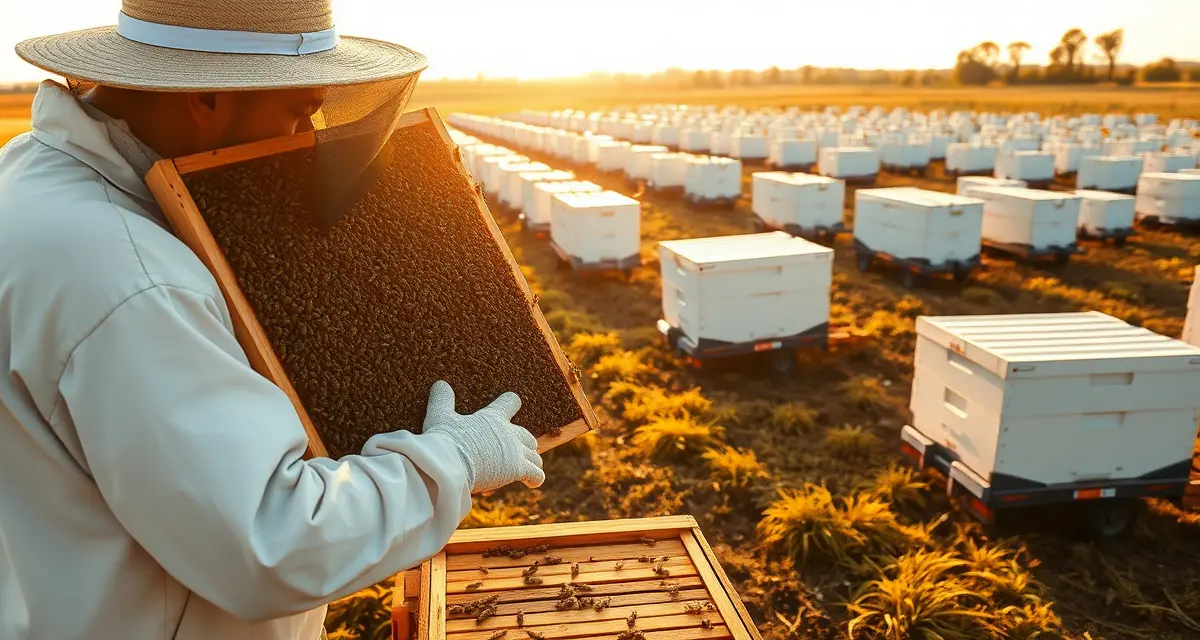
What Is Migratory Beekeeping?
Migratory beekeeping is the commercial practice of moving bee colonies to different locations throughout the year to provide pollination services for farmers or to take advantage of different nectar flows for honey production. It's industrial-scale agriculture, not a hobby.
TL;DR
- Most states require a Certificate of Health or Certificate of Veterinary Inspection issued by the origin state before out-of-state colonies can enter.
- A California-to-Florida-to-Pacific-Northwest-to-Northern-Plains circuit is the most common full-year migratory route for large commercial operations.
- Interstate permit coordination requires lead time; certificates typically need to be obtained 7-30 days before entry depending on the destination state.
- Moving 1,000 hives requires 2-3 truck loads per move, with fuel, driver wages, and DOT compliance as the primary variable costs.
- Operations that plan their annual circuit 6-8 months in advance can sequence pollination contracts and honey production to maximize annual revenue per hive.
The Direct Answer
A migratory beekeeper loads their hives onto trucks and moves them, sometimes thousands of miles, to wherever bees are needed. In February, that means California almonds. In May, it might mean Washington cherries or Michigan blueberries. In July, North Dakota clover honey. Commercial migratory operations run 500 to 5,000+ hives and generate revenue from pollination contracts and honey sales at each stop on the circuit.
The Scale
The US commercial beekeeping industry moves roughly 1.3 million colonies to California almonds each February, the largest pollination event in the world. California produces about 80% of the world's almonds, and almonds cannot be pollinated mechanically. Every Hershey's Almond Joy, every can of Blue Diamond almonds, required bee pollination. Commercial migratory beekeepers make that possible.
About 400 commercial operators move significant hive counts (500+) to California almonds each year. The largest single operations run 50,000–80,000 hives across multiple states simultaneously.
What a Migratory Circuit Looks Like
A typical 1,000-hive commercial operation might run:
September–January: Winter staging in Florida, Texas, California, or the Southwest. Hives build populations in warm-climate locations with winter forage.
February–March: California almonds. The year's primary revenue event, $185–220/hive for 3–5 weeks.
April–May: Pacific Northwest cherries and apples, or Michigan/Maine blueberries. Spring pollination circuit.
June–August: North Dakota, Montana, or Minnesota for summer clover and wildflower honey production.
September–October: Honey harvest, fall varroa management, equipment maintenance.
November–December: Requeen weak colonies, assess winter preparation, begin staging for next year's almond season.
Total distance traveled in a year: a California-based operation might put 3,000–5,000 miles on its trucks without ever leaving the US.
Why It Works
Bees are fundamentally a warm-season organism. In any single location, the forage season is limited, maybe 4–6 months of significant nectar and pollen availability. Moving hives chases the bloom across the country, maximizing the productive time hives spend on high-value crops.
A hive sitting in Ohio in February is consuming stores and producing nothing. That same hive on California almonds in February is generating $200 in pollination revenue.
The Operational Complexity
Running a migratory operation is logistics-intensive. Permits for interstate movement (each state has different requirements), fuel costs for 18-wheelers, varroa management timed to the circuit, crew scheduling across multiple states, and multiple simultaneous grower contracts, this is an operational management challenge on top of the biology.
That's why software designed specifically for commercial migratory beekeeping, like PollenOps, focuses on contract management, fleet logistics, and colony health monitoring in one platform. The biology is hard enough without adding administrative chaos.
FAQ
How is migratory beekeeping different from stationary beekeeping?
Stationary beekeeping means keeping hives in one location year-round, typically for local honey production. Migratory beekeeping means actively moving hives, often 500+ miles, to provide pollination services for different crops in different states across the calendar year. Commercial migratory beekeeping is a full-scale agricultural business operation. Revenue comes primarily from pollination contracts (paying $50–220/hive depending on crop) and honey production at each stop. The scale is industrial: 18-wheelers carry 400–500 hives per load, crews manage 15–20 yards across multiple states simultaneously, and annual revenue for a 1,000-hive operation can exceed $300,000.
How many hives do commercial migratory beekeepers typically run?
Commercial migratory operations typically range from 500 to 5,000+ hives. Operations under 500 hives may be part-time or supplemental income. Operations over 1,000 hives are typically full-time businesses with employees, dedicated truck fleets, and multi-state operating permits. The largest commercial operations in the US run 40,000–80,000 hives and move them across multiple states with teams of full-time employees. The average commercial migratory operation participating in California almond pollination runs approximately 1,500–2,000 hives.
What are the biggest challenges in commercial migratory beekeeping?
The biggest challenges are varroa mite management, logistics coordination, and contract management at scale. Varroa mites and associated viral diseases cause 30–40% annual winter losses in many commercial operations, requiring ongoing replacement investment. Coordinating truck movements, state entry permits, crew schedules, and multi-grower contract deliveries simultaneously during peak season creates significant operational complexity. Managing 15–20 grower contracts with different delivery dates, payment terms, and hive strength requirements requires systematic contract tracking, most operators still use spreadsheets, which becomes a bottleneck as operations scale. PollenOps was built specifically to address the contract management and logistics coordination challenges of commercial migratory operations.
What is the most common full-year circuit for US migratory beekeepers?
The classic commercial circuit runs: winter buildup in Florida or southern Texas, California almonds in February, Pacific Northwest tree fruit (cherry, apple, pear) in April-May, Pacific Northwest or northern Midwest berry and clover crops in June-July, summer honey production in North Dakota, Montana, or Minnesota in July-August, and fall honey extraction and requeening before the cycle restarts. The exact circuit depends on contracted commitments, hive capacity, and the operator's regional relationships.
How do you coordinate state entry permits for a multi-state circuit?
State entry permits and health certificates require lead time: most states want certificates issued 7-30 days before entry. For a circuit that crosses 5-6 states, this means overlapping certificate applications where a certificate for the next state must be initiated before the current state's placement ends. Some operators use a permit tracking calendar that accounts for the lead time required for each destination state. PollenOps includes a permit tracking feature that alerts operators when certificates need to be initiated based on planned move dates.
What are the most common mistakes new migratory operators make?
The most common errors are underestimating transport costs, failing to secure contracts before building hive capacity, not accounting for state entry permit lead times, and neglecting varroa management during the compressed pre-almond preparation period. New operators often also underestimate the administrative load of managing 10-20 contracts across multiple states -- tracking payment status, compliance documentation, and crew scheduling simultaneously requires systems, not just a spreadsheet.
Try These Free Tools
Sources
- USDA Agricultural Research Service
- Bee Informed Partnership
- American Beekeeping Federation (ABF)
- American Honey Producers Association
- USDA Animal and Plant Health Inspection Service (APHIS)
Get Started with PollenOps
Migratory operations face the most complex coordination challenges in commercial beekeeping: permits across multiple states, staggered delivery windows, and fleet logistics that have to work precisely across hundreds of miles. PollenOps was built to handle multi-state, multi-grower, multi-crop operations at this level of complexity.