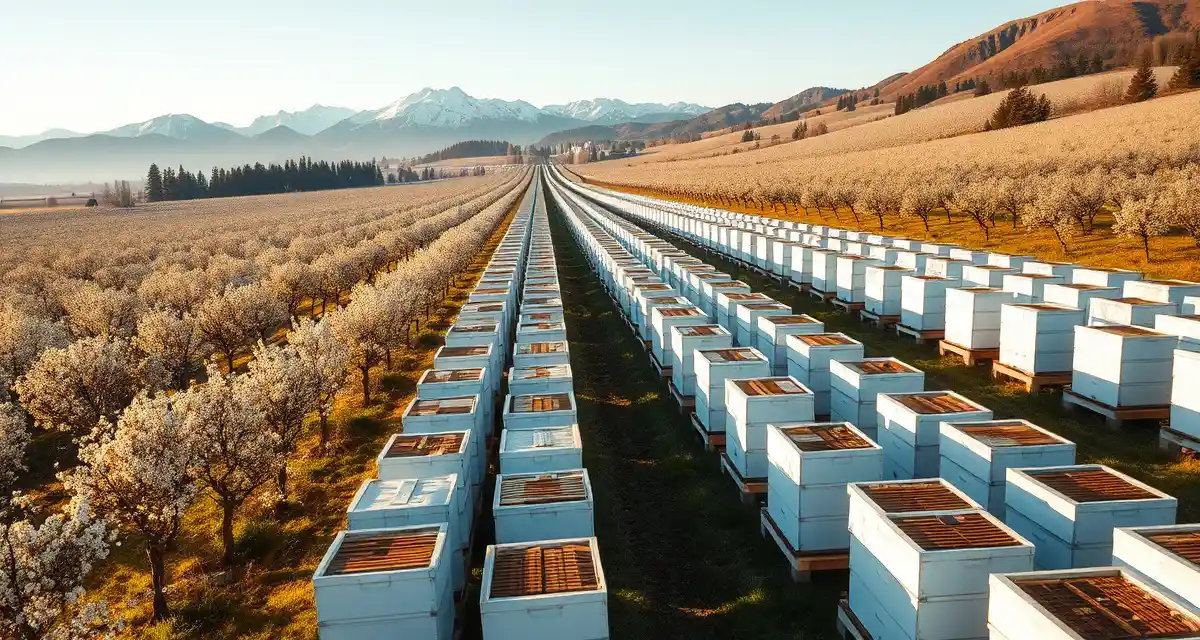
Migratory Beekeeping Management for the Pacific Northwest
Pacific Northwest pollination season generates over $500 million in beekeeper contract revenue annually. No other spring pollination market outside California comes close to this volume, and unlike California's almond monoculture, the PNW offers a cascading multi-crop season that keeps a well-organized fleet moving from late March through July.
For migratory beekeepers who've mastered California almond season, the Pacific Northwest is the natural next step: a complex, high-value market that rewards operators with the systems to manage it.
TL;DR
- Most states require a Certificate of Health or Certificate of Veterinary Inspection issued by the origin state before out-of-state colonies can enter.
- A California-to-Florida-to-Pacific-Northwest-to-Northern-Plains circuit is the most common full-year migratory route for large commercial operations.
- Interstate permit coordination requires lead time; certificates typically need to be obtained 7-30 days before entry depending on the destination state.
- Moving 1,000 hives requires 2-3 truck loads per move, with fuel, driver wages, and DOT compliance as the primary variable costs.
- Operations that plan their annual circuit 6-8 months in advance can sequence pollination contracts and honey production to maximize annual revenue per hive.
The PNW Pollination Cascade
The Pacific Northwest's geography creates a natural bloom cascade that experienced migratory beekeepers exploit through careful scheduling:
Late March to early April: Lower Yakima Valley cherry, Willamette Valley pear (Rogue Valley pear slightly earlier)
Early to mid-April: Wenatchee/Columbia Basin cherry, mid-elevation Yakima cherry, Willamette Valley cherry
Mid-to-late April: Willamette Valley apple, higher elevation Yakima cherry, Pacific Northwest pear (Hood River)
May: Pacific Northwest apple (from lower elevation to higher), Oregon Willamette Valley blueberry beginning
May through June: Oregon and Washington blueberry, strawberry, raspberry
June through July: Late-season blueberry, marionberry, other cane fruits
A beekeeping operation that manages this cascade efficiently can keep most of its fleet working from late March through late June, covering cherry, pear, apple, and berry contracts sequentially before heading to summer honey production or seed crop pollination.
Washington: The Cherry and Apple Engine
Washington is the dominant PNW pollination state, driven by its position as the source of 70% of US sweet cherry production and one of the largest apple production regions in the world.
Cherry cascade management: The key to Washington cherry is understanding and managing the elevation gradient. Lower Yakima Valley orchards bloom 2-3 weeks before the highest-elevation orchards in the same district. A beekeeper who delivers to the Yakima Valley floor in late March and can move the same hives to Wenatchee area orchards in mid-April is effectively running two cherry contracts with one hive fleet.
Apple season: Washington apple orchards bloom approximately 7-14 days after cherry at comparable elevations. The timing gap is enough to move cherry hives into apple contracts without leaving early cherry orchards early.
Cherry bloom tracking and apple pollination management in PollenOps provide elevation-adjusted bloom timing for Yakima, Wenatchee, and Columbia Basin districts.
Oregon: Berry Country
Oregon's Willamette Valley is one of the most productive berry-growing regions in North America. The combination of volcanic soil, consistent rainfall, and a marine-influenced climate creates ideal conditions for highbush blueberry, strawberry, marionberry, red raspberry, and specialty crops.
Oregon berry season provides a natural continuation for beekeepers finishing Washington cherry contracts in late April. Geographic routing from Yakima to the Willamette Valley is straightforward via US Highway 97 south and over the Cascades.
Blueberry timing in the Willamette Valley: Late April to late May for most commercial varieties. Some coastal-influenced sites bloom slightly later than inland valley sites.
Marionberry and cane fruit: Late May through June, extending the productive Oregon season past the main blueberry window.
Oregon berry pollination contracts and bloom timing are managed in the same PollenOps platform as Washington cherry and apple, so your full PNW season is visible in one calendar view.
How Do I Plan a Full Pacific Northwest Pollination Season?
The planning process starts in winter, well before the season begins:
1. Lock in your cascade schedule. Which Washington cherry districts are you targeting? What elevation zones? What's the timing gap between your lowest and highest elevation cherry contracts?
2. Identify your apple and berry opportunities. After cherry, where does your fleet go? Apple contracts in Washington? Willamette Valley berry in Oregon? Plan both options and secure contracts before spring.
3. Map your route. The PNW geography is specific. Getting from Yakima to Wenatchee to the Willamette Valley requires planning that accounts for pass closures (especially early April when Snoqualmie and Stevens passes may still have winter conditions), truck dimensions on mountain routes, and drive time between districts.
4. Set your bloom timing alert thresholds. PollenOps PNW bloom alerts need to be calibrated to your specific orchard locations and elevation zones. Spend time setting these up before season starts, not when bloom is imminent.
5. Confirm access and permits. Health certificates for Washington entry, county registration in each Washington and Oregon county, yard lease confirmation for every location.
What Crops Are Available for Pollination Contracts in the Pacific Northwest?
The full PNW crop list for commercial pollination:
- Sweet cherry (Washington, Oregon, British Columbia border areas)
- Tart cherry (Eastern Washington)
- Pears (Hood River, Wenatchee, Rogue Valley Oregon)
- Apples (Yakima, Wenatchee, Columbia Basin)
- Highbush blueberries (Willamette Valley, Skagit Valley, Columbia Basin)
- Strawberries (Willamette Valley)
- Red raspberries (Willamette Valley, Snoqualmie Valley Washington)
- Marionberries and other cane fruits (Willamette Valley)
- Clover seed (Columbia Basin Washington, Willamette Valley)
- Hops (emerging specialty crop market)
- Canola seed (Columbia Basin)
How Do I Manage Contracts in Both Oregon and Washington Simultaneously?
The geographic separation between Eastern Washington (cherry and apple) and the Willamette Valley (berry) means you're rarely managing contracts in both areas at exactly the same time. The cascade scheduling that moves hives from Washington cherry to Oregon berry is a sequential flow, not a simultaneous multi-state deployment.
That said, if you have late Washington cherry contracts at high elevation and early Oregon berry contracts starting in the valley, there's a real overlap window in late April. Managing that overlap requires knowing exactly which hives are committed to which contracts, and what logistics are required to move hives from Eastern Washington to Western Oregon (crossing the Cascades) during that window.
PollenOps contract calendar shows all your PNW contracts simultaneously with bloom timing projections by district, so you can see overlaps weeks in advance and plan your logistics accordingly.
Frequently Asked Questions
How do I plan a full Pacific Northwest pollination season?
Start by locking in your cascade schedule in winter: which Washington cherry districts at which elevation zones, followed by what apple and berry contracts. Calibrate your PollenOps bloom timing alerts for each district and elevation zone before season starts. Map your route accounting for mountain pass conditions in early April. Confirm permits, health certificates, and county registrations for each state and county on your route. The PNW season rewards early planning because the best contracts go to operators who commit early.
What crops are available for pollination contracts in the Pacific Northwest?
The main crops are sweet cherry, pears, apples, and highbush blueberries. Secondary crops include tart cherry, strawberries, red raspberries, marionberries, clover seed, and canola seed. The full PNW crop cascade runs from late March cherry through July cane fruit and seed crops, providing a 15-18 week productive window for well-organized operations.
How do I coordinate berry contracts across both Oregon and Washington?
The natural cascade flows from Eastern Washington cherry and apple in April-May to Willamette Valley berry in May-June. The geographic transition crosses the Cascades via US-97 south or other routes depending on your specific yard locations. PollenOps shows your Washington and Oregon contracts in the same calendar with district-specific bloom timing alerts for each region. Build your route to minimize deadhead miles between the two states during the transition period.
What is the most common full-year circuit for US migratory beekeepers?
The classic commercial circuit runs: winter buildup in Florida or southern Texas, California almonds in February, Pacific Northwest tree fruit (cherry, apple, pear) in April-May, Pacific Northwest or northern Midwest berry and clover crops in June-July, summer honey production in North Dakota, Montana, or Minnesota in July-August, and fall honey extraction and requeening before the cycle restarts. The exact circuit depends on contracted commitments, hive capacity, and the operator's regional relationships.
How do you coordinate state entry permits for a multi-state circuit?
State entry permits and health certificates require lead time: most states want certificates issued 7-30 days before entry. For a circuit that crosses 5-6 states, this means overlapping certificate applications where a certificate for the next state must be initiated before the current state's placement ends. Some operators use a permit tracking calendar that accounts for the lead time required for each destination state. PollenOps includes a permit tracking feature that alerts operators when certificates need to be initiated based on planned move dates.
What are the most common mistakes new migratory operators make?
The most common errors are underestimating transport costs, failing to secure contracts before building hive capacity, not accounting for state entry permit lead times, and neglecting varroa management during the compressed pre-almond preparation period. New operators often also underestimate the administrative load of managing 10-20 contracts across multiple states -- tracking payment status, compliance documentation, and crew scheduling simultaneously requires systems, not just a spreadsheet.
Try These Free Tools
Sources
- USDA Agricultural Research Service
- Bee Informed Partnership
- American Beekeeping Federation (ABF)
- American Honey Producers Association
- USDA Animal and Plant Health Inspection Service (APHIS)
Get Started with PollenOps
Migratory operations face the most complex coordination challenges in commercial beekeeping: permits across multiple states, staggered delivery windows, and fleet logistics that have to work precisely across hundreds of miles. PollenOps was built to handle multi-state, multi-grower, multi-crop operations at this level of complexity.