Migratory Beekeeping Seasonal Calendar: Month-by-Month Operations Guide
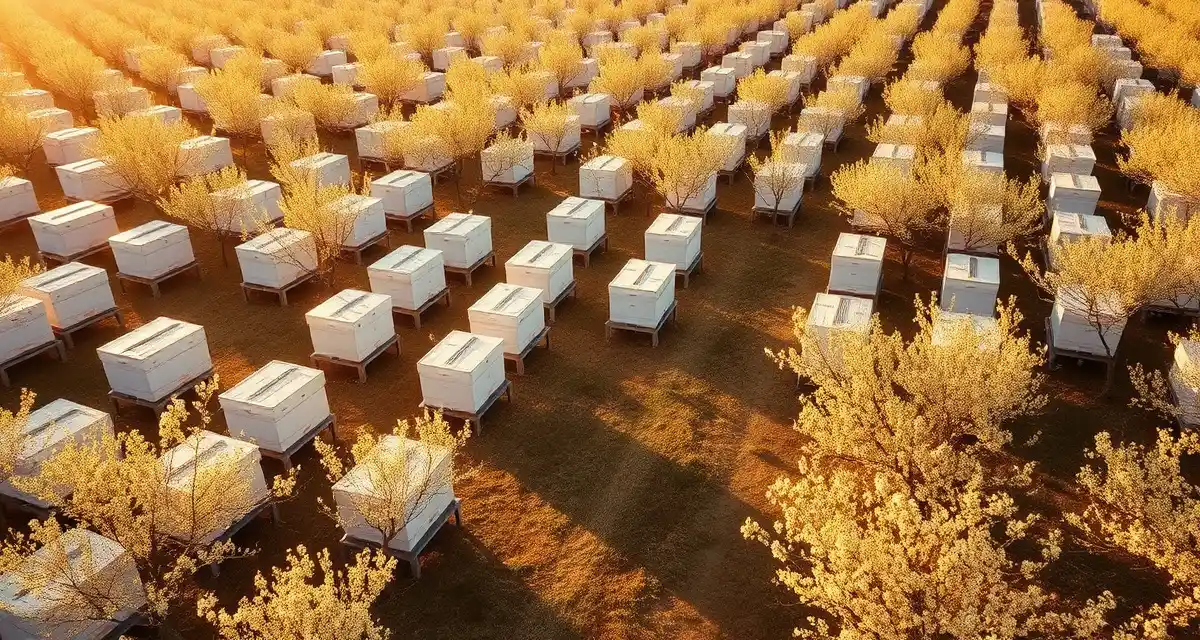
California almonds in February anchor the migratory calendar for 80% or more of commercial pollinators. Everything else (where you winter, when you move, which crops you chase, when you harvest honey) gets planned backward and forward from that single event.
The migratory circuit connects 5 to 8 states across 12 months, and coordination requires systematic planning. This isn't a calendar you can run from memory or a spreadsheet you check twice a week. It's a continuous sequence of decisions about bee biology, truck schedules, contract commitments, and regulatory requirements that run simultaneously across dozens of locations.
Here's what a well-run commercial migratory operation looks like month by month.
TL;DR
- Most states require a Certificate of Health or Certificate of Veterinary Inspection issued by the origin state before out-of-state colonies can enter.
- A California-to-Florida-to-Pacific-Northwest-to-Northern-Plains circuit is the most common full-year migratory route for large commercial operations.
- Interstate permit coordination requires lead time; certificates typically need to be obtained 7-30 days before entry depending on the destination state.
- Moving 1,000 hives requires 2-3 truck loads per move, with fuel, driver wages, and DOT compliance as the primary variable costs.
- Operations that plan their annual circuit 6-8 months in advance can sequence pollination contracts and honey production to maximize annual revenue per hive.
December: Winter Yard Management and Planning
December is your quietest month in the yard but one of your most important months in the office.
Colony Management
In winter yards (California, Florida, south Texas), colonies should be clustered and self-managing. Your job in December is monitoring, not intervening. Visit each yard at least once during the month.
What to check:
- Dead colonies (document immediately for insurance records)
- Food stores, and supplement feed if colonies are running low
- Varroa, and treat any colonies showing high loads
- Queenlessness, as a colony going into January queenless won't build for almond season
In cold-weather states, you should have already completed your winter move. If any hives remain in northern yards, they're being managed for spring survival, not almond contracts.
Planning and Administration
December is when the next season's contract calendar takes shape. Confirm almond contract quantities and delivery windows with your California growers. Begin reaching out to spring crop contacts (apple, cherry, blueberry) for early contract discussions.
Review your equipment inventory. What hive bodies need replacement? What truck maintenance is due before the February move? Order supplies now rather than scrambling in January.
January: Spring Buildup Begins
January is when the race to almond strength starts. If you're in a California winter yard, you have roughly 4 to 6 weeks to build colonies from winter cluster to 8+ frames of bees.
Pollen Supplement Feeding
Start pollen substitute patties in early January. Even if natural pollen is available in California (and in many areas it is: wild mustard, eucalyptus), supplement feeding accelerates brood rearing and gives you consistent results regardless of forage availability.
Replace patties every 2 to 3 weeks. Colonies consuming patties rapidly are building well. Colonies leaving patties untouched need to be assessed. They may be queenless or weaker than you realize.
Pre-Almond Assessments
Do a complete colony assessment by mid-January. Count frames of bees. Verify queen presence and laying pattern. Identify colonies that won't meet almond requirements by early February.
Combine weak colonies into stronger ones. A yard full of mediocre colonies is worth less than a smaller yard of full-strength ones, and growers will hold you to the minimum frames specified in your contract.
Logistics Preparation
Book truck routes and drivers for February delivery if you're using contract hauling. Confirm yard access with landowners at almond delivery locations. Review your fleet logistics and route plan for efficiency.
February: Almond Season
This is what everything builds toward. Almond bloom in the San Joaquin Valley typically begins in mid-February. Hive delivery to orchards targets 2 to 7 days before bloom opens.
Delivery Logistics
Hives move at night. Bees cluster in the evening and all foragers are home by dark. That's when you load. A well-run loading night gets 80 to 100 hives per truck per driver, strapped and screened and rolling by midnight.
Coordinate with your growers on exact yard locations. In the San Joaquin Valley, over 900,000 hives are placed simultaneously. Road congestion, access conflicts, and placement coordination are all real operational challenges.
Mid-Almond Season Checks
About two weeks into placement, visit your almond yards. Check that hives are where they should be. Assess colony condition: are they foraging actively? Any signs of pesticide exposure? Any colonies that need attention?
Document everything. Photos, colony counts, strength assessments. This documentation protects you if growers raise contract disputes.
February Administration
While your hives are in almonds, you should be finalizing spring contracts. Cherry pollination in California's Central Valley follows almonds by 3 to 4 weeks. Washington cherry season follows California by 6 to 8 weeks. Maine blueberry contracts need to be confirmed by February for placements in late May.
March: Almond Exit and Spring Circuit Decisions
Almond bloom wraps up in early to mid-March. Hive removal typically happens 2 to 4 weeks after bloom peak, as nut set is confirmed and growers release you.
Post-Almond Assessment
Assess every colony after almond removal. Almonds are pollination-intense, and colonies often come out of almond yards lighter than they went in. Check food stores, brood pattern, and varroa loads.
Treat for varroa now if mite loads are elevated. Early spring treatment before brood rearing intensifies is highly effective.
Spring Circuit
March is decision time for where your hives go next. Options include:
California cherry and other spring crops: Central Valley cherry bloom begins in March. Some operators stay in California for cherry before moving north.
Pacific Northwest: Washington and Oregon cherry and apple bloom follow California by 6 to 8 weeks. This is the largest next step for many California-exit operators.
Southeast: Blueberry in Georgia and Florida blooms earlier. Some of this is already wrapping up by late March. Strawberry and other crops may still be available.
Honey yards: Some operators skip spring pollination altogether and move to established honey yards for an early-spring honey flow.
April: Spring Pollination and Colony Expansion
April is typically the most productive month for colony population growth. Longer days, warming temperatures, and natural pollen abundance combine to drive rapid expansion.
Colony Management
If you're in spring pollination yards (apple, cherry, blueberry), your colonies should be building rapidly. This is a good time for splits if you're targeting hive count growth. April and May splits set up colonies for summer production.
Manage swarm pressure. Rapidly expanding colonies in spring are swarm-prone. Check for swarm cells every 10 to 14 days in active spring yards.
Regulatory Compliance
Spring moves often involve crossing state lines. Confirm you have current interstate movement permits for every state you're entering. Inspection certificate requirements vary. Don't assume last year's certificates are still valid.
May: Northeast Circuit and Early Summer Transition
May is when the operation splits its attention between northeast pollination (Maine blueberry, Massachusetts cranberry, New England apple orchards) and positioning for summer honey production.
Maine and Northeast Pollination
Maine wild blueberry bloom typically begins in late May in southern coastal counties. Colony delivery to Maine blueberry yards usually starts in the third week of May and runs through early June.
For operators running a Northeast circuit, May might include New York or Pennsylvania apple orchards (mid to late April through mid-May) followed by Maine blueberry (late May through June).
Summer Honey Positioning
Operators not in northeast contracts should be positioning for summer honey flows:
- North Dakota and South Dakota for clover and wildflower (peak July through August)
- Minnesota and Wisconsin for clover
- Midwest for various honey flows depending on regional conditions
Scout your summer honey locations now. Talk to landowners and confirm yard access.
June: Maine Blueberry and Summer Honey Buildup
June is active on multiple fronts. Maine blueberry is in full swing through the third week of June. Summer honey flows are beginning in the northern Midwest.
Maine Operations
Maine blueberry is a 3 to 4 week window. Stay responsive to grower communication. Colonies need to be in yards during bloom and out reasonably soon after to avoid disrupting harvest operations.
Document your Maine placements thoroughly: colony counts, delivery dates, and yard locations.
Planning Summer Honey
By late June, your summer honey positioning should be finalized. Colonies heading to the Dakotas need to be strong. Summer honey production rewards the same colony strength that pollination demands.
July: Peak Summer Honey Season
July is honey production month for most operators who run a clover circuit. Colonies in good Midwest forage can cap honey rapidly. Some operators see 80 to 100 pound yields per colony in exceptional years.
Honey Management
Add supers aggressively. Colonies that run out of comb space can swarm or backfill brood with honey. Extract and replace supers as colonies fill them.
Monitor varroa. Summer mite populations can explode in July if left unmanaged. Elevated summer mite loads set up winter bee damage that shows up in February as poor spring buildup.
Fall Contract Planning
Start your fall contract planning now. Almond contract negotiations for next season often begin in July and August. Growers want to know what quantities you can commit to. Your performance this season (strength at delivery, communication quality, documentation) determines whether they'll renew.
August: Late Summer Honey and Pre-Fall Management
August wraps up the summer honey season in most circuits. Some operators target a late-season nectar flow (goldenrod, aster) before beginning fall management.
Varroa Treatments
August is the most critical varroa treatment window of the year. Winter bees are raised in late August and September. If mite loads are elevated when winter bees are being developed, those bees emerge compromised, and weak winter bees lead to spring dwindle and almond-season shortfalls.
Treat in August while colonies still have brood, using formic acid or amitraz strips. Target mite loads below 1% before winter bee rearing begins.
Honey Harvest
Complete your main honey harvest by late August. Extracted honey needs to be stored properly, tested for moisture (below 18.6% water content to avoid fermentation), and prepared for sale or storage.
September: Fall Buildup and Colony Assessment
September is the beginning of the winter preparation sequence.
Colony Assessment
Assess every colony for winter preparation:
- Queen status and quality (replace old or failing queens)
- Varroa loads (treat if still elevated after August treatments)
- Food stores (feed if low)
- Overall strength (combine weak colonies)
A systematic fall assessment across hundreds of yards is a major logistical undertaking. Prioritize yards with historically higher loss rates.
Feeding Program
Begin supplemental feeding for colonies that aren't at target weight. 2:1 sugar syrup while temperatures allow; switch to dry sugar or fondant when night temperatures drop below 50°F.
October: Winter Prep and Movement
October is when the winter move begins for most migratory operators.
Loading and Moving
Colonies move to winter yards in October and November. Coordinate truck schedules, yard access, and arrival windows. Document colony counts at both departure and arrival yards.
Administrative Tasks
October is contract settlement time for many seasonal pollination relationships. Invoice remaining summer contracts. Review your performance data: what were your actual colony counts at delivery versus contracted quantities? Where did you fall short and why?
This review informs your winter management priorities and your conversations with growers about next season.
November: Winter Yard Arrival and Season Review
By mid-November, most colonies should be in their winter yards.
Final Pre-Winter Checks
Once colonies are in winter yards, do a final round of checks:
- Confirm colony counts
- Treat any remaining high-varroa colonies
- Ensure adequate food stores
- Document any dead colonies
Business Review
November is when you should review the full season:
- Total revenue vs. plan
- Colony loss rates by yard and treatment protocol
- Contract compliance and grower satisfaction
- Equipment condition and replacement needs
This review drives your business plan for the following year and your contract negotiations entering winter.
Building the Systems to Run This Calendar
Running this calendar across 1,000 hives in 5 to 8 states requires more than memory and spreadsheets. You need a system that connects yard locations, colony health records, contract commitments, and fleet movement, all visible in one place.
The operators who manage this calendar consistently are the ones who've built systematic operations rather than relying on individual expertise.
FAQ
How do you plan a migratory beekeeping circuit for the full year?
Start with your anchor events. California almonds in February is the most common anchor for large operations. Plan backward to determine winter yard locations and management timeline. Plan forward to determine spring pollination circuit based on post-almond colony location and strength. Summer honey locations fill the July to August window. Fall management and winter prep complete the loop. Each step's timing is constrained by the previous one, so the planning sequence runs from the anchor outward in both directions.
What tasks are required each month for a 1,000-hive operation?
Every month involves colony assessments in active yards, treatment or feeding decisions based on those assessments, contract communication with growers, and fleet logistics for upcoming moves. The intensity varies. December and November are lighter operationally; February through June are the most intensive. On average, a 1,000-hive migratory operation requires 60 to 80 hours per week of combined work from the owner and employees across all months.
How do you align colony buildup timing with pollination contract delivery dates?
Work backward from your delivery date and required frame count. Count the weeks from your current colony condition to your target strength, then determine what management interventions are needed. Pollen supplement feeding, varroa treatment timing, queen replacement, and yard location all affect buildup rate. A colony going into a California winter yard in October needs to be on a specific buildup trajectory to reach 8 frames by early February, and the management decisions in November and December determine whether it gets there.
What is the most common full-year circuit for US migratory beekeepers?
The classic commercial circuit runs: winter buildup in Florida or southern Texas, California almonds in February, Pacific Northwest tree fruit (cherry, apple, pear) in April-May, Pacific Northwest or northern Midwest berry and clover crops in June-July, summer honey production in North Dakota, Montana, or Minnesota in July-August, and fall honey extraction and requeening before the cycle restarts. The exact circuit depends on contracted commitments, hive capacity, and the operator's regional relationships.
What are the most common mistakes new migratory operators make?
The most common errors are underestimating transport costs, failing to secure contracts before building hive capacity, not accounting for state entry permit lead times, and neglecting varroa management during the compressed pre-almond preparation period. New operators often also underestimate the administrative load of managing 10-20 contracts across multiple states -- tracking payment status, compliance documentation, and crew scheduling simultaneously requires systems, not just a spreadsheet.
What is the difference between commercial and hobby beekeeping?
Commercial beekeeping is distinguished by scale (typically 100+ hives, often 500-5,000+), revenue source (pollination contracts and bulk honey sales rather than local honey retail), and management approach (systematic protocols applied across yards rather than individual colony attention). Commercial operators manage bees as an agricultural enterprise, with the administrative, regulatory, and logistical complexity that entails. Most commercial operators derive the majority of their income from pollination services; honey production is a supplementary revenue stream.
Try These Free Tools
Sources
- USDA Agricultural Research Service
- Bee Informed Partnership
- American Beekeeping Federation (ABF)
- American Honey Producers Association
- USDA Animal and Plant Health Inspection Service (APHIS)
Get Started with PollenOps
Migratory operations face the most complex coordination challenges in commercial beekeeping: permits across multiple states, staggered delivery windows, and fleet logistics that have to work precisely across hundreds of miles. PollenOps was built to handle multi-state, multi-grower, multi-crop operations at this level of complexity.