Bee Yard Setup Checklist for Pollination Operations
Getting bees to a yard is the obvious part. Getting a yard set up correctly, with every step documented and every hazard addressed, is what separates professional operations from ones that end up in a contract dispute or an injury incident.
Incomplete yard setup is cited as a cause of reduced pollination effectiveness in 22% of contracts. That's not a small number. And most of those cases weren't intentional. They were rushed setups where something got missed.
This checklist covers what you need to do before, during, and after placing hives at a new pollination site.
TL;DR
- Commercial beekeeping operations face two primary management challenges: operational logistics (hive health, transport, placement) and administrative coordination (contracts, payments, documentation).
- Most disputes and revenue losses in commercial beekeeping are preventable with better documentation and clearer contract terms.
- The operations that run most profitably are those with disciplined systems for tracking hive health, contract status, and fleet logistics in one place.
- PollenOps is built specifically for the operational complexity of commercial-scale pollination services, not adapted from a hobbyist tool.
- The most important management decisions (treatment timing, contract renewal, hive allocation) require accurate current data to make well.
Before You Arrive at the Site
The best yard setups start before the truck leaves.
Confirm the lease or access agreement. Do you have written permission to place bees at this location? Is the lease current? If this is a new site, make sure you have a signed landowner agreement before you load a single hive.
Review the contract requirements. What does the grower's contract specify? How many hives? What strength minimums? What's the placement deadline? Print or pull up the contract before the setup so you're measuring against the right spec.
Check permits and registrations. If you're placing bees in a new county or state, confirm that your apiary is registered and any required placement notices have been filed.
Scout the site if it's new. Drive the property before the full crew arrives. Where will the truck access? Where's the water source? Are there any access restrictions (soft fields, narrow gates, low-hanging power lines over the drive approach)?
Pre-assess hive strength. Do your pre-move assessment before loading. You want to know your hives meet contract minimums before they're on the truck, not when you're 200 miles into the drive.
During Setup at the Site
Confirm GPS location. Pin your yard location before you start unloading. This creates the time-stamped arrival record that protects you in a delivery dispute.
Document the hive count. Count hives off the truck. Count them again if there's any discrepancy. Your delivery record should match your invoice.
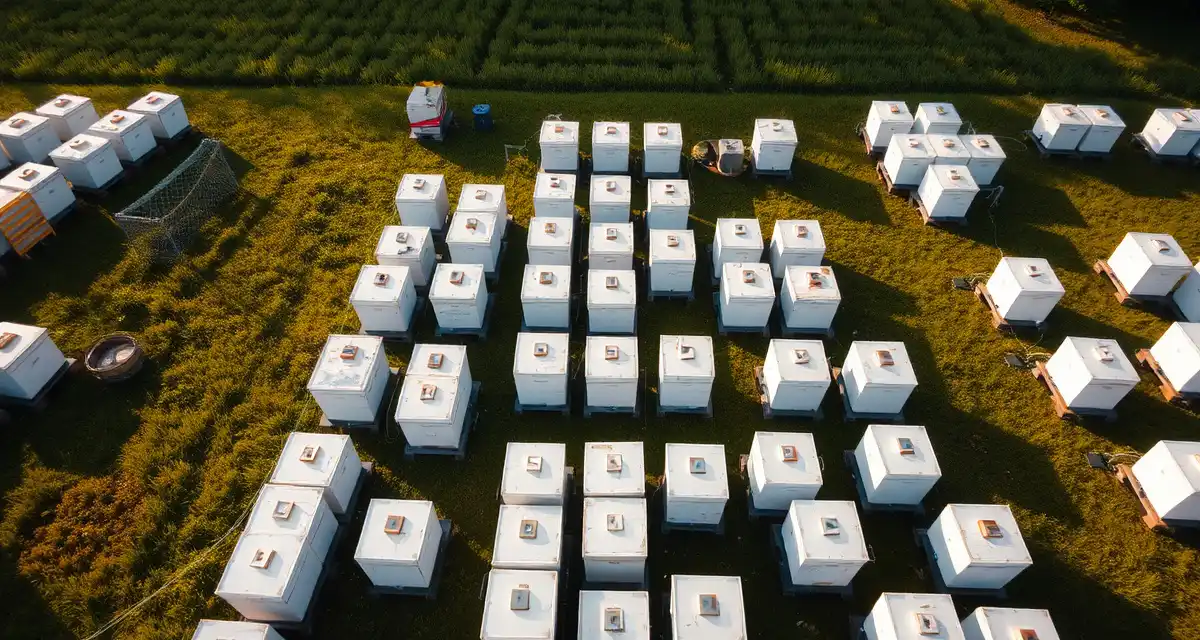
Check hive placement for density and coverage. Refer to the contract for any placement density or spacing requirements. Some almond growers specify maximum cluster sizes or minimum spacing between clusters to maximize foraging coverage across the orchard.
Assess hive condition on arrival. Were any hives damaged in transit? Any signs of overheating, unusually high mortality, or queen loss? Document anything unusual immediately. If there's a problem, your grower needs to know before they discover it themselves.
Establish water access. Hives need a reliable, clean water source nearby. If the site doesn't have one, you're responsible for providing it. This is often spelled out in the contract. Set it up during the initial placement, not as an afterthought.
Install entrance reducers or entrance protection if needed. Depending on colony strength and the time of year, protecting colonies during the acclimation period may be appropriate.
Take photos. Date-stamped photos of the setup, including hive rows, cluster placement, and any site features relevant to the contract, are your best defense against later disputes.
Notify the grower. As soon as setup is complete, send a confirmation to the grower. Include hive count, arrival time, and a photo or map showing placement. PollenOps delivery documentation can send this notification automatically as soon as you complete the yard check-in.
After Setup
Submit your delivery record. Create the formal delivery record in your contract management system while the details are fresh. Include GPS location, arrival time, hive count, strength scores, and any notes about site conditions.
Link the yard record to the contract. Make sure the delivery is connected to the specific grower contract it covers. This is the chain of documentation that protects your invoice.
Schedule your first follow-up inspection. When are you coming back to check on these hives? Add it to your yard schedule.
File any required placement notices with the state or county. Some jurisdictions require notification when a new apiary is established. Do this within the required window.
What Safety Equipment Is Needed at a Commercial Pollination Yard?
Every yard should have:
- Protective equipment for anyone accessing the site (suit, veil, gloves)
- First aid kit accessible in the vehicle
- EpiPen or equivalent if anyone in your crew has a known bee sting allergy
- Fire extinguisher if you're using a smoker near dry vegetation
- Emergency contact information posted in the vehicle, including the site address for emergency services
Consider posting a site marker (reflective stake or sign) at remote yard entrances so emergency vehicles can locate the site if needed. In fire-prone regions, this is worth doing even if it's not required.
How to Document Yard Setup for a Grower Report
Your grower report should include:
- Date and time of placement
- GPS coordinates of the yard location
- Hive count placed
- Hive strength score summary
- Cluster placement map or description
- Water source status
- Contact information for any questions
PollenOps generates a grower-ready report from your yard check-in data. You complete the checklist in the field, and the formatted report is ready to send before you leave the site. Growers who receive setup reports within a few hours of delivery are far less likely to raise placement questions later.
Connecting Setup to Contract Compliance
The setup checklist isn't just operational, it's a compliance document. When your contract requires minimum hive strength, the pre-move assessment proves you met it. When your contract specifies delivery timing, the GPS timestamp proves you were on site by the required date. When a grower claims you placed fewer hives than contracted, the hive count in your delivery record is your evidence.
Every item on this checklist connects to a potential contract compliance question. The beekeepers who complete it thoroughly are the ones who win disputes quickly, or avoid them entirely.
Frequently Asked Questions
What should I check when setting up a new bee yard for a pollination contracts?
Before arriving: confirm your lease or access agreement, review the contract requirements for hive count and strength minimums, check permits, and complete your pre-move hive assessment. During setup: pin the GPS location, document hive count, check placement density against the contract, confirm water access, take date-stamped photos, and notify the grower immediately after completion. After setup: submit your delivery record, link it to the contract, and schedule your first follow-up inspection.
How do I document yard setup for a grower report?
Your grower report should include the placement date and time, GPS coordinates, hive count, strength score summary, cluster placement information, and water source status. PollenOps generates this report automatically from your field check-in data, so you can send a professional formatted report to the grower before you leave the site.
What safety equipment is needed at a commercial pollination yard?
At minimum: protective equipment (suit, veil, gloves) for anyone accessing the site, a first aid kit in your vehicle, an EpiPen if any crew member has a sting allergy, and a fire extinguisher if you're using a smoker near dry vegetation. In remote locations, a reflective site marker at the yard entrance helps emergency responders locate the yard if needed.
What is the difference between commercial and hobby beekeeping?
Commercial beekeeping is distinguished by scale (typically 100+ hives, often 500-5,000+), revenue source (pollination contracts and bulk honey sales rather than local honey retail), and management approach (systematic protocols applied across yards rather than individual colony attention). Commercial operators manage bees as an agricultural enterprise, with the administrative, regulatory, and logistical complexity that entails. Most commercial operators derive the majority of their income from pollination services; honey production is a supplementary revenue stream.
How many hives are needed to make commercial beekeeping a full-time income?
Most beekeeping economists put the full-time commercial threshold at 500-800 hives, assuming efficient operations management and a combination of pollination and honey revenue. At 500 hives and $200/hive for almond pollination, almond season alone generates $100,000 in gross revenue before expenses. Net margins depend on operational efficiency, but well-run operations can achieve 30-50% net margins on pollination revenue. Additional crops and honey production improve per-hive economics but require additional management capacity.
What is the annual revenue potential for a 1,000-hive commercial operation?
A 1,000-hive operation running an almond season ($200/hive) plus blueberry or apple contracts ($80-100/hive) plus summer honey production ($25-40/hive after extraction costs) can generate $300,000-360,000 in annual gross revenue. Net margins after transport, crew, equipment, and hive replacement costs typically run 25-40% for well-managed operations, putting net income at $75,000-145,000 annually. The specific number depends heavily on circuit efficiency, loss rates, and contract quality.
Try These Free Tools
Sources
- USDA Agricultural Research Service
- Bee Informed Partnership
- American Beekeeping Federation (ABF)
- American Honey Producers Association
- Project Apis m.
Get Started with PollenOps
Managing a commercial beekeeping operation involves more data, more deadlines, and more moving parts than any general-purpose tool was designed to handle. PollenOps brings contracts, yard records, health documentation, and fleet logistics together in one platform built for the realities of commercial-scale beekeeping.