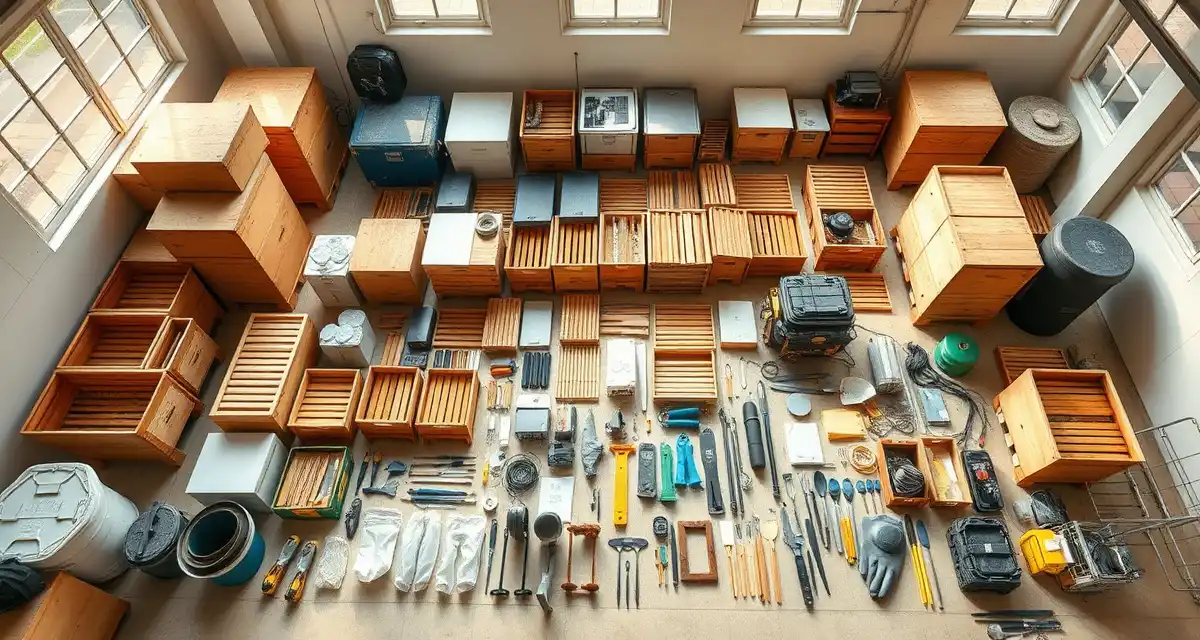
Commercial Beekeeping Equipment Checklist for Pollination Operations
Missing or broken equipment at peak season costs pollination beekeepers an average of $3,500 in emergency purchases. That number climbs fast when you're scrambling for a forklift attachment at midnight before a load moves. The commercial beekeeping equipment checklist below covers everything you need before the first hive touches a flatbed.
What separates a smooth pollination season from a chaotic one isn't luck. It's preparation, documentation, and knowing exactly where every piece of gear is deployed at any given moment. With PollenOps equipment tracking, each item in your inventory is linked to the yard and contract where it's currently working.
TL;DR
- Core equipment for a 500+ hive commercial operation includes flatbed trailer or 18-wheeler capacity, a forklift or telehandler, commercial OAV vaporizers, and a honey extraction setup.
- Equipment needs scale with hive count; operations above 1,000 hives typically need multiple vehicles and a dedicated extraction facility.
- USDA Farm Service Agency operating loans and equipment financing from agricultural lenders are the primary financing options for commercial equipment purchases.
- Detailed equipment inventory with depreciation schedules supports loan applications and insurance coverage documentation.
- Equipment maintenance records and scheduling prevent breakdowns at peak-demand times when truck or forklift failures have maximum operational impact.
Hive Hardware
Every hive going out on a contract needs to be in sound physical condition. Walk through this list before the season starts.
Boxes and frames:
- Deep hive bodies (at least 2 per colony)
- Medium supers for honey build-up during placement
- Full complement of frames with drawn comb
- Frame spacers if you're using 9-frame configurations for inspection efficiency
Lids and bottoms:
- Screened bottom boards for ventilation and mite monitoring
- Telescoping outer covers
- Inner covers
- Entrance reducers
Queen excluders are optional for pollination but useful if you're managing honey supers simultaneously.
Inspect every box for structural damage before the season. Warped lids and cracked bottom boards fail in the field. Replace them now, not at the yard.
Transport Equipment
This is where most emergency spending happens. Your transport gear takes constant abuse.
Truck and trailer:
- Flatbed or gooseneck trailer rated for your hive load
- Ratchet straps and load bars
- Tarps or screens for nighttime ventilation during transport
Loading and unloading:
- Forklift or pallet jack sized to your operation
- Hive pallets (4-way entry preferred for orchard placement)
- Pallet frames and strapping
Hive closures:
- Foam or screen inserts for entrances during transport
- Staple gun and staples for securing lids during movement
Check your trailer hitch, lights, and brakes at the start of every season. A blown trailer light can cost you hours at a weigh station.
Yard Management Tools
Once hives are placed, the daily management work begins.
Inspection tools:
- Hive tools (carry extras; they disappear)
- Smokers with bellows
- Smoker fuel (burlap, pine needles, or wood chips)
- Bee brushes
Personal protection:
- Veils and full suits for every crew member
- Gloves (both leather and nitrile depending on work type)
- Knee pads for low-frame inspections on pallets
Feeding equipment:
- Entrance feeders or top feeders
- Syrup tanks and pumps for large-scale feeding
- Pollen substitute frames or patties if pre-season build-up is needed
Record Keeping and Compliance
Professional commercial operations document everything. This isn't optional when you're fulfilling pollination contracts.
Use PollenOps hive movement tracking to log every hive's location, condition, and movement history. Paper records get lost. Digital records travel with you.
Documentation you need:
- State apiary registration certificates for every state you operate in
- Interstate movement permits and health certificates
- Pesticide exposure logs
- Hive inspection records for each yard
Keep paper backups in your truck for roadside checks, but your primary records should be digital and backed up.
Spare Parts and Emergency Supplies
This category is what the $3,500 average emergency purchase figure is built on. Stock these before you need them.
Mechanical:
- Forklift forks or replacement tines
- Spare trailer tires (already mounted)
- Extra ratchet straps and load binders
- Generator and fuel if your operation uses powered feeders or monitoring equipment
Hive repair:
- Extra bottom boards
- Spare outer covers
- Box nails and wood glue for emergency repairs
- Metal hive staples
Medical and safety:
- Epinephrine auto-injectors for crew members with unknown allergy status
- First aid kit in every truck
- Eye wash stations for truck cabs during heavy inspection days
Seasonal Preparation Timeline
Start your equipment audit 8 weeks before the first contract delivery. That gives you time to order, receive, and test anything that needs replacing.
8 weeks out: Full inventory count against your asset list. Identify gaps.
6 weeks out: Order replacement parts. Source any new equipment for expanded hive counts.
4 weeks out: Full mechanical inspection of trucks and trailers. Service forklift.
2 weeks out: Load test your trailer with empty pallets. Verify weight ratings match your hive count.
1 week out: Confirm all permits and health certificates are current. Load spare parts kit in each truck.
Running through this checklist in PollenOps connects each equipment item to the yards it's assigned to, so you know at a glance what's deployed and what's in reserve. That visibility prevents the double-booking of gear that leaves a crew at a yard with nothing to work with.
Frequently Asked Questions
What equipment do I need for a commercial pollination operation?
A commercial pollination operation needs hive hardware (boxes, frames, lids, bottom boards), transport equipment (flatbed trailer, pallets, forklift or pallet jack, hive strapping), yard management tools (hive tools, smokers, protective gear), and record-keeping systems for permits and inspection logs. You also need a spare parts inventory covering trailer tires, replacement boxes, ratchet straps, and mechanical components for your loading equipment. The exact quantities scale with your hive count, but the categories are consistent regardless of operation size.
How do I track where my beekeeping equipment is deployed across multiple yards?
The most reliable method is a digital equipment log that links each item to the contract and yard where it's currently placed. PollenOps tracks equipment deployment alongside hive placement records, so when a pallet or forklift attachment moves with a load, its location updates in the same system you're using to manage the contract. Paper-based tracking fails at scale because items get moved without updates. A digital system with yard-linked records prevents the equipment dead-ends that waste crew time and delay deliveries.
What spare parts should I always have on hand during pollination season?
Carry at least two mounted spare trailer tires, a full set of replacement ratchet straps, extra hive outer covers, spare forklift tines if your equipment is older, and a basic mechanical tool kit. Inside the truck, keep extra hive tools, smoker fuel, and entrance closures. The items that cause the most expensive emergencies are trailer components and loading equipment parts, because they're hard to source quickly and essential for moving hives on schedule. Stock them before the season starts, not after something breaks at 4 a.m. in a rural almond county.
What is the difference between commercial and hobby beekeeping?
Commercial beekeeping is distinguished by scale (typically 100+ hives, often 500-5,000+), revenue source (pollination contracts and bulk honey sales rather than local honey retail), and management approach (systematic protocols applied across yards rather than individual colony attention). Commercial operators manage bees as an agricultural enterprise, with the administrative, regulatory, and logistical complexity that entails. Most commercial operators derive the majority of their income from pollination services; honey production is a supplementary revenue stream.
How many hives are needed to make commercial beekeeping a full-time income?
Most beekeeping economists put the full-time commercial threshold at 500-800 hives, assuming efficient operations management and a combination of pollination and honey revenue. At 500 hives and $200/hive for almond pollination, almond season alone generates $100,000 in gross revenue before expenses. Net margins depend on operational efficiency, but well-run operations can achieve 30-50% net margins on pollination revenue. Additional crops and honey production improve per-hive economics but require additional management capacity.
What is the annual revenue potential for a 1,000-hive commercial operation?
A 1,000-hive operation running an almond season ($200/hive) plus blueberry or apple contracts ($80-100/hive) plus summer honey production ($25-40/hive after extraction costs) can generate $300,000-360,000 in annual gross revenue. Net margins after transport, crew, equipment, and hive replacement costs typically run 25-40% for well-managed operations, putting net income at $75,000-145,000 annually. The specific number depends heavily on circuit efficiency, loss rates, and contract quality.
Try These Free Tools
Sources
- USDA Agricultural Research Service
- Bee Informed Partnership
- American Beekeeping Federation (ABF)
- USDA Farm Service Agency
- American Honey Producers Association
Get Started with PollenOps
Commercial equipment investments represent significant capital that needs to be tracked, maintained, and financed alongside day-to-day operations. PollenOps helps you manage the full picture of your operation, from hive inventory to equipment records to contract revenue.