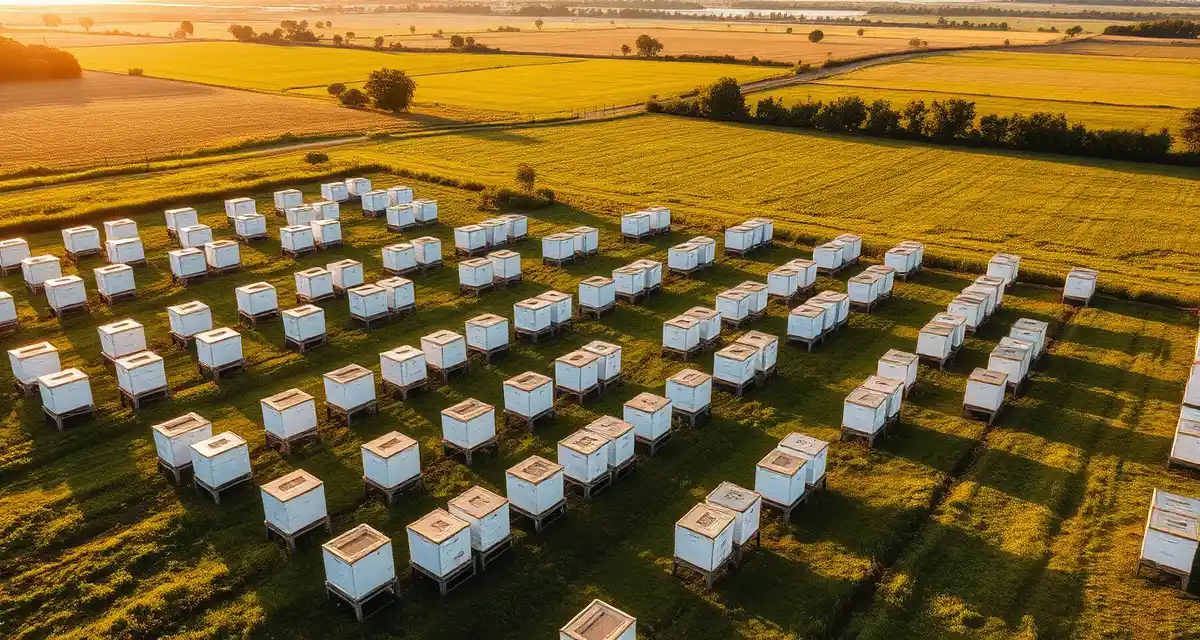
Yard Site Selection for Commercial Beekeeping Operations
Yard access and landowner relationships are among the most critical assets in migratory beekeeping. You can have great colonies and tight contracts, but if you're scrambling to find yard locations two weeks before delivery, or if a landowner pulls your access mid-season, you're in a genuinely difficult position that no amount of good hive management resolves.
A 2,000-hive operation may manage 20-30 yard sites across multiple states year-round. Each site has a landowner agreement (formal or informal), access logistics, forage context, and a seasonal role in your circuit. Managing this portfolio of sites as an intentional business asset, not just a collection of places where hives happen to be, separates well-run operations from reactive ones.
TL;DR
- Most states require a Certificate of Health or Certificate of Veterinary Inspection issued by the origin state before out-of-state colonies can enter.
- A California-to-Florida-to-Pacific-Northwest-to-Northern-Plains circuit is the most common full-year migratory route for large commercial operations.
- Interstate permit coordination requires lead time; certificates typically need to be obtained 7-30 days before entry depending on the destination state.
- Moving 1,000 hives requires 2-3 truck loads per move, with fuel, driver wages, and DOT compliance as the primary variable costs.
- Operations that plan their annual circuit 6-8 months in advance can sequence pollination contracts and honey production to maximize annual revenue per hive.
What Makes a Good Yard Site
Not all locations support the same colony health outcomes. The site characteristics that matter:
Sun and wind protection: Hives oriented east or southeast get morning sun and start foraging earlier. Protection from prevailing winds, tree lines, hedgerows, buildings, reduces the energy bees spend thermoregulating in cold weather. On northern plains sites, wind exposure in fall and early spring directly increases mortality.
Water access within foraging range: Colonies need reliable water sources within 1/4-1/2 mile. A yard without accessible water forces foragers to travel further, reducing efficiency. Some operators provide water at the yard; where possible, a natural source (pond, creek, irrigation channel) is preferable.
Forage quality and diversity: For summer honey production sites, the goal is proximity to large-scale flows, sweet clover, alfalfa, basswood, tulip poplar, wildflowers. Research the USDA National Land Cover Database or state agricultural census data to assess what's within 2-3 miles of candidate locations. A yard in the middle of 5,000 acres of continuous corn has nothing for your bees to forage unless there's a water source and weed cover nearby.
Pesticide exposure risk: Sites adjacent to conventional row crop fields, orchards with pest management programs, or golf courses have higher pesticide risk. This doesn't disqualify a site, but it affects your risk assessment and pesticide event probability. Pollinator protection plan registration helps, but can't eliminate the risk.
Access for equipment: You're arriving with an 18-wheeler and a forklift. The road to the site needs to support the truck's weight, the turns, and the backing maneuver to unload. A beautiful, high-forage site that requires a half-mile of dirt road with a 12,000 lb weight limit is effectively inaccessible during wet conditions.
Levelness: Hive pallets need to be roughly level for bees to orient correctly and so water doesn't accumulate in boxes. Gently sloping sites can work with appropriate pallet placement; steep terrain creates problems.
Distance from neighbors and livestock: Agricultural neighbors understand beekeeping. Residential neighbors sometimes don't, especially when hives are in flight paths for human activity. Keep hives away from fence lines and property edges when possible. Livestock in the same pasture can disturb hives, electric fence around the yard perimeter is standard practice in cattle country.
Landowner Relationships and Agreements
Most yard sites on private land are accessed through informal handshake agreements, the farmer knows you, you put bees there, maybe you leave a few pounds of honey at the end of the season. This works until it doesn't. A landowner who passes away, sells the property, or simply changes their mind mid-season leaves you without a yard when you need it most.
A written yard agreement covers:
- Parcel identification (address, APN, GPS coordinates)
- Access rights: dates of access, access routes, right to bring vehicles/equipment
- Colony count maximum (some landowners want to limit density)
- Responsibilities for damage to property (fencing, crops)
- Notice requirements for either party to terminate
- Duration and renewal terms
- Any compensation (honey, cash, or none, many landowners accept nothing but appreciate the offer)
A simple 1-page agreement that both parties sign is worth more than years of informal arrangement. It's not about being litigious, it's about being clear so there's no misunderstanding when circumstances change.
For operations that manage honey production on specific sites, a more formal lease with exclusivity terms may be appropriate. If you've built a relationship with a property owner whose 2,000-acre wildlife management area produces exceptional clover honey, you don't want a competitor to approach them and take the site.
Evaluating New Sites Before Committing
Before you move colonies to a new yard site, do the evaluation in person:
- Drive the access route with a loaded truck in mind. Can you make the turns? Is there seasonal flooding on the road? Are there any bridges or culverts with weight limits?
- Walk the site. Where will pallets go? How does water drain? Where's the prevailing wind? Is there any evidence of previous hive activity (wax moth damage on old wood, propolis on structures)?
- Check surrounding land use. Drive 2-3 miles in each direction. What crops? Any large-scale conventional agriculture? Any commercial facilities with pest management programs?
- Talk to the landowner about their own practices. If they farm the surrounding acreage, what pesticides do they use? When? Are there cover crops or native plantings that provide forage?
- Check state and county regulations. Some counties have setback requirements for apiaries (distance from roads, residences, property lines). Verify your planned layout meets local requirements before building a relationship around a noncompliant site.
Managing a Portfolio of 20-30 Yard Sites
At scale, your yard portfolio needs to be managed as deliberately as your colony inventory. Each site has:
- A landowner contact and agreement status
- A seasonal role in your circuit (winter site, spring buildup, almond staging, summer honey, fall treatment)
- Access quality rating (all-weather vs. fair-weather only)
- Forage quality rating (strong honey flow vs. maintenance forage only)
- Pesticide risk level
- County and state registration status
Tracking this across 20-30 sites in spreadsheets produces inevitable gaps. Fleet logistics management tools that maintain site profiles alongside movement schedules let you make route decisions with the full picture, not just where the colonies are, but whether that site's access road is passable in late January and whether the landowner agreement is current.
Seasonal Site Rotation
Different sites serve different functions at different times of year:
Winter sites (November-February for southern operations): Mild climate, minimal forage but adequate survival conditions, accessible for periodic checks. Florida, Georgia, Louisiana, and Mississippi are common wintering regions. Site requirements: good sun exposure, wind protection, no standing water, and access that works in winter rain.
Spring buildup sites (February-May): Early natural pollen availability is the key. Sites in areas with early spring wildflowers, willows, maples, or fruit trees provide the first natural protein stimulus to jump-start spring buildup.
Almond staging sites (late January, California): Access to orchards is handled through the grower, yard selection is determined by your contract placement assignments. But your staging yard (where trucks load before the move) needs to be within a practical drive and have the loading infrastructure you need.
Summer honey sites (June-August, Northern Plains): The highest-value honey production sites in your portfolio. Access to large-scale sweet clover, alfalfa, or canola flows. Site selection here is primarily driven by forage, a 500-colony yard in an exceptional sweet clover area generates 40-70 more lbs per colony than a mediocre site.
Fall treatment and consolidation sites: After extraction, colonies need treatment and assessment. A site with good access and room for consolidation operations, combining weak colonies, moving equipment, doing fall inspections, needs practical infrastructure more than exceptional forage.
FAQ
What makes a good yard site for commercial beekeeping?
The key criteria: good sun exposure with wind protection, access for large commercial vehicles (18-wheelers, forklifts), natural or provided water within foraging range, high-quality diverse forage within 2-3 miles, low pesticide risk from neighboring agriculture, level or near-level terrain, and a landowner with a clear written agreement. For summer honey production sites, forage quality is the dominant factor. For wintering sites, climate and wind protection take priority.
How do you negotiate a landowner agreement for a beekeeping yard?
Start with the existing relationship, most yard agreements start with a direct ask to a farmer, landowner, or rural property owner. Offer fair compensation: a few cases of honey, a modest annual cash payment ($50-200 for a small yard, more for a productive site), or a combination. Get the terms in writing, access dates, vehicle rights, colony count, notice requirements, and duration. A 1-page signed agreement protects both parties without requiring a lawyer. Most landowners are receptive when you approach professionally and explain the mutual benefit (pollination of their crops, wildflower gardens, or surrounding farmland).
How many yard sites does a 1,000-hive operation typically need?
A 1,000-hive operation on a full migratory circuit typically maintains 8-15 yard site relationships, including 2-3 wintering yards in a southern state, 2-4 spring buildup sites, contract placement positions for pollination (managed through growers), and 4-6 summer honey yards in the Northern Plains or Pacific Northwest. Operations with tight geographic circuits run fewer sites; operations covering multiple regions need more. Having 15-20% more site relationships than you actively use in any season provides redundancy when a site becomes unavailable.
What is the most common full-year circuit for US migratory beekeepers?
The classic commercial circuit runs: winter buildup in Florida or southern Texas, California almonds in February, Pacific Northwest tree fruit (cherry, apple, pear) in April-May, Pacific Northwest or northern Midwest berry and clover crops in June-July, summer honey production in North Dakota, Montana, or Minnesota in July-August, and fall honey extraction and requeening before the cycle restarts. The exact circuit depends on contracted commitments, hive capacity, and the operator's regional relationships.
How do you coordinate state entry permits for a multi-state circuit?
State entry permits and health certificates require lead time: most states want certificates issued 7-30 days before entry. For a circuit that crosses 5-6 states, this means overlapping certificate applications where a certificate for the next state must be initiated before the current state's placement ends. Some operators use a permit tracking calendar that accounts for the lead time required for each destination state. PollenOps includes a permit tracking feature that alerts operators when certificates need to be initiated based on planned move dates.
What are the most common mistakes new migratory operators make?
The most common errors are underestimating transport costs, failing to secure contracts before building hive capacity, not accounting for state entry permit lead times, and neglecting varroa management during the compressed pre-almond preparation period. New operators often also underestimate the administrative load of managing 10-20 contracts across multiple states -- tracking payment status, compliance documentation, and crew scheduling simultaneously requires systems, not just a spreadsheet.
Try These Free Tools
Sources
- USDA Agricultural Research Service
- Bee Informed Partnership
- American Beekeeping Federation (ABF)
- American Honey Producers Association
- USDA Animal and Plant Health Inspection Service (APHIS)
Get Started with PollenOps
Migratory operations face the most complex coordination challenges in commercial beekeeping: permits across multiple states, staggered delivery windows, and fleet logistics that have to work precisely across hundreds of miles. PollenOps was built to handle multi-state, multi-grower, multi-crop operations at this level of complexity.